Archive
January
February
March
April
May
June
July
August
September
October
November
December
January
February
March
April
May
June
July
August
September
October
November
(2)
December (2)
|
|
|
|
|
|
|
|
|
|
|
|
|
|
|
Wooden ships whether power or sail driven are always a labour of love. They require constant maintenance because if the natural deterioration of wood by dry rot gets a hold major repairs may be required. A ship sitting still will develop bottom rot due to barnacles and weeds.
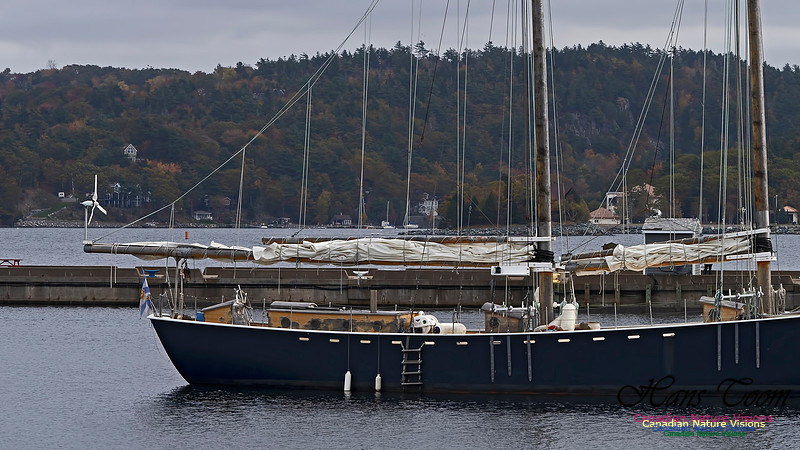
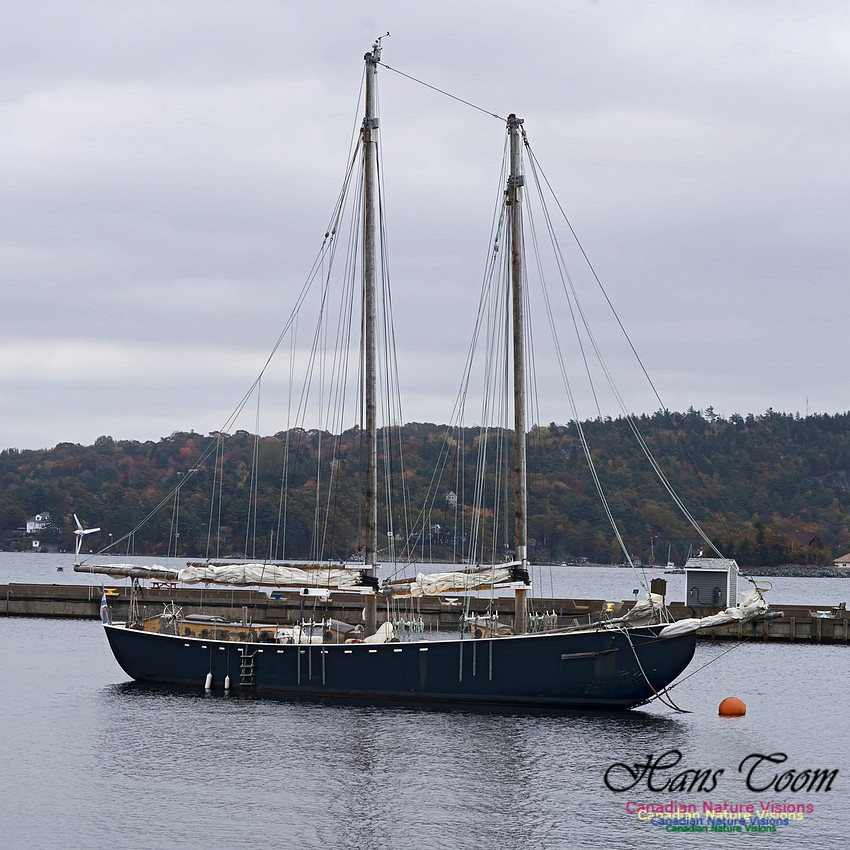
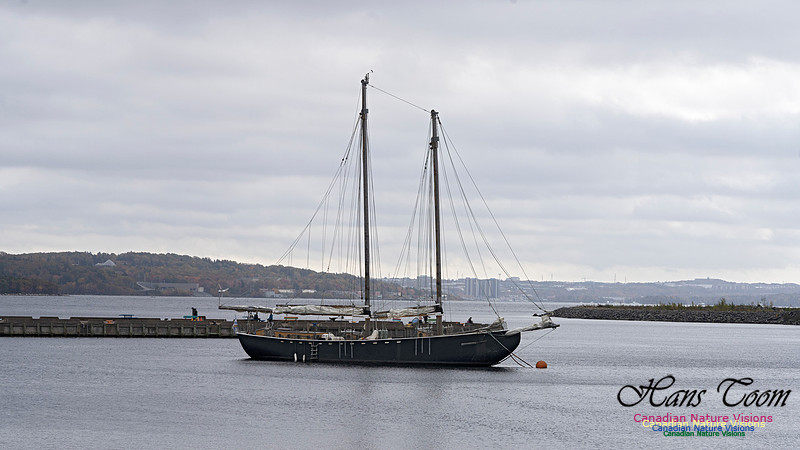
The schooner Katie Belle has sat in the open and exposed to our maritime weather for years. It should have been covered stem to stern with waterproof tarps.
I hope the owners of this fine vessel know what they are doing.
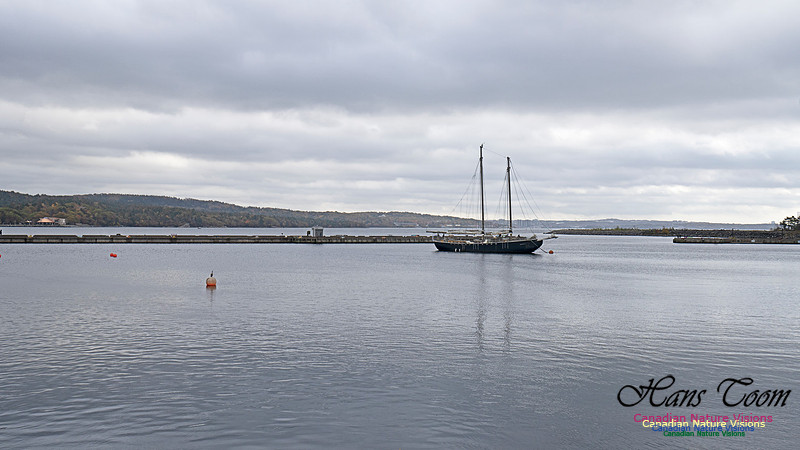
Schooner Katie Bell in Mill Bay, Bedford
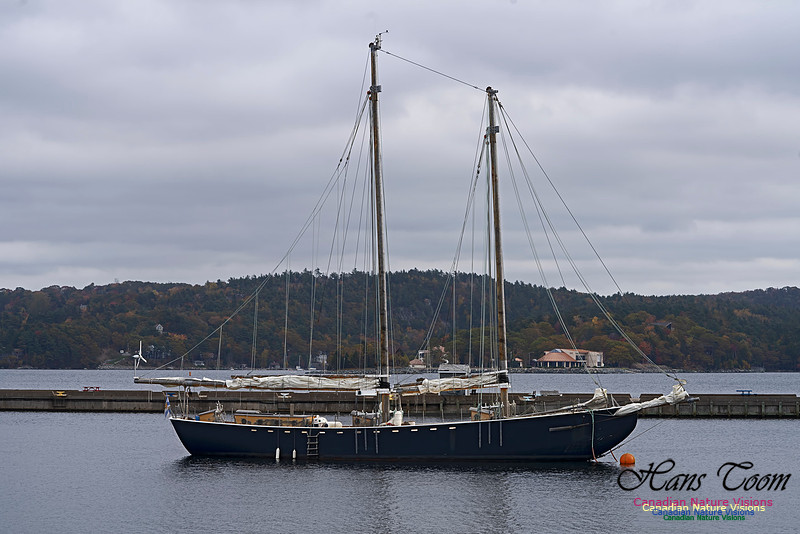 Kattie Belle 100 
This is a media except from earlier days:
In a community known more for its farmers than its shipbuilders, a large wooden sailboat is a strange sight in Stewiacke, N.S., and it’s attracting a lot of attention.
“Sheer size is what gets them, not used to something like this,” says Nick Densmore.
He and his cousin, Evan Densmore, built the 80-foot sailboat in memory of their beloved grandfather.
The cousins say they have always been interested in building things.
“I think I got my first toolset when I was two. They had to take that away from me,” says Nick. “I was cutting up furniture and pounding nails on the floor.”
“My dad sparked my interest when I was a kid. He loved powerboats, anything that floated really,” says Evan. “My grandfather was a builder and a carpenter, and he kind of fostered that interest in me.”
When Evan was a boy, he and his grandfather created a model of a sailboat in the hopes of building the real thing someday.
His grandfather built the wheel for the future vessel, but passed away last spring.
“He was a pretty quiet guy, have a couple laughs, it would be a pretty good time,” says Evan.
After three-and-a-half years of building, the cousins are almost ready to set sail. But first, they need to get the ship into the water.
“Time is pretty important. As the tide peaks in Stewiacke, it’s already going down in Maitland, and you kind of get that ‘swoosh’ effect,” says Evan.
“So, out in Maitland, the tide drops at about an inch per minute. So every 12 minutes you’re not there, the water goes down. Twelve minutes is one foot less of water, so we’re going to have to wait one tidal cycle in the river once we launch the boat in order to have enough water to get out to Cobequid Bay.”
The move from the shop to the river was also a challenge. It took months of planning to make a 45-minute trip three kilometres down the road.
“The front truck pulled the truck and Jeep and the boat and my other truck back up and steered the back end of the boat,” explains truck driver Brad Crowe.
Once in the water, two 140 horsepower diesel engines will take them to Parrsboro, where they will install the masts.
Eventually, the cousins plan to take tourists out to sea.
“I would say we could comfortably have 40 people on the deck for a day sail trip,” says Nick.
There is still work to be done below deck, but once it’s complete, Evan and Nick expect 14 people will be able to sleep there.
“I’d like to do some cruising hopefully this winter, head down the eastern seaboard, if everything goes according to plan,” says Evan. “If not, I’ll be freezing on a wharf in Nova Scotia.”
As for the ship’s name, the cousins are keeping it secret until the official launch next Tuesday.
“No, you’re going to have to wait for the launch day for that,” says Evan. “A little suspense.”
With files from CTV Atlantic's Matt Woodman
NATO exercise Cutlass Fury brought together ships from several allied navies to participate in antisubmarine exercises off the coast of Halifax and in Bedford Basin.
The event is a bi-annual, medium-scale, training exercise that enhances mutual awareness, interoperability, and readiness of participating Allied navies. This year’s Cutlass Fury 21 continued to build on previous training principles that focused on anti-submarine warfare, with the added emphasis on the multi-threat environment, air-maritime integration and support, and anti-air defence.
“The U.S. and NATO procedures are similar, but we’re still learning,” said Lt. j.g. Gianmatteo Francavilla, an assistant navigator and Italian Navy personnel-exchange-program officer aboard the USS Forrest Sherman (DDG 98). “Cooperating together during Cutlass Fury was a good learning experience for the future.”
“Cutlass Fury gives us an opportunity to participate in training applicable to us deploying together with NATO,” said Lt. Lisa Lacross, the operations officer aboard the Forrest Sherman. “It gives us an opportunity to integrate and operate with our foreign partners.”
NATO Allies, made up of Canadian, French and American navies, successfully performed gunnery, manoeuvring, boarding, replenishment and anti-submarine exercises despite the challenges presented by Hurricane Larry while operating at sea. These exercises facilitated training and developed interoperability within the coalition.
“We have the U.S. Navy way that we do things, but there’s also Allied Tactical Publications (ATP) that we use when we are operating with other countries,” said Lacross. “We’re all mariners and we speak that same language, but we have different ways of doing certain things, so, just getting together and seeing what the differences are and working through those is an important part of Cutlass Fury.”
Two years after the previous, this upcoming Cutlass Fury began just days after USS Forrest Sherman completed Frontier Sentinel with Canadian Allies. Both Frontier Sentinel and Cutlass Fury are international training exercises that help Forrest Sherman prepare for a future deployment.
“This is really a phenomenal training opportunity for everyone aboard the Forrest Sherman,” said Lacross. “As we continue down our path towards certification and deployment, training with international partners is a plus.”
One of the goals for the Forrest Sherman while participating in Cutlass Fury is to improve operational capabilities using NATO procedures.
“Improving our cooperation with other NATO countries is one of our goals,” said Francavilla. “Sometimes you can learn from the different ways other countries execute procedures.”
Hudner also participated in Exercise Noble Defender from Sept. 11-12. Noble Defender is a NORAD and U.S. Northern Command exercise series that demonstrates the ability to conduct agile combat employment principles across the North American area of operation while strategically messaging U.S. and Canadian bi-national defense of the homelands.
HMCS Halifax
HMCS Kingston
HMCS Moncton
HMCS Montreal
HMCS Summerside
HMCS Toronto
HMCS Windsor
MV Asterix
Harbour Pilot joined the melee
USS Forest Sherman
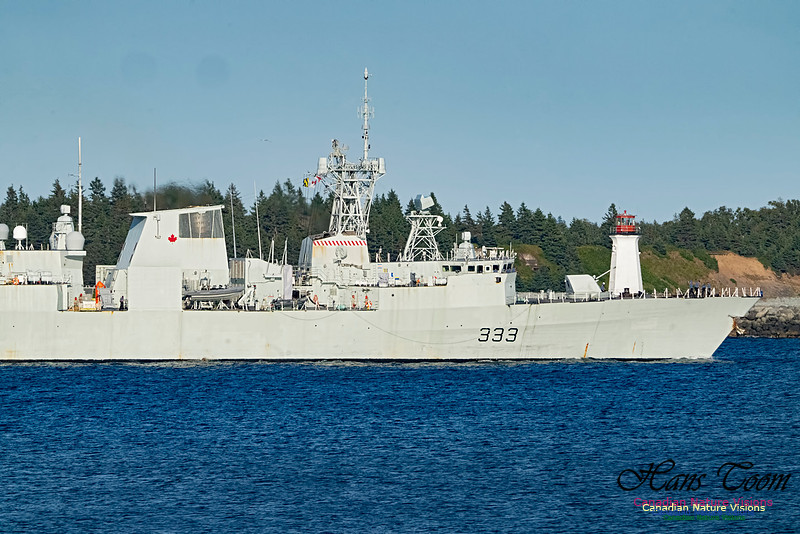 HMCS Toronto 100 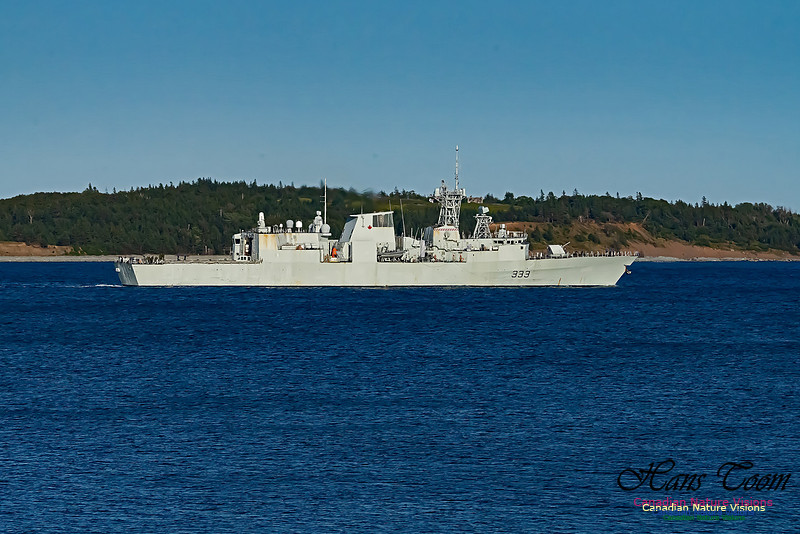 HMCS Toronto 101 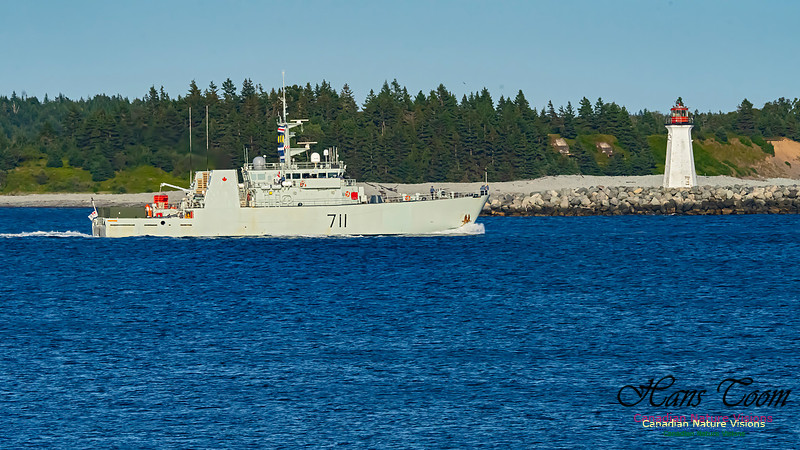 HMCS Summerside 100 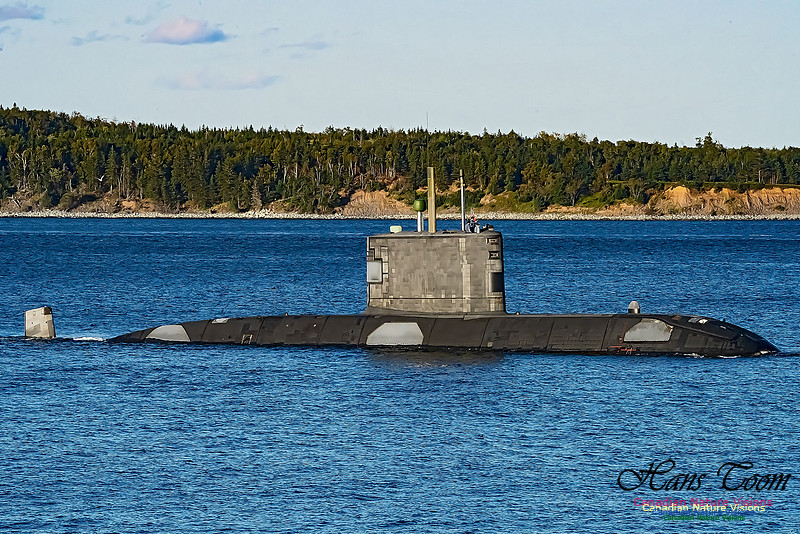 HMCS Windsor 100 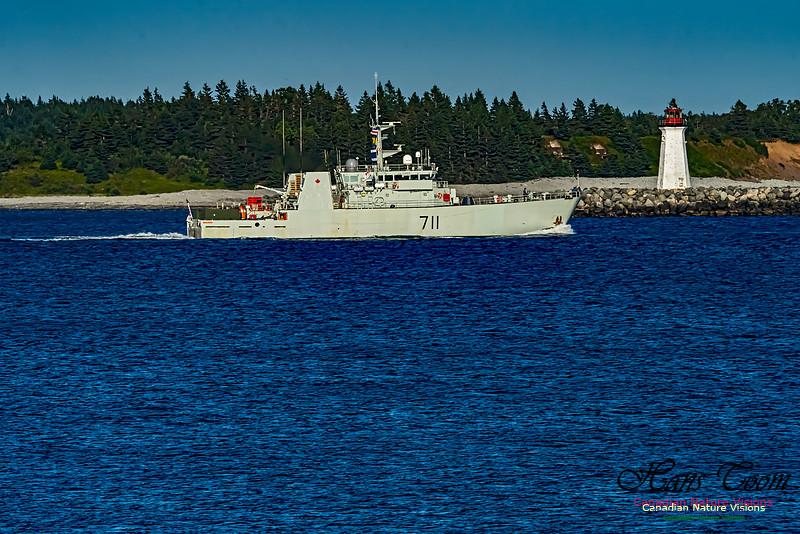 HMCS Summerside 101 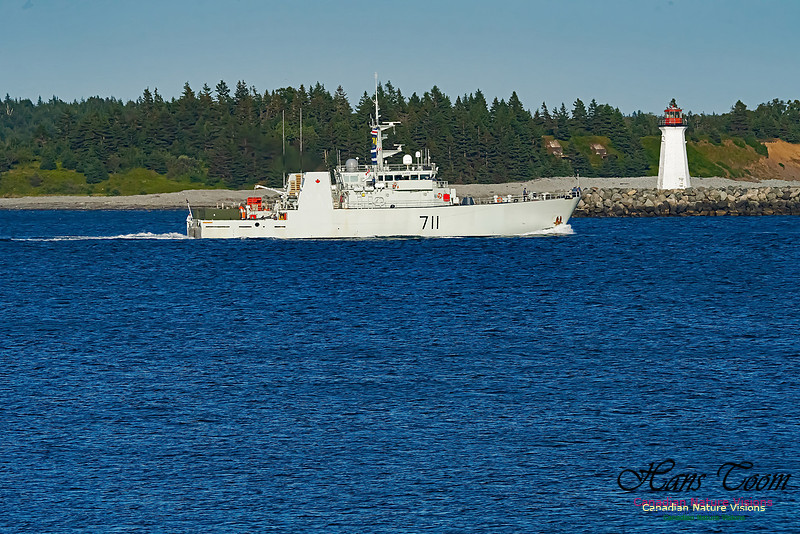 HMCS Summerside 102 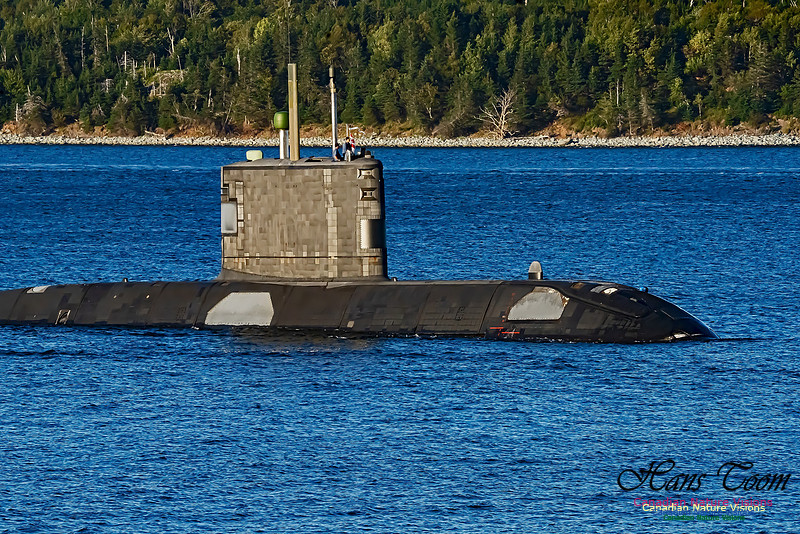 HMCS Windsor 102 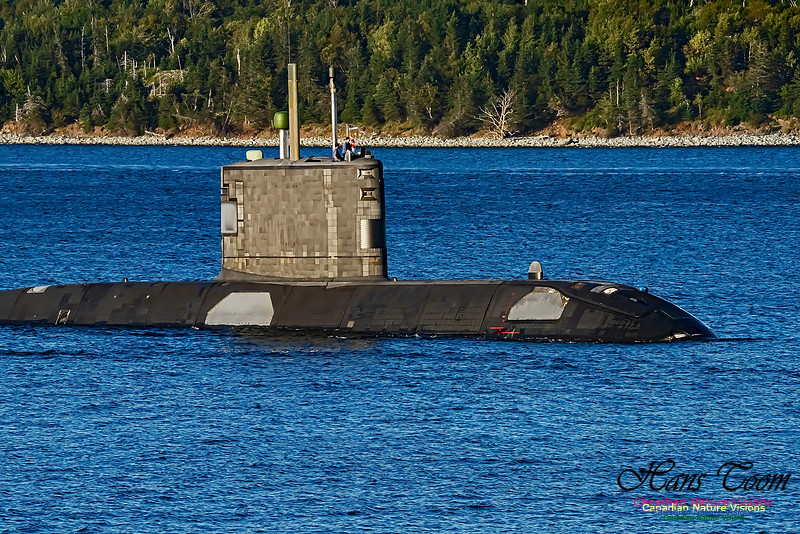 HMCS Windsor 101 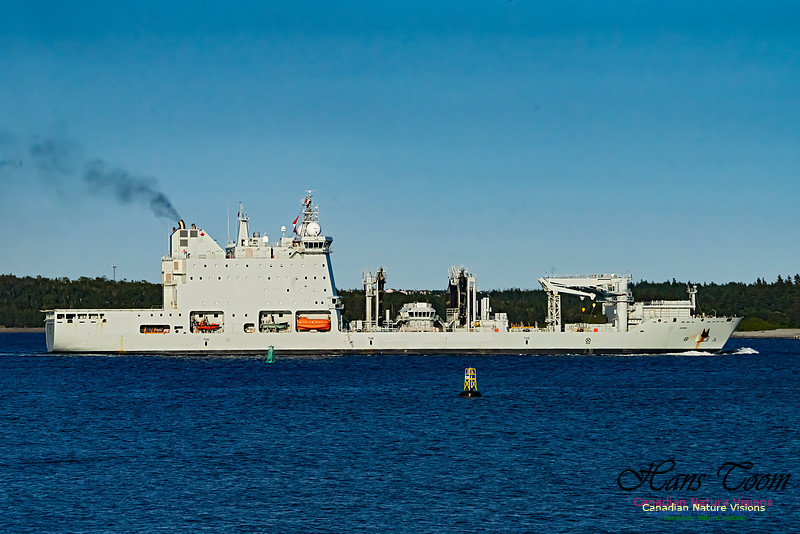 MV Asterix 100 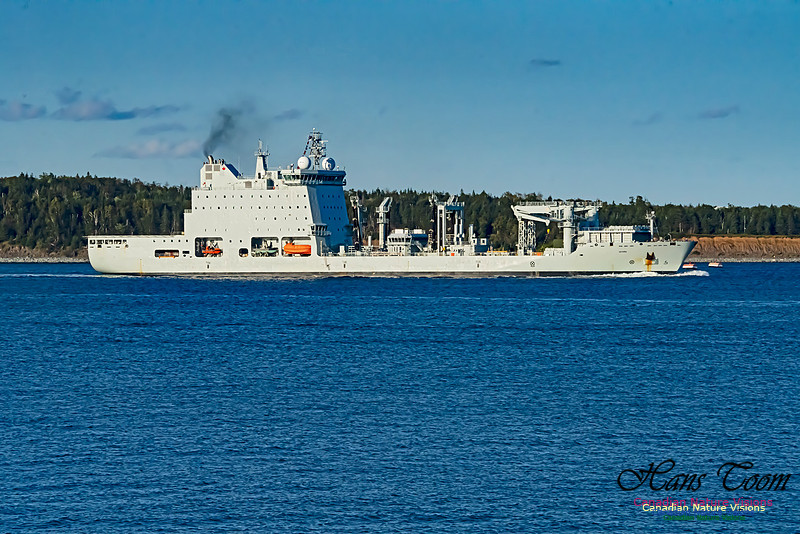 MV Asterix 101 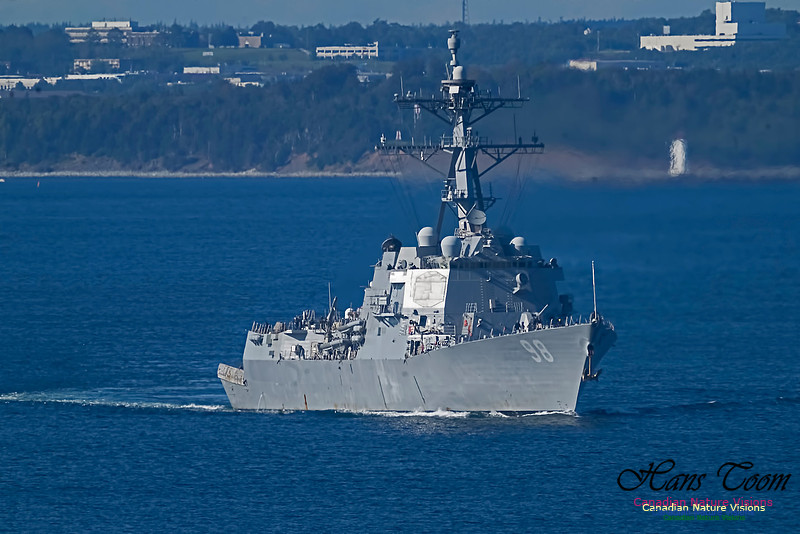 USS Forrest Sherman 102 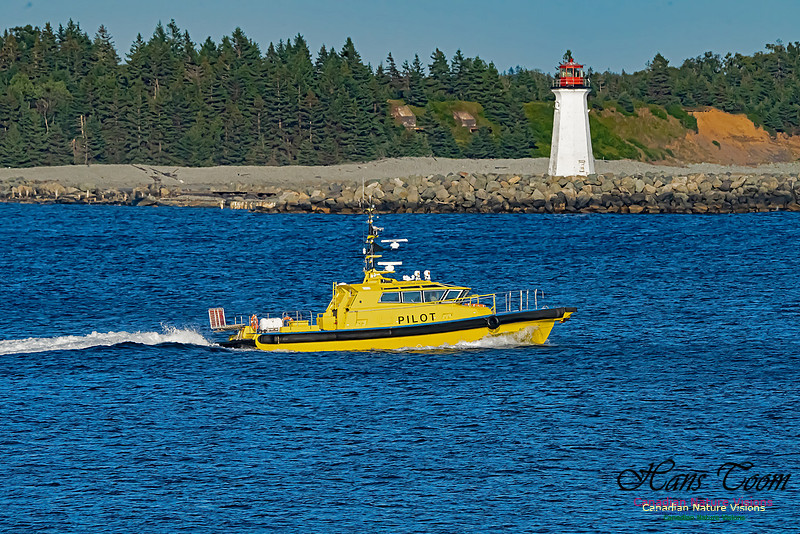 Pilot off McNabs Island Light 100 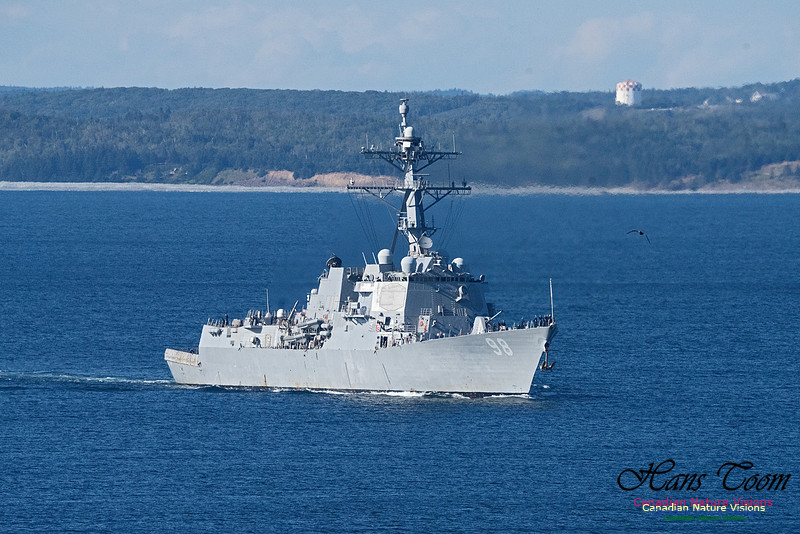 USS Forrest Sherman 101 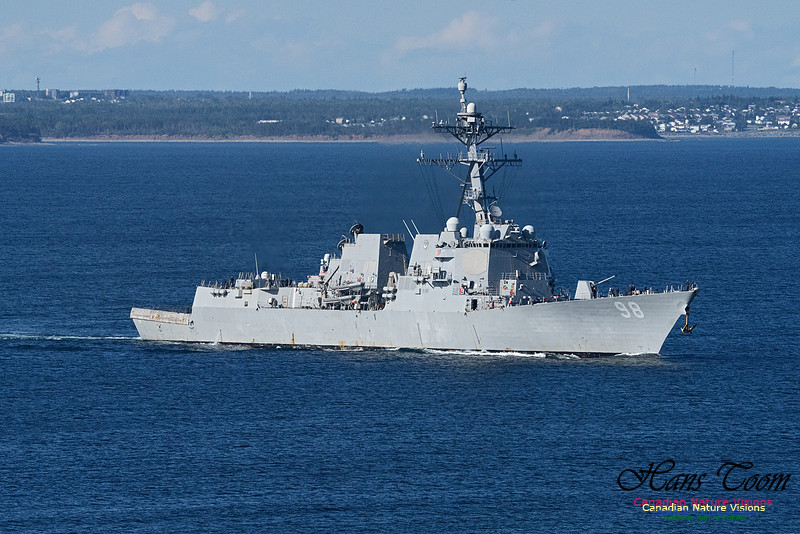 USS Forrest Sherman 100 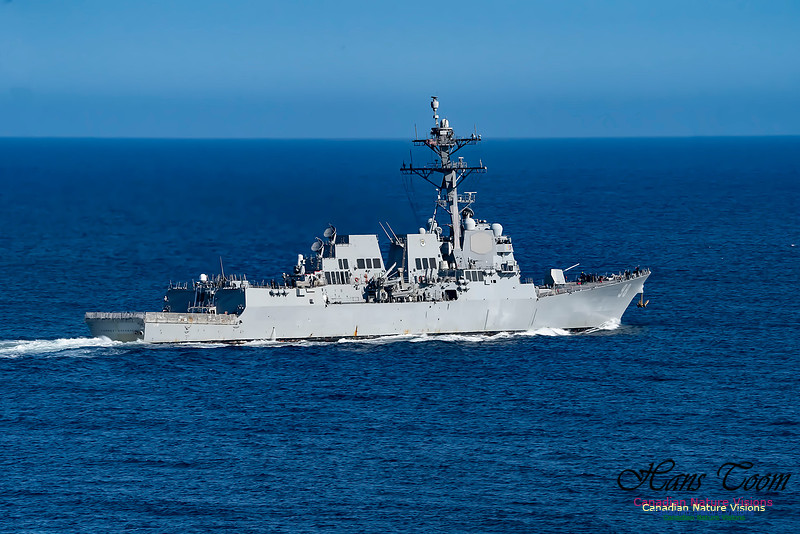 USS Forrest Sherman 103 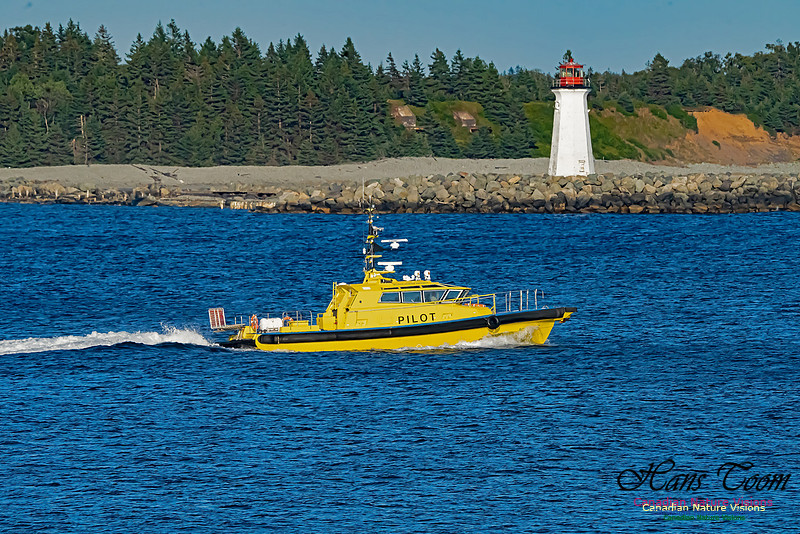 Pilot off McNabs Island Light 101 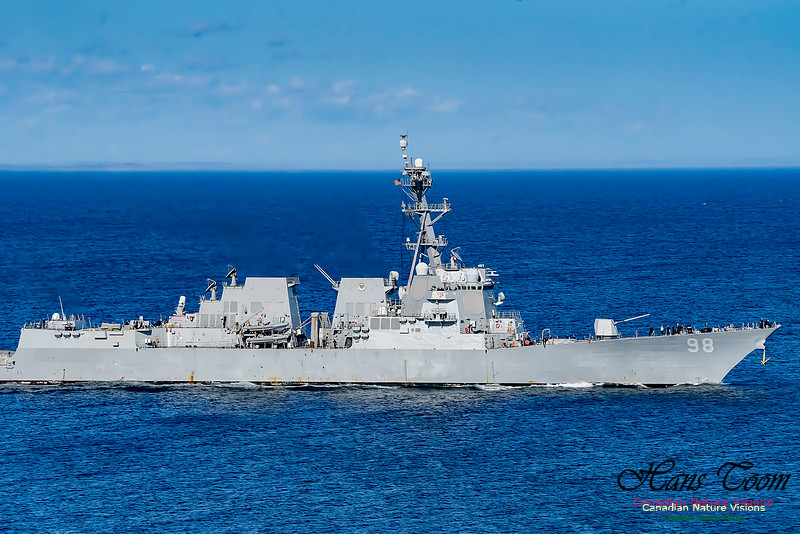 USS Forrest Sherman 104 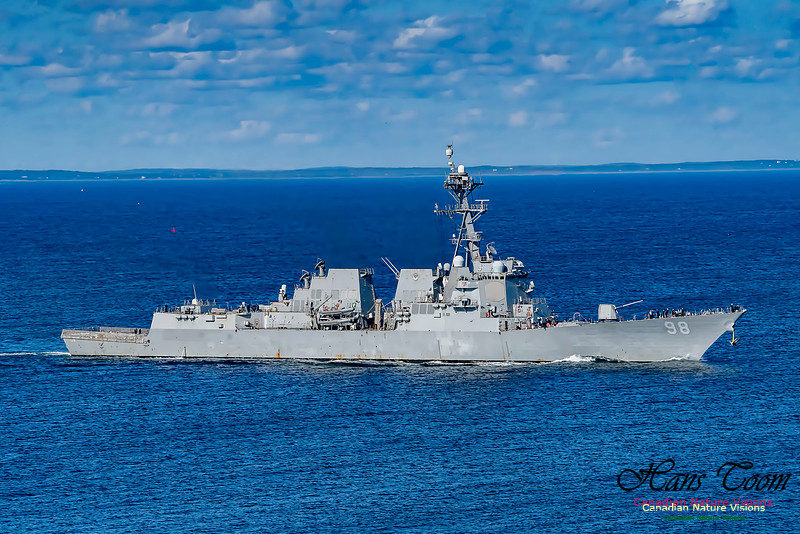 USS Forrest Sherman 105 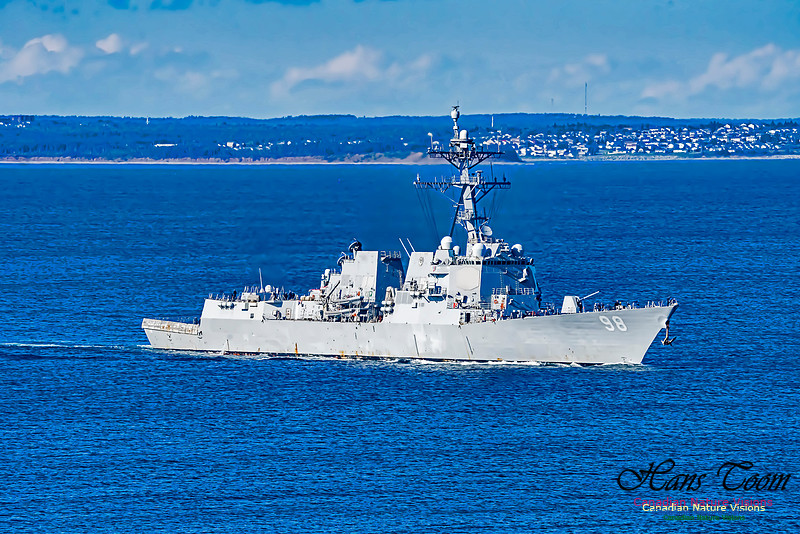 USS Forrest Sherman 106 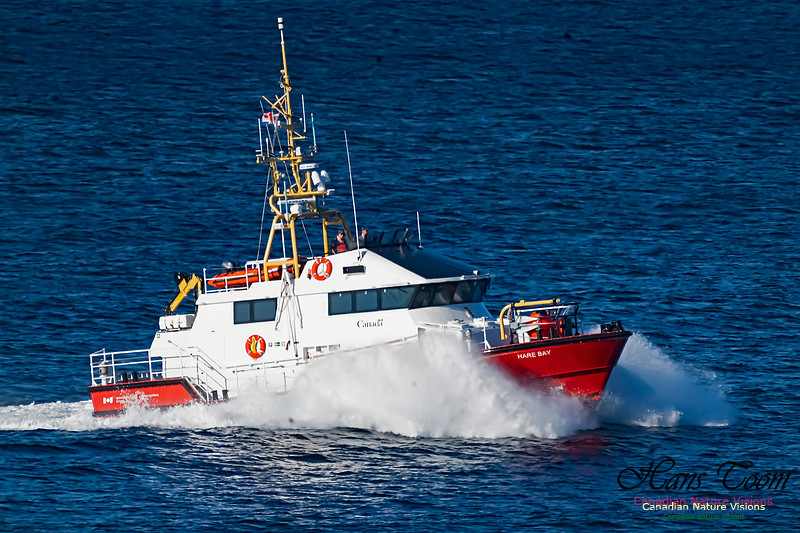 Hare Bay 100 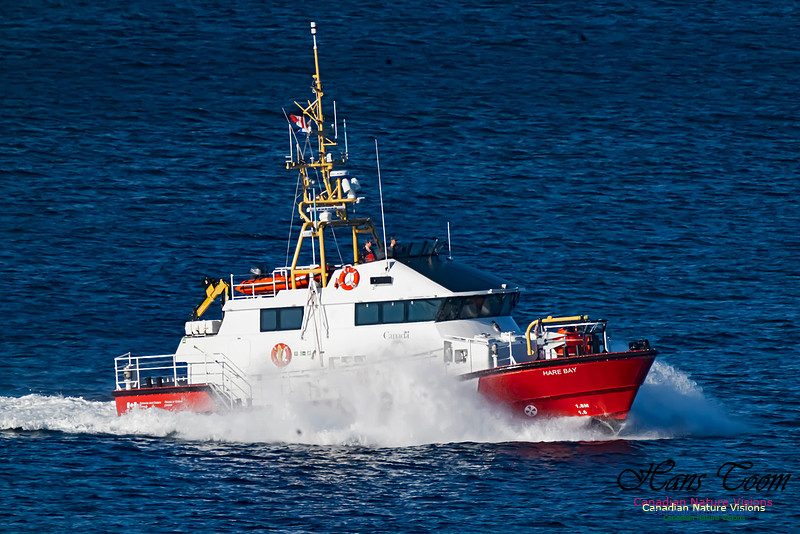 Hare Bay 101 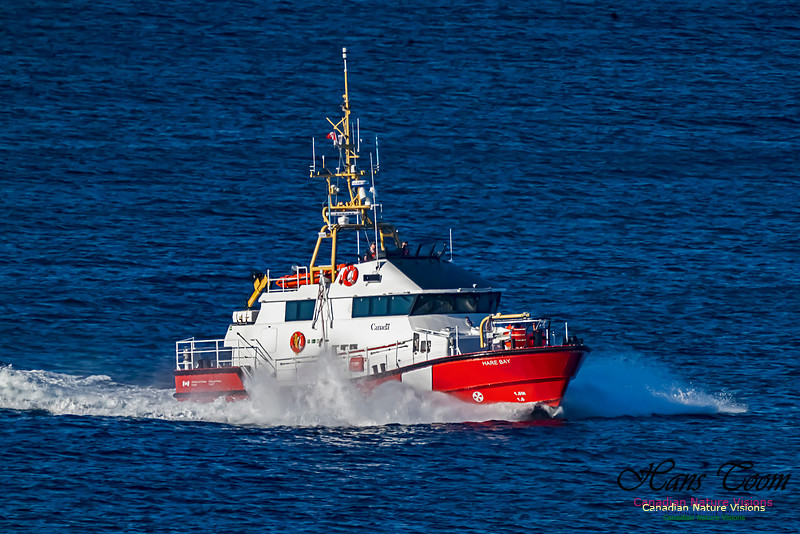 Hare Bay 102 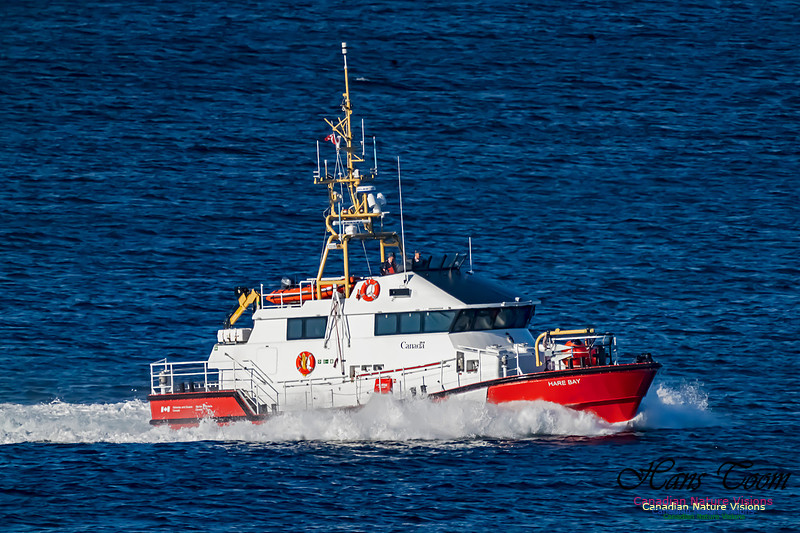 Hare Bay 103 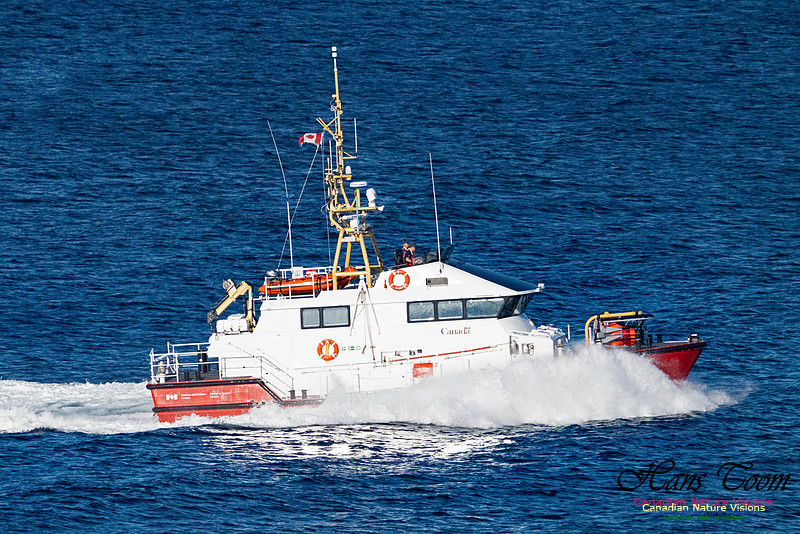 Hare Bay 104 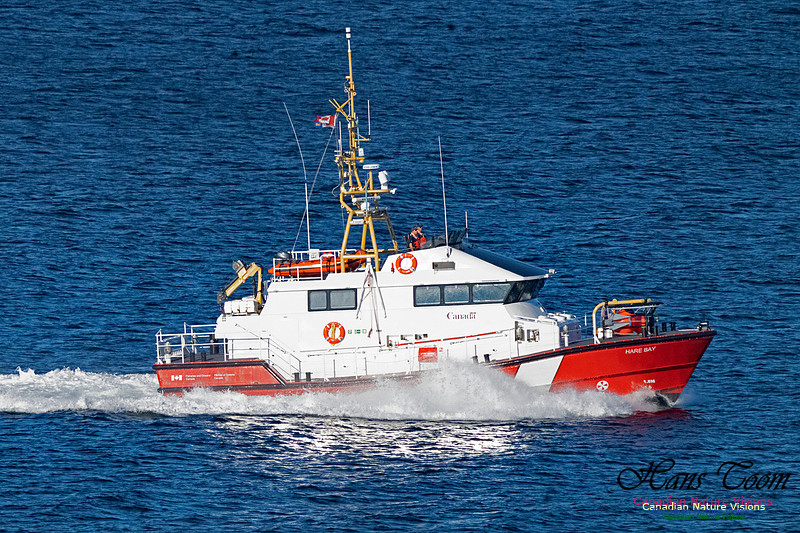 Hare Bay 105 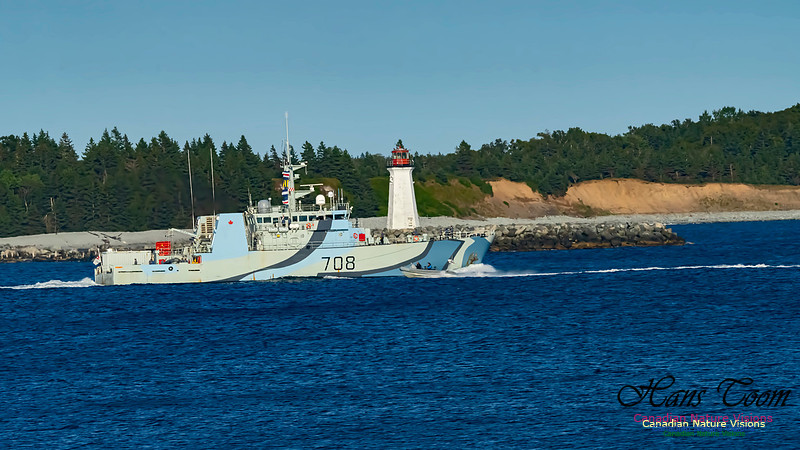 HMCS Moncton 100 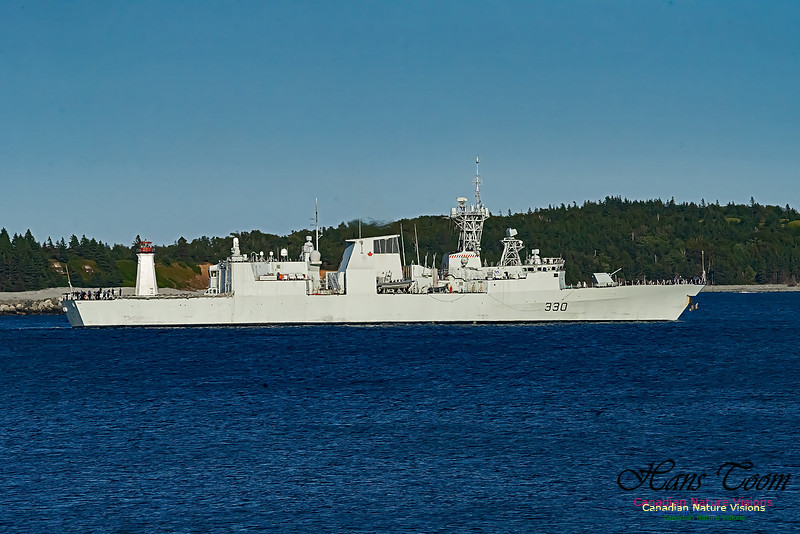 HMCS Halifax 100 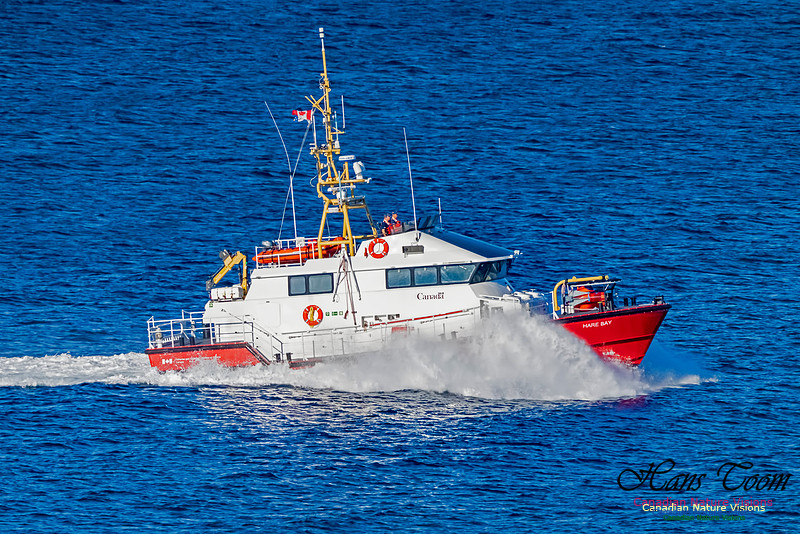 Hare Bay 106 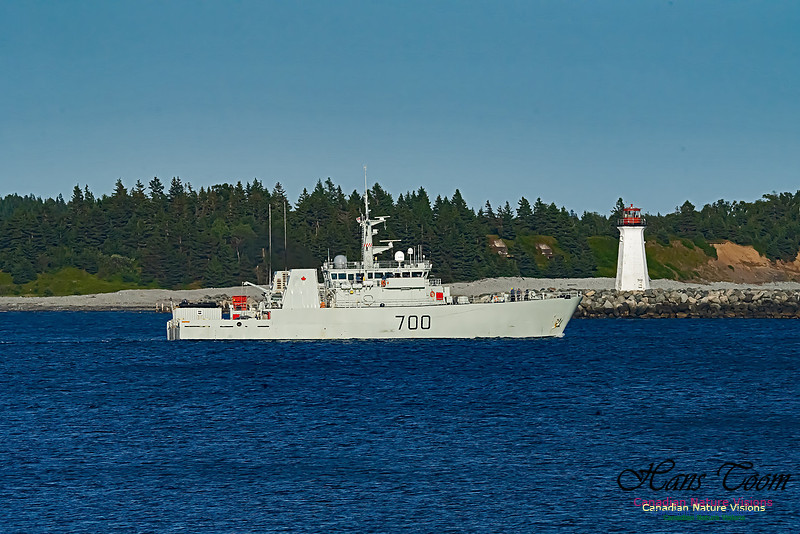 HMCS Kingston 100 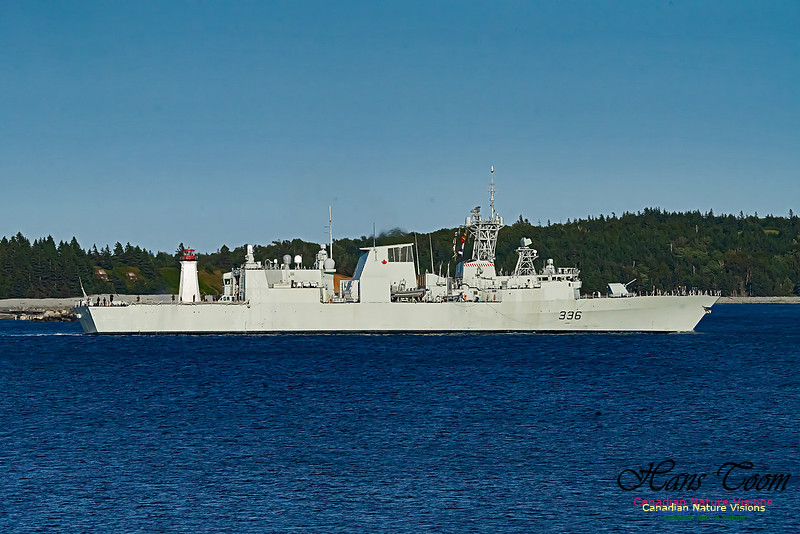 HMCS Montreal 100 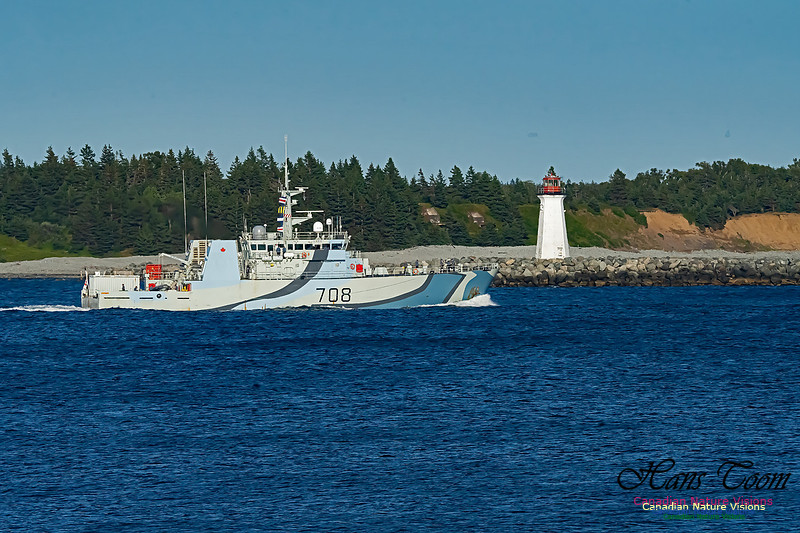 HMCS Moncton 101
The Arleigh Burke class of destroyers are the backbone of the United States navy's fleet defence. The USS Forrest Sherman was photographed off Chebucto Head as it was leaving Halifax harbour to participate in NATO Exercise Cutlass Fury.
USS Forrest Sherman (DDG-98)
From Wikipedia, the free encyclopedia
Jump to navigationJump to search
- See USS Forrest Sherman for other ships of this name.
USS Forrest Sherman (DDG-98) is an Arleigh Burke-class guided missile destroyer in the United States Navy and is the second US Navy ship to bear the name. She is part of Destroyer Squadron 28.
Namesake[edit]
She is named for Admiral Forrest Percival Sherman.
Construction[edit]
Built by Northrop Grumman Ship Systems Ingalls Shipbuilding in Pascagoula, Mississippi, Forrest Sherman was launched on 2 October 2004. Admiral Sherman's daughter, Ann Sherman Fitzpatrick, is the ship's sponsor.
History[edit]
She was commissioned on 28 January 2006 at NAS Pensacola, Commander Michael VanDurick in command, and six days later departed for her homeport in Norfolk, Va. to join the Atlantic Fleet.

USS Forrest Sherman (DDG 98) in 2007, test firing her new 5"/62 caliber Mark 45 Mod 4 gun, located forward of her 32-cell missile pack module.
She departed Norfolk for her maiden deployment in July 2007, visiting various nations around the Mediterranean Sea and the Black Sea. In August 2007, while the ship was visiting Sevastopol to conduct drills with the Ukrainian Navy, a 1,100 pounds (500 kg) naval mine from the Second World War was discovered 500 yards from the vessel. The mine was secured before it could damage the ship.[1] Also during that visit, she became the first US Navy ship to land a Ukrainian Navy helicopter. She also conducted Reliant Mermaid 2007 with the Turkish and Israeli Navies.[2]
On that deployment, she circumnavigated the continent of Africa as part of Task Group 60.5, the US Navy's Southeast Africa task force. She returned home on 19 December that year.[3][4]
In early June 2008, Forrest Sherman deployed for three months in support of U.S. Southern Command's Partnership of the Americas 2008 (POA 08) operation. She returned home on 29 August 2008.[5]
On 25 November 2019, Forrest Sherman captured a stateless dhow carrying a large cache of Iranian missile parts destined for Yemen.[6][7]

Halifax and Halifax Harbour has been heavily defended from naval attack for hundreds of years. Many of the bunkers and guns are still visible to this date.
I hadn't visited York Redoubt, one of the many harbour defenses, for several years. I took the opportunity to visit briefly on my tour of the east side of the Chebucto Peninsula.
York Redoubt
From Wikipedia, the free encyclopedia
Jump to navigationJump to search
York Redoubt is a redoubt situated on a bluff overlooking the entrance to Halifax Harbour at Ferguson's Cove, Nova Scotia, Canada, originally constructed in 1793. It was designated a National Historic Site of Canada in 1962.[1]
History[edit]

An anti-submarine net running between York Redoubt and McNab's Island in 1942
York Redoubt was a key element in the defence of Halifax Harbour in the 19th and 20th centuries, and saw many additions to its fortifications. It was a command centre for the local harbour defences in World War II, which included observation posts, a defensive minefield and a new gun battery below the fort at Sleepy Cove covering the anti-submarine net which stretched across the harbour's entrance from Fort McNab on McNabs Island. York Redoubt remained in military use until 1956.
Buildings in the redoubt complex include what remains of the Duke of York's Martello tower, built in 1798; other fortifications from around 1800 and 1900; and advanced fortifications and artillery from World War II. York Redoubt has many examples of rifled muzzle loader cannon from the 1870s period. An open-air collection of unmounted cannon within the fort has several pieces of artillery of various periods, including a large 9.62-inch breech loader that had been mounted at the Sandwich Point battery, part of the York Redoubt complex.
Structures at the water's edge at Sleepy Cove battery, now closed to the public, include three search light batteries, two concrete lookout towers and two gun emplacements which originally held two 12-pounder guns, but were later replaced with 6 pounder guns.
On 28 June 1985, Canada Post issued "York Redoubt, N.S.", one of the twenty stamps in the "Forts Across Canada Series" (1983 & 1985).[2]
Sandwich Point Battery[edit]

Sandwich point battery
The series of four gun emplacements was constructed during World War I one kilometre away from the main fort at York Redoubt to protect the approaches to Halifax Harbour. During World War II the two dated 9.2-inch breech-loading guns were removed, but the two 6-inch breech-loaders were retained throughout the war. The battery is currently derelict and completely contained within Department of National Defence fenced land (home to Canadian Forces Naval Engineering School) and is strictly off limits to the public (gates restrict road access to Gas Lane via Fire and Smoke Roads from John Bracken Drive).
See also[edit]
 York Redoubt 107
 York Redoubt 108  York Redoubt 110  York Redoubt 109  York Redoubt 100  York Redoubt 111  York Redoubt 112  York Redoubt 102  York Redoubt 103  York Redoubt 113jpg  York Redoubt 104  York Redoubt 114  York Redoubt 115  York Redoubt 116  York Redoubt 117  York Redoubt 119  York Redoubt 118  York Redoubt 101
I enjoyed a short circuit of the eastern end of the Chebucto Peninsula on a cloudy and drizzly day.
Double-crested Cormorant
 Double Crested Cormorant 100
Canada Goose
 Canada Goose 100
CCGS Hare Bay
GASPÉ, QC – Chantier Naval Forillon today announced the delivery of the fifth search and rescue vessel it has built for the Canadian Coast Guard, the CCGS Hare Bay, as part of a major contract, the first having been delivered in 2017. The contract calls for the yard to supply the Coast Guard with a total of ten vessels by 2023.
The entire team is pleased to have contributed to the production of vessels that will serve the Canadian Coast Guard in various provinces across the country. Boat enthusiasts will be able to admire the units produced by Chantier Naval Forillon in the various rescue stations in British Columbia, Newfoundland and the Magdalen Islands (Qc), among others. The CCGS Hare Bay will be stationed in Nova Scotia, where it will provide essential search and rescue services, including on-water searches, response to distress calls at sea and assistance to vessels in difficulty.
“Search and rescue vessels are an essential component of the Canadian Coast Guard fleet and are vital to marine safety and to supporting environmental response operations. Congratulations to the skilled workers at Chantier Naval Forillon for their exceptional work in building the CCGS Hare Bay,” said Mario Pelletier, Commissioner of the Canadian Coast Guard.
The contract was won as a result of the shipyard’s positive response to a number of criteria, including its strong shipyard organisation, proven expertise and value for money. Over the years, the team at the helm of the company has sought and found ways to increase production without neglecting the quality of the vessels built.
As a result, more than double the number of jobs have been created since the contract was confirmed, mainly as project managers and naval architects. The 37 employees have been joined by 34 who are retained on a year-round basis. The company is now operating with 70 employees on board and Jean-David Samuel, president and CEO of the shipyard, attributes this growth to the Coast Guard contract. “Obviously, this contract has proven to be structuring for the company. And we are pleased to be able to offer value-added jobs because of it,” he said.
Founded in 1952, Chantier Naval Forillon is a company that builds and repairs boats. Its advantageous geographical location allows it to accommodate coastal and ocean-going vessels weighing up to 800 tons. It also provides services to several shipowners in Eastern Canada, and its infrastructure makes it one of the best equipped shipyards in the province for the construction and repair of boats.
 CCGS Hare Bay 100  Double Crested Cormorant 101  Canada Goose 101
Yellow Ladies Tresses Orchid
Note the small yellow spot on the tongue. The single orchid flowers are about 1/4 inch long (6mm)
 Yellow Ladies Tresses Orchid 100
Head of Northwest Arm, Halifax
 Head of Northwest Arm 101  Head of Northwest Arm 100  Head of Northwest Arm 102  Head of Northwest Arm 103  Head of Northwest Arm 104  Herring Cove 100  Head of Northwest Arm 105
Sloop Nine off Sambro Island
 Nine 101
Herring Cove
 Herring Cove 101  Herring Cove 102  Herring Cove 103
 Nine 100
Portuguese Cove
 Portuguese Cove 101
Sambro Harbour
 Sambro Harbour 100
Portuguese Cove
 Portuguese Cove 103  Portuguese Cove 100  Portuguese Cove 102
Sambro Harbour
 Sambro Harbour 101  Sambro Harbour 102  Sambro Harbour 103  Sambro Harbour 104
The Dingle
 The Dingle 100
West Pennant Creek
 West Pennant Creek 100
|