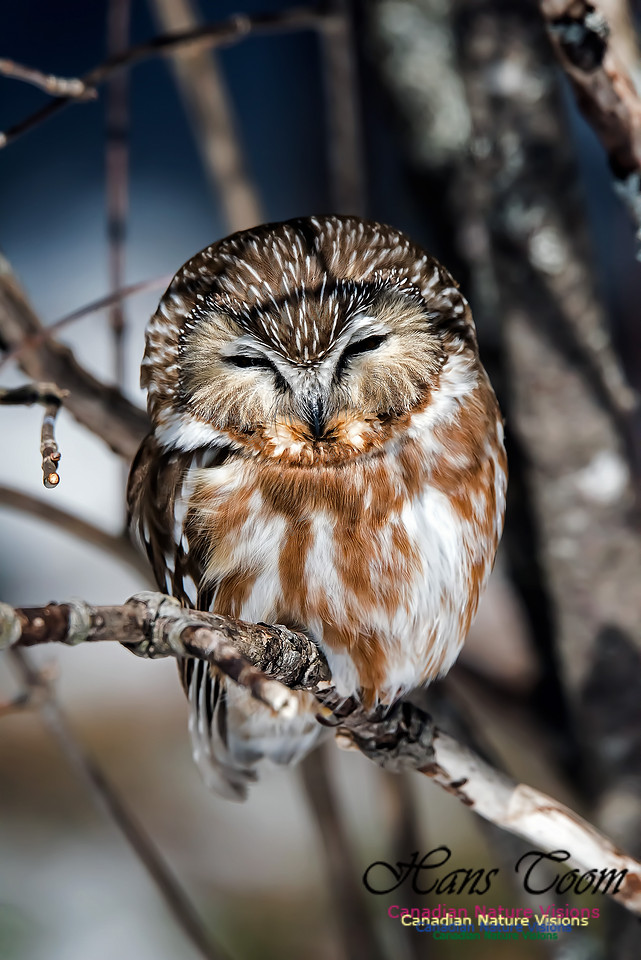
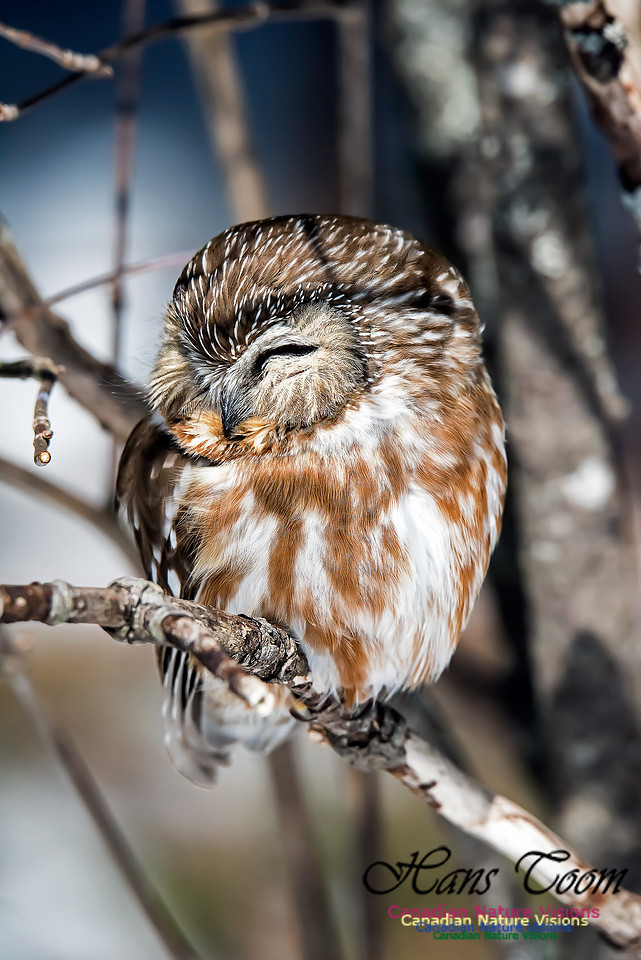
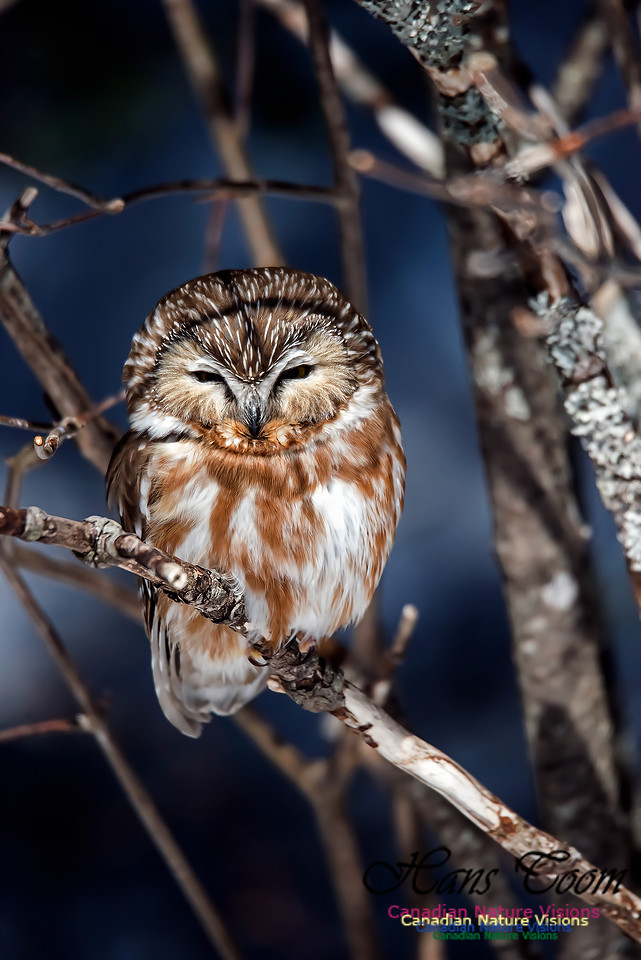
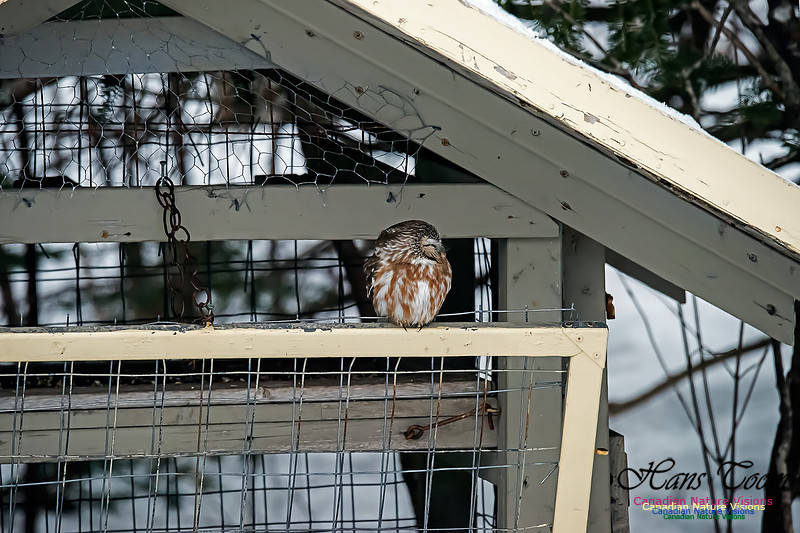
The Killer WinterThe winter of 2015 was the worst in our experience and the worst for most folks in Nova Scotia. White Juan, a major storm of a few years ago, dumped a metre of snow but snowblowers cut easily through it. The current winter comprising most of January, February and March was a killer, not so much for the snowfall but for the ice. Snow came in waves followed by rain followed by flash freezes. The result was a solid block of ice on our driveway and in the surrounding forest making it impossible for many birds to eat, both predator and forager. At our driveway's juncture with Ketch Harbour Road there was a solid block of triangular shaped ice. Some folks rented jack hammers to cut through this block of ice. Others used chain saws. Hundreds of thousands of birds died and many mammals suffered horrible distress including bobcats and deer. Thankfully, diligent bird lovers provided relief and saved the lives of hundreds of thousands of birds by operating feeding stations and keeping them available to birds during the worst weather conditions. One chap purchased $5000 worth of feed, bagged it, and gave it away free to anyone that would feed the birds. Incredible! This blog is a summary of our experience in Portuguese Cove. Northern Saw-whet Owl The winter was notable for the absence of accipiters in our area. The only raptors we saw were Northern Harriers and a single Northern Saw-whet Owl which I first spotted sitting on the edge of my back yard platform feeder's door. The owls both large and small suffered because feed species such as voles were impossible to find due to the inpenetrable ice protecting the roof of their tunnels. One Great Horned Owl was rescued with a face full of porcupine quills. Many small owls were found at death's door and delivered by folks all over Nova Scotia to rehabilition facilities. I approached my Northern Saw-whet Owl, wearing welding gloves, just in case I had to rescue it. I got to within a metre of the bird when it took to wing. It returned a short while later and sat in a tree near the feeding station. The problem with this owl is that it is extremely tame and even healthy birds can be closely approached and even picked up in hand so tameness which is usually an indication of a bird in distress is not a useful rule with this bird. I approached again and this time I could easily have picked it up in hand but it was lounging in the sun and appeared not to be in distress so I left it. There was a small pile of feathers by the feeder below where the owl was sitting so it is possible it ate a small bird. Nevertheless, l went to the pet store and returned with some frozen mice and I waved the mouse in front of the owl but it took no interest in the rodent. The owl eventually disappeared without the mouse although the mouse disappeared eventually as well although I cannot say who took it. I hope I did the right thing by not capturing the Northern Saw-whet Owl. There is no way to know but I will be haunted by my decision nonetheless.
Ring-necked Pheasant We have Ring-necked Pheasants all year round at our place in Portuguese Cove. They use the platform feeder by slotting their head between the protective page wire and munching away much to our delight. This winter was unusual since not only was the ground inaccessible but the platform feeder they normally foraged at also became buried in snow. So for the first time in our experience this very wary bird came up on our deck and deck railing to feed with the other much smaller birds which they never bullied. There were two male and six female Ring-necked Pheasants. 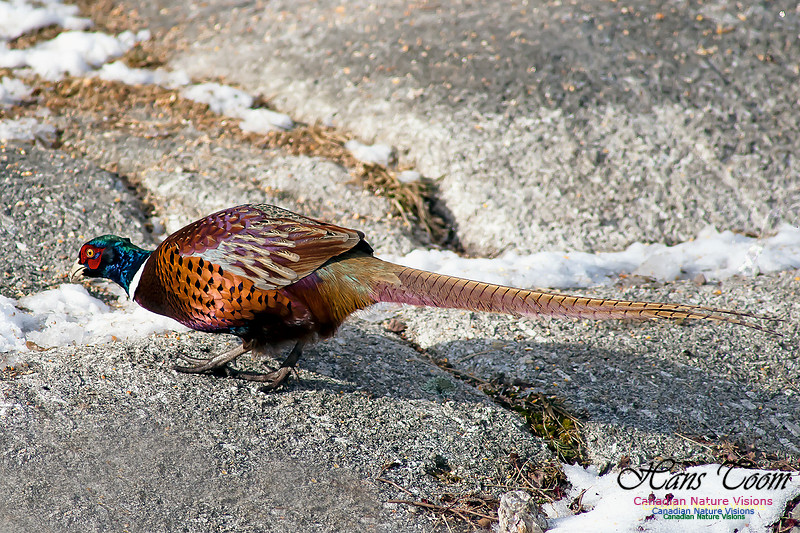 
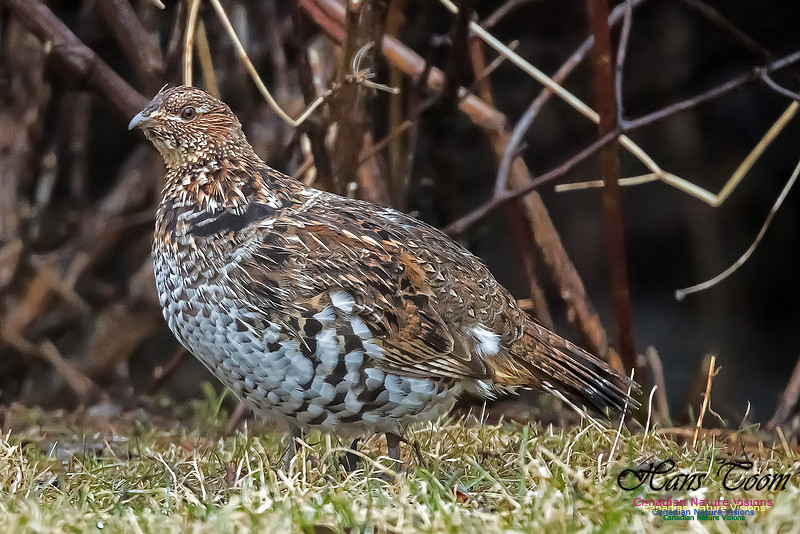
Ruffed Grouse The Ruffed Grouse is both a ground forager and a tree forager so its survival is a bit more assured than many other bird species yet it also took advantage of scattered seed spread about often on top of hard ice crusted snow. It was a chore staying ahead of the bird's needs during snow storms as the seeds kept getting buried by fresh snow, so I kept adding more and more seed. It got expensive! This photograph of the Ruffed Grouse was taken after the worst of the winter was over and ground was beginning to become exposed.
American Tree Sparrow The American Tree Sparrow is a regular over-wintering bird here in Portuguese Cove. We usually have between 10-20 of this species although they are hard to count accurately as one has to rush from window to window to spot them. As usual most are seen during stormy weather. As an exclusive ground forager it requires special attention. This meant I had to go out and clear off the deck in places to scatter seed, time and time again, during snow storms. This effort of course benefited all the other species as well.
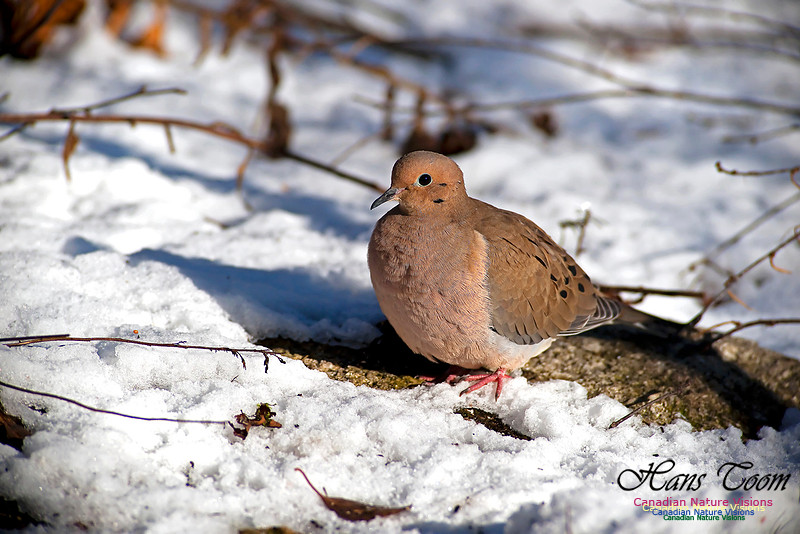
Mourning Dove The Mourning Dove as a ground forager is a particularly vulnerable species and our over-wintering population of about 50 individual birds would probably have all died were it not for my efforts. As with the American Tree Sparrow constant grooming of the deck and railing was required and a fresh supply of seed scattered throughout the storms.
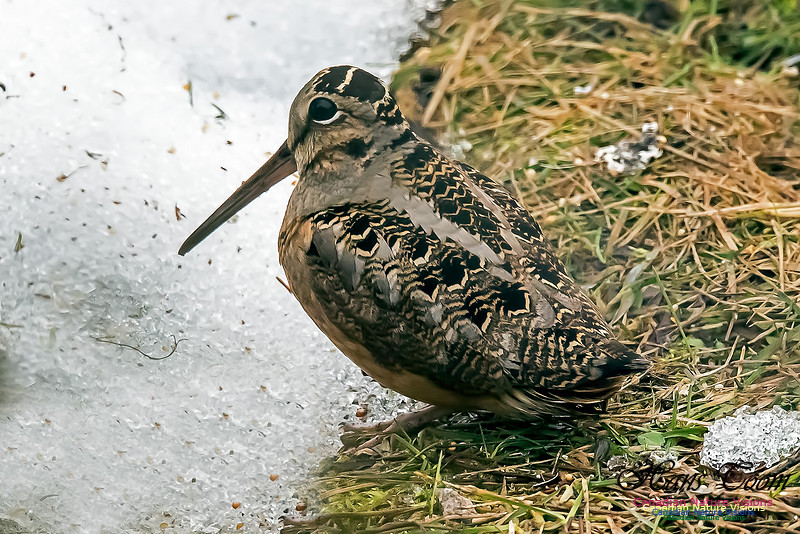
We have three principle feeding areas for birds; the low level platform feeder at the front of the house shrouded by multiflora brambles, the high platform feeder in the back yard and the feeders around the house and of course the back deck. The front yard feeder was useless for most of the three winter months due to snow cover. The back yard feeder was always available for most birds but I had to don snow shoes to replenish it during the latter part of the winter. The back yard deck and railings was the life saver for many ground feeding birds when the front feeder was buried in snow. The birds that used it were; White-throated Sparrow(~30), Song Sparrow(~20), Dark-eyed Junco(~30), American Tree Sparrow(~20), Mourning Dove(~50), Ring-necked Pheasant(~8) and all of the upper level feeder birds on occasion. Upper Level Feeding Species The least vulnerable of all the species are those that come to feeders above the snow pack; Black-capped Chickadee, Boreal Chickadee, American Goldfinch, Pine Siskin, Downy Woodpecker, Hairy Woodpecker, Blue Jays and Red-breasted Nuthatch. These birds frequent the sunflower seed feeder, the niger feeder, the suet feeders and the the peanut feeder. Keeping these feeders clear during snow storms is essential but not as tedious as working the back yard deck. White-tailed Deer Our resident population of deer varied between about 8-12 animals, mostly females and young. They became so desperate in mid winter that they actually came up onto our back yard deck to feed on the seeds. Normally they work the front yard platform feeder tonguing the seeds through the page wire, but this feeder was eventually buried in snow. The Early Migrant Species The winter snow cover lasted into the arrival period for our early migrants affecting; Fox Sparrow, American Robin and American Woodcock. All of these species depend on unfrozen and exposed ground upon their return especially since many are exhausted from their flight and their fat reserves are depleted. American Woodcock The American Woodcock requires several inches of unfrozen and exposed ground to forage for buried goodies. Most woodcocks were denied this and simply perished. The luckier ones frequented human habitation where unfrozen and open ground was easier to find such as the edge of buildings and around septic tanks. We only had one American Woodcock and it found favourable foraging around the edge of our septic tank and it appeared to be successfully extracting food so it may have survived.
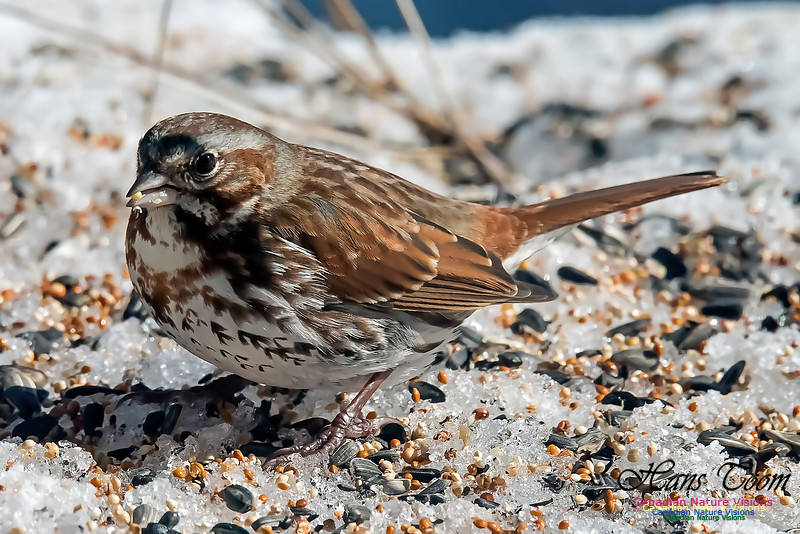
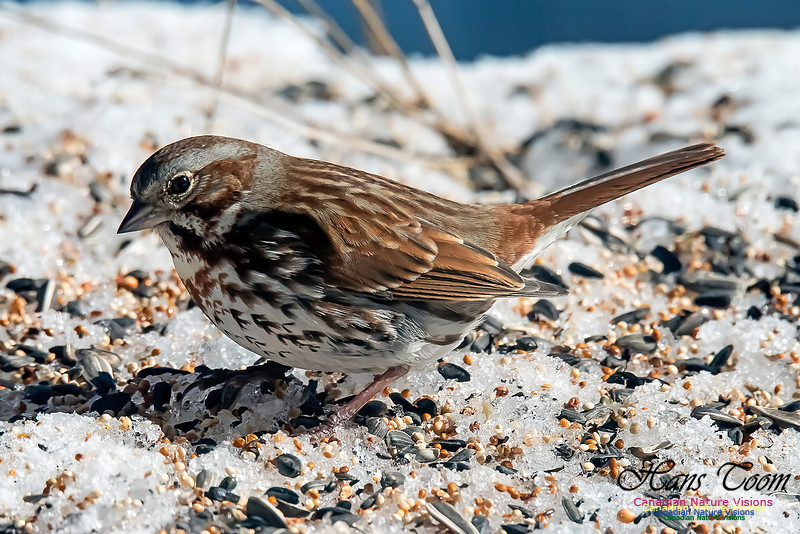
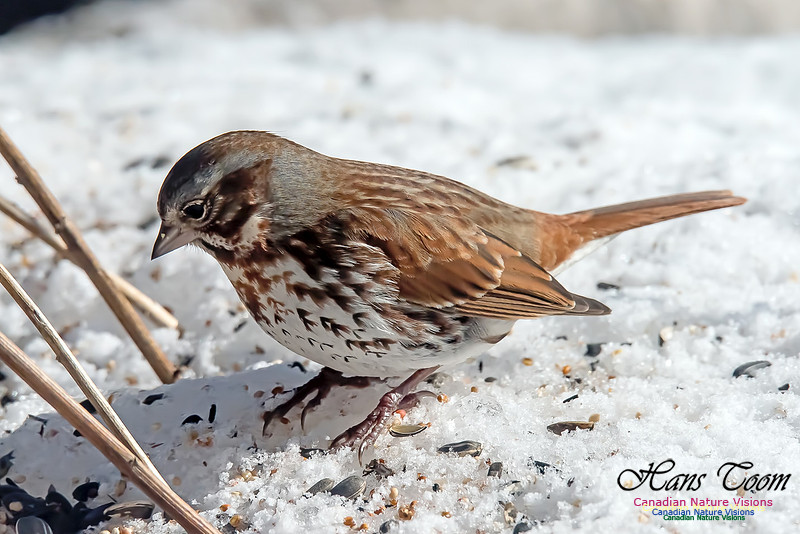
American Robin The American Robin has similar requirements to the American Woodcock although it can forage on berries and other fruit if they can find it. We usually have two families of American Robins at our place, one in the front yard and one in the back yard. But there was no unfrozen and open ground so the robins were desperate. Folks all along my street were visiting Canadian Tire stores and buying up supplies of fishing worms much to the delight of trout I'm sure. On my second visit to Canadian Tire they had actually run out of stock. Bird feeding folks had cleaned them out I was told. My faith in the goodness of human nature was bolstered. Unfortunately, the American Woodcock was very hard to feed worms but the American Robin dug right in and literally became like a pet awaiting its feed of blueberries and worms twice a day. Fox Sparrow The Fox Sparrow arrived here at our place in ones and twos and then between 10-20 individuals daily, all feasting on the scattered seed on the snow, back yard platform feeder and our backyard deck. We've never had so many Fox Sparrows and I'm confident they all survived. All the photos following are taken through our windows so lack definition.
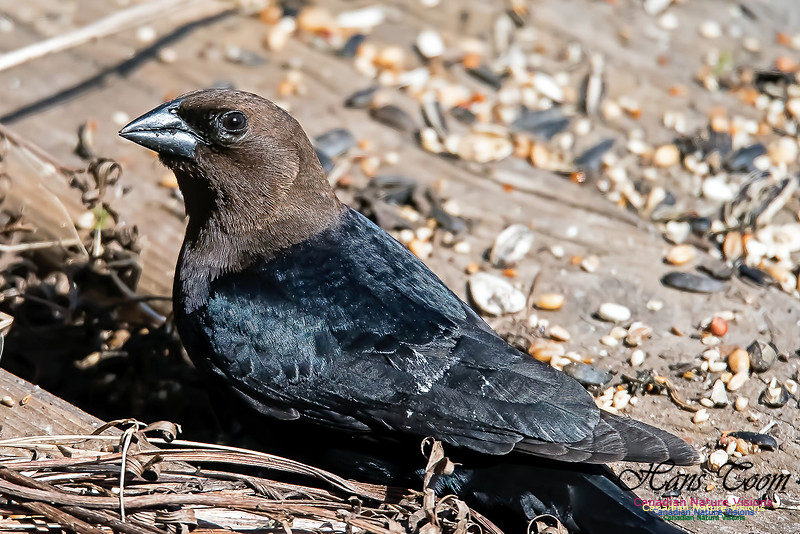
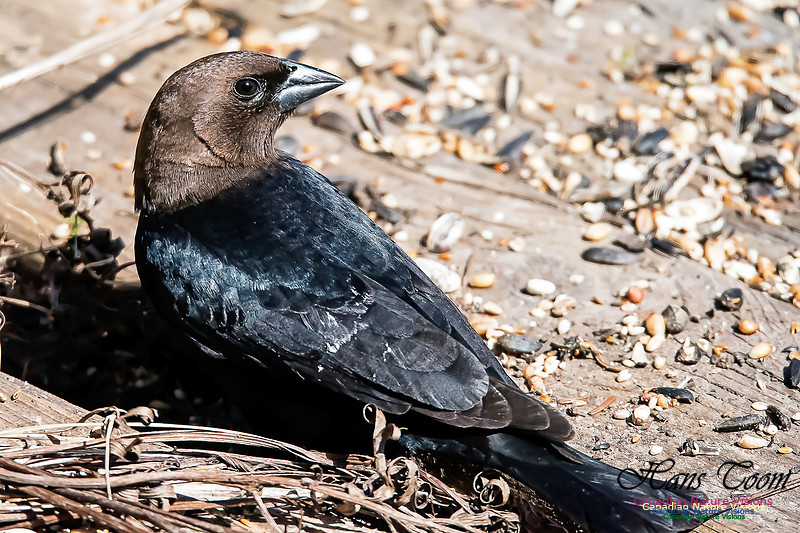
Later Arriving Migrants Later arriving migrants like the Brown-headed Cowbird, Common Grackle and Red-winged Blackbird missed the worst of the snow cover so were enjoying open ground upon their arrival.
It was a terrible killing winter and were it not for thousands of bird and nature lovers stocking feeders and going to extraordinary lengths to help the over-wintering and migrant birds it would have been much worse. Thank you all!!
Keywords:
American Woodcock,
Birds of Nova Scotia,
Canada,
Fox Sparrow,
Northern Saw-whet Owl,
Nova Scotia,
The Killer Winter of 2015 in Nova Scotia

Comments
No comments posted.
Loading...
|