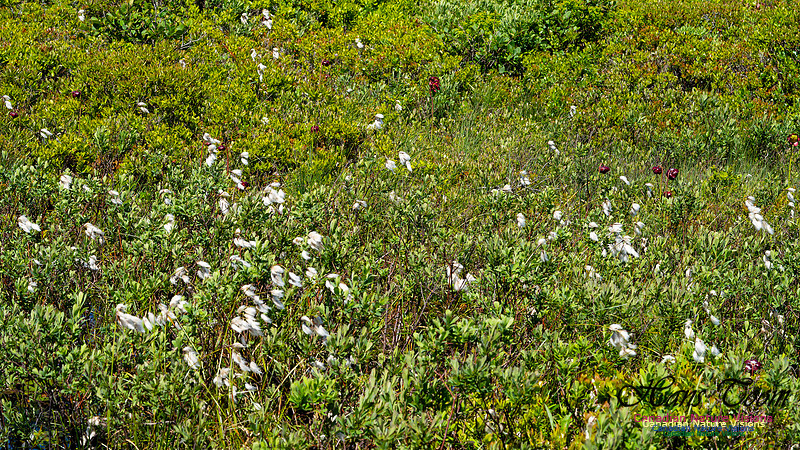
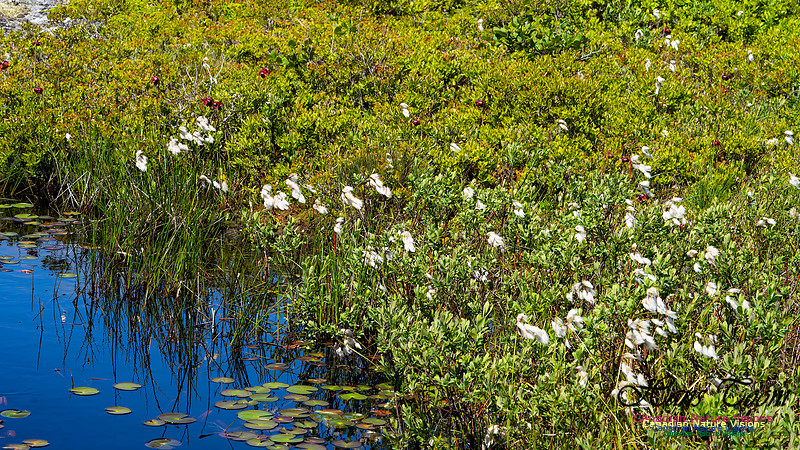
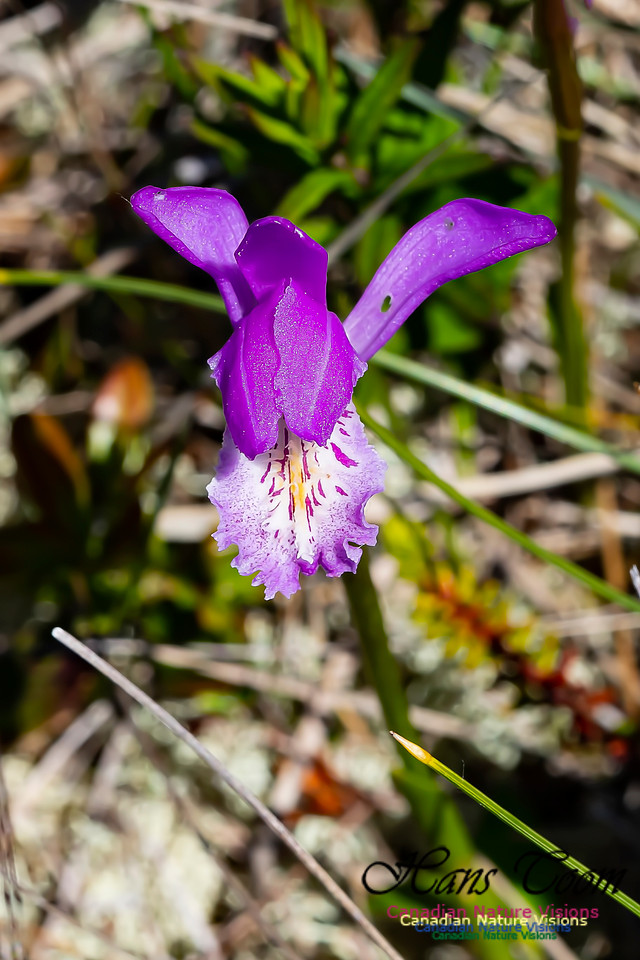
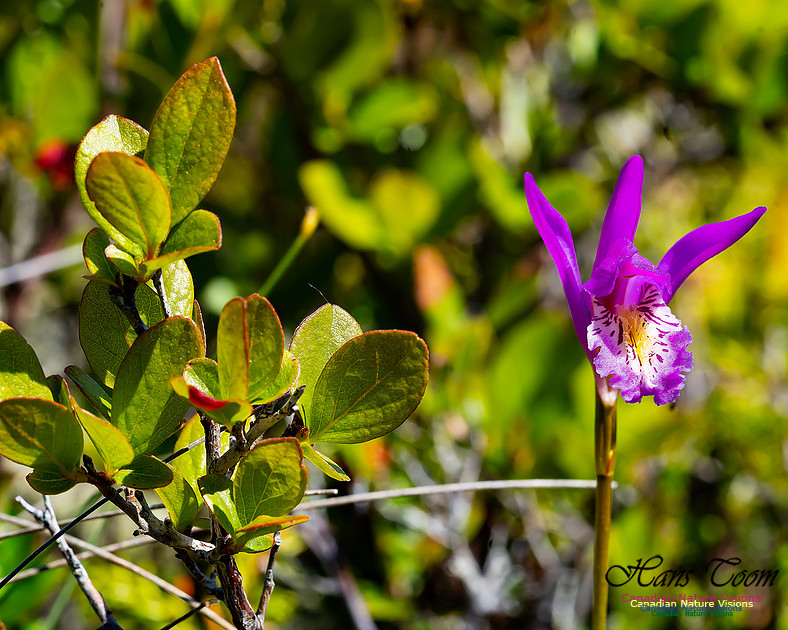
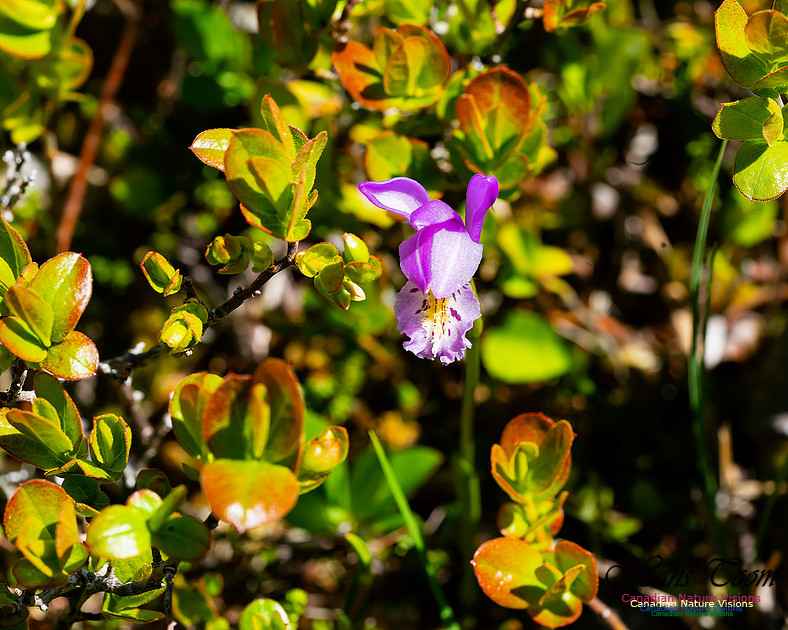
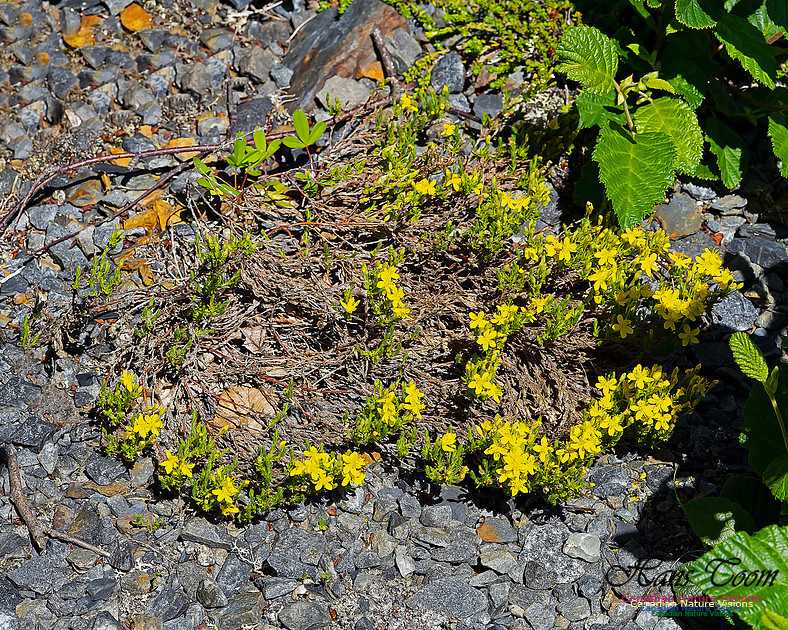
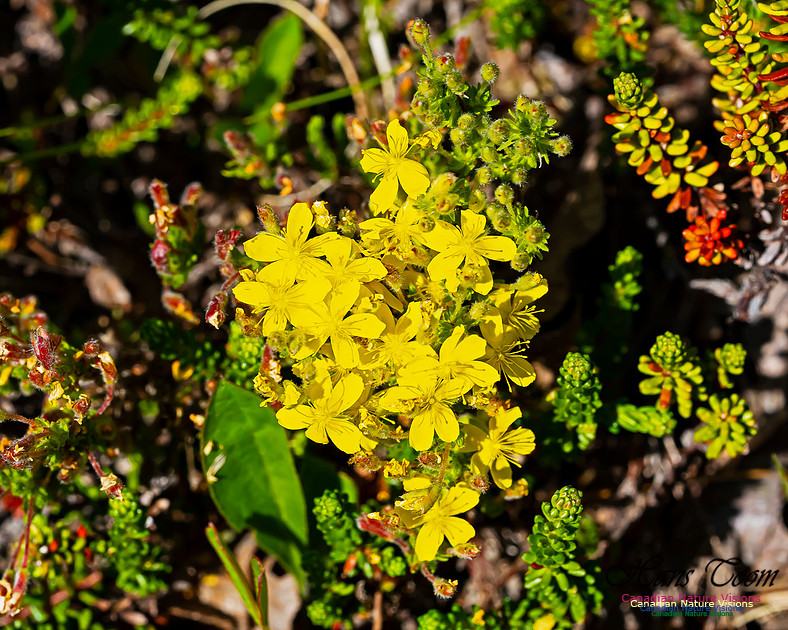
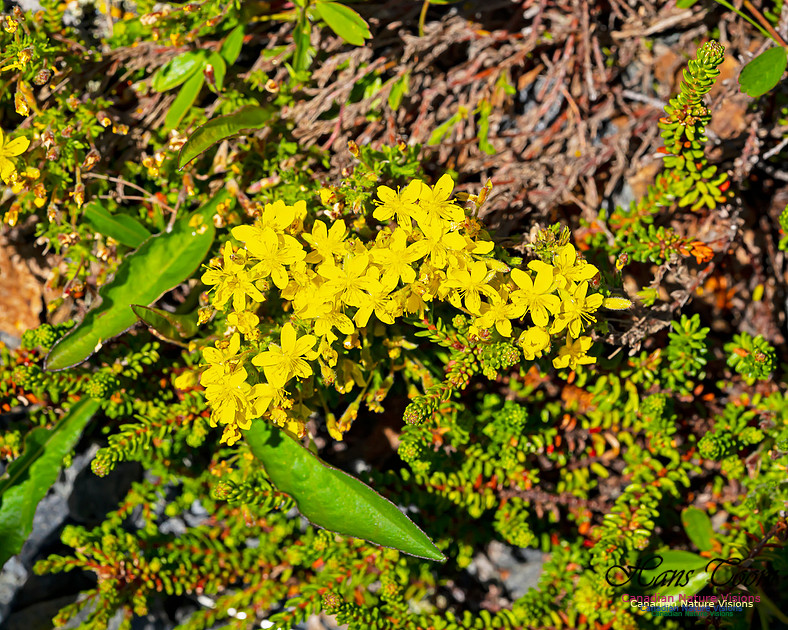
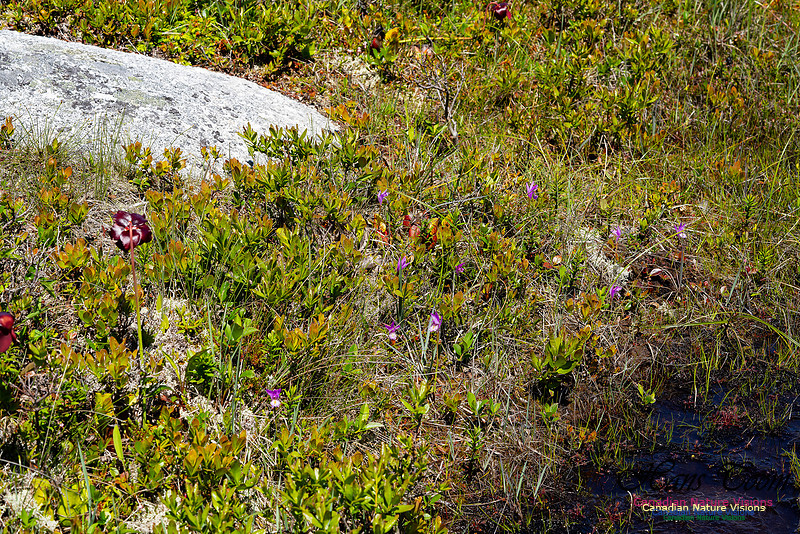
Laura and I hoofed it up to the coastal barren between Shoal Point and Chebucto Head primarily for the bog orchids and the Golden Heather.
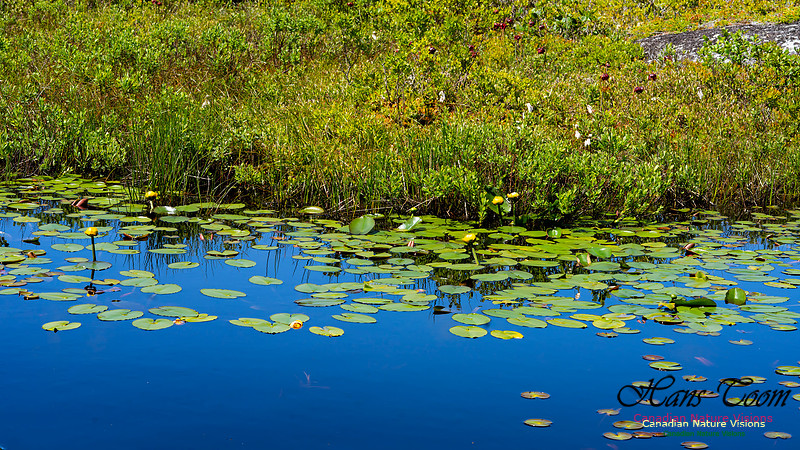
Of interest was a colony of Sundew at the pond edge, a colony I did not know was there until I processed the photographs. Another trip is warranted since the Golden Heather is not yet in full bloom.
Laura and I enjoyed a stroll along the Halifax waterfront in fair weather, ideal walkabout conditions.
We haven't been down here for about five years with vacillation and the COVID restrictions. The place has changed a lot and if they keep this up it will be a world class walkabout. Cows ice cream is good too.
I photographed this Ruffed Grouse on my way to the West Brook Pond dock. I did not notice the annoying stick when the photo was taken. Sticks like this often compromises focus and framing. The first photo is the best as the grouse looked away from the stick.
I can remove the stick from the photo but it is a tedious process if done properly.
These photos of Newfoundland will hopefully give the viewer the flavour of the place. The rugged beauty is complemented by the equally rugged weather. Always be well prepared for adverse conditions when visiting even in the summer.
This is a story of heroism of humans and a very famous Newfoundland dog. You couldn't make this stuff up!
.................... SS Ethie was a steamship that was tasked with bringing freight, mail, and passengers up and down the Great Northern Peninsula and the Labrador Strait. On December 11th, 1919, the boat was surprised by a gale while making the journey from Daniel’s Harbour to Cow Head. The ship eventually ran aground at Martin’s Point, South of Cow Head. What makes this wreck different than most is that nobody perished. Not a soul aboard her. Largely due to citizens of Martin’s Point, and the crew aboard the SS Ethie, led by the heroic Captain English. From this wreck came one of many longstanding folktales about the Newfoundland dog. Rumour has it that a dog took a mailbag to shore with a very special delivery inside — an infant. This folktale, while intriguing, was later proved false. The baby was saved by the quick thinking of the ship’s young Purser, Walter Young. Each year, the Gros Morne Theatre Festival in Cow Head offers a retelling of this tale in their dinner theatre entitled The Wreck of The SS Ethie.
The aptly named Bay-breasted Warbler is also a Canadian bird much like the Nashville Warbler with even more born in Canada, an astounding 85%. This one was photographed deep in the boreal forest north of its charted breeding range in Gros Morne National Park just off the Berry Hill Pond trail deep in the boreal forest. This Bay-breasted Warbler was probably a recent arrival since it was only interested in finding bugs and grubs in the understory of the boreal forest.
The Berry Hill Pond trail in Gros Morne National Park is a terrific visit due to its mix of; lake, marsh, bog, grassland and boreal forest.
With 80% of our Nashville Warblers born in Canada the stupidity of the name is obvious. The folks that name these birds should look for other employment?
The Nashville Warbler is a favourite of mine due to its relative or apparent shyness since it likes to spend its time high up in trees singing away usually behind a leaf, so getting good photographs is always a challenge.
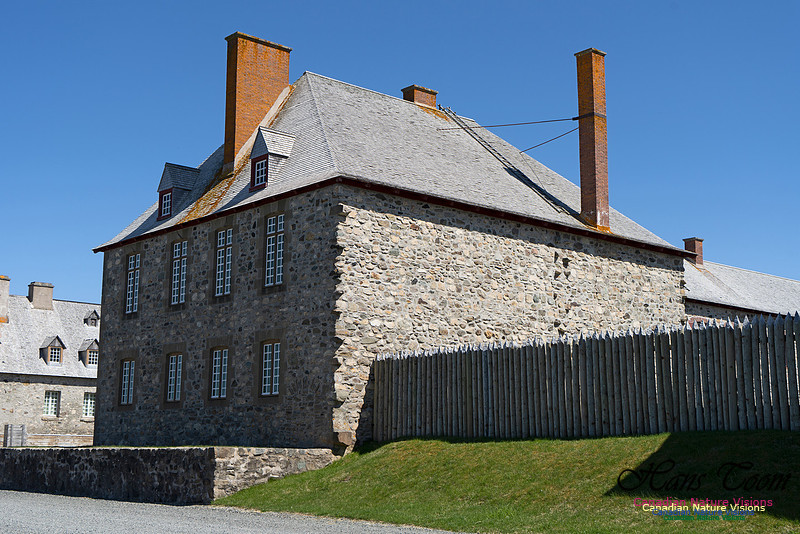
I visited the Fortress of Louisbourg on my way to catch the ferry to Newfoundland. Unfortunately the buildings were closed so I missed out on photographing the opulent interior of the governor's quarters.
This fortress was poorly located and captured by the the British twice. It only represents one quarter of its original size despite being the largest restoration in the Americas.
The original settlement was made in 1713, and initially called Havre à l'Anglois. Subsequently, the fishing port grew to become a major commercial port and a strongly defended fortress. The fortifications eventually surrounded the town. The walls were constructed mainly between 1720 and 1740. By the mid-1740s Louisbourg, named for Louis XIV of France, was one of the most extensive (and expensive) European fortifications constructed in North America.[2] It was supported by two smaller garrisons on Île Royale located at present-day St. Peter's and Englishtown. The Fortress of Louisbourg suffered key weaknesses, since it was erected on low-lying ground commanded by nearby hills and its design was directed mainly toward sea-based assaults, leaving the land-facing defences relatively weak. A third weakness was that it was a long way from France or Quebec, from which reinforcements might be sent. It was captured by British colonists in 1745, and was a major bargaining chip in the negotiations leading to the 1748 treaty ending the War of the Austrian Succession. It was returned to the French in exchange for border towns in what is today Belgium. It was captured again in 1758 by British forces in the Seven Years' War, after which its fortifications were systematically destroyed by British engineers.[2] The British continued to have a garrison at Louisbourg until 1768.
The fortress and town were partially reconstructed in the 1960s and 1970s, using some of the original stonework, which provided jobs for unemployed coal miners. The head stonemason for this project was Ron Bovaird. The site is operated by Parks Canada as a living history museum. The site stands as the largest reconstruction project in North America.[3]
Fortress of Louisbourg
This is the high ground north of the fortress where gun emplacements could rain shells on the fort.
Fortress of Louisbourg 100Fortress of Louisbourg 101Fortress of Louisbourg 102Fortress of Louisbourg 103Fortress of Louisbourg 104Fortress of Louisbourg 105Fortress of Louisbourg 106Fortress of Louisbourg 107Fortress of Louisbourg 108Fortress of Louisbourg 109Fortress of Louisbourg 110Fortress of Louisbourg 111Fortress of Louisbourg 112Fortress of Louisbourg 113Fortress of Louisbourg 114Fortress of Louisbourg 115Fortress of Louisbourg 116Fortress of Louisbourg 117Fortress of Louisbourg 118Fortress of Louisbourg 119Fortress of Louisbourg 120Fortress of Louisbourg 121Fortress of Louisbourg 122Fortress of Louisbourg 123Fortress of Louisbourg 124Fortress of Louisbourg 125Fortress of Louisbourg 126Fortress of Louisbourg 127Fortress of Louisbourg 128Fortress of Louisbourg 129Fortress of Louisbourg 130Fortress of Louisbourg 131Fortress of Louisbourg 132Fortress of Louisbourg 133Fortress of Louisbourg 134Fortress of Louisbourg 135Fortress of Louisbourg 136Fortress of Louisbourg 137Fortress of Louisbourg 138Fortress of Louisbourg 139Fortress of Louisbourg 140Fortress of Louisbourg 141Fortress of Louisbourg 142Fortress of Louisbourg 143
Laura and I visited the Yellow Lady's Slipper Orchid and although it was late in the season a few were still in good shape.
Evidence of the wild flora terrorists was also here with their little buckets and little shovels digging up the rare and endangered Ram's Head Orchid or Yellow Lady's Slipper Orchid. Our useless Department of Natural Resources dose nothing to protect against the pilferage of these rare plants although they are specialists at shooting bear cubs in front of children. Yes, it really happened despite the fact that there was a wildlife rehabilitation organization on hand prepared to protect and raise these bear cubs.
The Department of Natural Resources should be stripped of their responsibility for our natural world including the provincial parks and have same turned over to the Department of the Environment for management.
Laura and I enjoyed an evening on the rocks near Chebucto Head awaiting the departure of the Seven Seas Navigator, a more elegant ship then the mobile hotels that visit Halifax in the summer and fall.
Seven Seas Navigator is a luxury cruise ship operated by Regent Seven Seas Cruises. She entered service for Radisson Seven Seas Cruises in 1999. Ninety percent of her cabins have their own private verandas.[2] She has no sister ships. The hull was constructed by former USSR (Russia) as a satellite tracking ship.[3] The hull was purchased by RSSC and the superstructure was finished by Mariotti Yards, Italy.
In the spring of 2006, Radisson Seven Seas Cruises re-branded as Regent Seven Cruises. The Seven Seas Navigator continues to sail under the brand Regent Seven Seas Cruises.
The Navigator underwent a $40 million refurbishment in March/April 2016 that upgraded the common areas and suites.
USN Captain (retired) Morton Jablin has lived on Seven Seas Navigator since 2005.[4][5]
Seven Seas Navigator
Seven Seas Naviagator 100Seven Seas Naviagator 101Seven Seas Naviagator 102Seven Seas Naviagator 103Seven Seas Naviagator 104Seven Seas Naviagator 105Seven Seas Naviagator 106
Cape St. Mary's is a bird lovers meca; nesting Northern Gannet, Black-legged Kittiwakes, Common Murre, Thick-billed Murre, Black Guillemot and Razorbill.
The photographs of the cape are about one kilometre distant so the birds are coloured specs. You try and sort them out.
The Visitor Centre
Cape St. Mary's 100
The Light
Cape St. Mary's 101
Common Murre, Possibly some Razorbills and Thick-billed Murres
Cape St. Mary's 102
One Kilometre Distant and Tens of Thousands of Northern Gannets
I left Gros Morne National Park at 7AM and drove to Cape St. Mary's Ecological reserve arriving at 5PM, an exhausting leg but with plenty of time for photos I had hoped, but not so much. Just as I arrived after driving in bright sunshine most of the day a monstrous black cloud covered the sun. Everybody was departing the reserve when I arrived so I ended up being the only human at the prime location.
I set up my camera with shutter priority, 1/8000 second, full open aperture and floating ISO, the best arrangement I thought for the conditions. I was hand holding a 1200mm lens!
The Newfoundlanders call the Northern Gannet the Great Northern Gannet which works for me. It is such a magnificent bird.
The Oasis of the Seas is reported as the largest cruise ship to visit Halifax. I stationed myself halfway between Shoal Point and Chebucto Head on my favourite rock. The departing ships always have the benefit of the late day or setting sun. This produces the most dramatic images of the vessels.
Oasis of the Seas is a cruise ship operated by Royal Caribbean International. She is the first of her class, whose ships are the largest passenger ships in the world. Her hull was laid down in November 2007 and she was completed and delivered to Royal Caribbean in October 2009. At the time of construction, Oasis of the Seas set a new capacity record of carrying over 6,000 passengers.[9] The first of her class, she was joined by sister ships Allure of the Seas in December 2010, Harmony of the Seas in May 2016, and Symphony of the Seas in April 2018. Oasis of the Seas conducts cruises of the Caribbean from her home port of PortMiami in Miami, Florida.
Oasis of the Seas surpassed the Freedom-class cruise ships (also owned by Royal Caribbean) to become the largest cruise ship in the world at that time.[10] She was herself surpassed by her sister ship Allure of the Seas, which is 50 millimetres (2.0 in) longer, although this may have been caused by ambient temperature differences at the times the measurements were made.[11] In May 2016, her second sister ship Harmony of the Seas became the new record holder with a length of 362.12 metres (1,188.1 ft),[12] and in March 2018, Symphony of the Seas, the fourth member of the Oasis class, became the new world's largest cruise ship with a length of 361.011 m (1,184.42 ft) and a tonnage of 228,081 GT.
The gross tonnage (GT) of Oasis of the Seas at launch was 225,282, but it was expanded to 226,838 GT when additional cabins were added to Deck 14 in 2019.[1][13] Her displacement—the actual mass of the vessel—is estimated at 100,000 metric tons (110,000 short tons), slightly less than that of an American Nimitz-classaircraft carrier.[14]
To keep the ship stable without increasing the draft excessively, the designers created a wide hull; 9.3 metres (31 ft) of the ship sits beneath the water, a small percentage of the ship's overall height. Wide, shallow ships such as this tend to be "snappy", meaning that they can snap back upright after a wave has passed, which can be uncomfortable. This effect, however, is mitigated by the vessel's large size.[15] The cruise ship's officers were pleased with the ship's stability and performance during the transatlantic crossing, when the vessel, in order to allow finishing work to go on, slowed and changed course in the face of winds "almost up to hurricane force" and seas in excess of 12 metres (39 ft).[16][17]
One of the ship's lifeboats
The ship's power comes from six medium-speed, marine-diesel generating sets: three 16-cylinderWärtsilä 16V46D common rail engines producing 18,860 kilowatts (25,290 hp) each and three similar 12-cylinder Wärtsilä 12V46D engines producing 13,860 kilowatts (18,590 hp) each. The fuel consumption of the main engines at full power is 1,377 US gallons (5,210 l; 1,147 imp gal) of fuel oil per engine per hour for the 16-cylinder engines and 1,033 US gallons (3,910 l; 860 imp gal) per engine per hour for the 12-cylinder engines.[7][18] The total output of these prime movers, some 97,020 kilowatts (130,110 hp), is converted to electricity, used in hotel power for operation of the lights, elevators, electronics, galleys, water treatment plant, and all of the other systems used on the operation of the vessel, as well as propulsion. Propulsion is provided by three 20,000-kilowatt (26,800 hp) Azipods, ABB's brand of electric azimuth thrusters. These pods, suspended under the stern, contain electric motors driving 20-foot (6 m) propellers.[7] Because they are rotatable, no rudders are needed to steer the ship. Docking is assisted by four 5,500-kilowatt (7,380 hp) transverse bow thrusters.[1][18]
Additional power comes from solar panels fitted by BAM Energy Group, which provide energy for lighting in the promenade and central park areas. The installation cost US$750,000 and covers 1,950 square metres (21,000 sq ft) on deck 19.[19][20]
The ship carries 18 lifeboats that hold 370 people each, for a total of 6,660 people. Inflatable life rafts provide for additional passengers and crew.[21]
Oasis of the Seas
Oasis of the Sea 100Oasis of the Sea 101Oasis of the Sea 102Oasis of the Sea 103Oasis of the Sea 104Oasis of the Sea 105Oasis of the Sea 106Oasis of the Sea 107Oasis of the Sea 108Oasis of the Sea 109
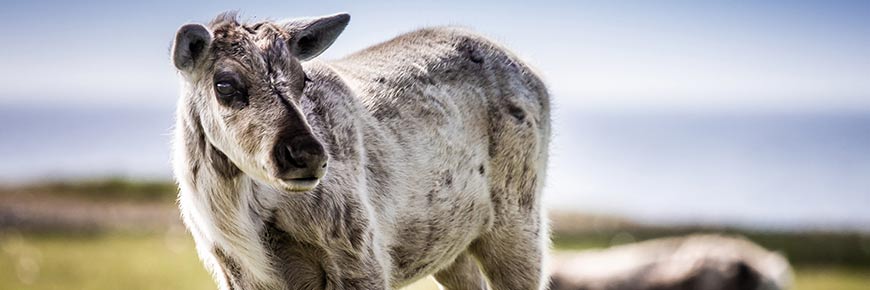
I saw and photographed the Woodland Caribou and Moose near the West Brook Pond parking lot. I saw lots of moose but caribou although less common are easier to photograph once found.
Gros Morne National Park
Wildlife
Due to its isolation from the North American mainland, the island of Newfoundland is home to only fourteen native mammals, no native amphibians or reptiles and many rare plants. Newfoundland populations of many of these represent endemic Newfoundland subspecies, which have diverged from their mainland cousins over thousands of years. However many non-native species have also been introduced to Newfoundland and may be affecting the island’s native species. The National Park provided a protected places for these species, and is one of the best places in Canada to see species such as caribou and ptarmigan. Some of our iconic species include:
A moose
Moose – Moose were introduced to Newfoundland over a century ago, and with no predators their numbers grew rapidly in the park to a peak of 7800 in 1995. Excessive moose munching was keeping forests from re-growing, as a moose can eat 18 kg of trees and shrubs per day! Today the park manages moose at a sustainable level and forests are starting to recover, with benefits to many other species. Visit a ‘moose exclosure’ on the Bakers Brook Trail, a fenced area that shows the impacts of moose on forests by preventing them from eating the vegetation inside.
A young caribou
Woodland Caribou – Uniquely, both male and female caribou grow antlers. Caribou range across lowland bogs and forests to highland barrens seeking food, mates, and a safe place to give birth. In winter, they paw through half a metre of snow to reach lichens that they can smell underneath! Gros Morne Mountain is closed from May to the last Friday in June to protect newborn caribou and ptarmigan. Where to see: Caribou are often seen on large coastal bogs North of Rocky Harbour.
It is surrounded by steep rock walls 600 m (2,000 ft) high,[2] having been carved from the surrounding plateau by glaciers. After the glaciers melted, the land rebounded and the fjord was cut off from the sea. Salty water was eventually flushed from the fjord leaving it fresh. The catchment area is composed of igneous rock with relatively thin soil, so the waters feeding Western Brook Pond are low in nutrients and the lake is classified as ultraoligotrophic.[2] It is fed by Stag Brook at the extreme eastern end of the lake and by numerous waterfalls cascading from the plateau above. One of these, Pissing Mare Falls at 350 m (1,150 ft), is one of the highest in eastern North America.
The lake is accessible by a moderate-easy 3 km (1.9 mi) hiking trail over coastal bogs and low limestone ridges.[3] Two tour boats, one with a capacity of 70 passengers and the other 90 passengers, cruise the lake from June to mid-October.[4] The lake waters are pristine, having had very little impact from human activities. The tour boat operators had to undergo special certification to ensure that their operations would have minimal impact on the environment.[5]
In the early part of the 20th century, a part of the surrounding cliff broke off and fell into the lake, causing a 30 m (98 ft) tsunami.[6]
It's an easy three kilometre walk to the dock for the two hour tour of Western Brook Pond, or five kilometres if you take the circuitous route through the forest. I did the latter and it was quite muddy in places although I did get some fine photos of a Ruffed Grouse.
It was blustery and cool on the boat until we got into the shadow of the surrounding mountain range. The pond is deep, over three hundred feet, even at the edge of the shore and very cold so forget about a dip to cool off.
The bird life on the walk in is an interesting mix of Lincoln's Sparrow, Wilson's Warbler and Northern Waterthrush.





.jpg)