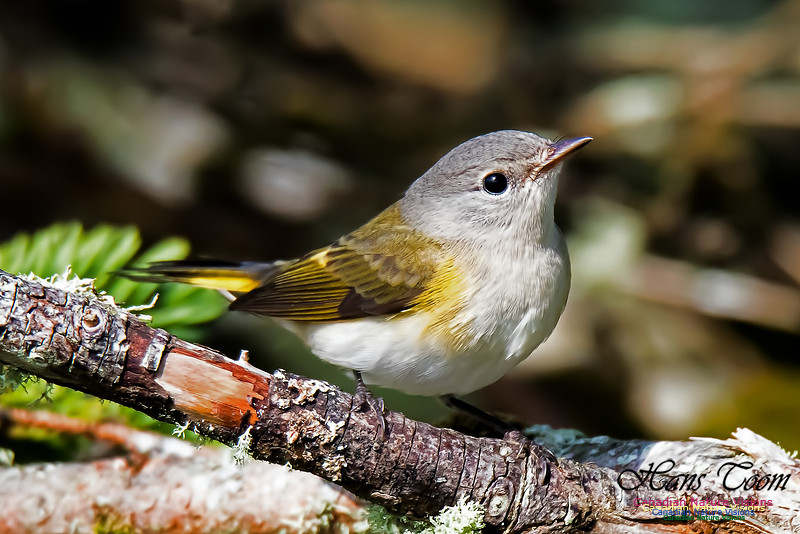
Cape Sable JournalI joined the stampede to Cape Sable on August 15, Cape Sable Day, the annual fundraising gala for the Cape Sable Light. A 6AM departure from Portuguese Cove allowed me to board one of the first boats to the cape. The tide was high so most of the shore birds were roosting. I had no luck finding my target species, the Buff-breasted Sandpiper. This place has changed. They have built a dock at the end of the fish plant's breakwater and also a relocatable floating dock at the cape. One no longer needs rubber boots to board the boats although as in my case trudging through the mud flats resulted in wet feet anyway. Groomed trails, that is mowed, now crisscross the cape although the constant running back and forth of an all-terrain vehicle was no asset to shore bird photography. I followed the groomed trail, much like a cross country ski trail, to "The Forest", a small grove of trees and flowers protected from the sheep by a white picket fence. There were a number of Savannah Sparrows at "The Forest" but only one warbler, an American Redstart. American Redstart
The Forest did allow for some interesting photos of the Cape Sable Light, from an unsual vantage. The Forest and the Cape Sable Light
Cape Sable Light
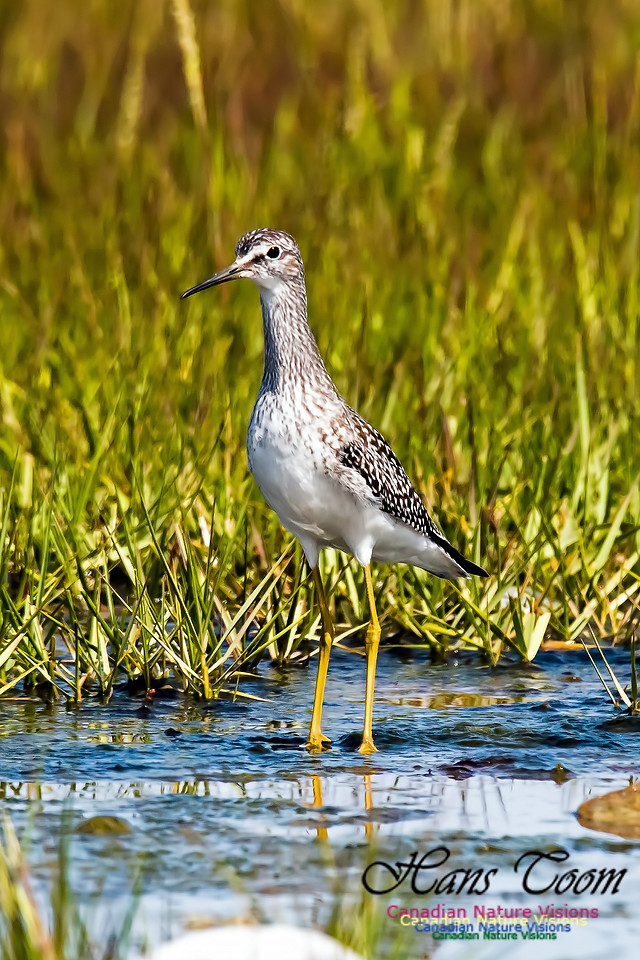
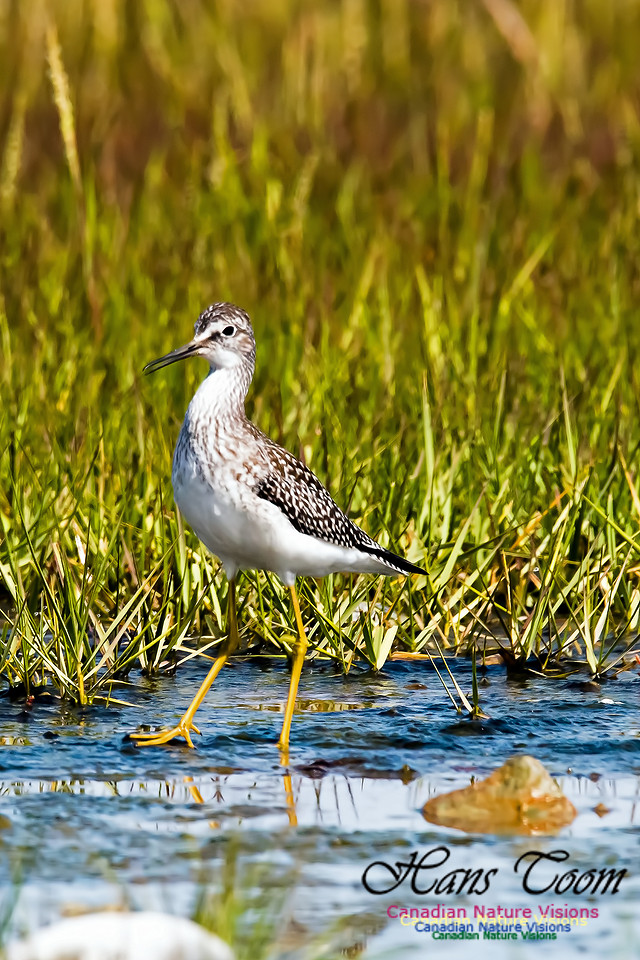
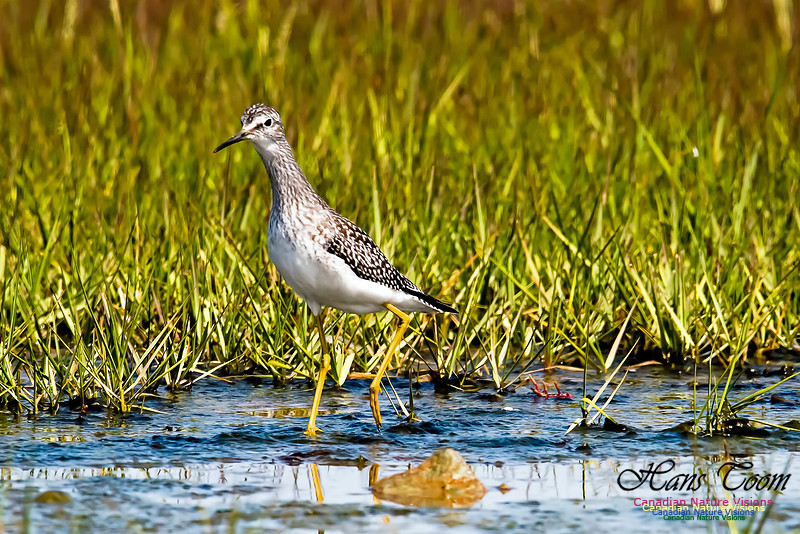
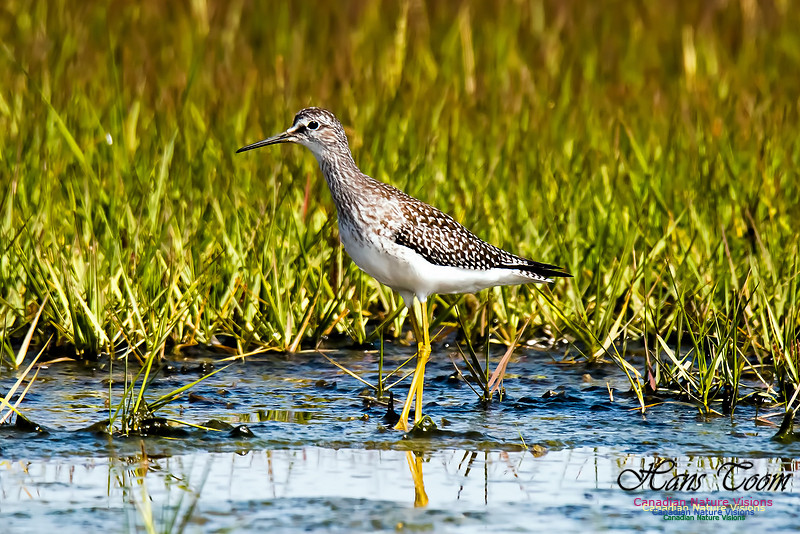
Lesser Yellowlegs
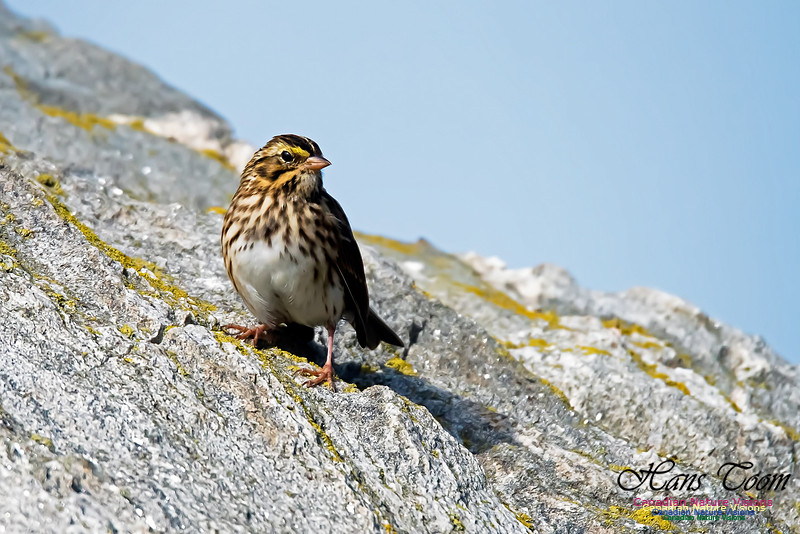
Savannah Sparrow at the Big Rock by The Forest
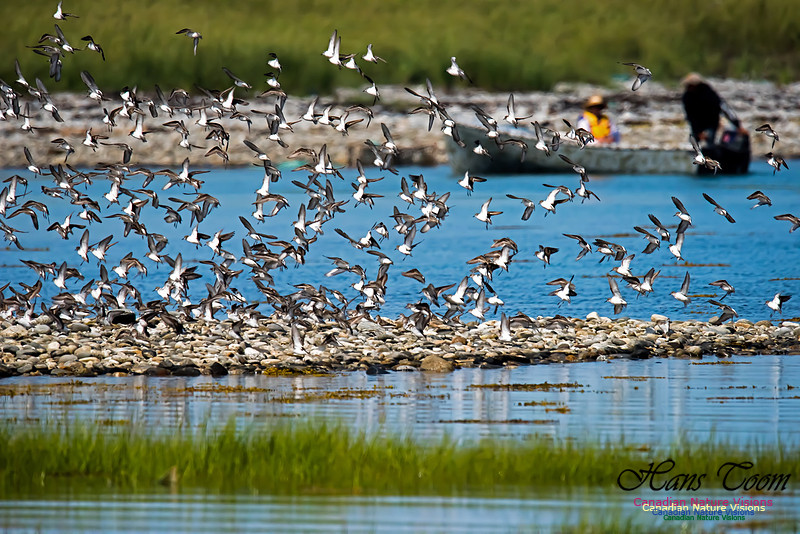
Roosting Shore Birds Roused by Local Activity
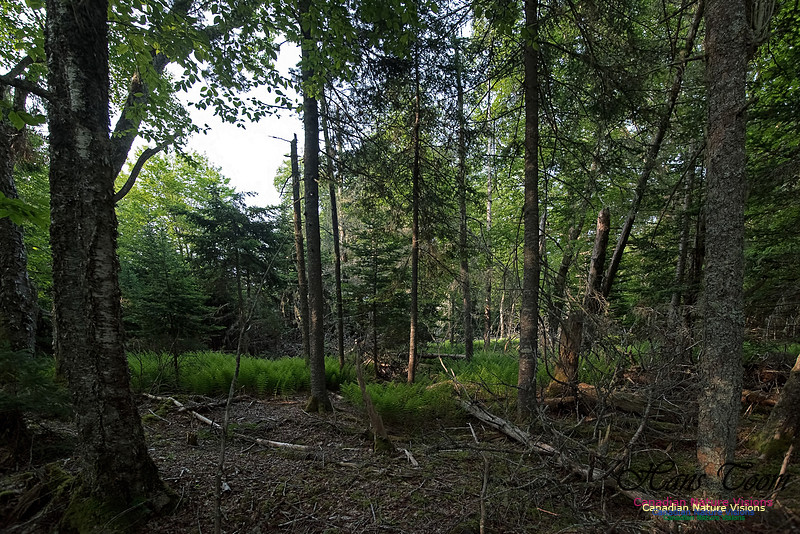
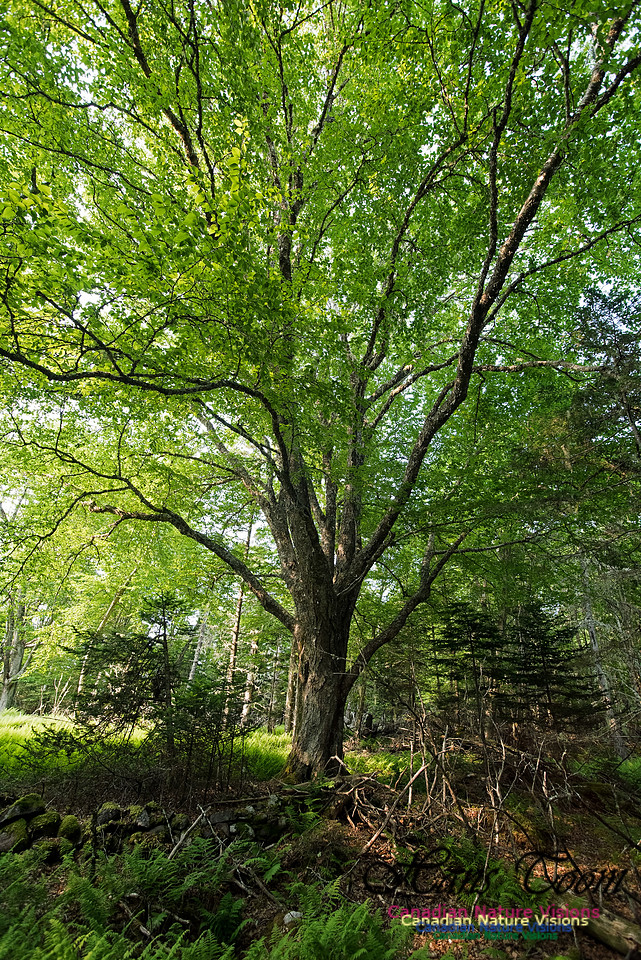
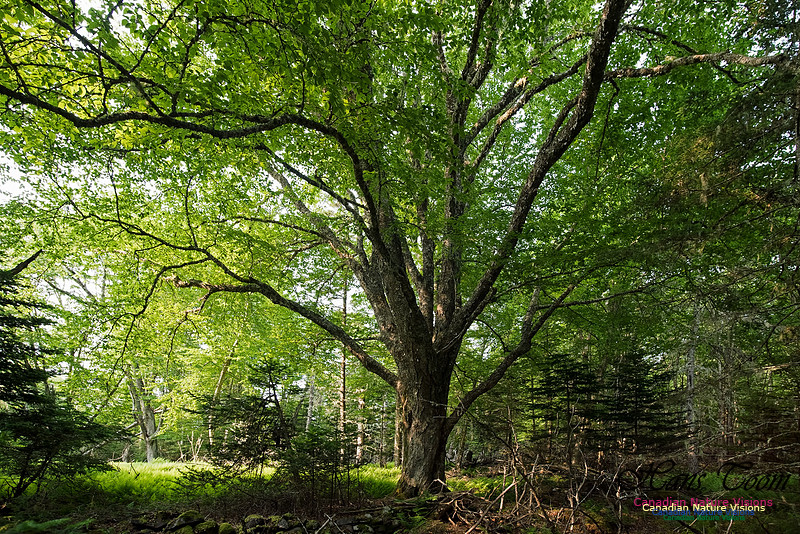
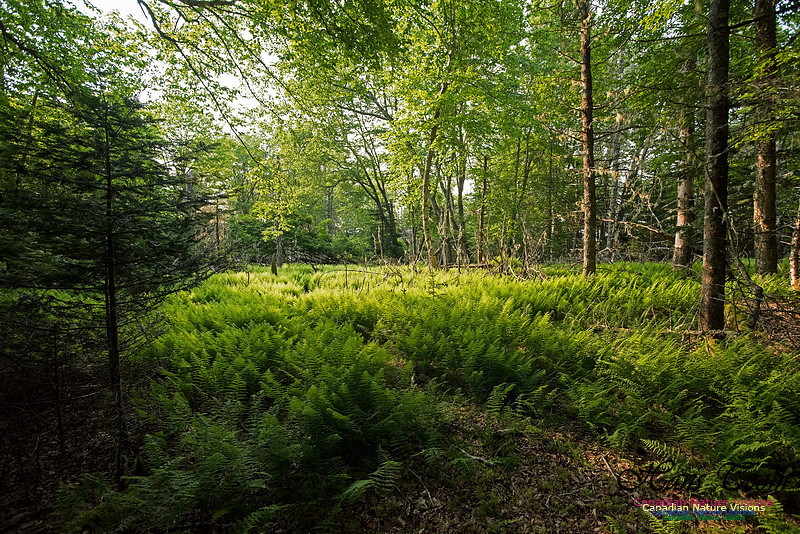
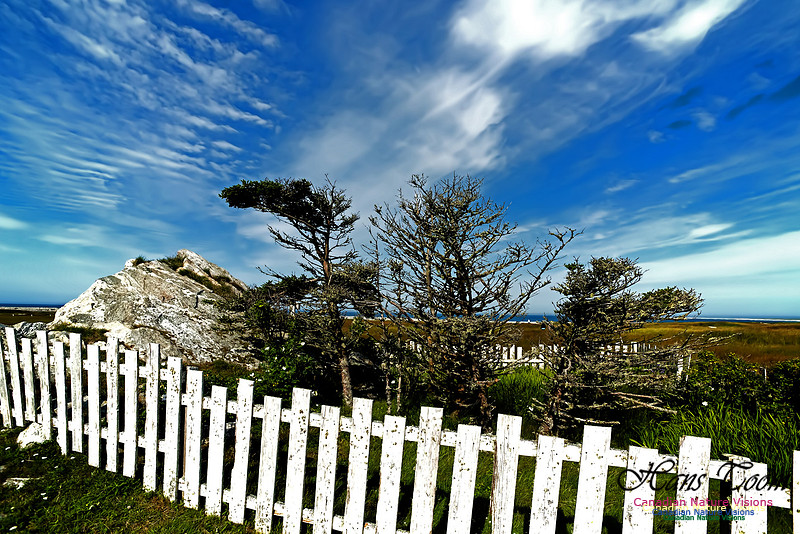
The Forest
Green Adder's Mouth OrchidEvery year Laura and I haunt the coastal barrens looking primarily for the Green Adder's Mouth Orchid. Last year we struck out completely and this year for the second year in a row we had no luck so we decided to expand our search. Sure enough we found some further north and higher up the slope, below the Chebucto Head Light. This orchid which is about the size of my thumb, and I'm no wrestler, has a flower head about the size of my thumb nail and flowers in late July and early August. It flutters in the wind so focusing is problematic. I am investing in a better, probably the best, macro lens so my photos will improve next year. Green Adder's Mouth Orchid
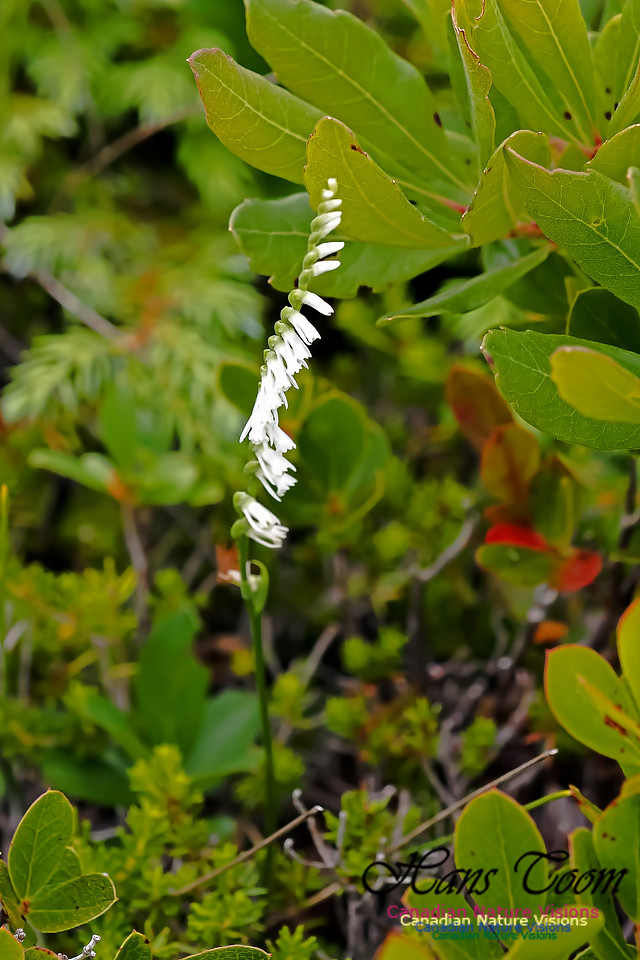
Slender Lady's Tress's Orchid
An orchid we did not expect to see on these windy slopes was the Little Club Spur Orchid. It grows in profusion among the other plants alongside Sandy Cove Road. Little Club Spur Orchid
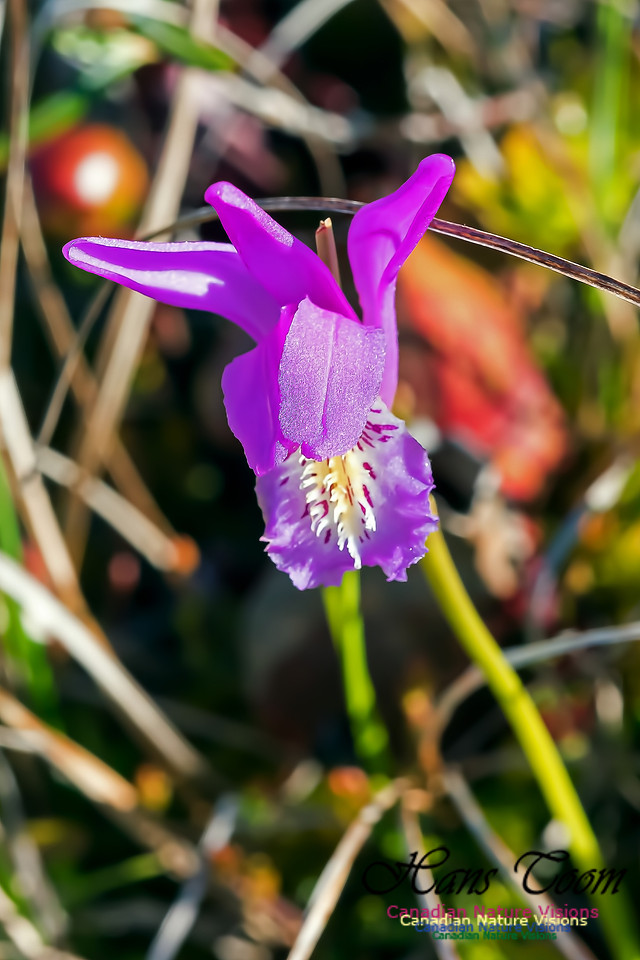
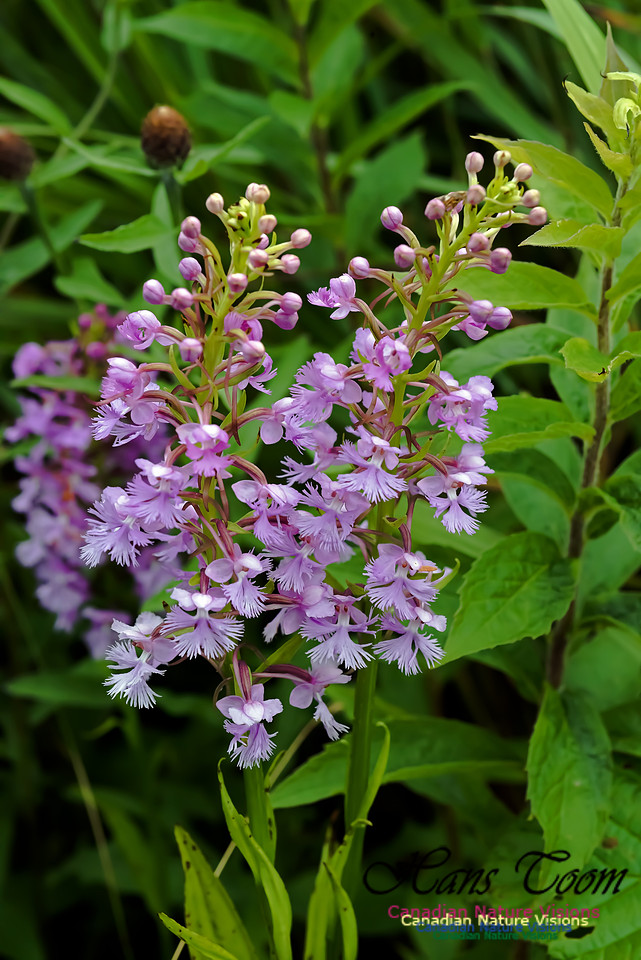
Yet another pleasant surprise was the Ragged Fringed Orchid. The climate on these slopes is much like the arctic, hence the local success of the Arctic Blueberry. The rare Arctic Blueberry is one of the reasons this area was declared a nature preserve. Ragged Fringed Orchid
Smiley's Provincial ParkLaura and I visited Smiley's Provincial Park twice in early August on the hunt for a rare orchid which we never did find. However, we did find two new to us orchids and one new to us wildflower plus a couple of weird fungi. The wildflower was the Canada Lily, growing naturally and wild. Courtesy of Wikipedia: Lilium canadenseFrom Wikipedia, the free encyclopedia
Lilium canadense, commonly called either the Canada lily, wild yellow-lily, or the meadow lily, is a native of eastern North America.[3] Its native range extends fromOntario to Nova Scotia south toGeorgia and Alabama. It is most common in New England, theAppalachian Mountains, and theCanadian Maritimes.[4] It is also cultivated as an ornamental in Europe and other places.[5] Flowers emerge in June. They are nodding (hanging downward), yellow, orange or red, often with darker spots. The plant has become less common in urban and suburban areas due to heavy browsing by the white-tailed deer. • Habitat: moist meadows, wood margins • Height: 0.5-1.5 metres • Flower size: 50-75 mm wide • Flower color: yellow, orange, or red • Flowering time: June to July • Origin: native The flower buds and roots were once gathered and eaten by North American indigenous peoples.[6]
Here's a few photos of our find, with the kind assistance of park staff. Canada Lily
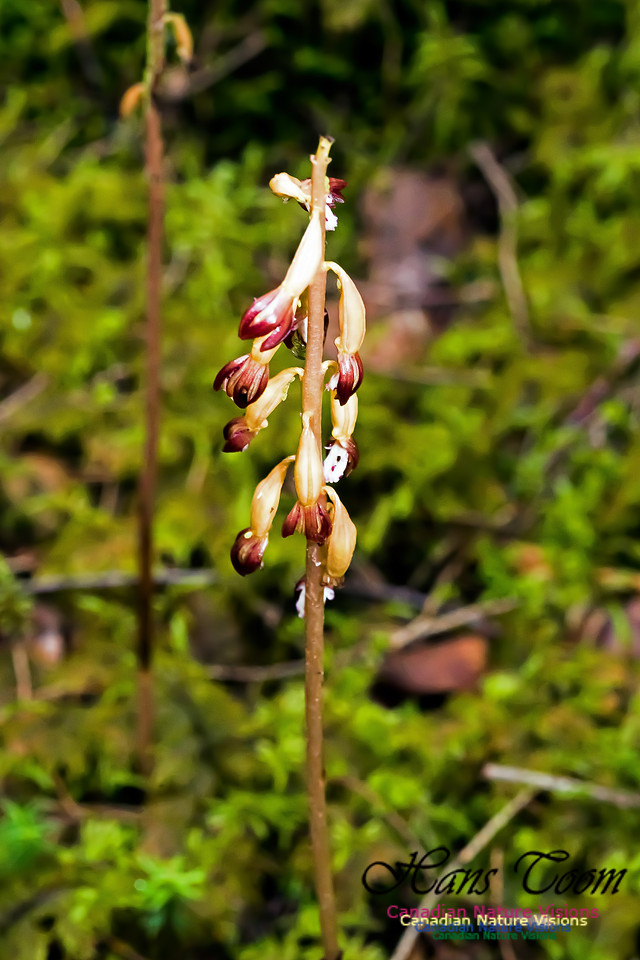
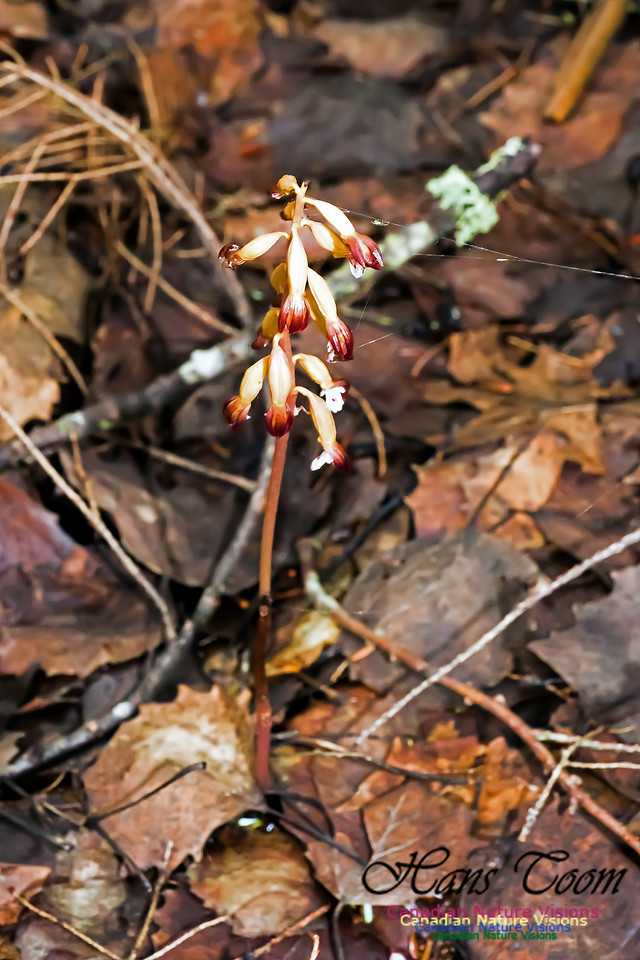
The two new to us orchids although not rare were a treat nevertheless: Coralroot Orchid
The other orchid was tall and not in flower when we first saw it, hence the need for a return trip. Helleborine Orchid
We also found two fungi, both unusual. I've finally developed enough courage to set up a fungus and lichen gallery on my website. I will have to invest in a fungus/lichen identification book. American Caesar's Mushroom
Tree Fungus, type unknown
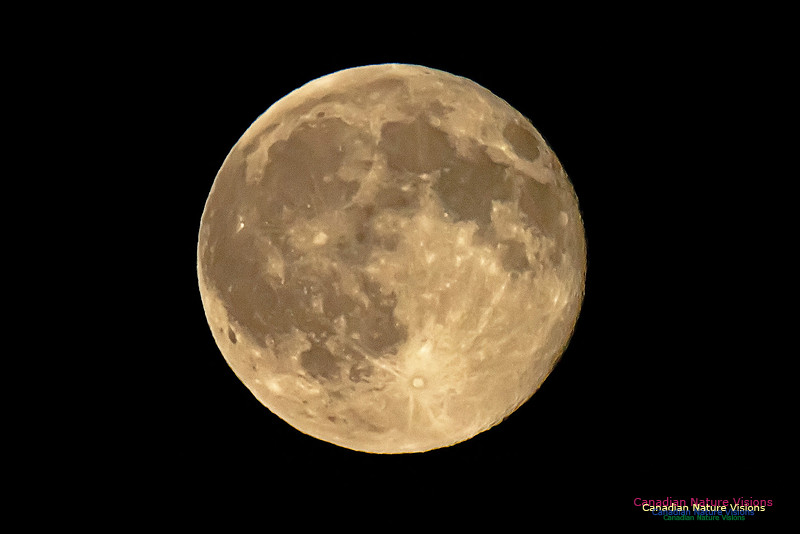
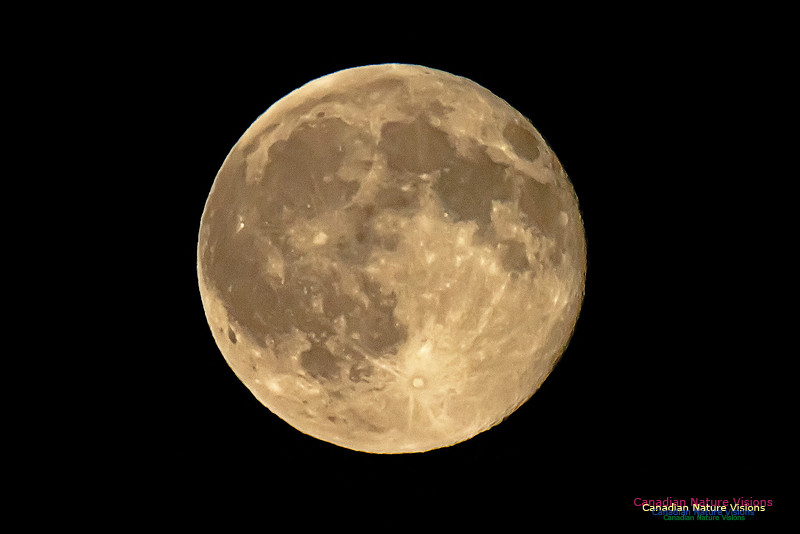
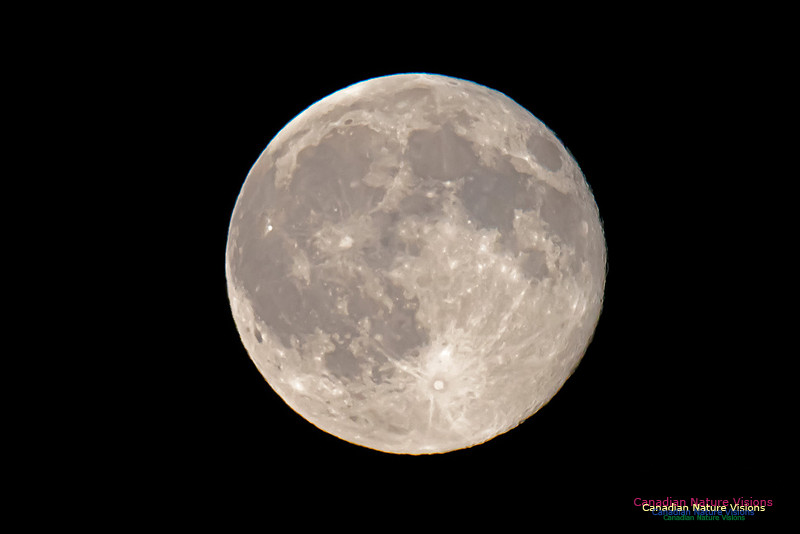
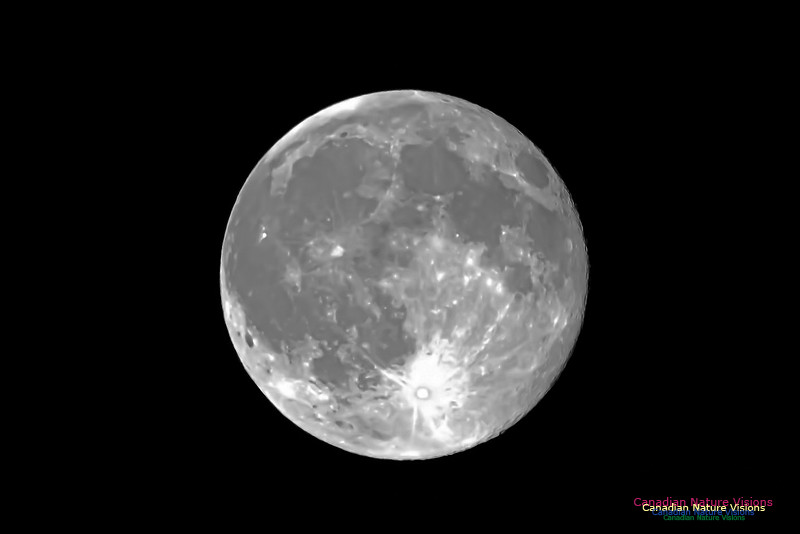
Blue Moon Over Portuguese CoveThe blue moon rise at Portuguese Cove happened at 7:42AM, July 31. I took the following photographs about 13 hours later during its rise over the Atlantic Ocean. They were taken from my front porch. The blue moon is the second full moon in any month and this event occurs on average every three years. Expect the next one in 2018. Blue Moon Rising circa 9PM July 31, from Portuguese Cove
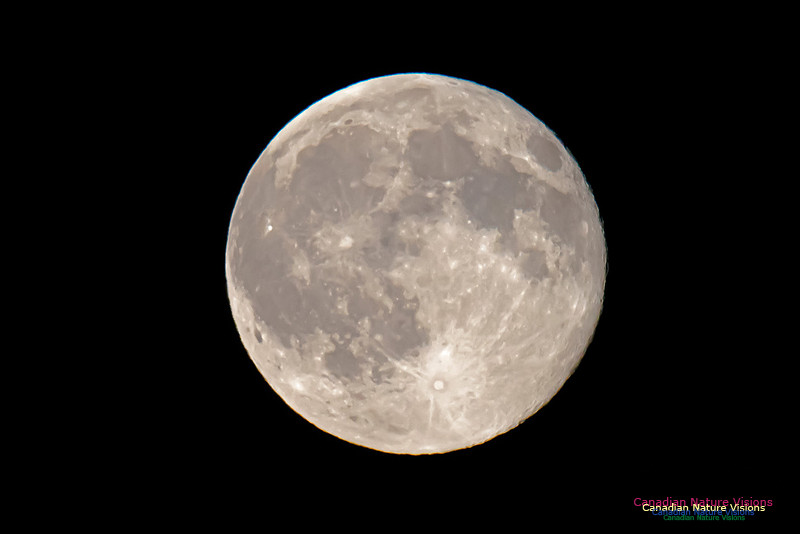
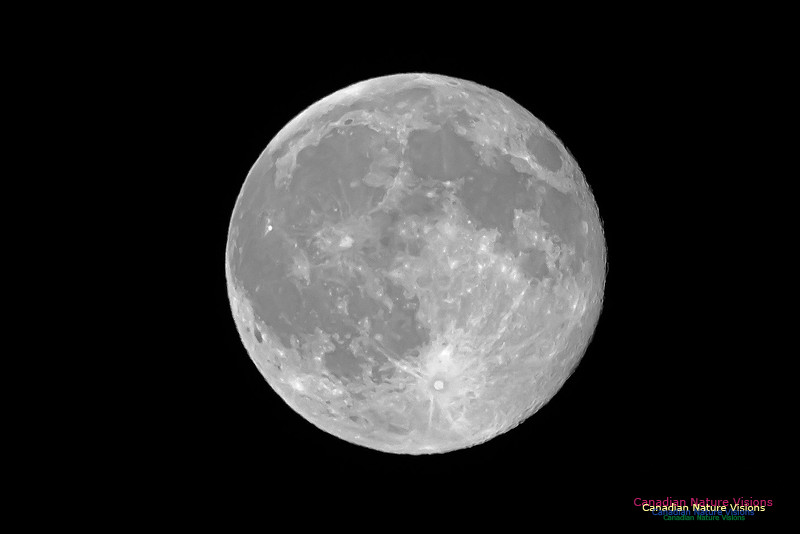
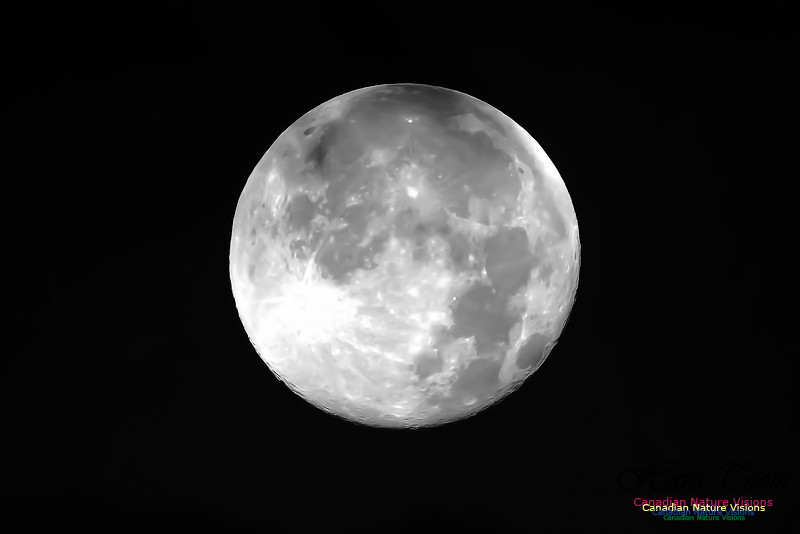
Blue Moon Setting circa 7AM, August 1, 2015, from Shoal Point
The Wildflowers of the West Dalhousie RoadAfter our visit to the Gardens of Annapolis Royal Laura and I followed the West Dalhousie Road home. This route is quiet, has little traffic, and sports a good mix of marsh, bog and woodland offering opportunities for birds and wildflowers. Brown-eyed Susan 
Wildflower Bouquet of Queen Anne's Lace and Sweet Yellow Clover and Knapweed
Sweet Yellow Clover
Swamp Candles
A Brook Along the Route
Juvenile Yellow-bellied Sapsucker This young bird was a long ways off. I photographed it at 850mm and still had to do a severe crop to get this image.
Meadowsweet
Sundew
Flower of Sundew?
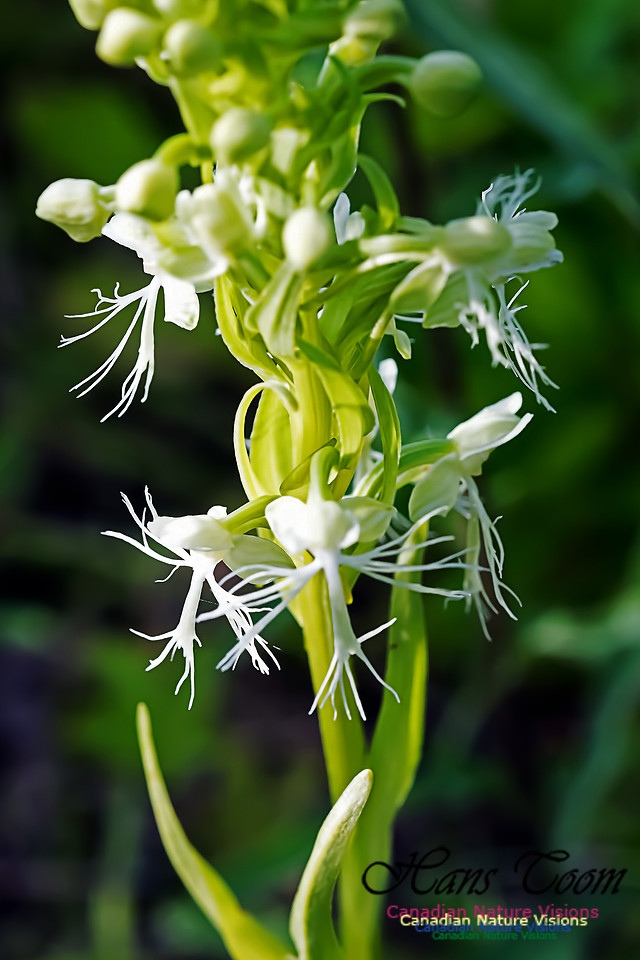
White Fringed Orchid
Dewdrop
Fireweed
Elderberry
Bouquet of Elderberry and Sweet White Clover
Horned Bladderwort This bog hosts the most extensive display of horned bladderwort we have seen anywhere!
Pickerel Weed
Ragged Fringed Orchid
Wildflowers of Miner's MarshLaura and I visited Miner's Marsh in Kentville, in late July. This was my first visit to this marsh and Laura's third. The marsh held the usual mix of summer dabbling ducks and divers, including Pied-billed Grebe, but our visit was for the wildflowers. Water Hemlock
Swamp Candles
Black Mustard
Black Mustard
Canada Hawkweed
Meadowsweet
Purple Vetch
Knapweed
Tall Meadow-rue
Pearl(ly) Everlasting
Swamp Candles
Pearl(ly) Everlasting
Hummingbird Clearwing Moth on Knapweed
Wildflower Bouquet of Purple Vetch, Rabbit's Foot Clover and Yellow Hop Clover
Tall Meadow-rue
Sweet White Clover
Cow Parsnip
Ragged Fringed Orchid
Milkweed
Fleabane
Tansy
Tansy
Tansy
Milkweed
Queen Anne's Lace
Mullein
Pokeweed
Sumac
Musk Mallow
Sulphur Cinquefoil
Chicory
Fleabane
Nightshade
Northern Crescent Butterfly
Narrow-leafed Bur-weed
Canada Thistle
Queen Anne's Lace
Bur-head
Musk Mallow
Pokeweed
Chicory
Three-striped Bee on Queen Anne's Lace
Queen Anne's Lace
Deptford Pink
Yarrow
Milkweed ....as the Monarch Butterfly sees it!
Milkweed
Annapolis Royal GardensLaura and I visited the Annapolis Royal Gardens at Annapolis Royal July 25. The weather forcast was for cloudy bright conditions with some sunshine and a 40% chance of showers in the afternoon. Apparently I am the only one of the meetup group to check the weather at Annapolis Royal. The meetup trip was cancelled due to weather but by that time Laura and I were well on our way despite the torrential downpour at Halifax and along most of the route. The gardens as usual were spectacular. The last time I was here I used a 24-105mm zoom lens but this time I used a 15-30mm zoom lens, both on a full frame sensor. I prefer the wide angle lens.
Northern Pearly Eye Butterfly This is was a delightful surprise. I pulled out my 60mm macro for these photographs.
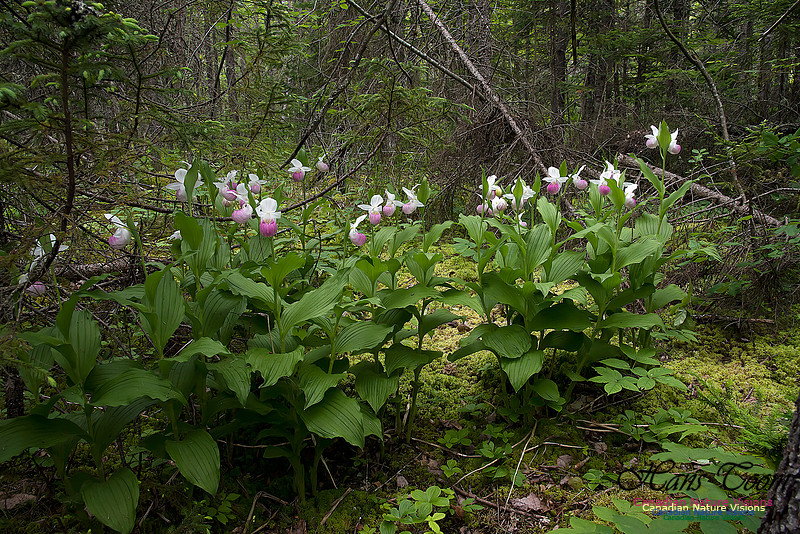
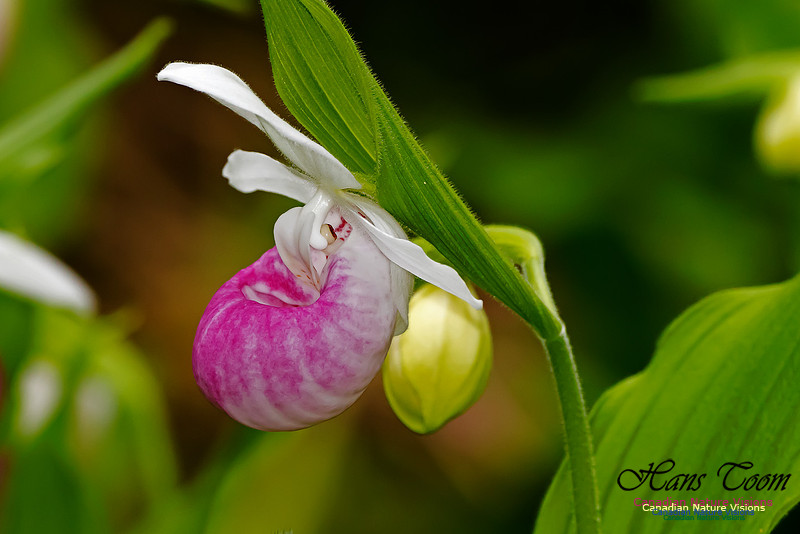
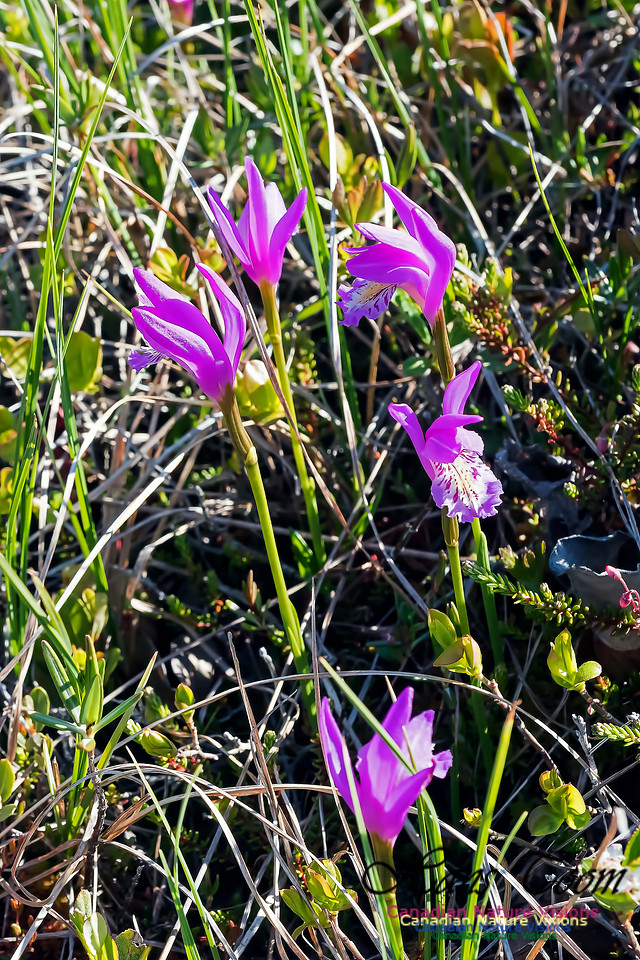
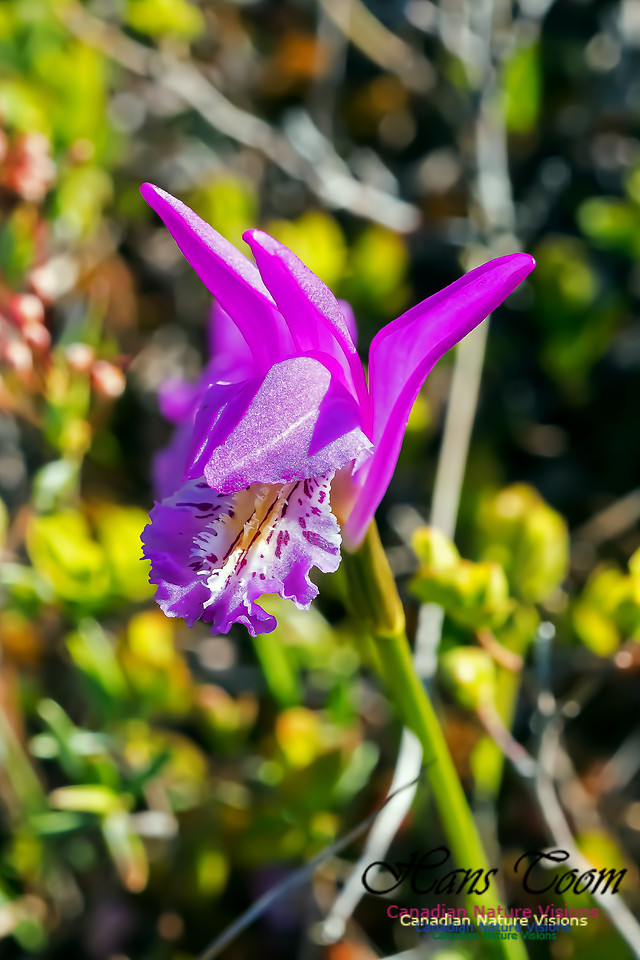
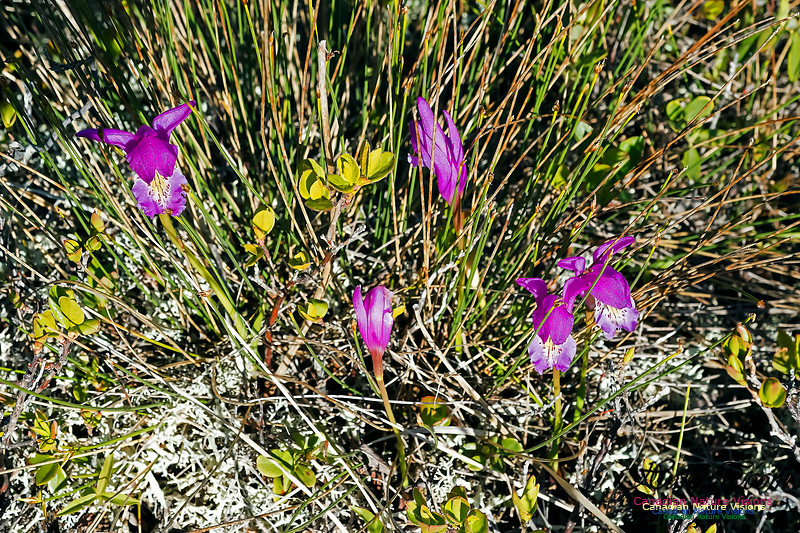
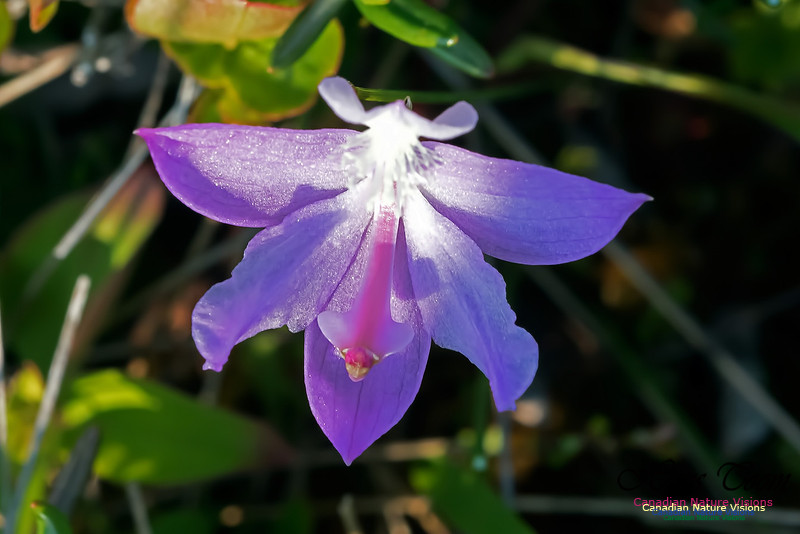
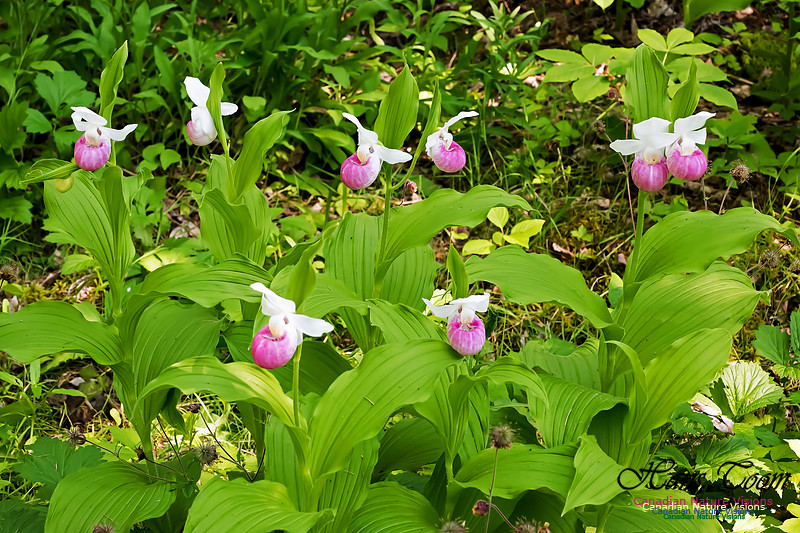
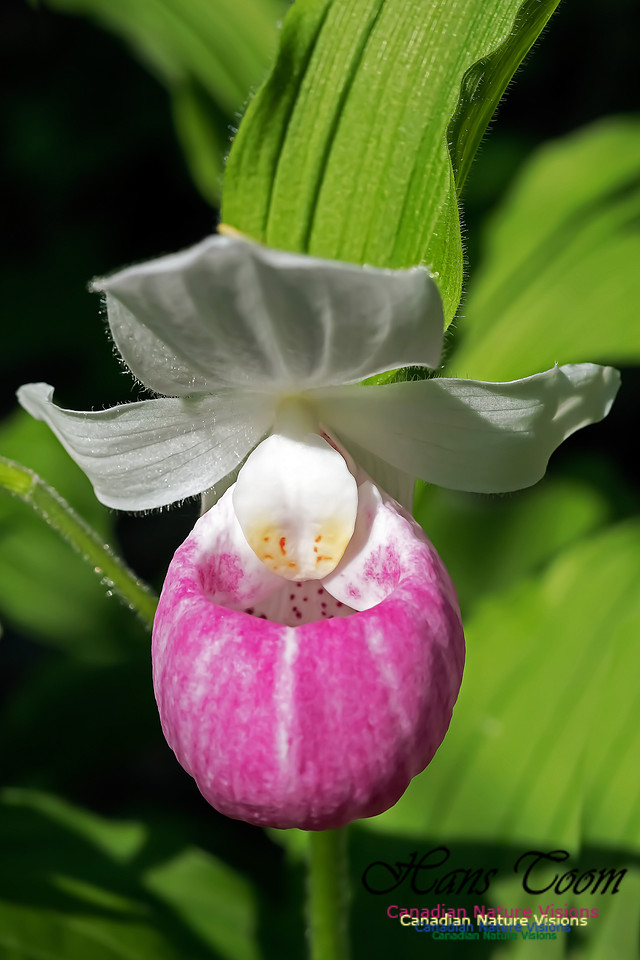
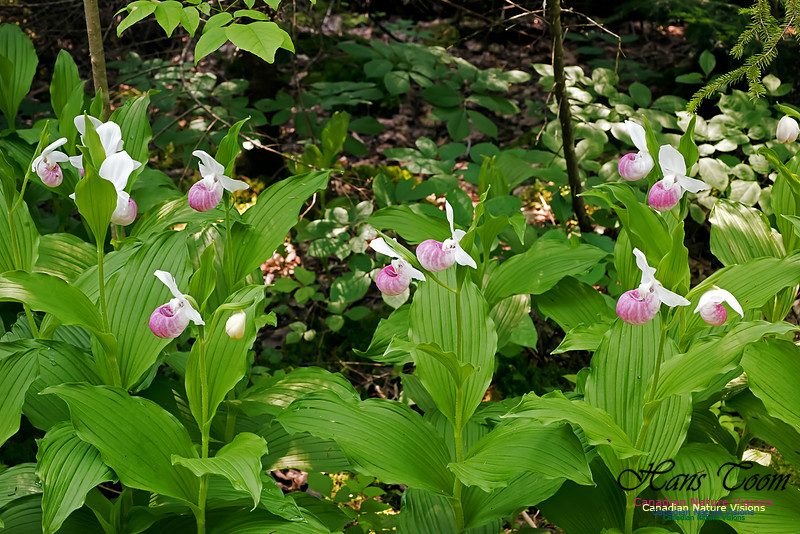
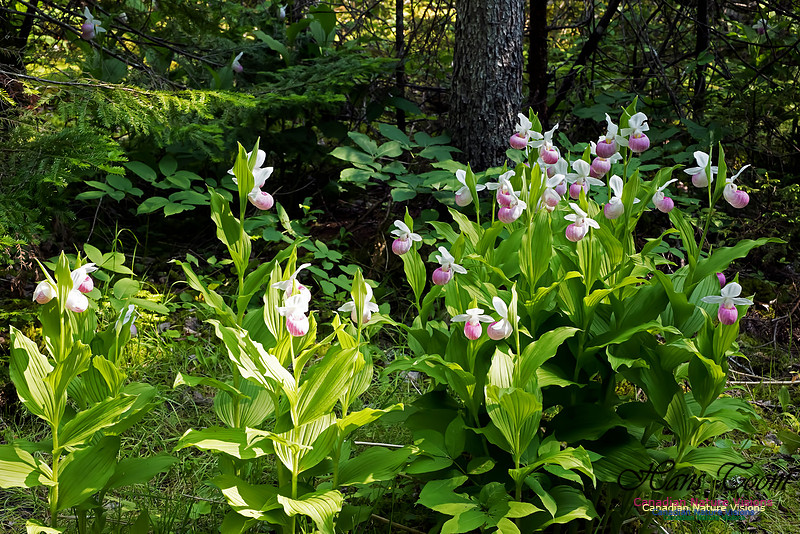
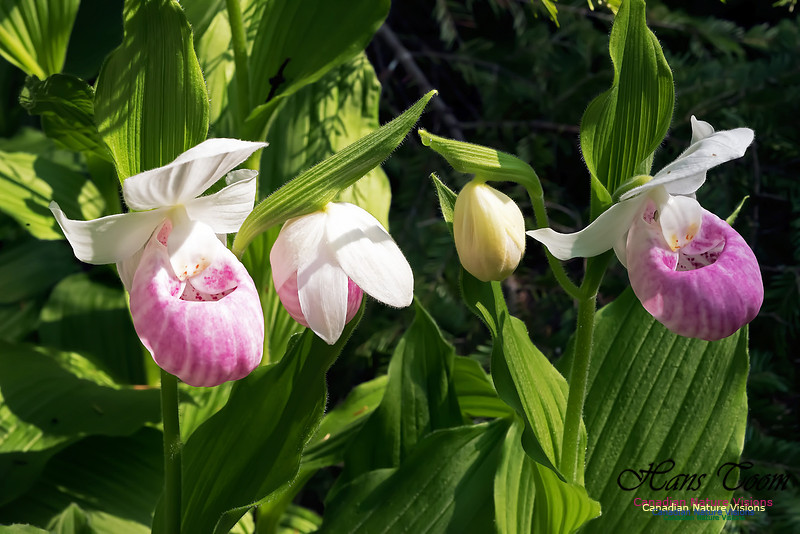
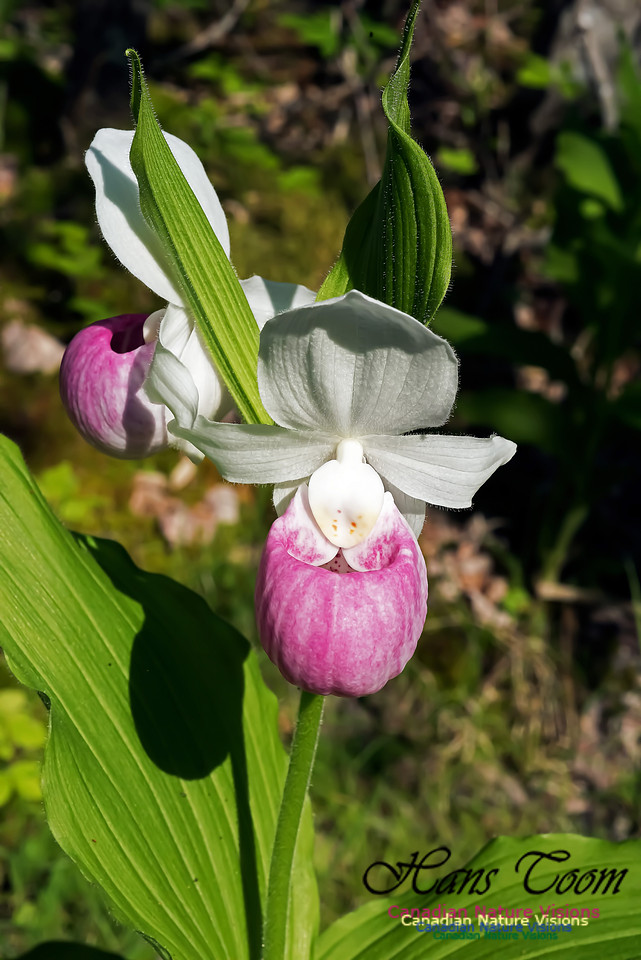
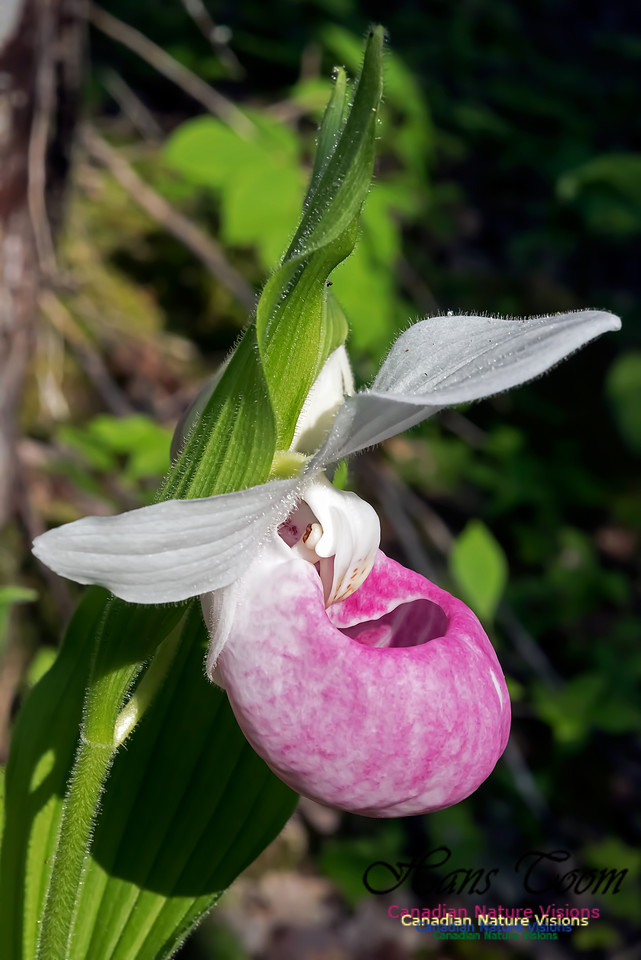
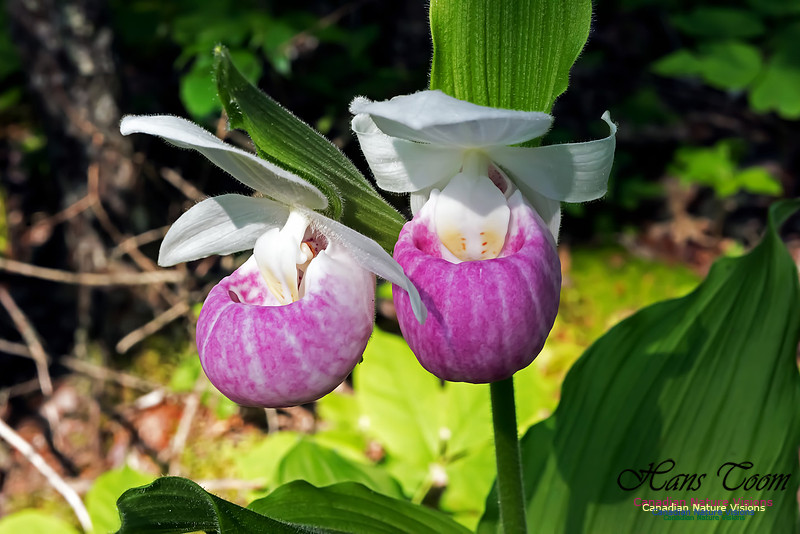
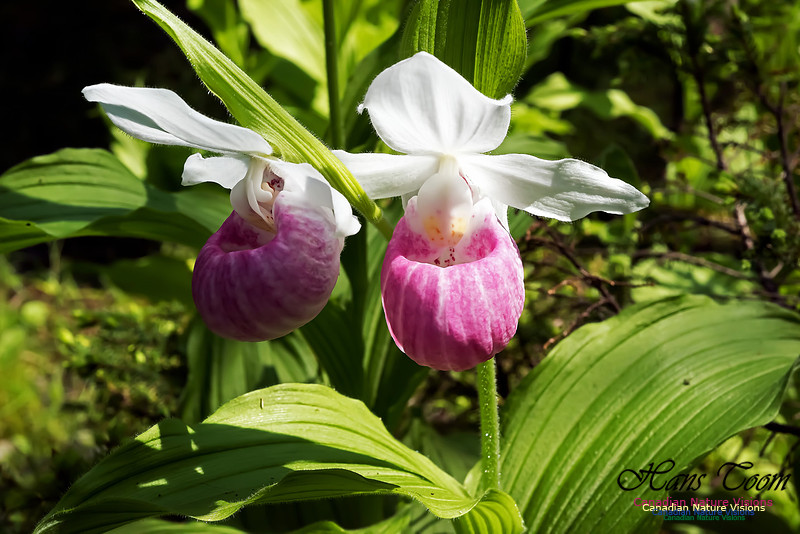
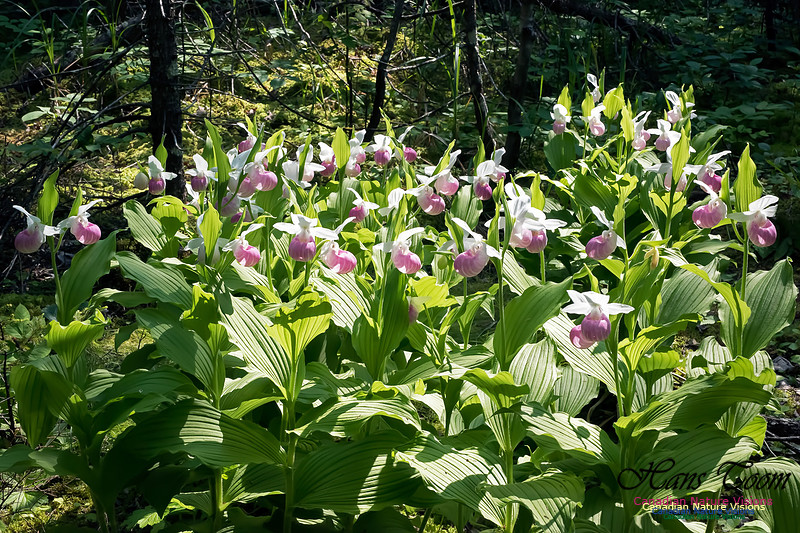
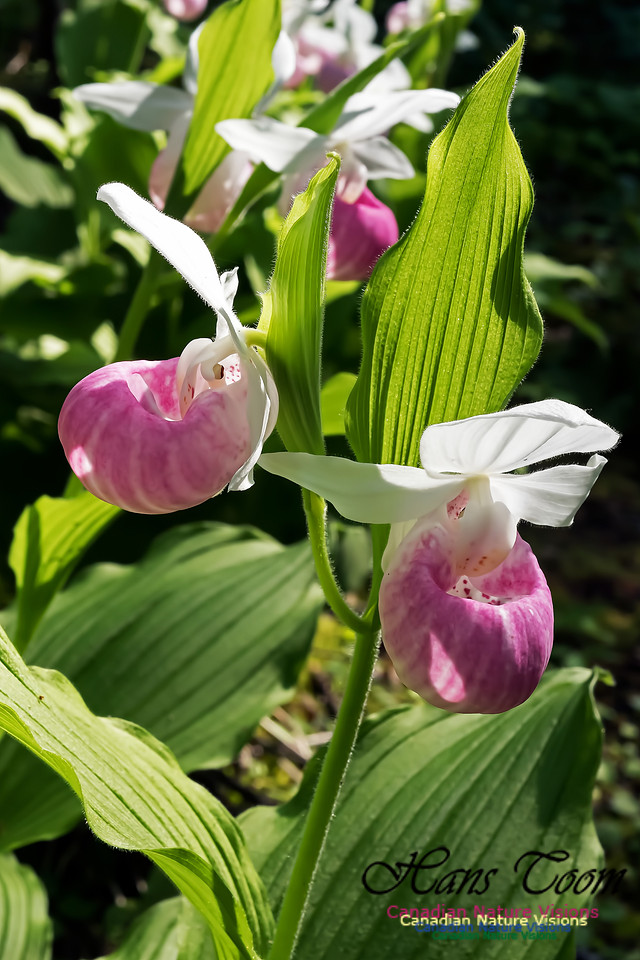
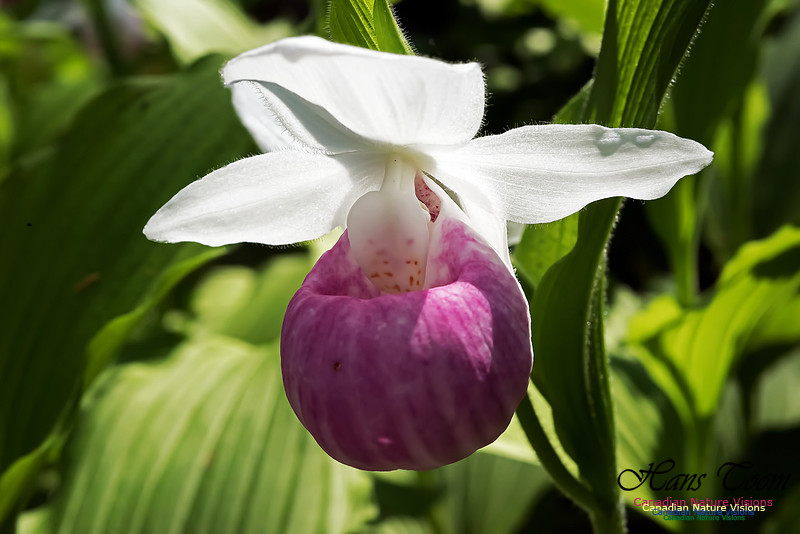
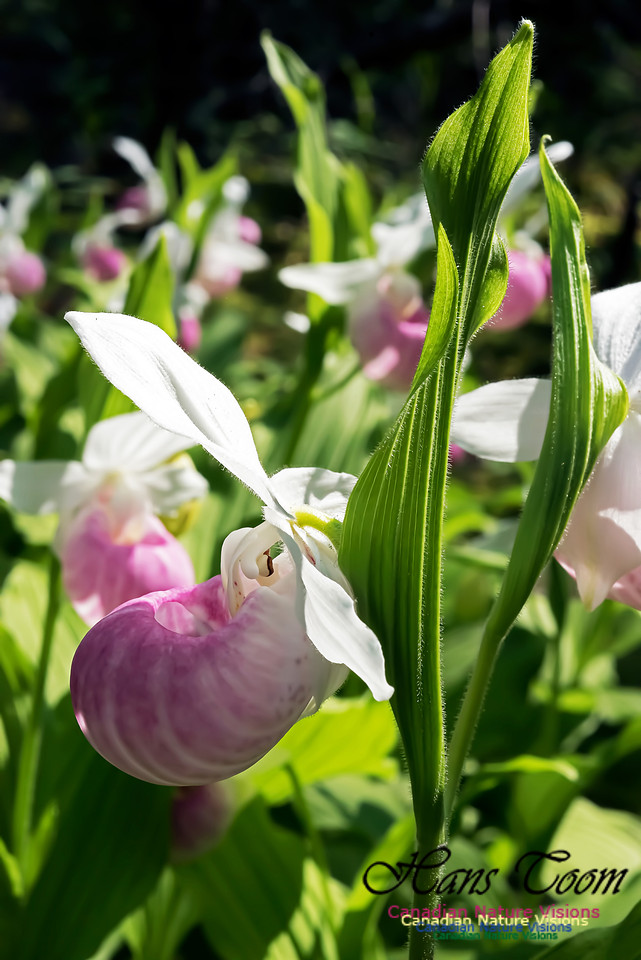
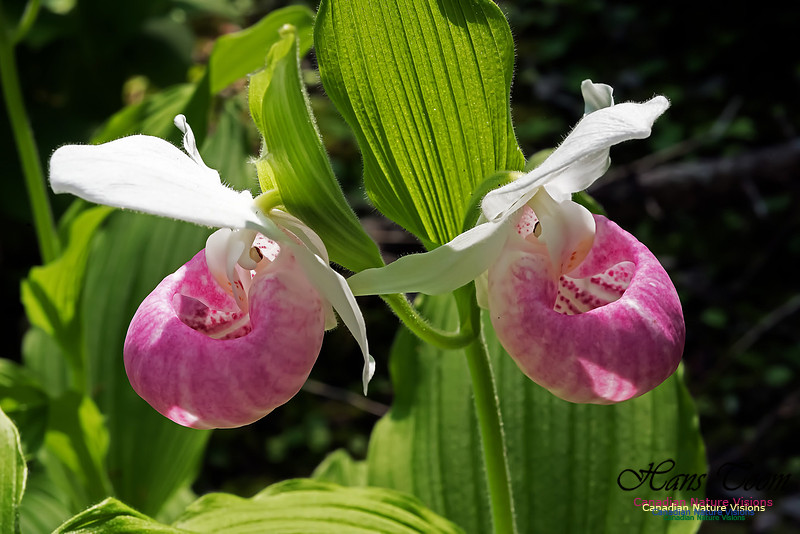
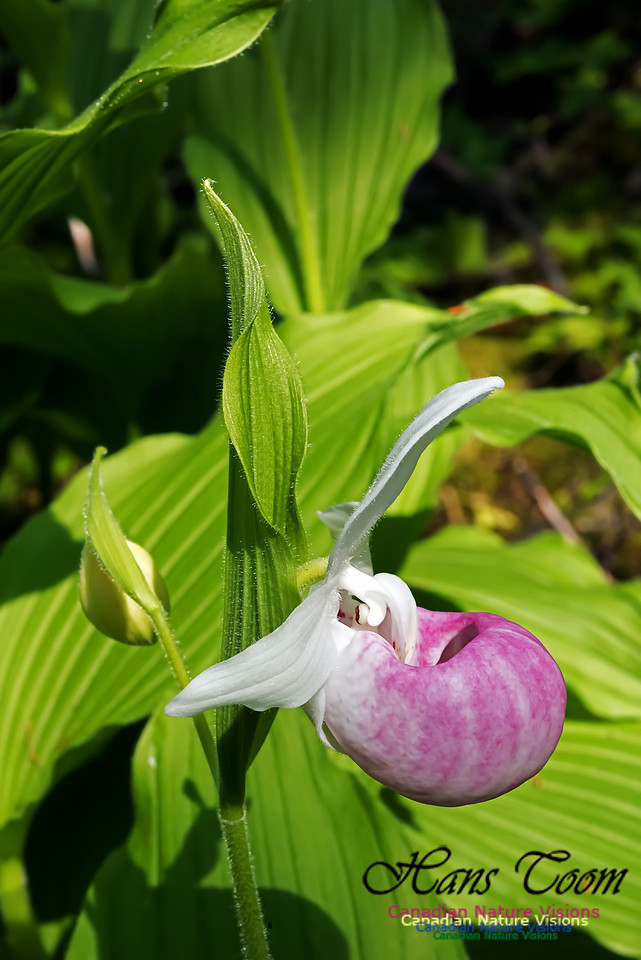
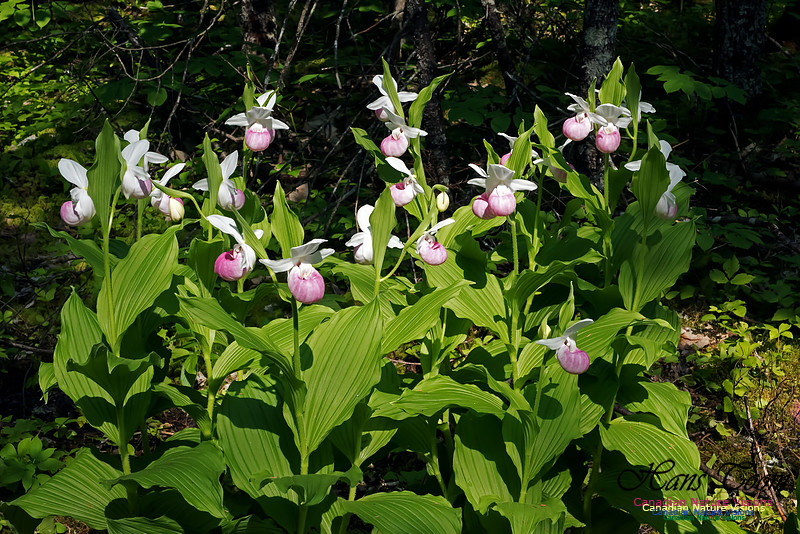
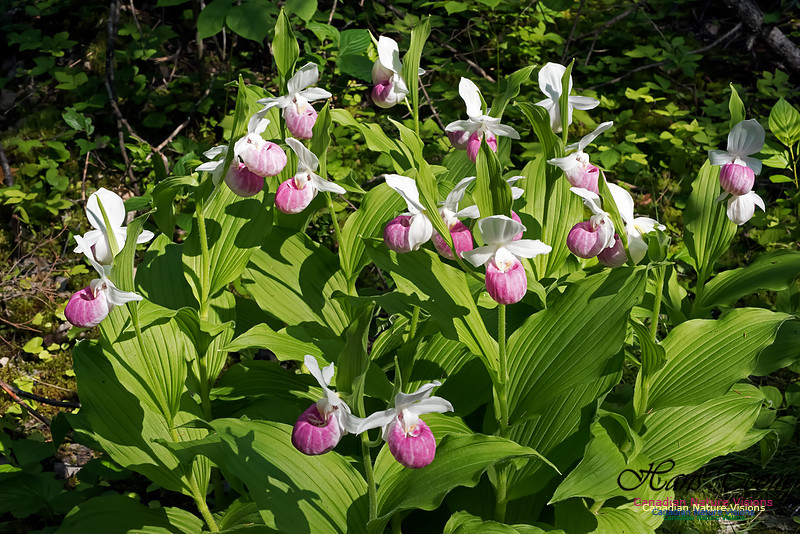
Compendium of Early Summer Orchids of Nova ScotiaThis is a photographic compendium of early summer orchids from June 22 to July 31. Many more early summer orchid photographs can be seen on my website. Later orchids such as the coveted Green Adder's Mouth Orchid will be in my late summer compendium of orchids August 1 to Sept 20. Showy Lady's Slipper Orchid
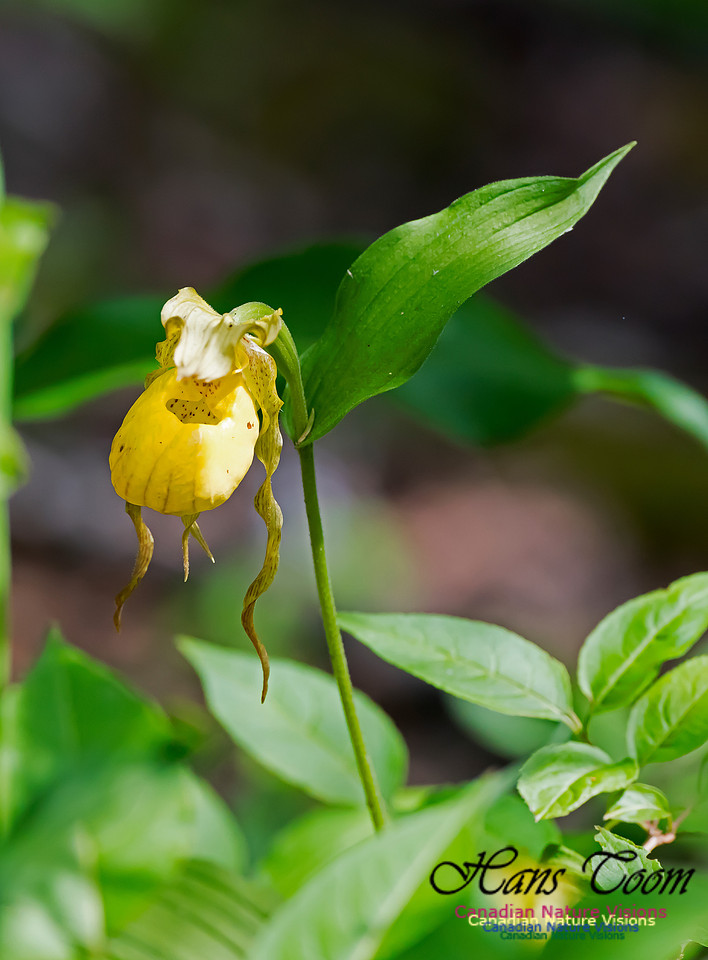
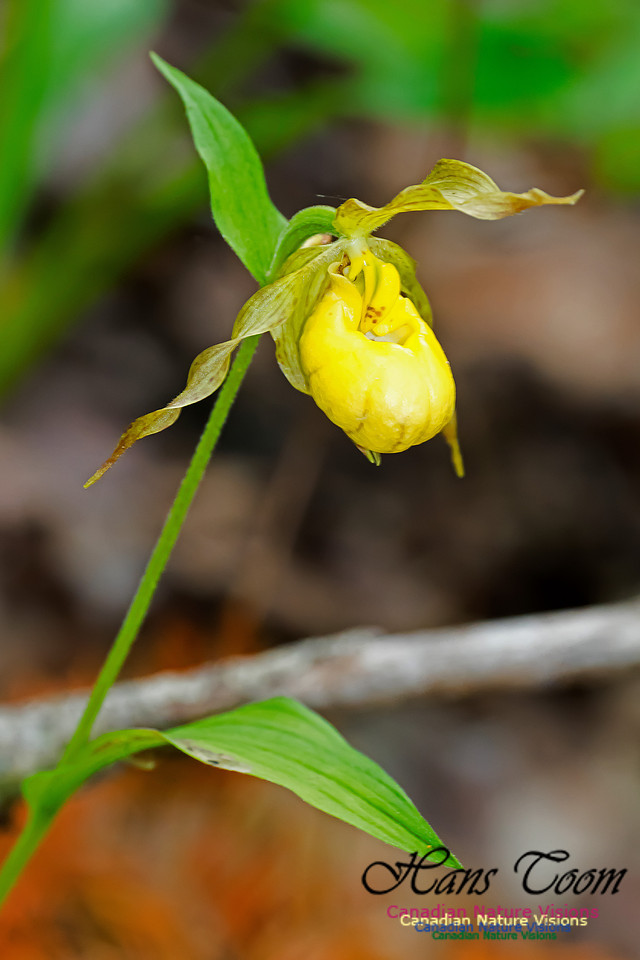
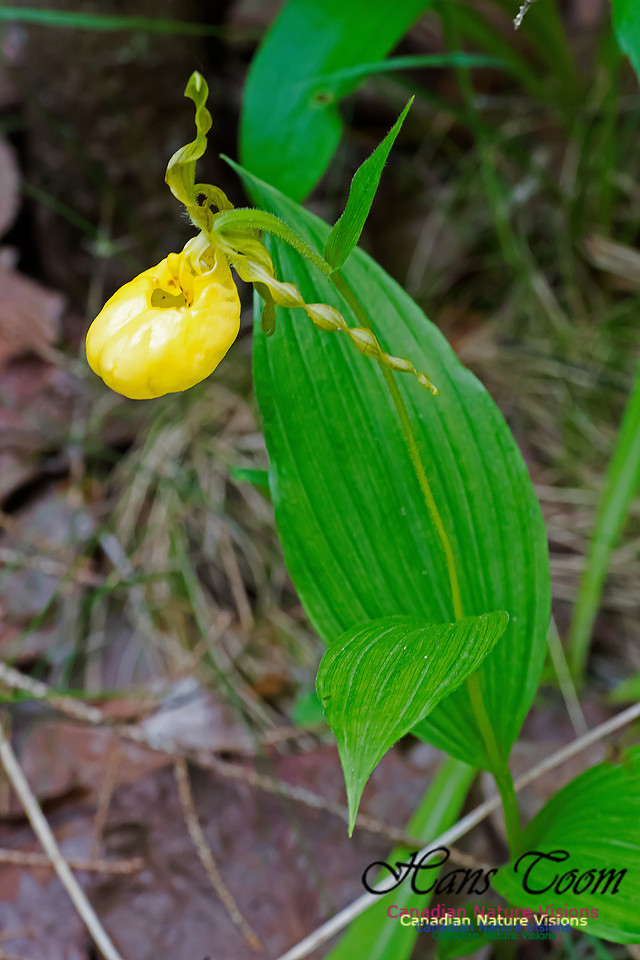
The Yellow Lady's Slipper Orchid was happenstance. I didn't expect any to be surviving of this early blooming orchid when I visited the gypsum lands of West Hants County but I took a chance since my companion, Beth McGee, had never seen them in Nova Scotia. This was early in July! Yellow Lady's Slipper Orchid
Dragon's Mouth Orchid
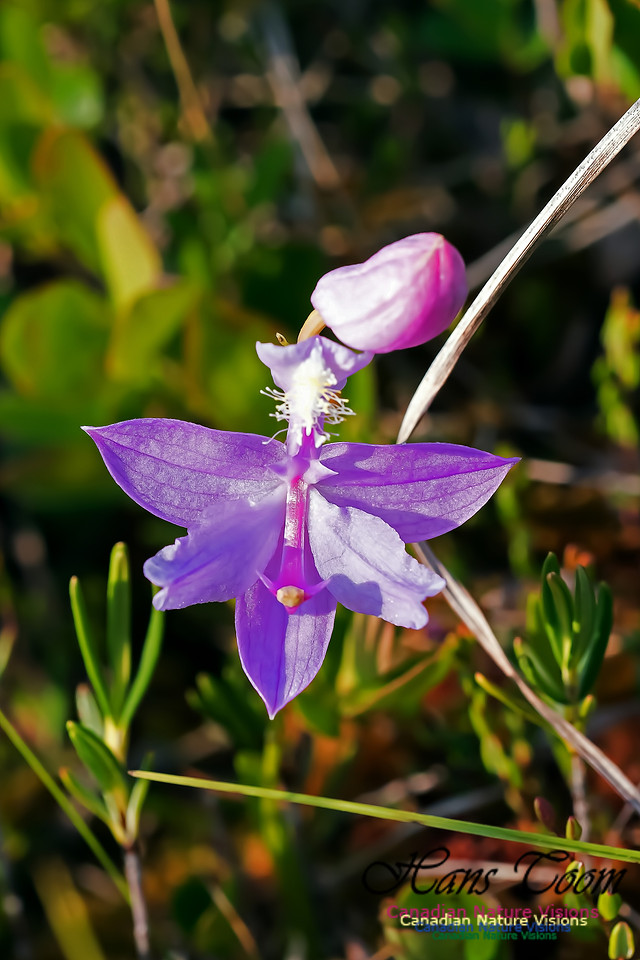
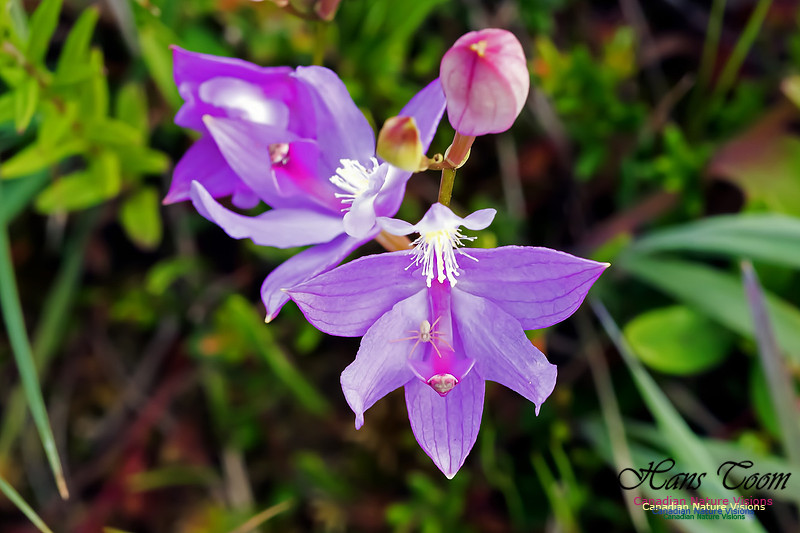
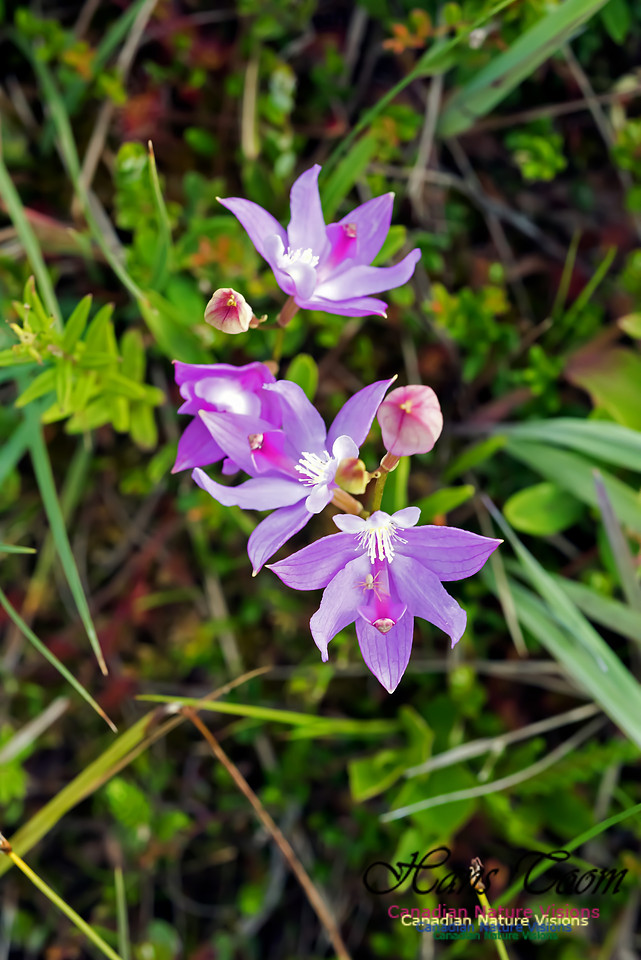
Grass Pink Orchid
Ragged Fringed Orchid
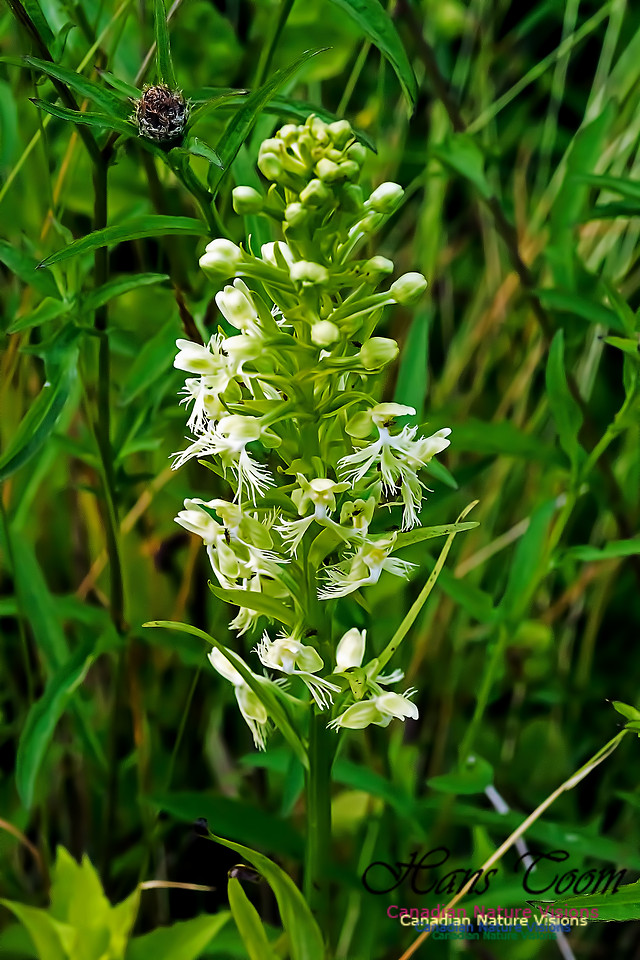
White Fringed Orchid  
Coral Root Orchid
This hard to find orchid was just beginning to open. I will revisit this orchid in early August for my compendium of late summer orchids.
Large Purple Fringed Orchid(white)
This is a very unusual and rare white Large Purple Fringed Orchid. I will visit it again with a different lens. I use a macro lens for most flower photography but unfortunately the macro has a very limited depth of field.
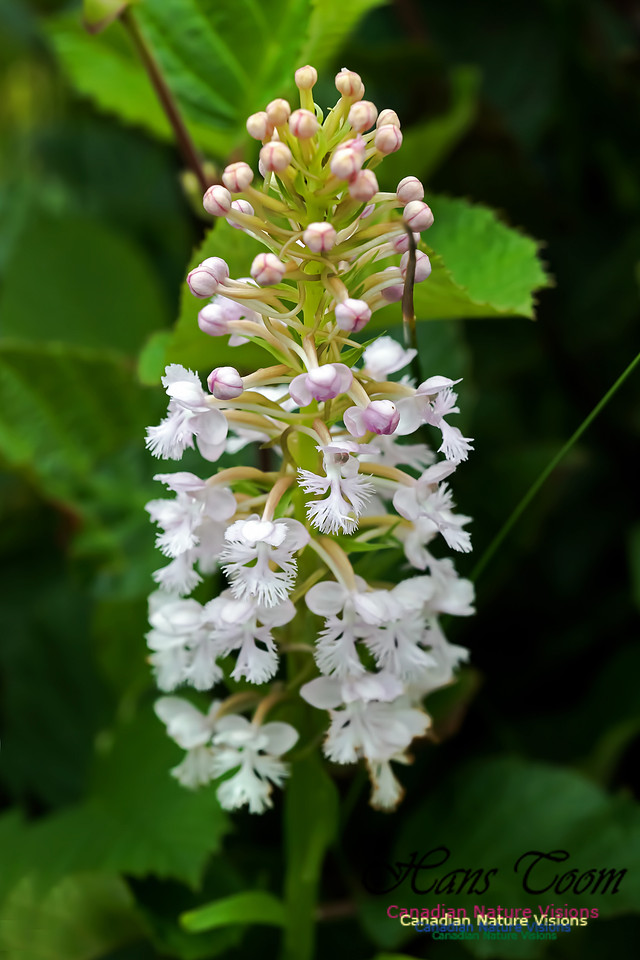
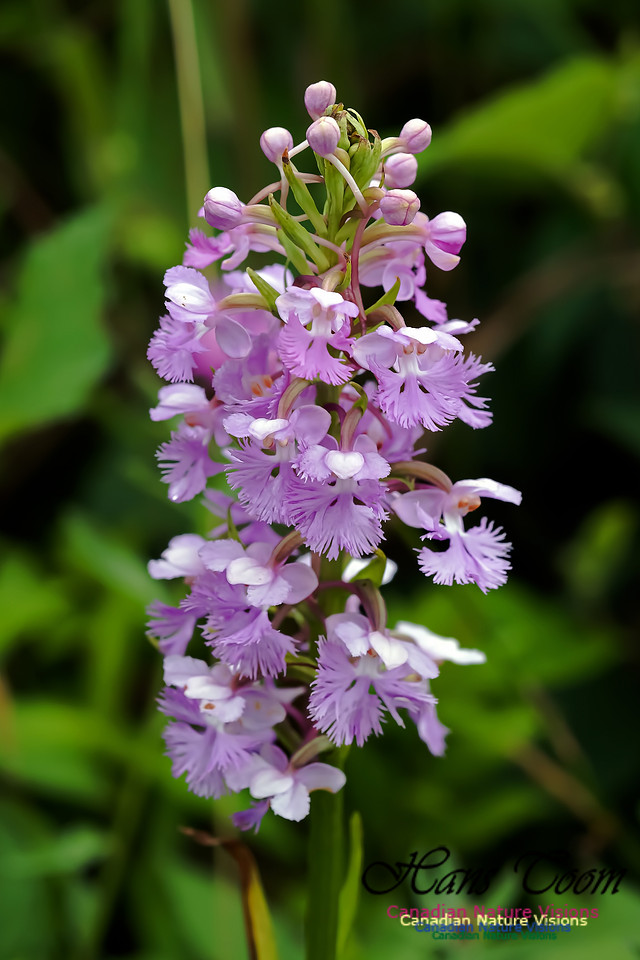
Large Purple Fringed Orchid
Slender Lady's Tress's Orchid
This is the only one I could find on the coastal barren. I will try again in another place.
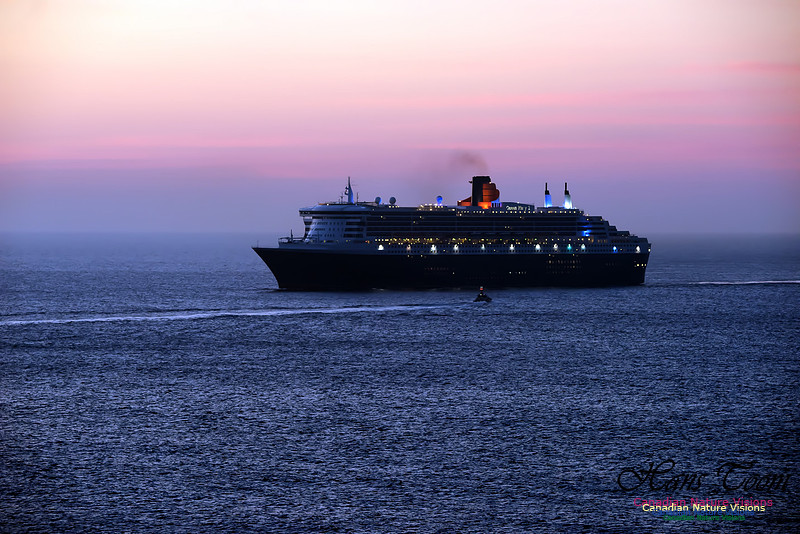
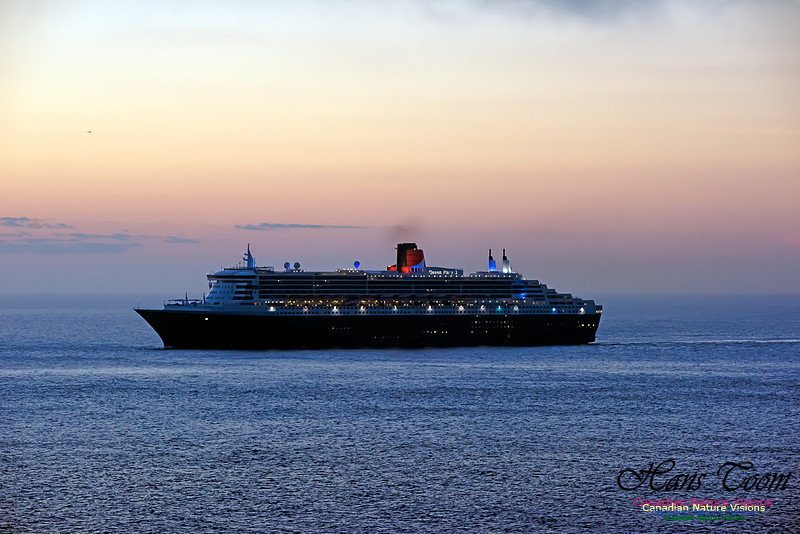
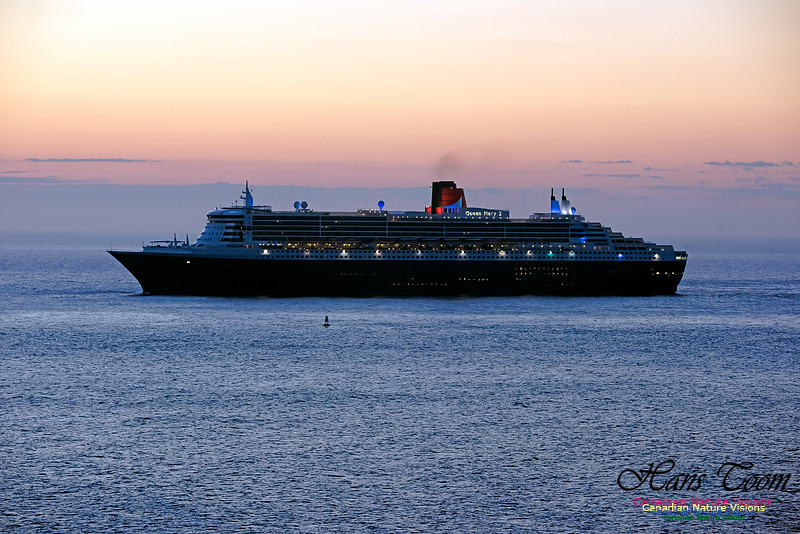
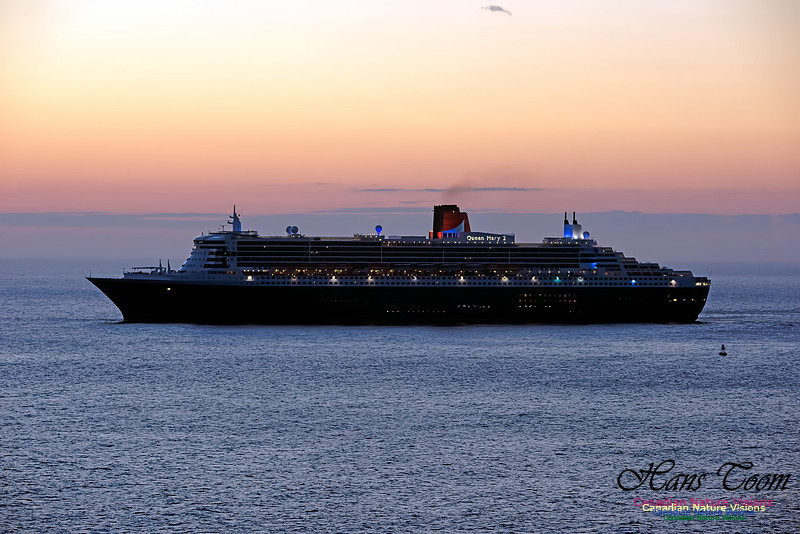
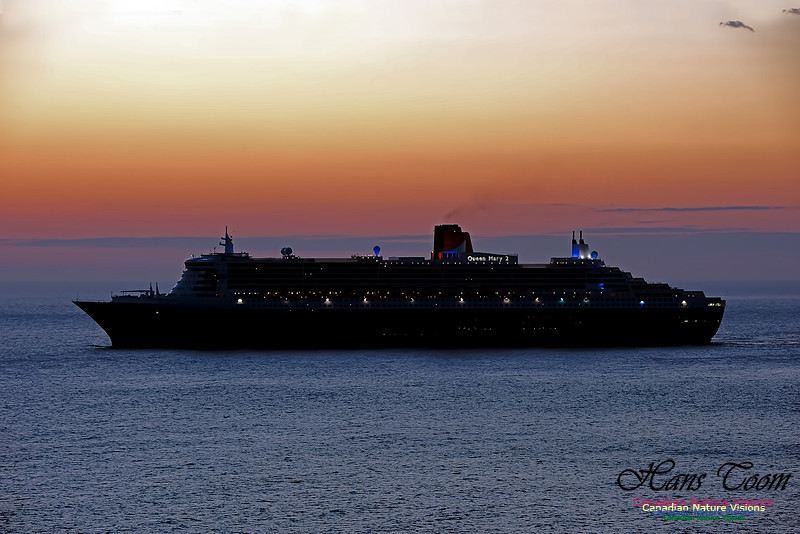
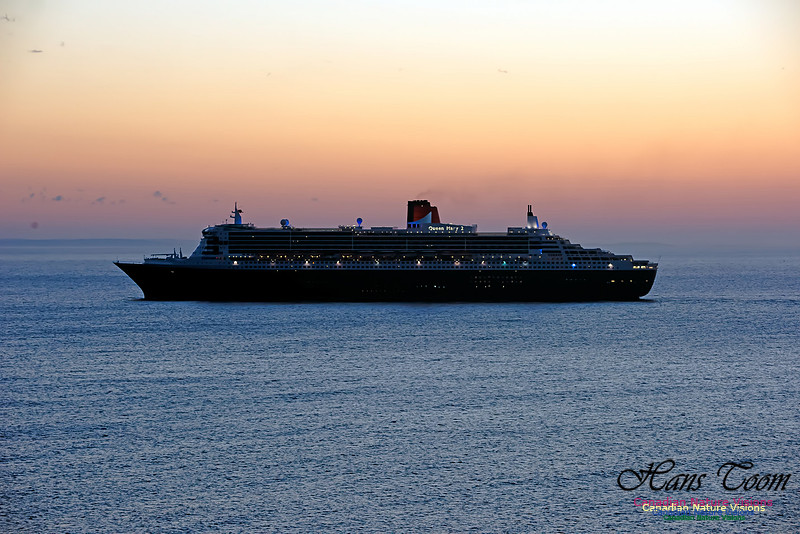
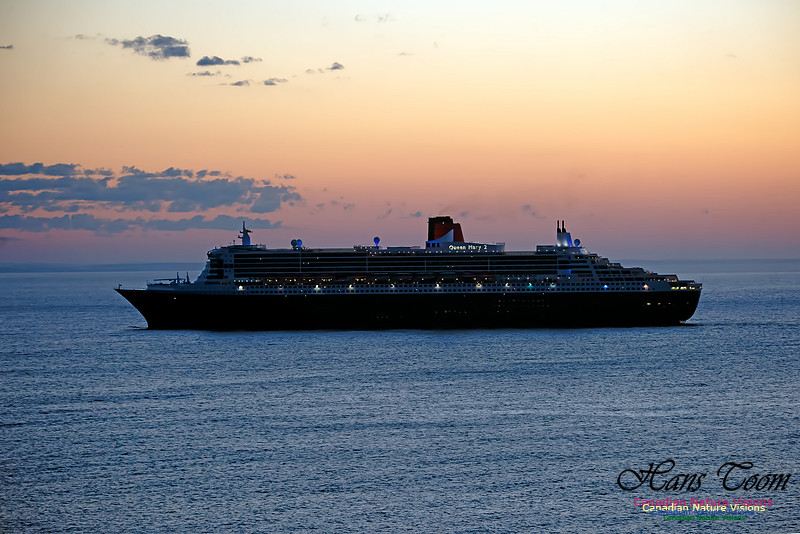
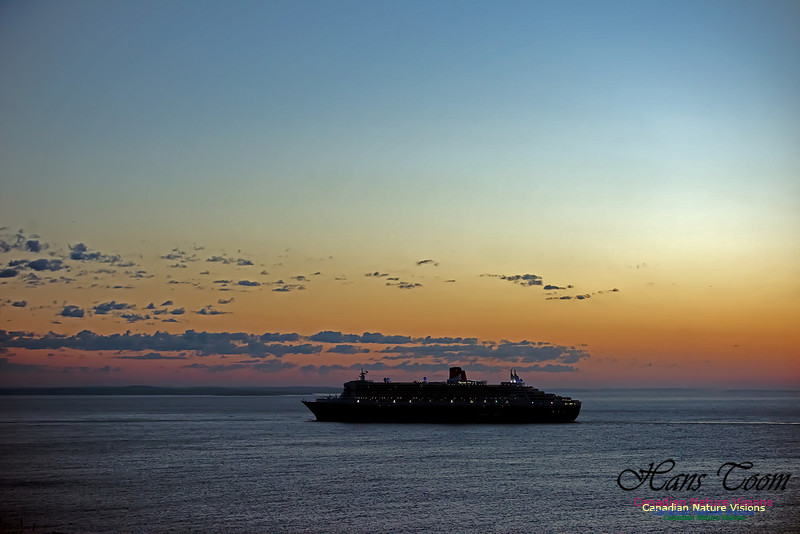
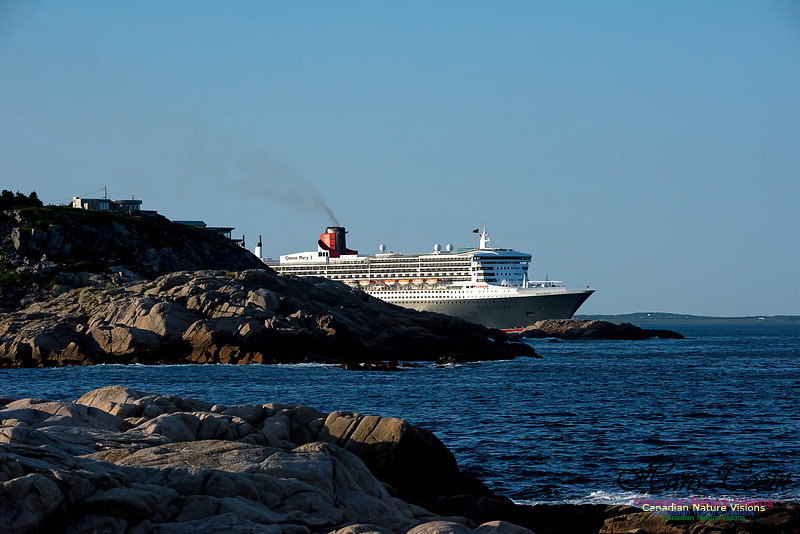
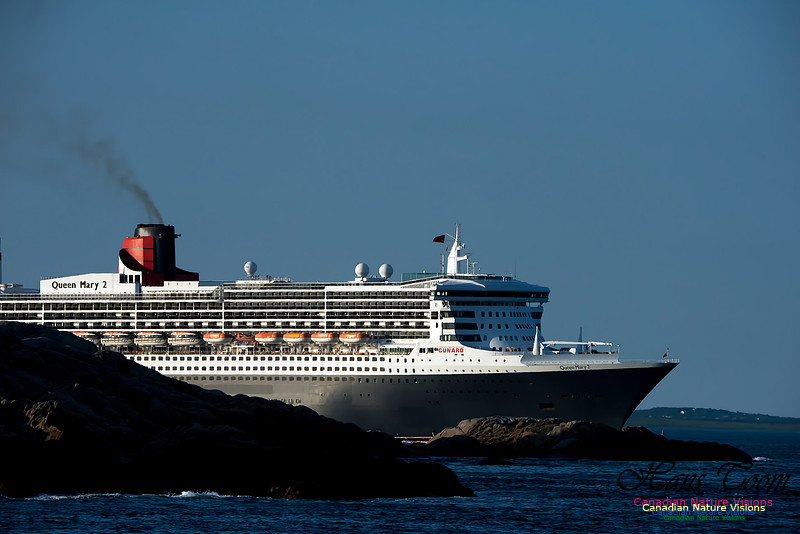
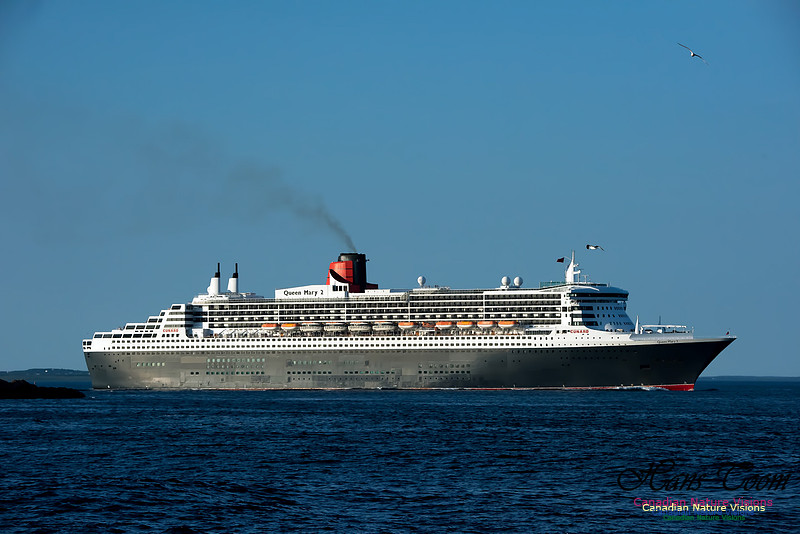
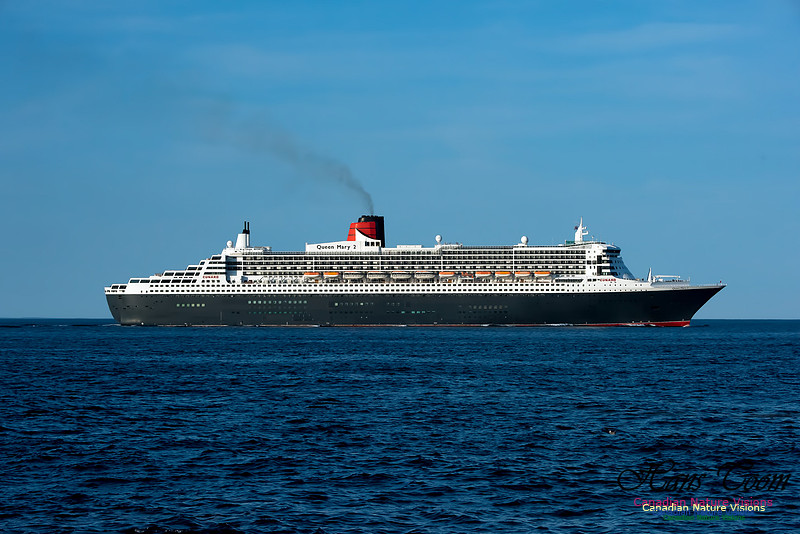
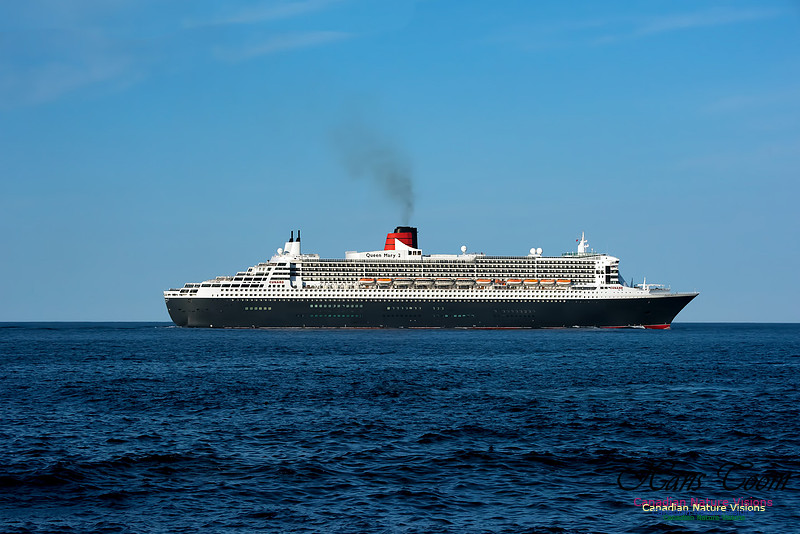
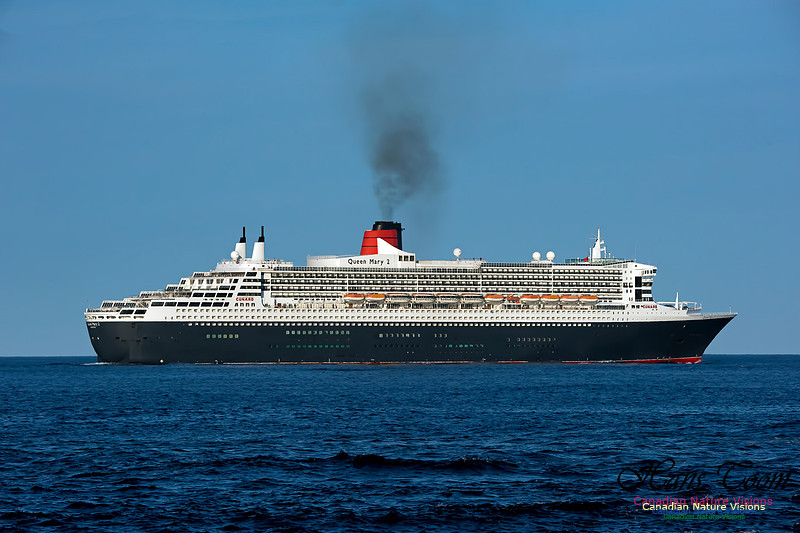
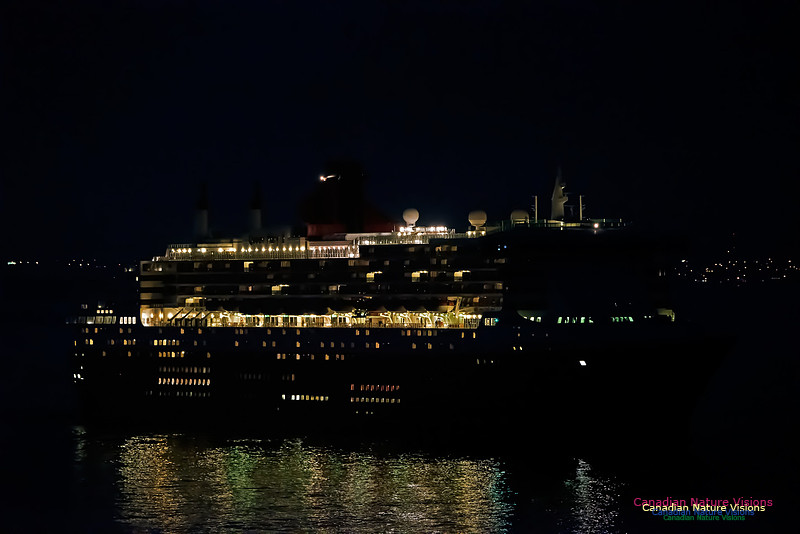
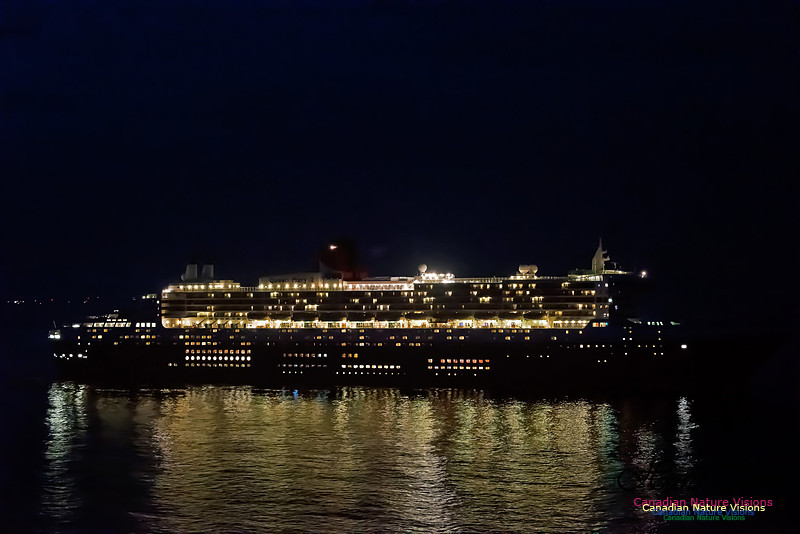
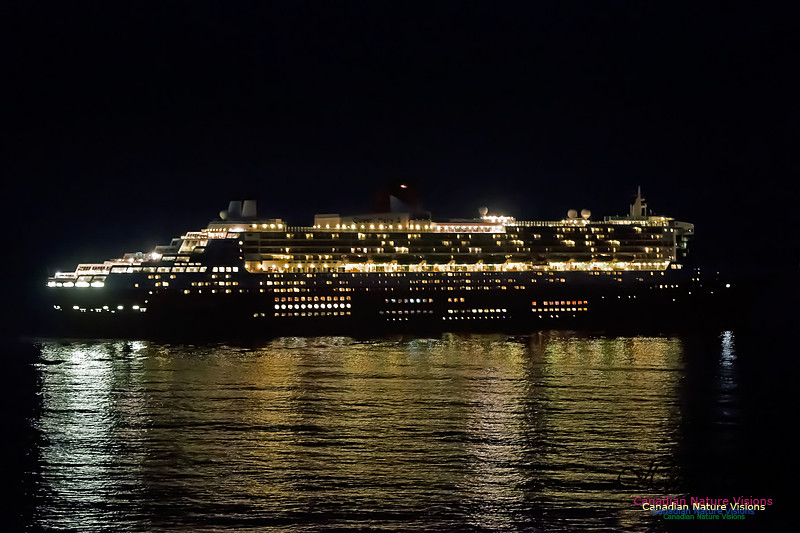
Queen Mary 2 at a Shoal Point SunriseThe morning of August 1 I saw the arrival of the Queen Mary 2 and the setting of the 2015 blue moon, the last blue moon we'll see until 2018. I had hoped that the Queen Mary 2 would arrive at sunrise at Shoal Point(Chebucto Head Light) but alas the ship passed just 10 minutes ahead of the sunrise. Queen Mary 2 at Shoal Point Just Before Sunrise
I used a shorter focal length lens to photograph the setting blue moon than I did for the blue moon rise the evening before. Most of the blue moon photographs are desaturated since colour adds nothing except when the moon is at the horizon.
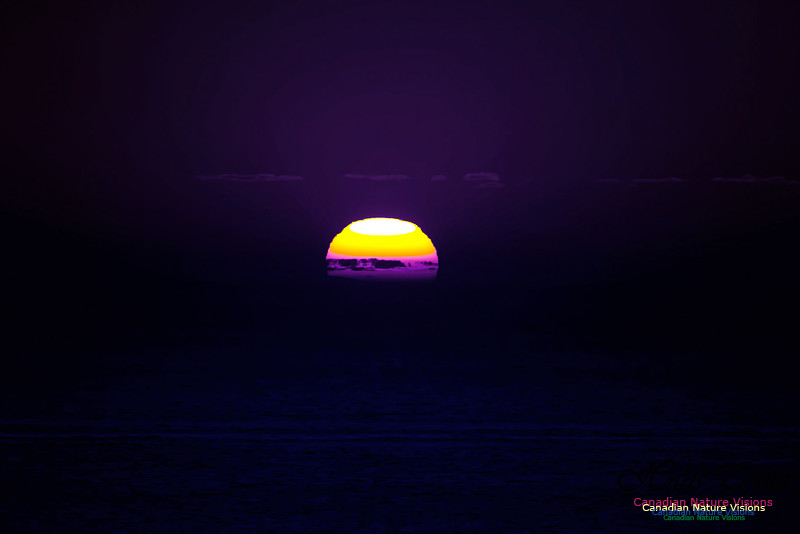
Sunrise at Shoal Point There is no colour added to this photograph.
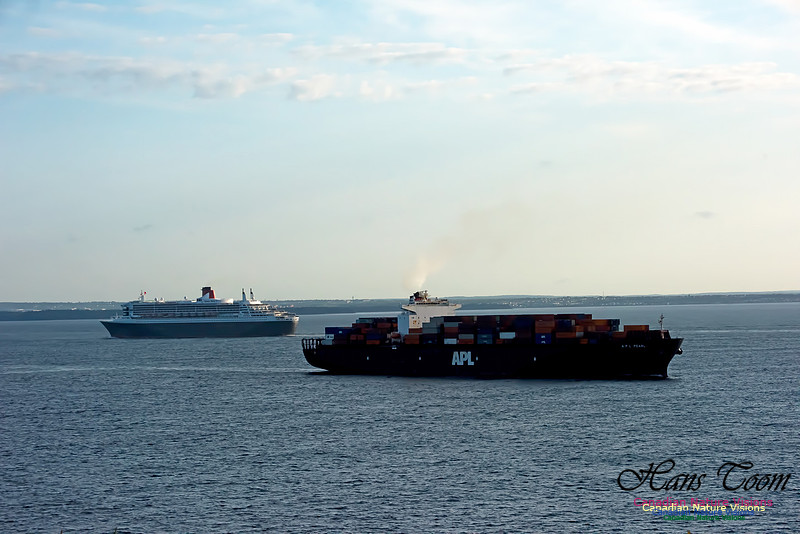
Sunrise is just in time for a freighter but late for the Queen Mary 2. .............next time!
The Grasses of the Coastal Barrens
Blue Moon Set August 1
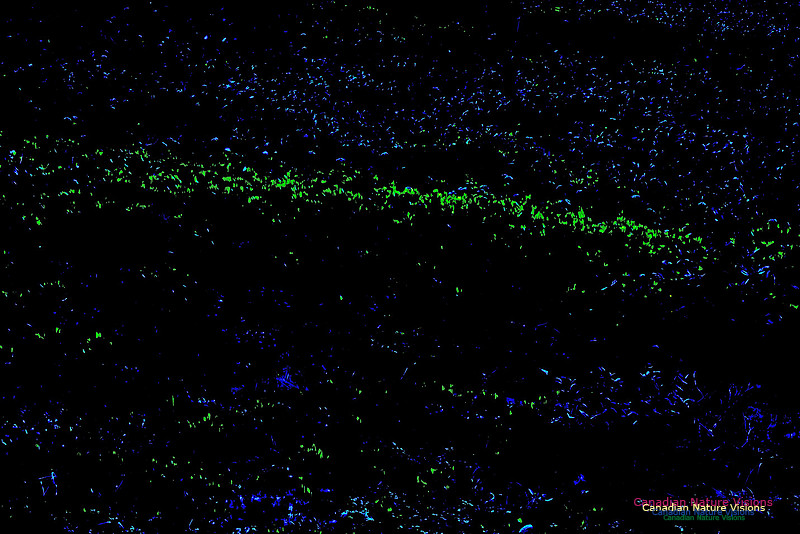
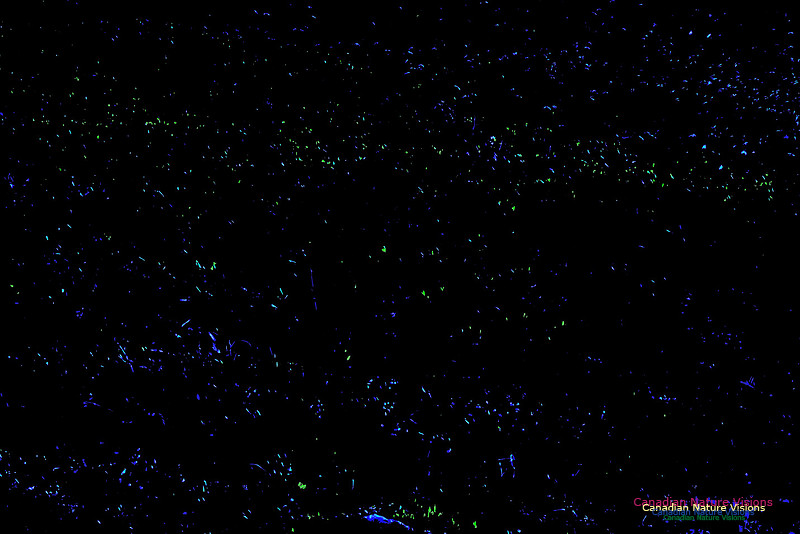
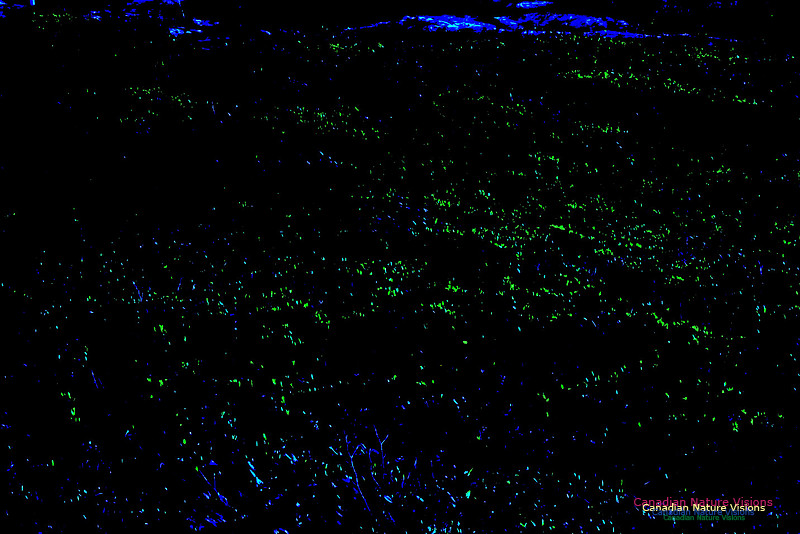
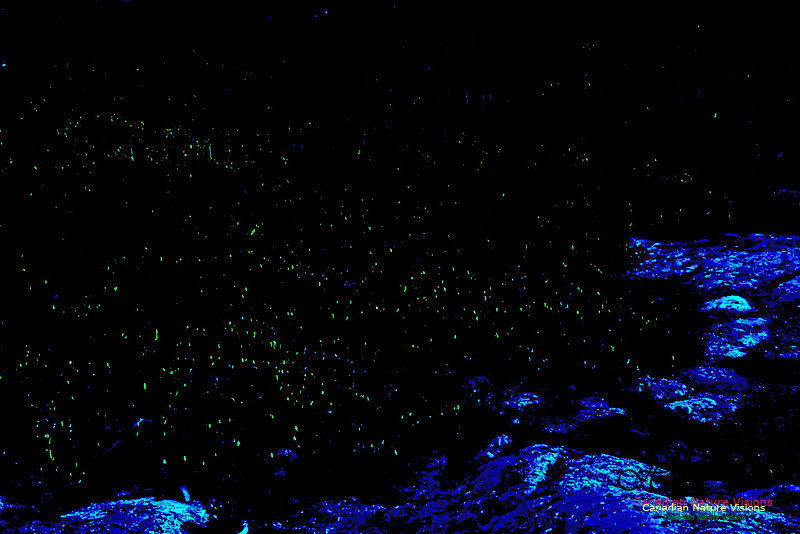
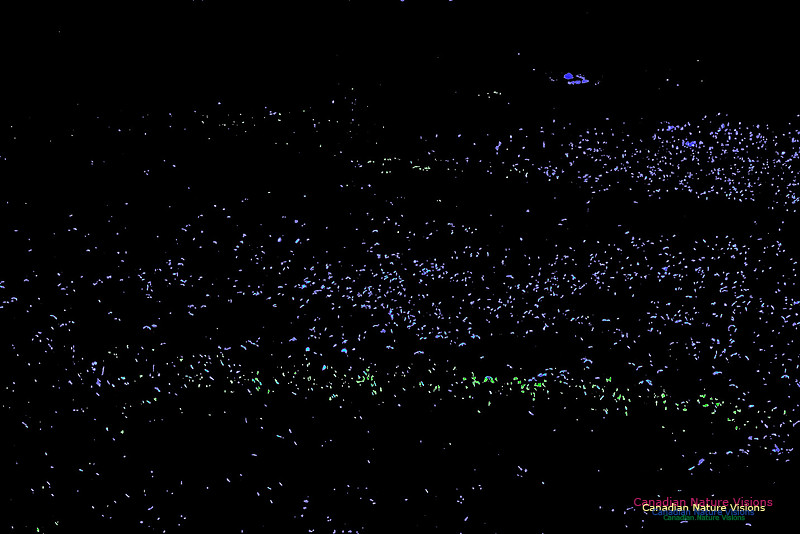
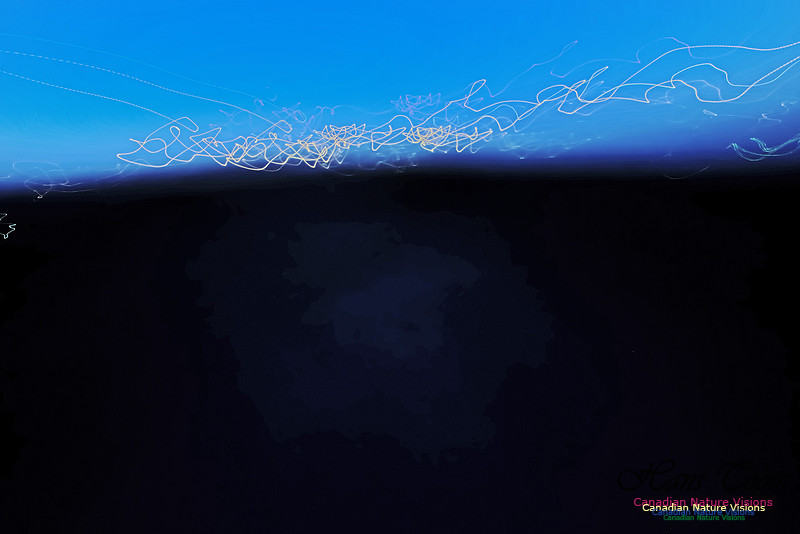
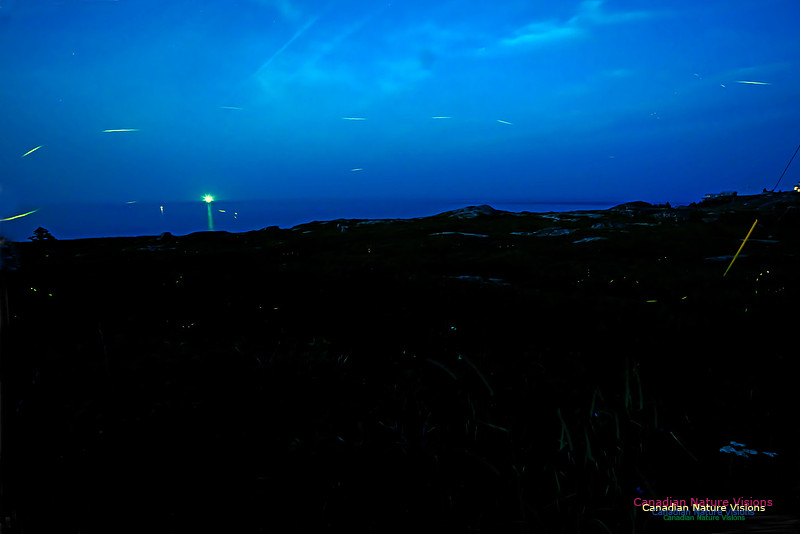
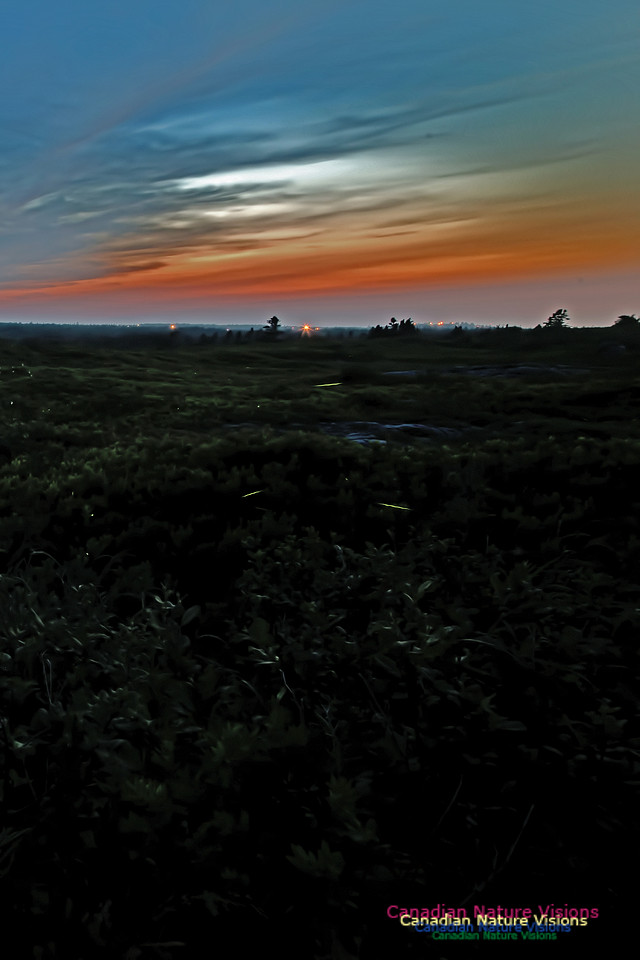
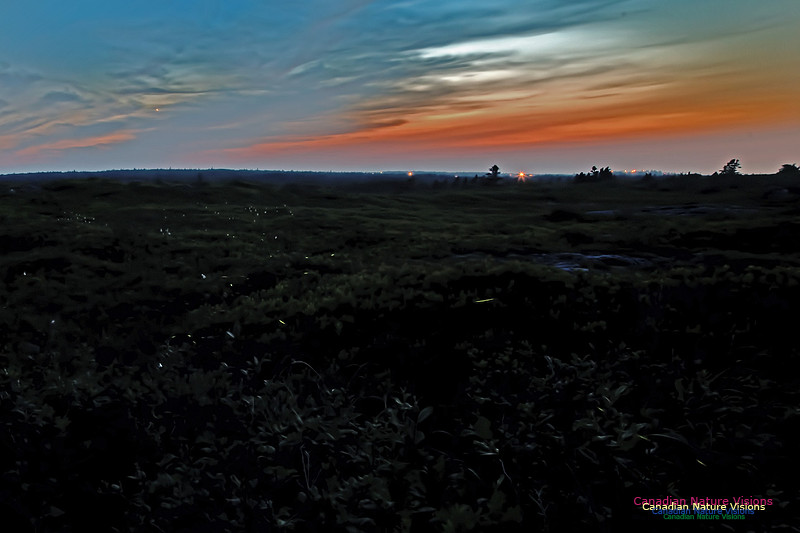
Fireflies on the Barrens of Shoal PointMy first attempt at photographing the Queen Mary 2, although a failure due to darkness, exposed Laura and I to the myriad of fireflies on the coastal barrens west of Chebucto Head Light. I made three attempts to finally come up with these photographs. Since the exposure is 30 seconds long many fireflies flare more than once but the effect is much like a Jackson Pollock painting. Jackson PollockFrom Wikipedia, the free encyclopedia
For the supercentenarian, see Jackson Pollock (supercentenarian).
Paul Jackson Pollock (January 28, 1912 – August 11, 1956), known professionally as Jackson Pollock, was an influential American painter and a major figure in the abstract expressionist movement. He was well known for his unique style of drip painting. During his lifetime, Pollock enjoyed considerable fame and notoriety; he was a major artist of his generation. Regarded as reclusive, he had a volatile personality, and struggled with alcoholism for most of his life. In 1945, he married the artist Lee Krasner, who became an important influence on his career and on his legacy.[1] Pollock died at the age of 44 in an alcohol-related single-car accident when he was driving. In December 1956, several months after his death, Pollock was given a memorial retrospective exhibition at the Museum of Modern Art (MoMA) in New York City. A larger, more comprehensive exhibition of his work was held there in 1967. In 1998 and 1999, his work was honored with large-scale retrospective exhibitions at MoMA and at The Tate in London.[2][3] Fireflies on the Coastal Barrens The green spots on the photos may be nodules of vegetation, or not. The white or white/blue spots are definitely fireflies. The bluish smudges are probably rocks.
This last photo is probably my best with lots and lots of firefly flares.
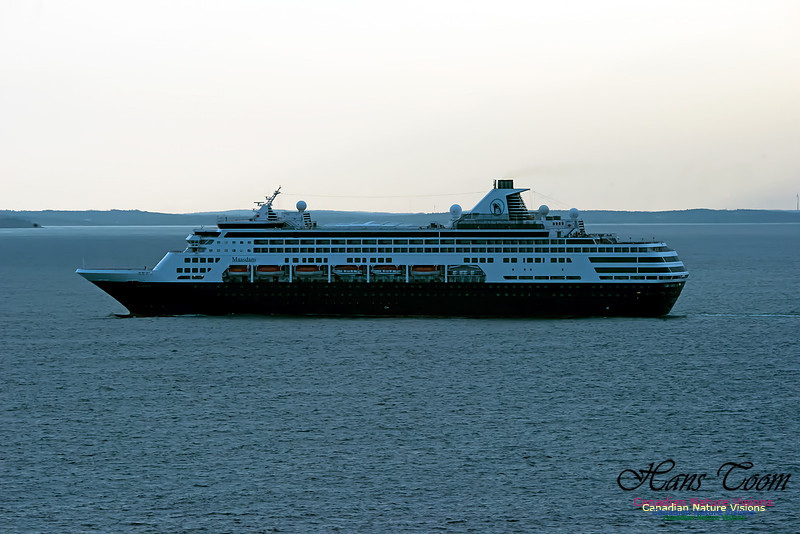
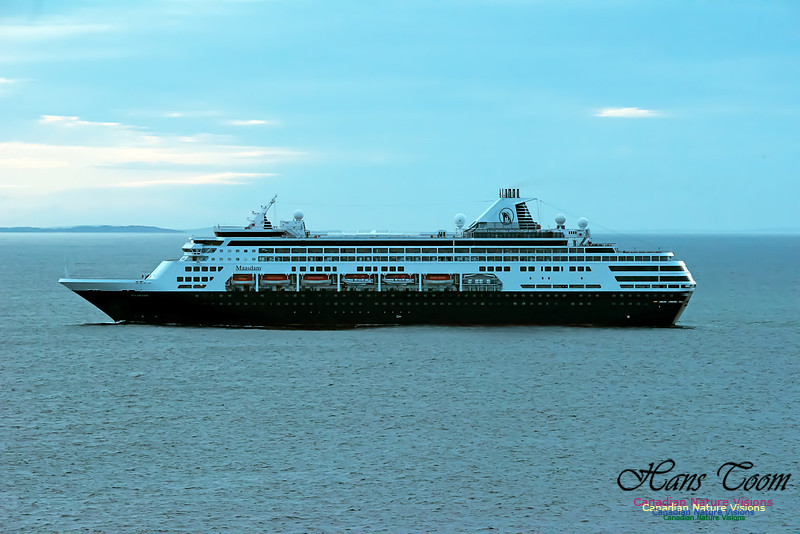
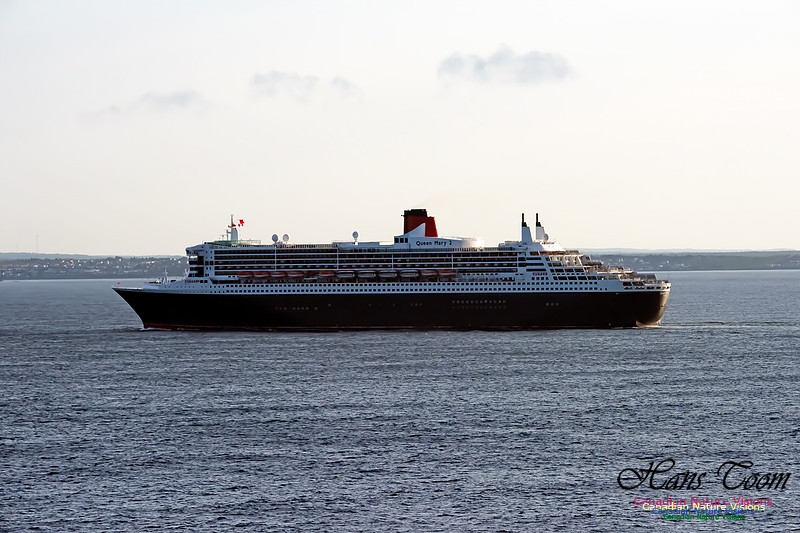
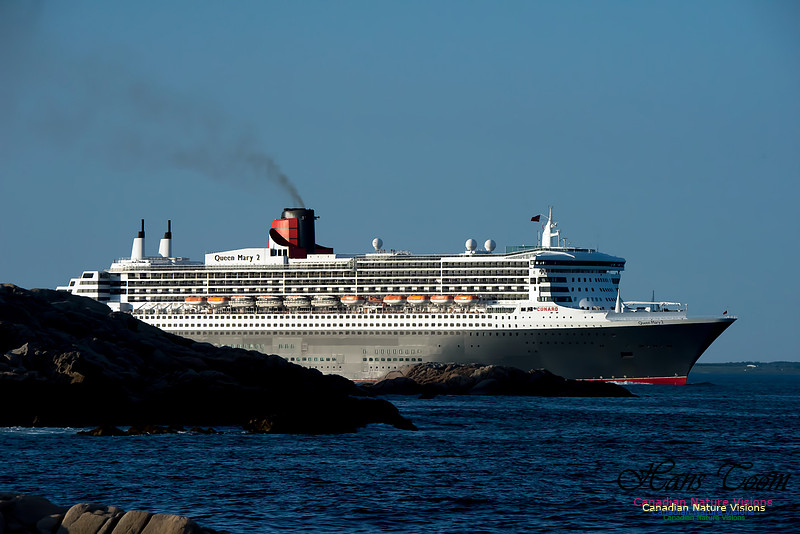
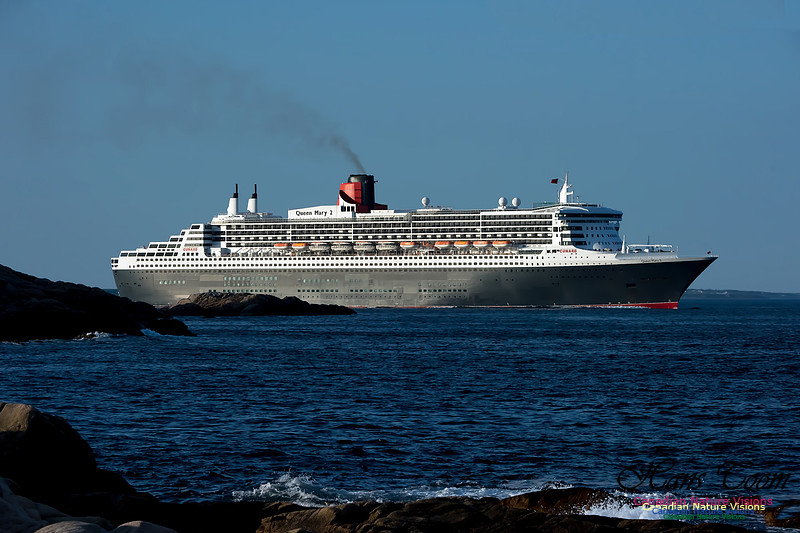
Queen Mary 2I attended at Chebucto Head Light(Shoal Point), July 10, to photograph the Queen Mary 2 on her first visit this year but alas the arrival and departure times were both in darkness so I decided to try again on her second visit. She arrived on a cloudy morning, July 16, with the Maasdam taking the lead into port. Maasdam
Queen Mary 2 Arriving
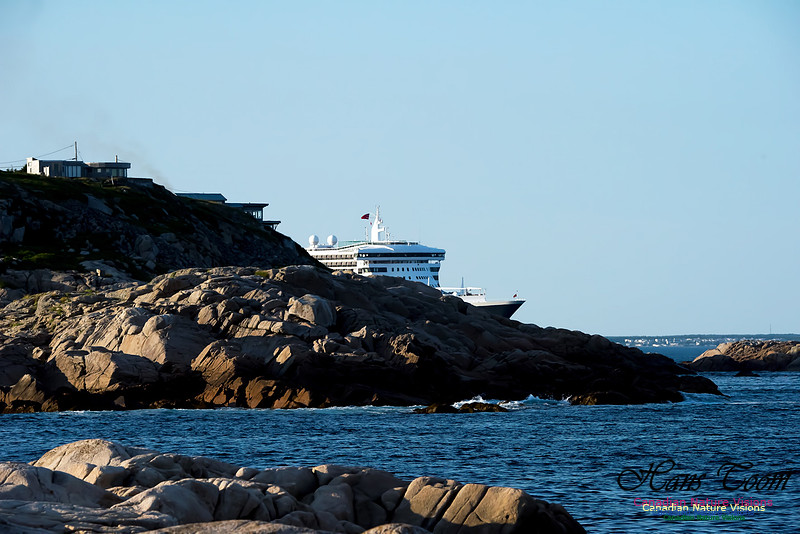
I went to Duncan Reef to photograph the Queen Mary 2 departing Halifax. The first photographs below show her rounding Chebucto Head(the real Chebucto Head) with Jeffries Island in the foreground. Jeffries Island guards the entrance to Duncan's Cove. The islet to the right of Jeffries Island is Parliament Rock. The gulls and cormorants sit on this rock and look all about squawking at each other for no apparent reason much like the Members of our Canadian Parliament.
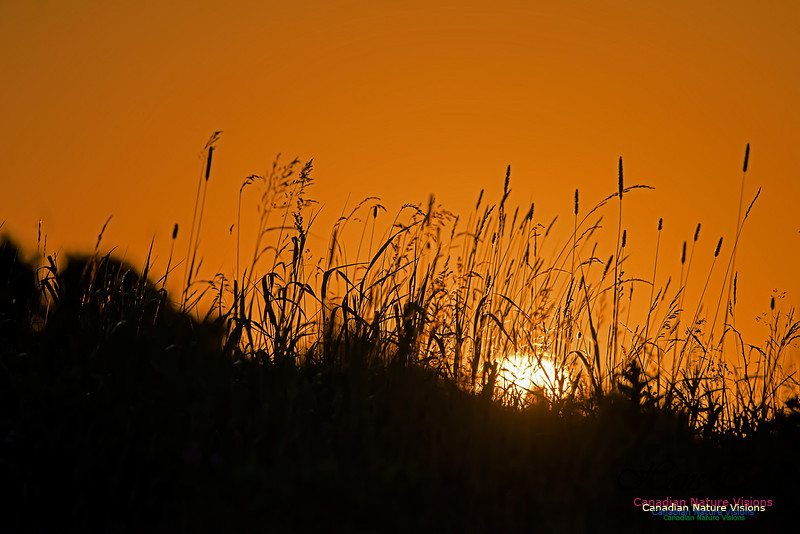
Queen Mary 2 and FirefliesLaura and I hoofed it up to Shoal Point, Friday July 10, the present location of what is known as the Chebucto Head Lighthouse. Chebucto Head is actually located about one half kilometre to the south just past the cluster of homes on the rocky knoll. During World War 2 the lighthouse was relocated to its present location to make room for harbour defence installations at Chebucto Head. A couple of the homes are built right on top of gun battery/search light/visual observation bunkers. We were at Shoal Point to observe the passing of the Queen Mary 2. Unfortunately due to all the celebratory activity at the Halifax Harbour the Queen Mary 2 did not arrive until about 10PM which was fortuitous as it turned out. The celebrations were due to the 175the year that Cunard Lines has visited Halifax. The Queen Mary 2 is the only ocean liner in the world, faster and stronger than any of the cruise ships that tend to calmer coastal waters, although cruise ships will make occasional world cruises in fair weather. Only the Queen Mary 2 can make all season Atlantic Ocean crossings. Samuel Cunard the founder of Cunard Lines was born in Halifax. Sunset Over the Coastal Barrens
Chebucto Head Lighthouse
By the time the Queen Mary 2 reached Shoal Point all of her display lighting, the funnels, the name plate, were switched off and she was moving in cruise mode. Queen Mary 2
It was just before the arrival of the Queen Mary 2 that we started to notice the fireflies. By the time we were trooping down the hill the barrens were alight with their flashes and light trails. I recognize a challenge when I see one so photographing these guys was my next project. The next evening was very windy which kept the mosquitoes away but most of the fireflies were grounded. I had little luck. I tried again last evening again with little success but I am getting closer to photographing the fireflies successfully. My first two tries were made with a 15-30mm wide angle zoom which captured all the fireflies just fine but they turned out as light spots on the frame, barely visible, with a few exceptions. I will try again with a longer lens. Fireflies This photograph is interesting! Note how three fireflies enter the frame(or leave) on the left and then do identical loops before proceeding on a random roller coaster ride.
The bright light in the frame is a ship anchored in the outer harbour.
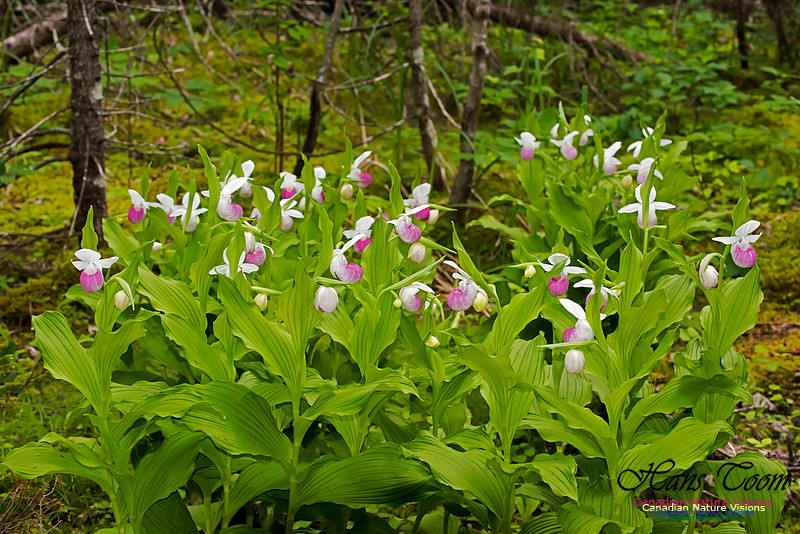
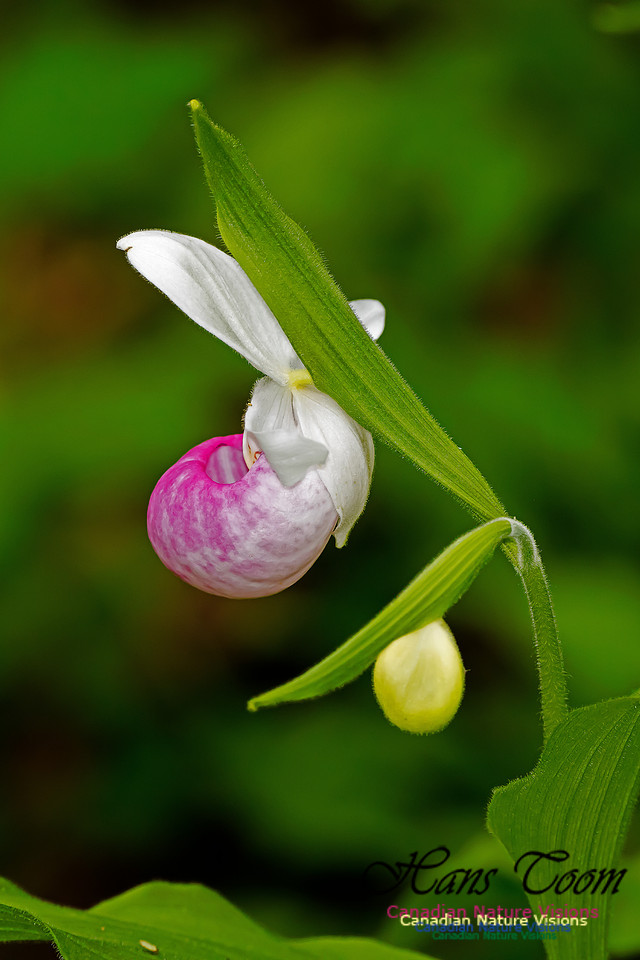
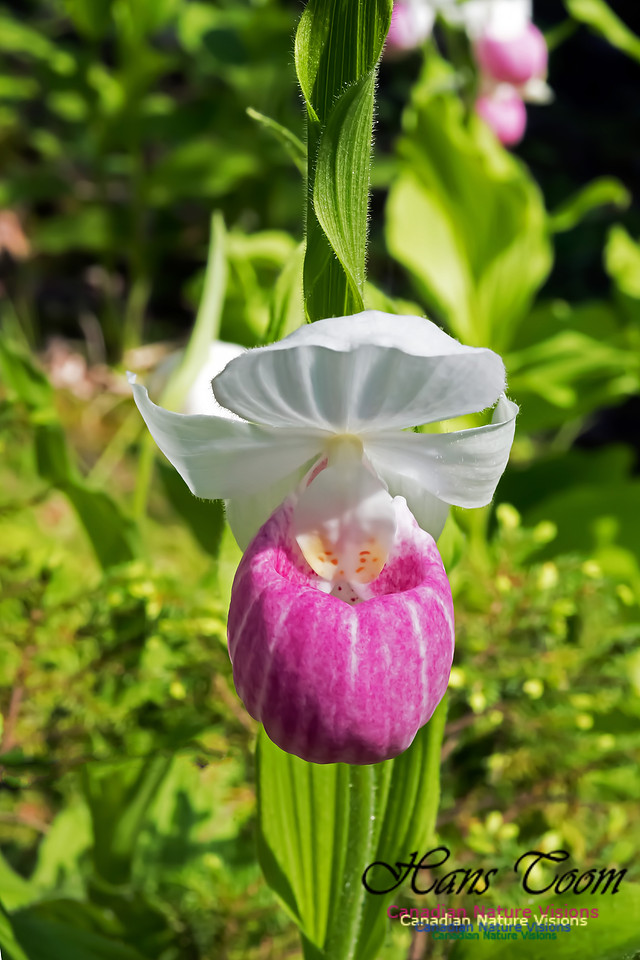
The key to this photography is to capture the fireflies without lighting up the landscape since long exposure times are required. Showy Lady' Slipper OrchidI visited Smiley's Provincial Park for a second time to photograph the Showy Lady's Slipper Orchid. The photographs from my earlier visit were poor since I was compelled to use flash photography due to the overcast sky and poor light. I only stayed about fifteen minutes moving amongst the orchid grove to obtain this batch of photos. Natural light photographs, even those in dappled shade or full sun are better than any flash photographs.
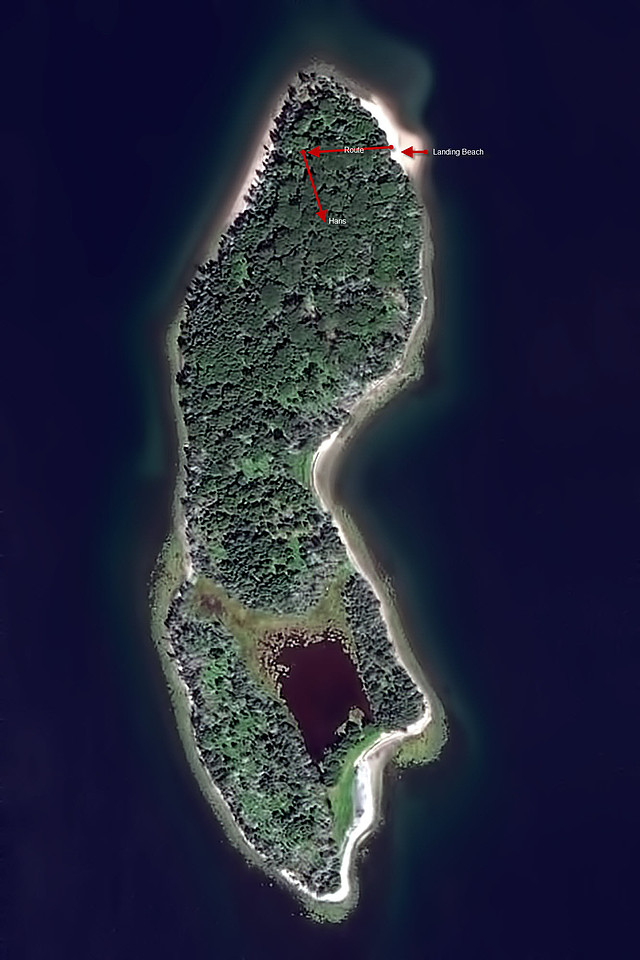
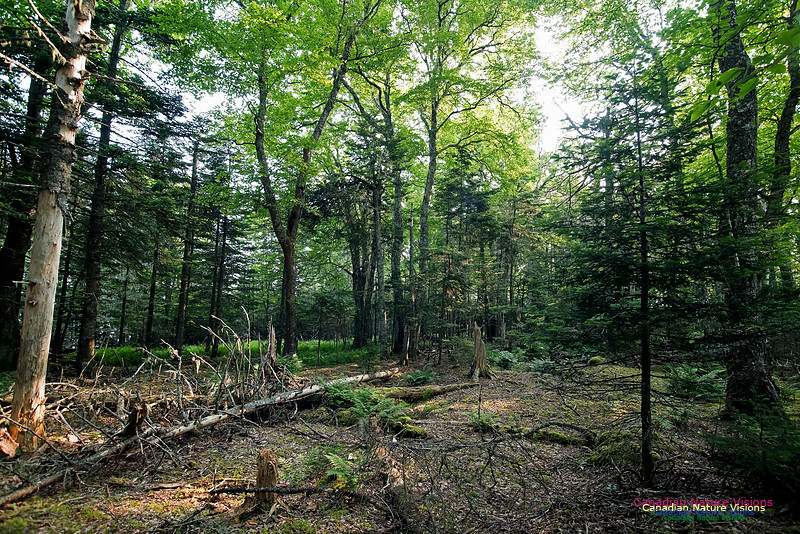
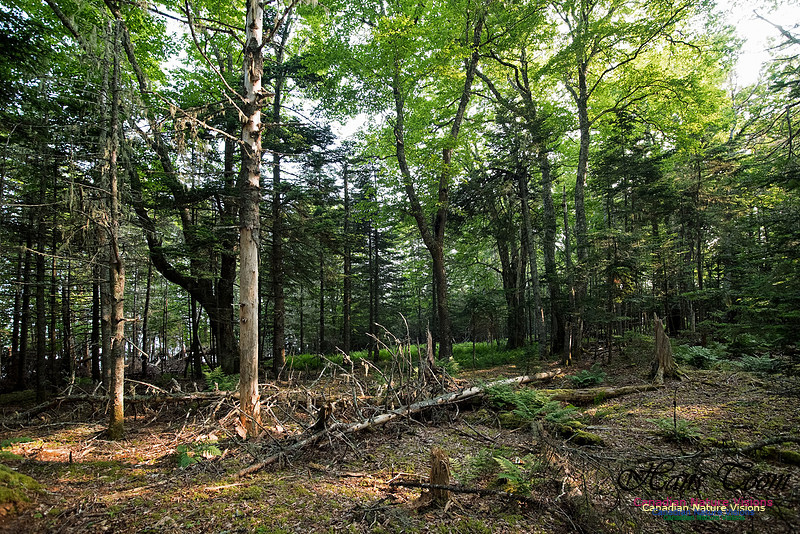
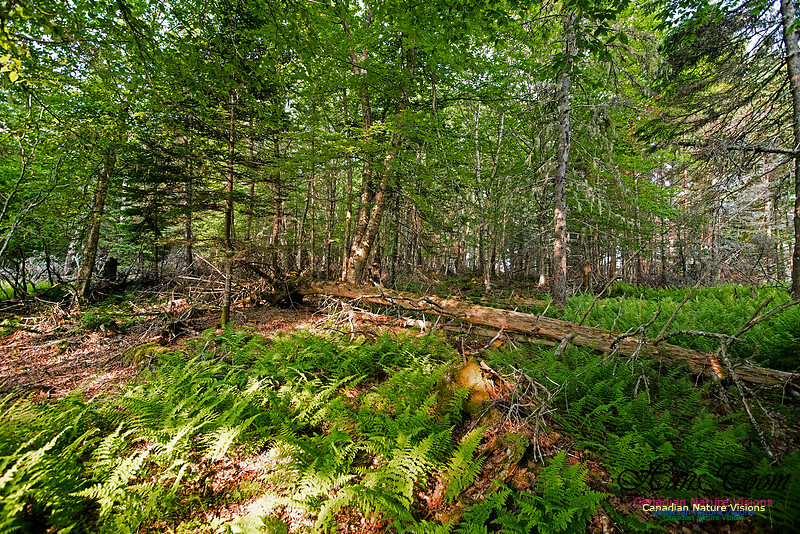
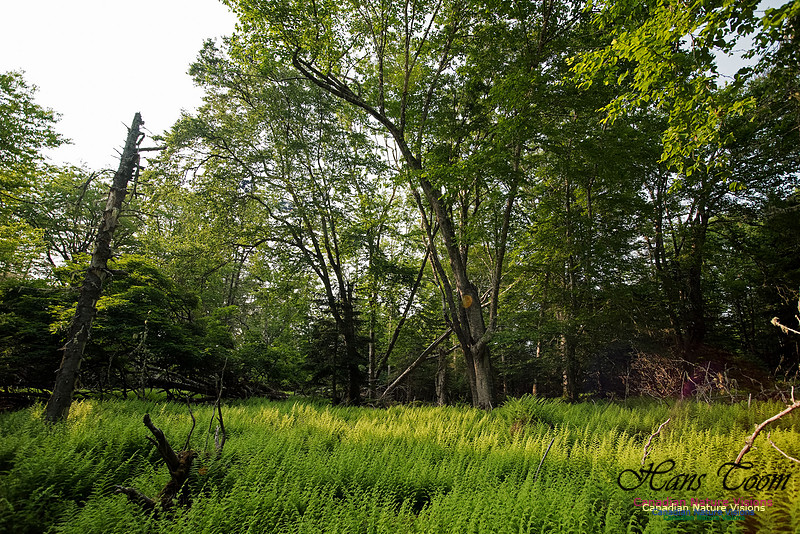
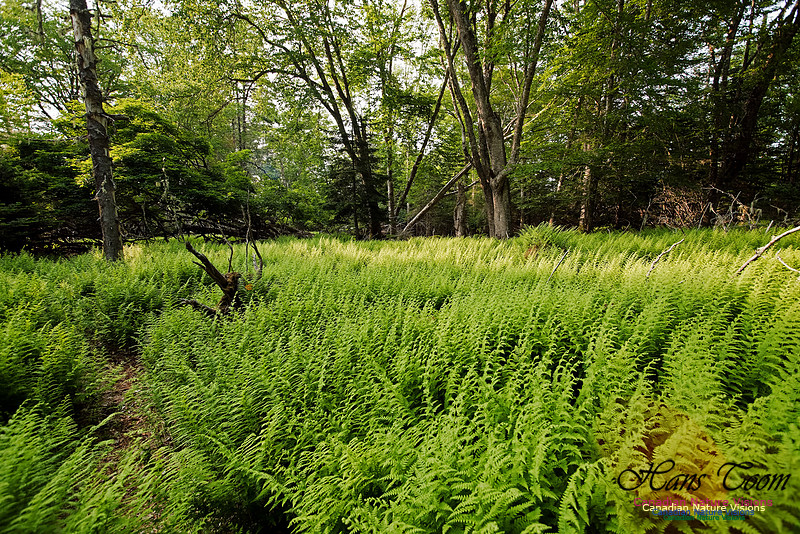
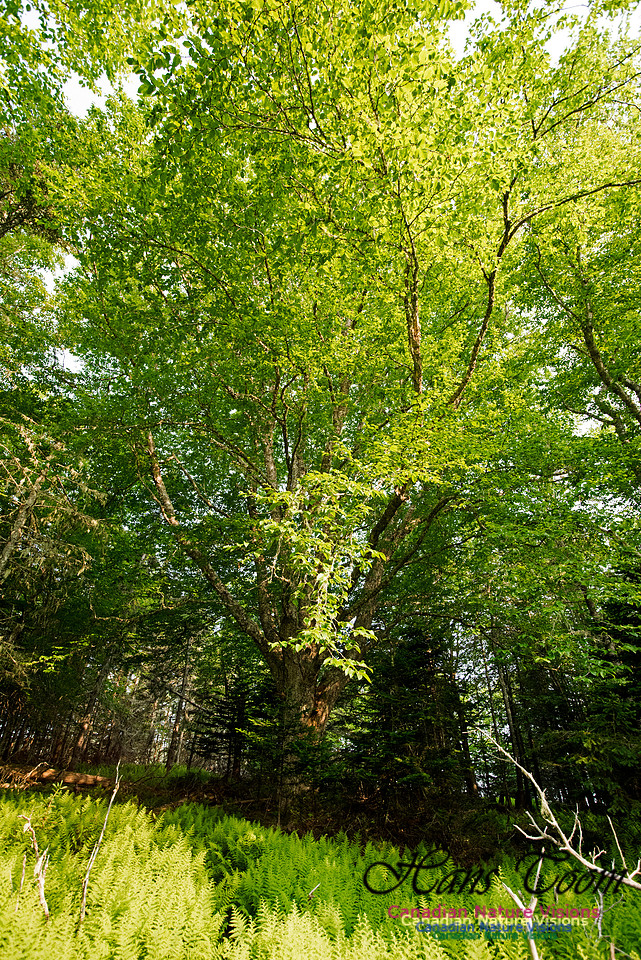
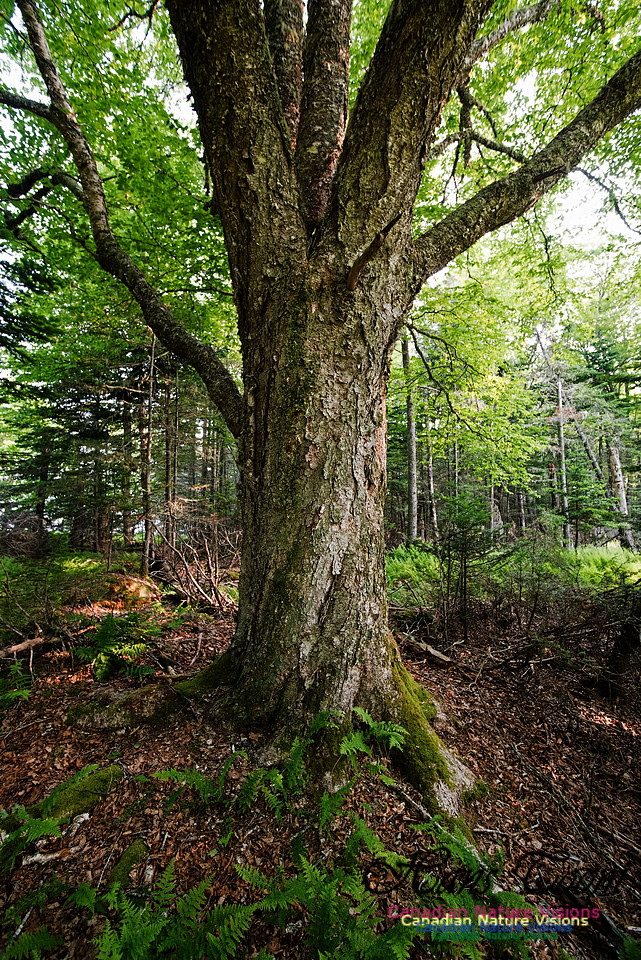
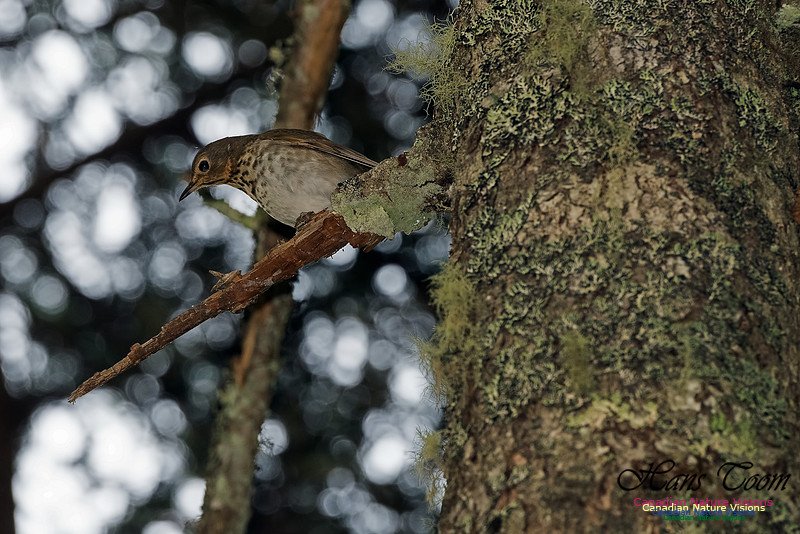
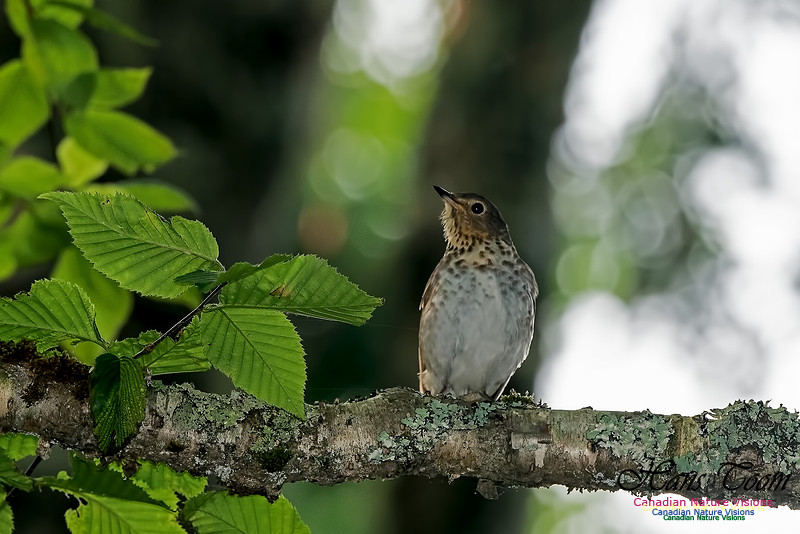
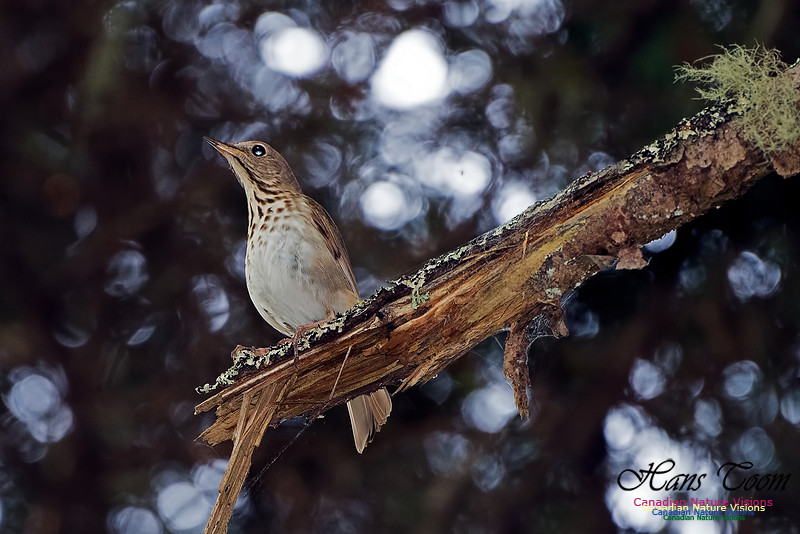
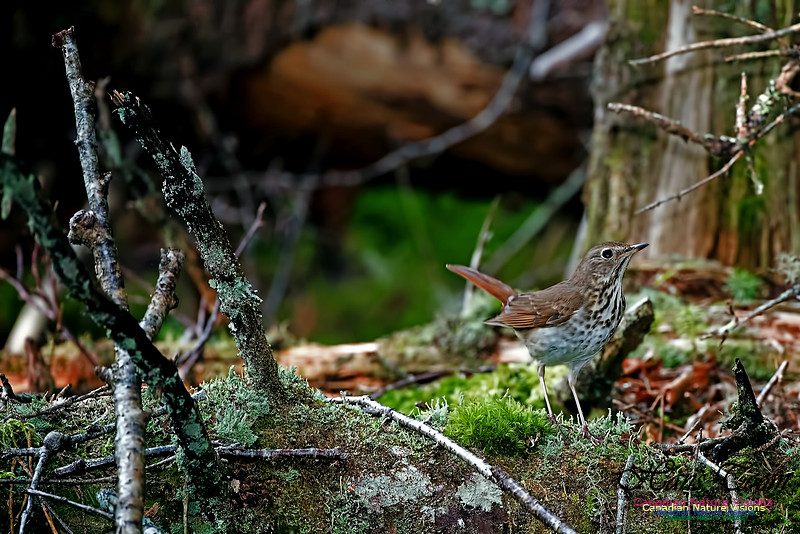
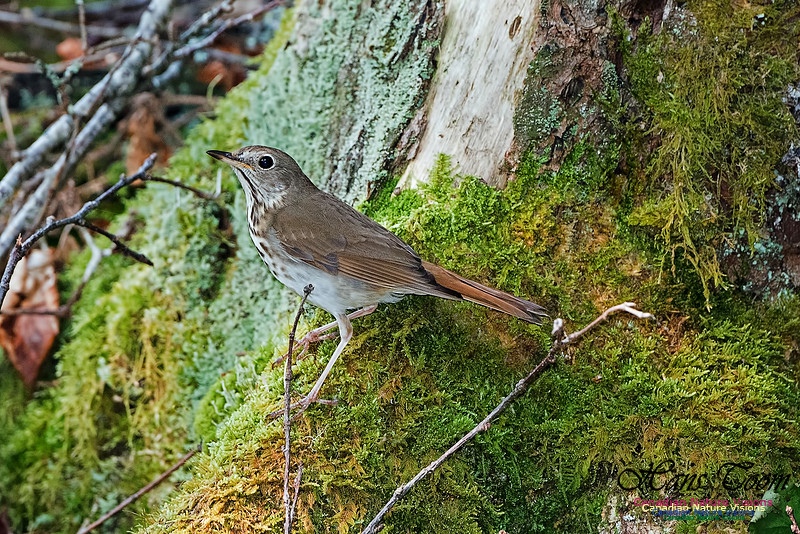
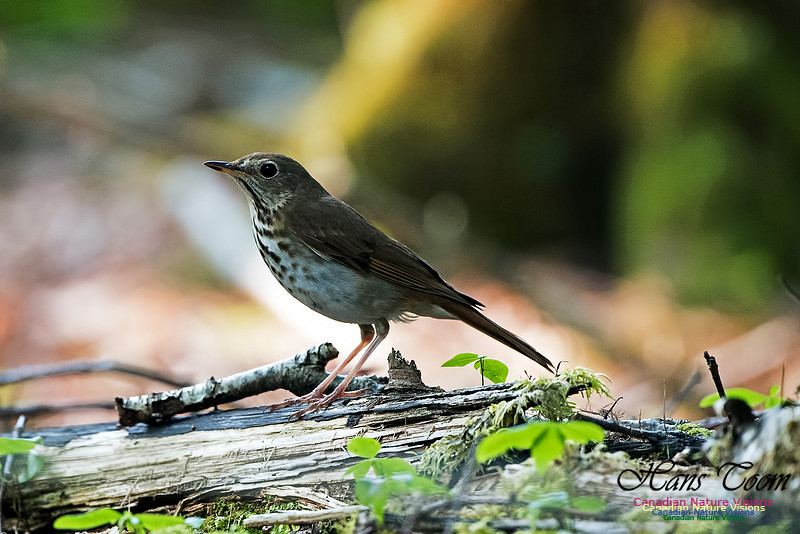
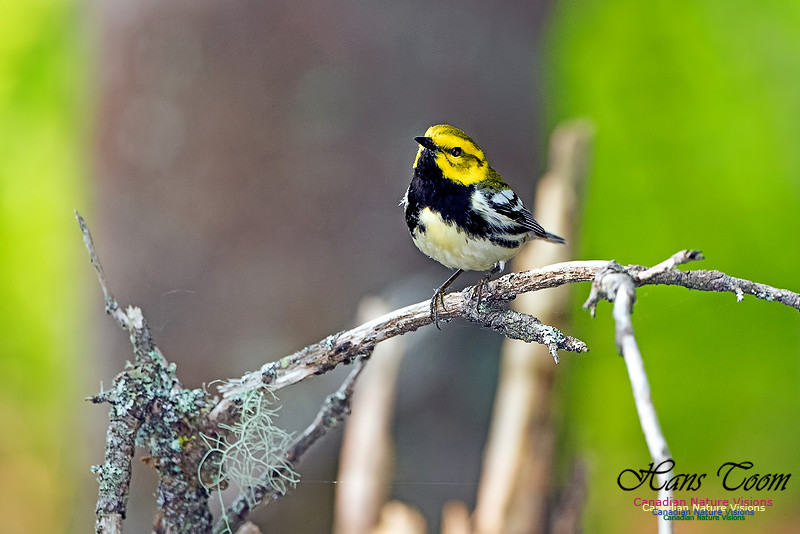
Old Growth Forest on Troop IslandBeth McGee ferried me over to Troop('s) Island on Monday July 6. I didn't do a tour of the island or look for specific species of plant or bird. I wanted to spend time in the centre of the old growth forest near the giant yellow birch and just look and listen. I brought along a chair to sit in and just waited for things to happen. There was no disruptive noise present. The only sound emanating from the forest canopy was the sweet melody of the Swainson's Thrush. At times a Hermit Thrush joined the chorus. Other times Northern Parula and Black-throated Green Warbler would also join in. It was magical. I walked around the giant yellow birch and tried to photograph it but no lens can do it justice. I used a 15mm wide angle lens on a full frame sensor without vertical perspective correction but the top portion of the tree was still out of the frame. From where I was walking I could see the eastern and western shores of the island(St. Margaret's Bay). Troop Island
The Old Growth Forest
The Giant Yellow Birch Courtesy of Wikipedia Betula alleghaniensisFrom Wikipedia, the free encyclopedia
Betula alleghaniensis (Yellow Birch), is a species of birch native to eastern North America, from Newfoundland to Prince Edward Island, Nova Scotia, New Brunswick, southern Quebec and Ontario, and the southeast corner of Manitoba in Canada, west to Minnesota, and south in the Appalachian Mountains to northern Georgia. It is a medium-sized deciduous tree reaching 20 m tall (exceptionally to 30 m) with a trunk up to 80 cm diameter. The bark is smooth, yellow-bronze, flaking in fine horizontal strips, and often with small black marks and scars. The twigs, when scraped, have a slight scent of oil of wintergreen, though not as strongly so as the related Sweet Birch. The leaves are alternate, ovate, 6-12 cm long and 4-9 cm broad, with a finely serrated margin. The flowers are wind-pollinated catkins 3-6 cm long, the male catkins pendulous, the female catkins erect. The fruit, mature in fall, is composed of numerous tiny winged seeds packed between the catkin bracts. Betula alleghaniensis is the provincial tree of Quebec, where it is commonly called merisier, a name which in France is used for the wild cherry. The name "yellow birch" reflects the color of the tree's bark.[1] The wood of Betula alleghaniensis is extensively used for flooring, cabinetry and toothpicks. Most wood sold as birch in North America is from this tree. Several species of Lepidoptera use the species as a food plant for their caterpillars. See the list of Lepidoptera that feed on birches.
Here are two of my photographs from last year's visit to give perspective to the size of the tree. The model is Mike Lancaster. All the other photos are from this visit. Giant Yellow Birch
The Old Growth Forest
The Giant Yellow Birch
Swainson's Thrush
Hermit Thrush
Black-throated Green Warbler
Northern Parula
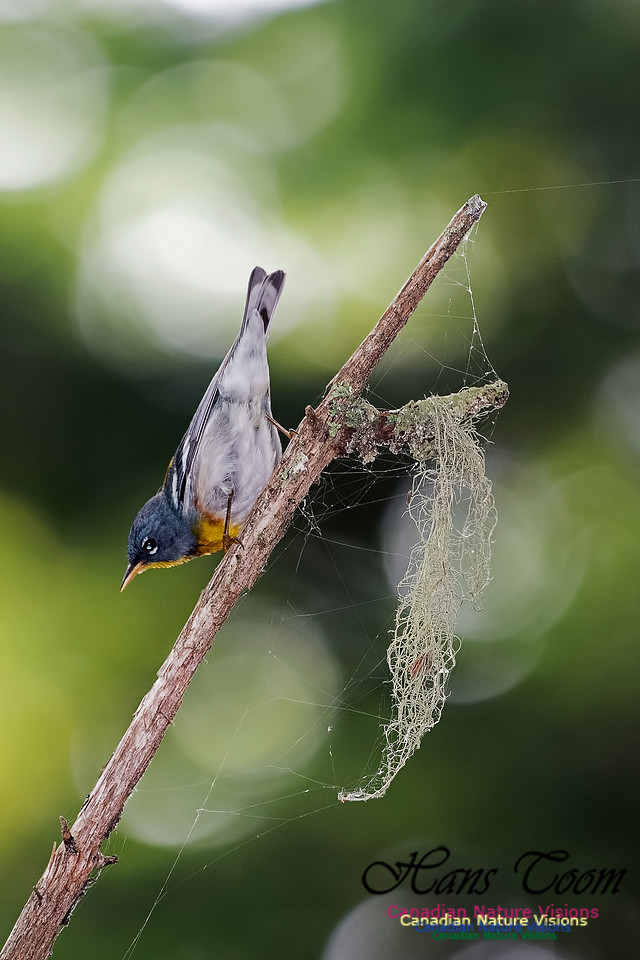
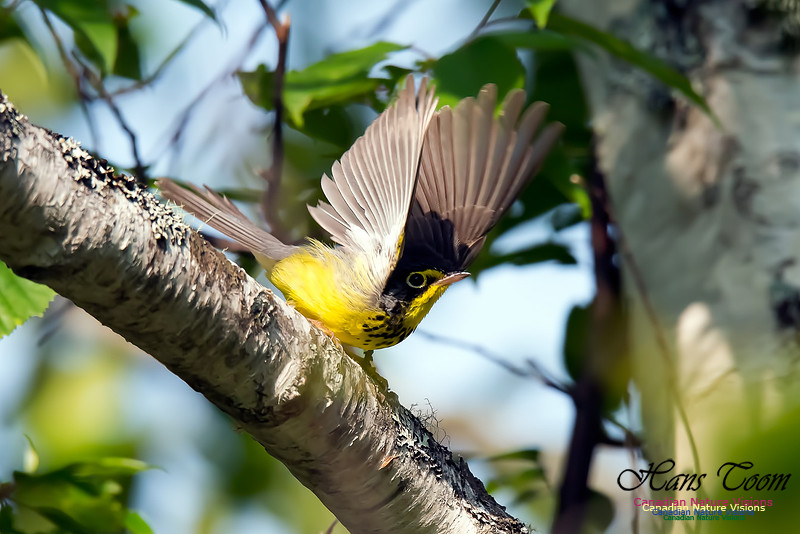
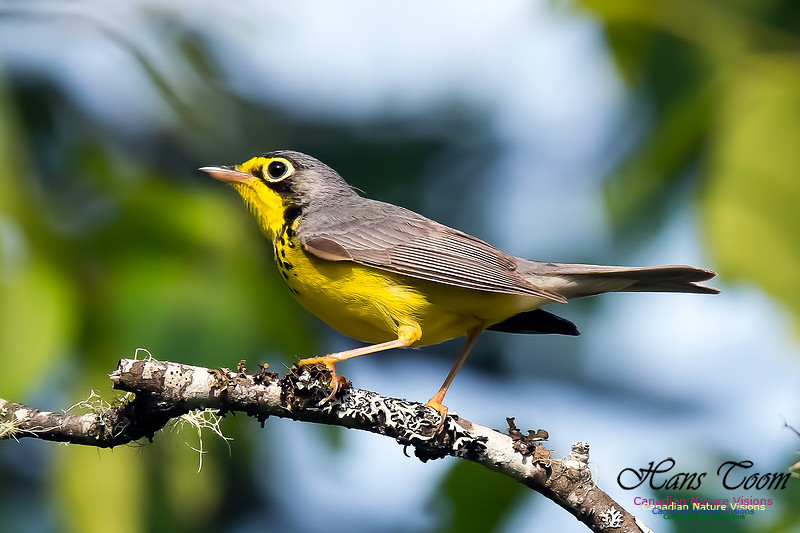
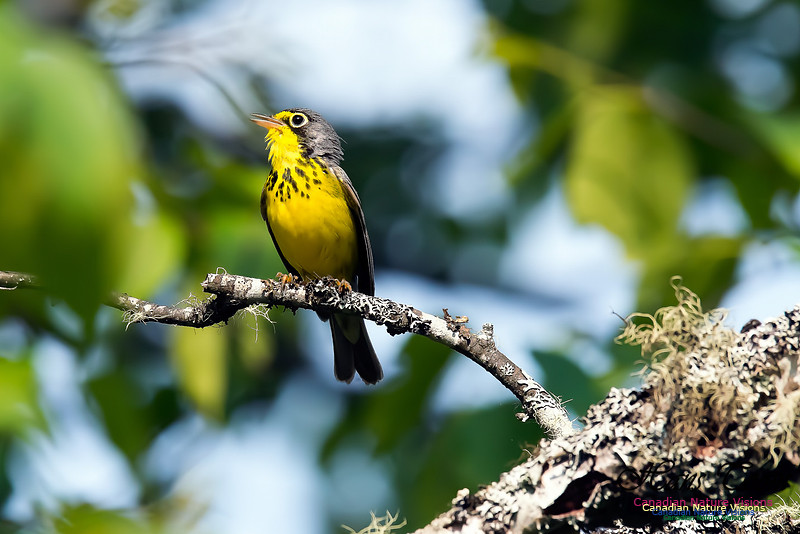
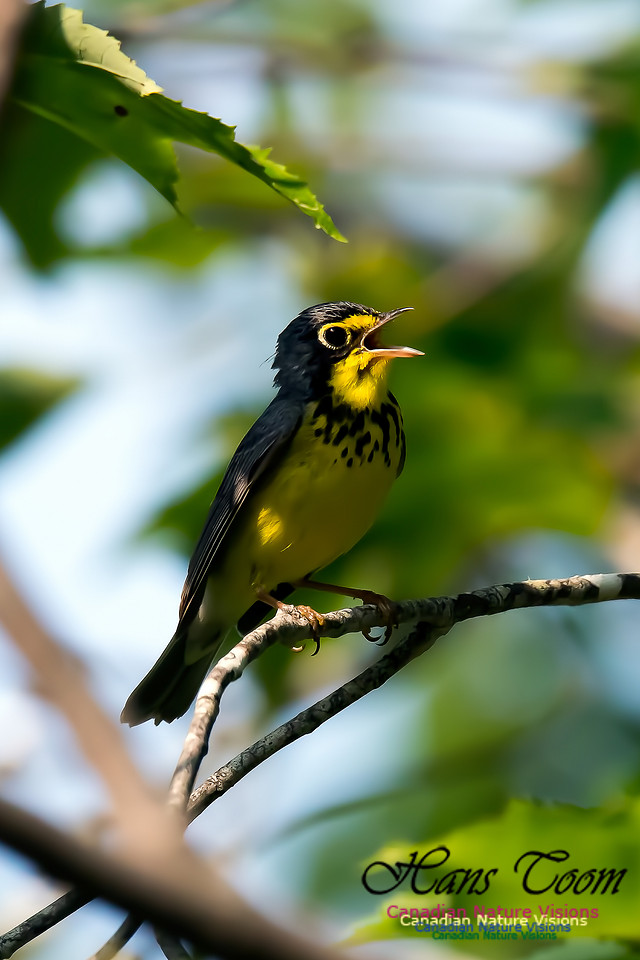
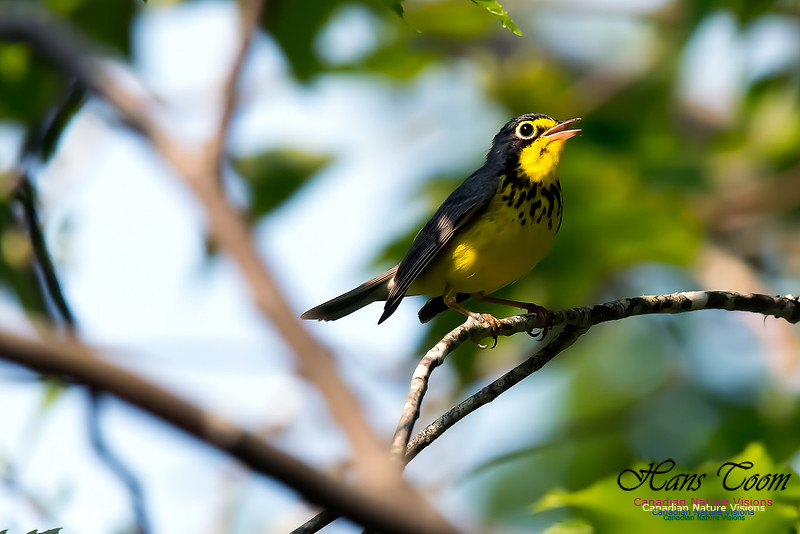
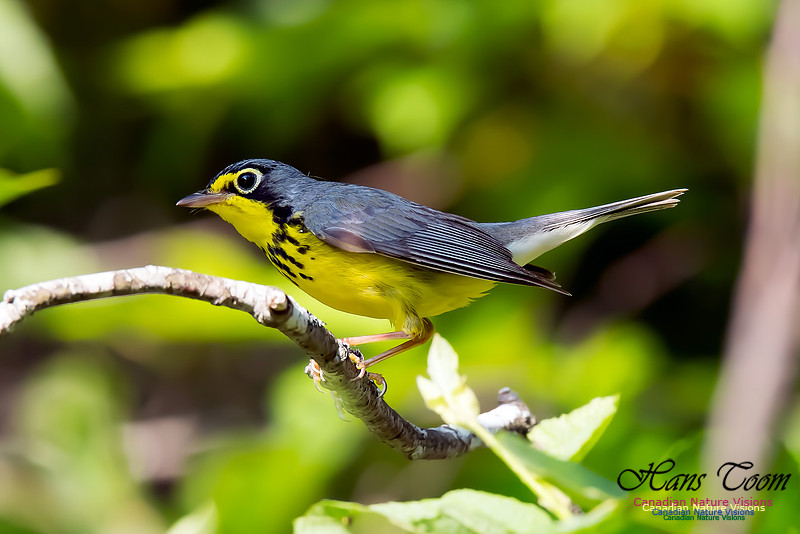
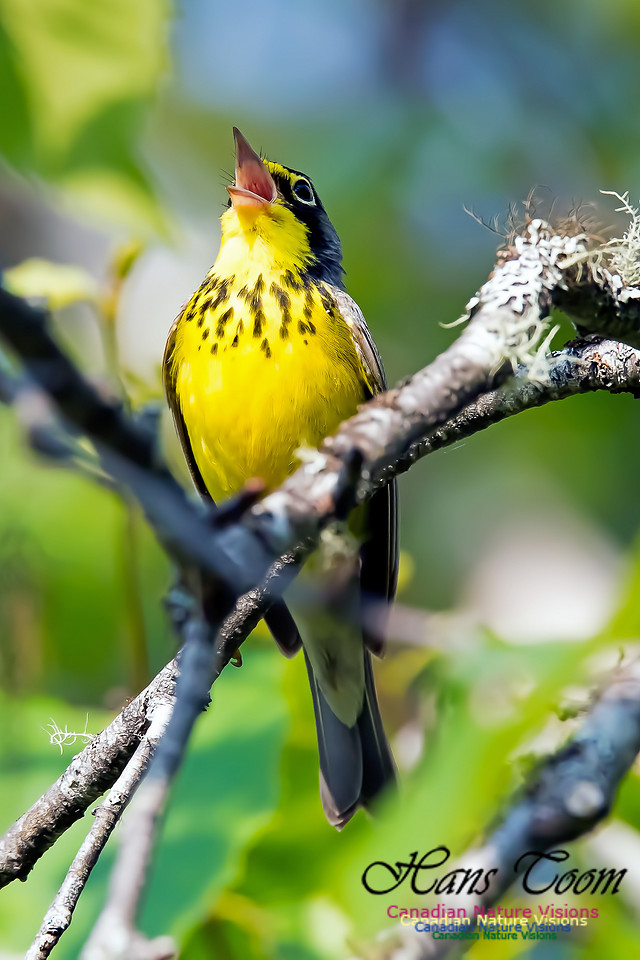
Canada Warblers at Jerry Lawrence Provincial ParkI visited the Canada Warblers at Jerry Lawrence Provincial Park Saturday July 4. I saw an adult male but no females or youngsters. I'll return in a couple of weeks for another look. I only visited one location although they nest in a number of places in the park.
|
|||||||||||||||||||||||||||||||||||||||||||||||||||||||||||||||||||||||||||||||||||||||



.jpg)