Tundra SwanThe Tundra Swan was once known as the Whistling Swan. It is very similar in appearance to the rare and endangered Trumpeter Swan so hunters have to show great care when blasting away at the sky. I've seen them in large groups in Oak Hammock Marsh, north of Winnipeg, and overflying our Winnipeg home. A memory just popped into my mind worth recounting. I was watching the Aurora Borealis over our Winnipeg home one night when a flock of great large birds glided past overhead in total silence whilst silhouetted against the Northern Lights. I don't expect to see such a spectacle again. They were not Tundra Swans but White Pelicans. Tundra Swan
Wood DuckThe Wood Duck is the best looking duck I have met in my travels. This majestic duck was almost hunted out of existence. It is hard to believe that the human race could be so uncaring and reckless about the existence of a sentient species. The bird is a cavity nester, usually over water, so the building of Wood Duck boxes became a national pastime for caring people in Canada and the United States. I recall nest boxes on trees overhanging the Red River from the United States border to Lake Winnipeg. Wood Duck
Spotted SandpiperThe Spotted Sandpiper arrives early and leaves late. It breeds in most of Canada and the United States, a true continental bird. Like most sandpipers they are easy to photograph if you just sit and wait for it to walk by. In the fall the spots disappear and the bird has a different look but it is easily recognizable by the white tick up the side from the white flank. Spotted Sandpiper
Tricoloured HeronThe Tricoloured Heron has stunning good looks. It is also relatively tame so Nova Scotia birders and photographers take advantage of this bird by chasing it around with cameras literally within two metres of the bird. The bird couldn't even feed. To my shame as I watched this spectacle I didn't blast my car horn to scare off the bird. Next time! It is the foolishness of bird societies and bird reports that allows this abuse of our birds to continue. There is a code of ethics but very few people abide by it or know it exists. The rules are simple; approach slowly and if the bird backs away or moves you are too close. Tricoloured Heron
RhodoraRhodora is widespread and common in Nova Scotia. The more common reddish version is found in wet roadsides and edges of bogs and ponds. The rare White Rhodora prefers dry habitat and is also found on roadsides if your lucky since our local highways folks like to mash these plants and all other roadside plants with an unusually crude machine that doesn't cut but tears the plants apart. Rhodora
Fringed White OrchidThe White Fringed White Orchid is found in wet bogs typically sphagnum. When you find this lovely orchid wear long rubber boots or regret the visit. You will sink into the bog as you photograph this orchid. Look for it late July. Fringed White Orchid
Showy Lady's Slipper OrchidThe Pink Lady's Slipper Orchid is endangered and only found in a few locations in Nova Scotia, locations that are all best kept secret. The management of Nova Scotia Provincial Parks, the Ministry of Natural Resources, ignores their responsibility by not providing appropriate walking platforms around the well known colonies This is to prevent trampling of the plants. Woodland walkways are not expensive to construct even over wet areas. Put down 12" X 12" sleepers and then 2" X 12" walking planks over the sleepers and handrails to deter the public from wandering. The Department of Natural Resources in Nova Scotia could learn a lot about park management from the federal Department of the Environment who manage the national parks. Showy Lady's Slipper Orchid
Pink Lady's Slipper OrchidThe Pink Lady's Slipper is widespread and common in Nova Scotia. It blooms in early June and fades by the end of June depending on the local micro climate. There is a pure white variation which is also common occurring perhaps once out of 20-50 plants but since there are often hundreds of this orchid along favourable woodland trails finding white variations is not a challenge. Pink Lady's Slipper Orchid
Wetlands Trail, Mount Uniacke Museum EstateThe Wetland's Trail at Mount Uniacke Museum Estate is among my favourite trails. Unfortunately, like most of the province it is now infested with ticks. Look for warblers(Blackburnian and Bay-breasted), wildflowers, butterflies, dragonflies and of course gorgeous scenery. Wetland's Trail Mount Uniacke Museum Estate
Blue Flag IrisThe Blue Flag Iris is among our most elegant wildflowers. It is common and widespread throughout the province of Nova Scotia often easily found in round side drainage ditches. It grows in our back yard bog sometimes in the hundreds. Blue Flag Iris
Baltimore OrioleThe Baltimore Oriole has been a hard bird for me to photograph well although others have had good success. I had Baltimore Orioles visiting a meal worm feeder early in the morning one winter. I had to get up one hour before sunrise to put out the meal worms under a small lamp to keep them from freezing. The orioles always arrived right after I put out the meal worms. I didn't appreciate the early rising to feed them or ordering meal worms from Ontario. I was nose to nose with the orioles although I couldn't photograph them due to the low light and only a mug would use a flash. Speaking of flash we have the Southern Flying Squirrel visiting our bird feeders at night again. This is the rare flying squirrel. The Northern Flying Squirrel is larger and more common. The first visits several years ago were announced by our motion activated security light and this time our cats saw them in the dark. Baltimore Oriole
Red FoxThe Red Fox is native to Nova Scotia and much loved for its interesting behaviour and good looks. They are easily tamed by feeding but this is not a good practise for a fox or any wild animal since they can become dependent especially if they are feeding young. Foxes can bite if cornered but prefer to run away. They are unlikely to attack a domestic or feral cat since cats are quite capable of protecting themselves with claws, teeth and speed. Red Fox
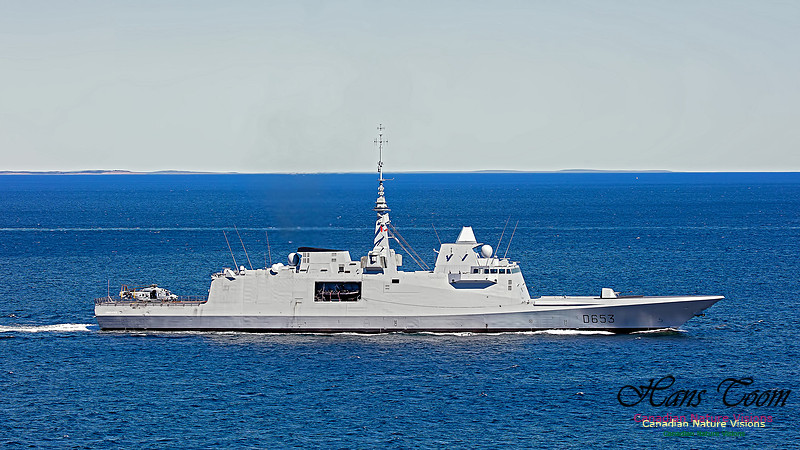
NATO NavyOccasionally Halifax enjoys a visit by war ships of the NATO navies. They are easy to photograph due to the city's small mid harbour or at look offs like Shoal Point and Chebucto Head where they enter or leave the outer harbour. A mid sized zoom lens is best for this kink of photography. NATO Navy SPS Patino A14
FS-LANGUEDOC
HMCS Athabaskan
HMCS Charlottetown
HMCS Charlottetown
HMCS Frederiction
HMCS Glace Bay
HMCS Goose Bay
HMCS Iroquois
HMCS Kingston
HMCS Moncton
HMCS Preserver
HMCS Summerside
HMCS Toronto
HMCS Winnipeg
HMDS Thetis
HMS Monmouth
HMS Scott
HNLMS Van Speijk (F828)
Monge (A601)
Perle (S606)
USNS Dwight D. Eisenhower
USNS Robert E Peary
USS Bulkeley & USS Gonzalez
USS Bulkeley
USS Gonzalez
Showy Lady's Slipper Orchid 2The rare and endangered Showy Lady's Slipper Orchid is our largest and latest blooming orchid not reaching its peak until the first week of July. It prefers neutral soils but will thrive in acidic and basic conditions although it prefers a wet root system in dappled shade. It's in decline due to habitat loss and illegal collection of seeds. The colonies should be protected with raised walkways so the ground is not trampled near the plant or broken by careless onlookers and dog managers. Showy Lady's Slipper Orchid
Nelson's SparrowThe Nelson's Sparrow is a denizen of the coastal salt marshes announcing itself with a buzzing song. It's a very attractive bird with subtle ochre chest shading and a prominent head shape and bill. Look for it everywhere in our eastern salt marshes. Nelson's Sparrow
|