Yellow-billed CuckooThe Yellow-billed cuckoo is an insectivore so will not survive our winters. Its elegant and relatively tame, usually approachable with stealth. The song once learned allows the bird to be located although it is hard to find except during migration. I usually see or hear one every year. Yellow-billed Cuckoo
Arctic TernThe Arctic Tern breeds locally but it is a trans polar migrant. It completes the longest migration journey of any bird. They winter on the pack ice of antarctica and breed in the arctic and northern coastal islands. I've visited their nesting colony several times and despite their fearsome reputation they leave me alone although the gulls are not so lucky as they suffer continuous dive bombing attacks from the swirling mob of guard birds. Of course I never go near their nests nor should any human. Arctic Tern
Northern MockingbirdThe Northern Mockingbird is renowned for its song, a series of mimics from several bird species. This make the bird easy to find in the field. Its a tough bird quite capable of surviving our winters although a little help from humans does help. We had one that sucessfully overwintered and had a interesting feeding regime. It would sit in our front yard multiflora bramble and when ready to make its feeding run it would utter several calls. Its favourite food was red grapes, the large ones, and peanut butter suet. Northern Mockingbird
Northern FlickerThe Northern Flicker will survive our winters especially if assisted with suet and seed. It specializes in eating ants so it spends a great deal of its time foraging on lawns and driveways. The call and song are distinctive so it can be heard and identified from a considerable distance. There are two distinct populations, the red-shafted and the yellow-shafted(check the colour of the outer tail and flight feathers). Our population is the yellow-shafted. Northern Flicker
Pine GrosbeakThe Pine Grosbeak is widespread in Canada and a short distance migrant,.... if it migrates. It is primarily a Canadian bird with some colonies in the western mountains of the United States and Alaska. The song is a bright musical flute like warble easily heard at a considerable distance. Unfortunately, although it is wide spread in Nova Scotia and Canada it is hard to find in its mature forest habitat. Pine Grosbeak
Painted BuntingI photographed this Painted Bunting last summer. My photographs should have been better but for some reason they lacked definition. Perhaps a clothes drier was blowing hot air into the space between me and the bird or more likely I am expecting too much from severe crops and edits. I tried to edit some of these photos again and there is a marginal improvement. Painted Bunting
Atlantic PuffinOur tour boat followed the shoreline where alcids and puffins were breeding. Visible were Atlantic Puffin, Razorbill, Common Murre and Black Guillemot. In respect for the birds and the law the tour boat never came close to the shore so the photos are distant and severely cropped. The Atlantic Puffin digs long tunnels into the soft earth between rocky outcrops probably as a defence against predators like the Great Black-backed Gull. Atlantic Puffin
Humpback WhaleThese photos of the Humpback Whale are unusual, possibly rare. I was on a tour boat that was tossing and bouncing in near gale force winds so these distant photos lack definition but they do demonstrate my point. The whale is approaching the shore so closely that it must be near to impacting the rocks. The technique witnessed here is likely a feeding maneuver to corral prey fish between its bulk and the shore. This allows for efficient scooping by the whales enormous mouth. Humpback Whale
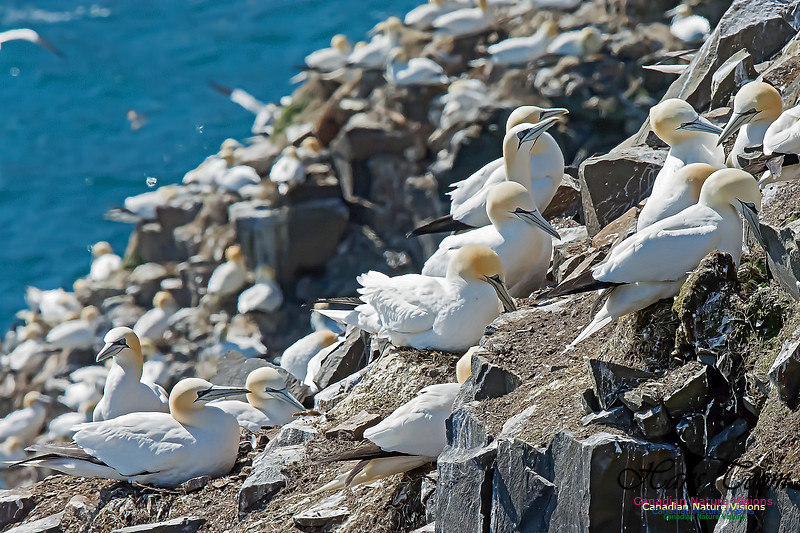
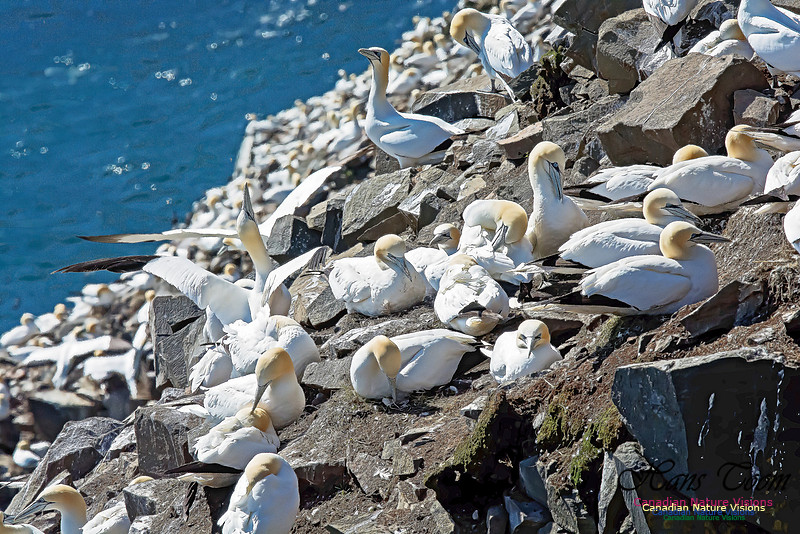
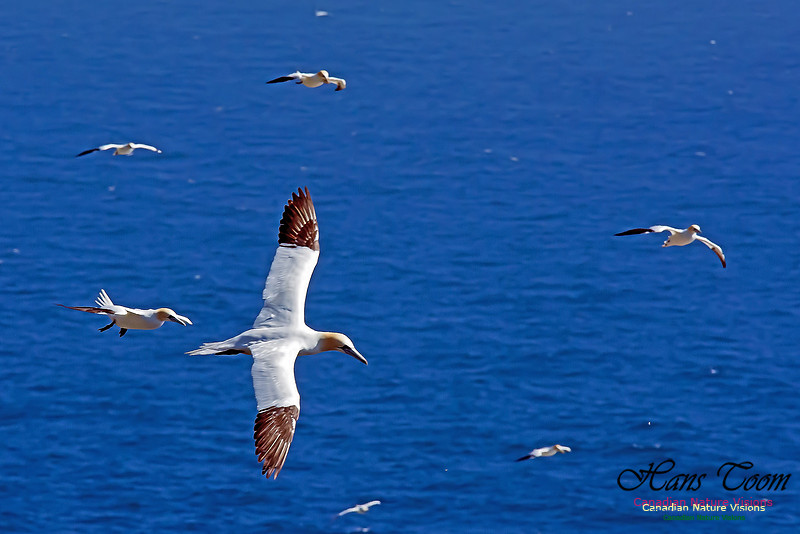
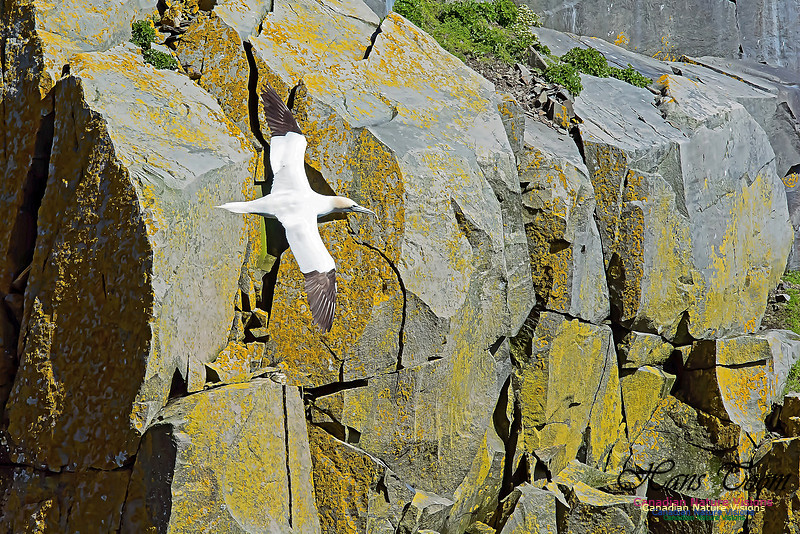
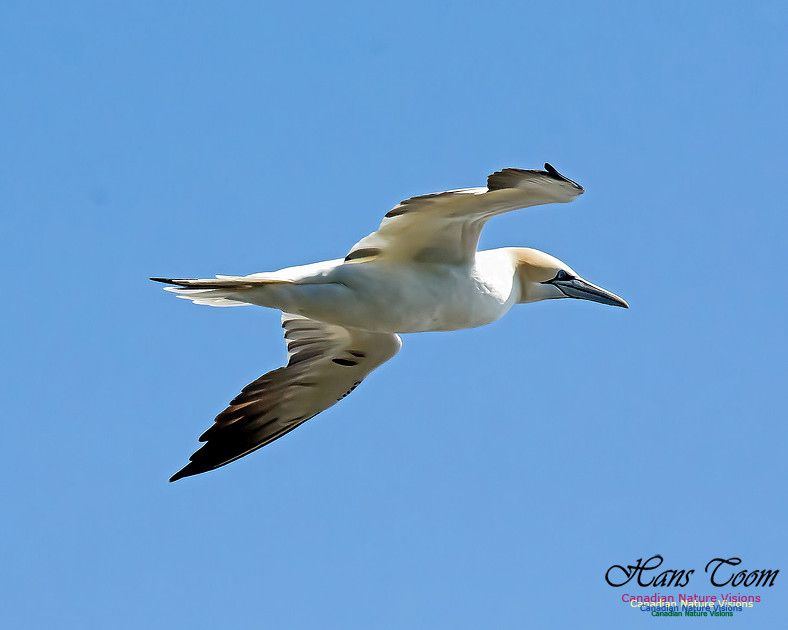
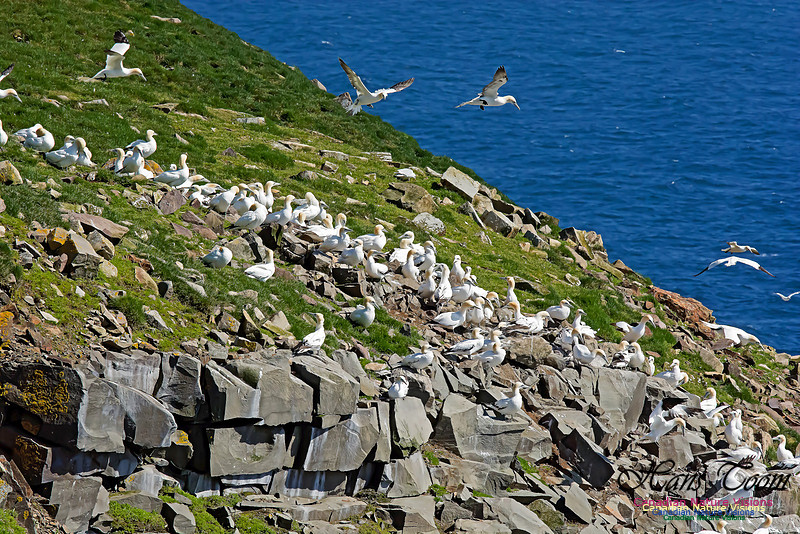
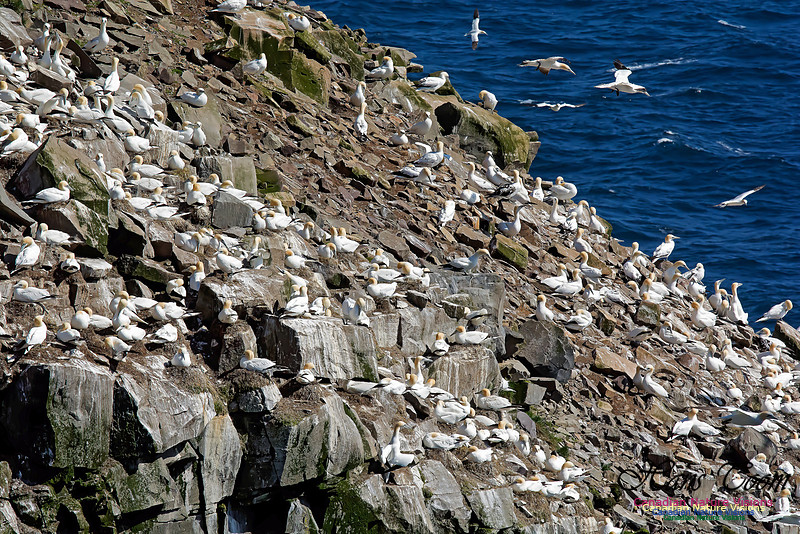
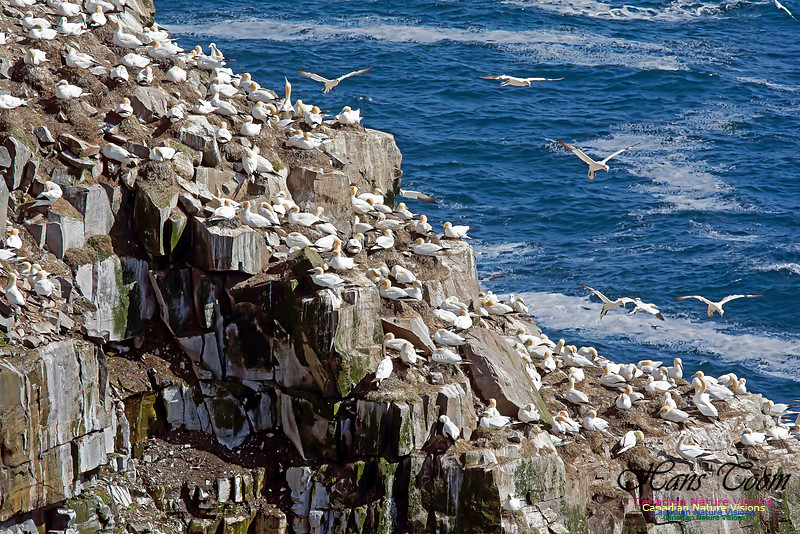
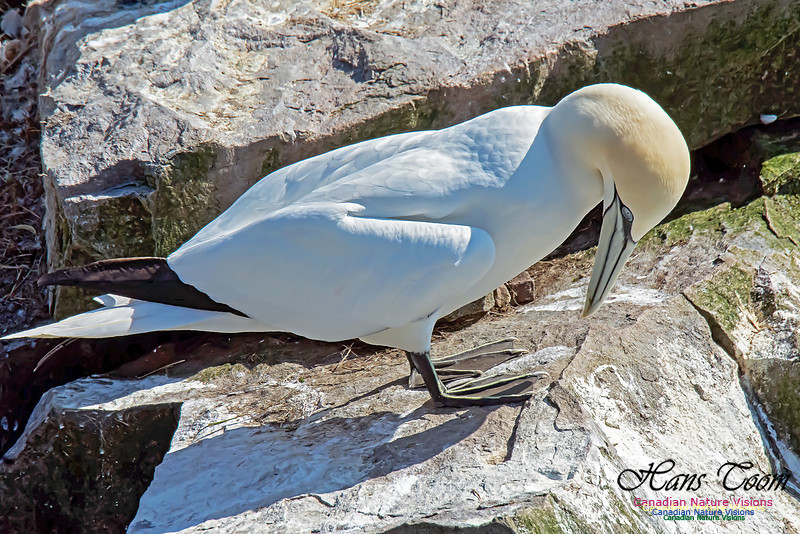
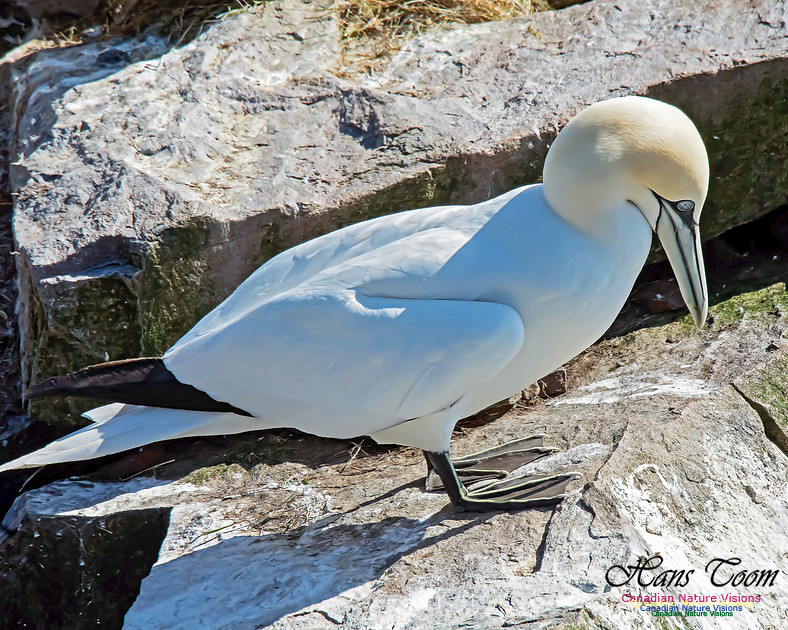
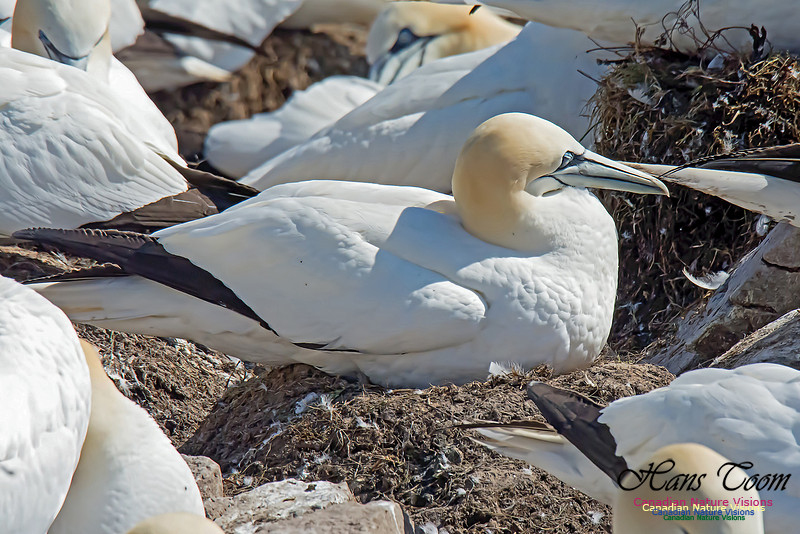
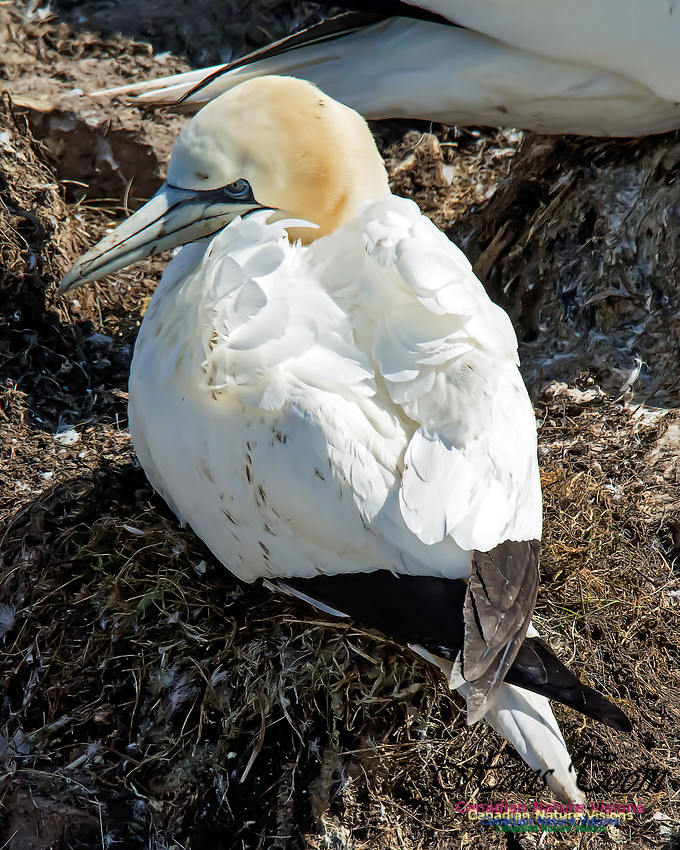
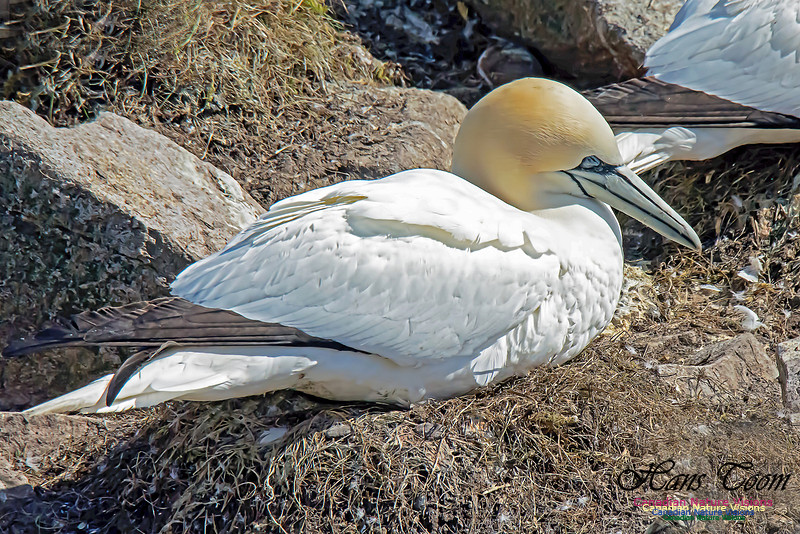
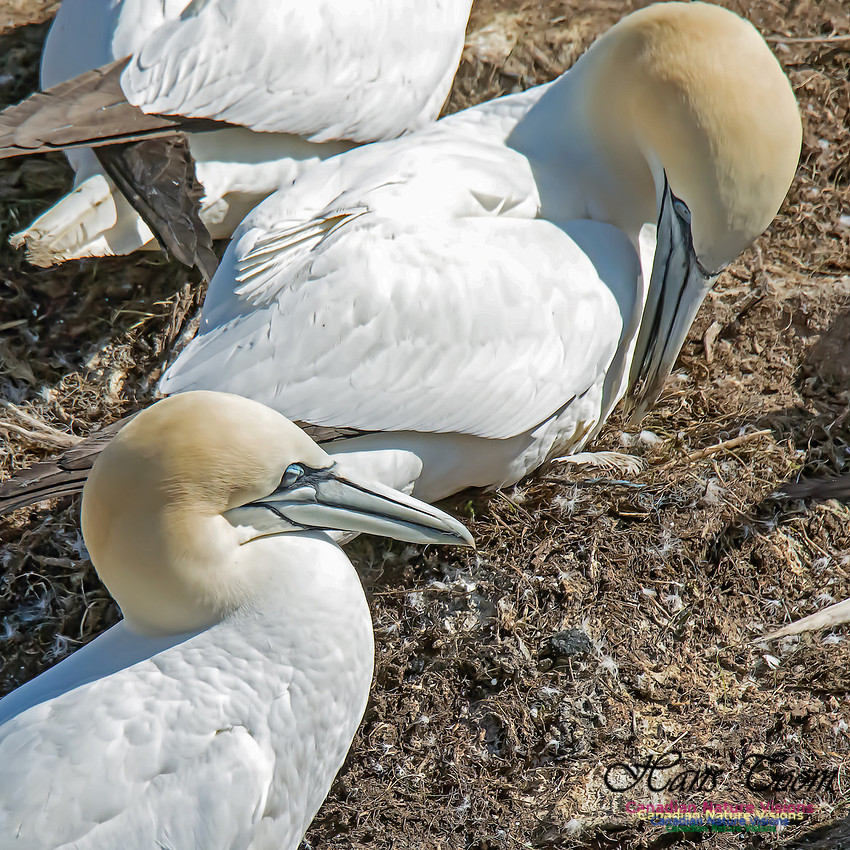
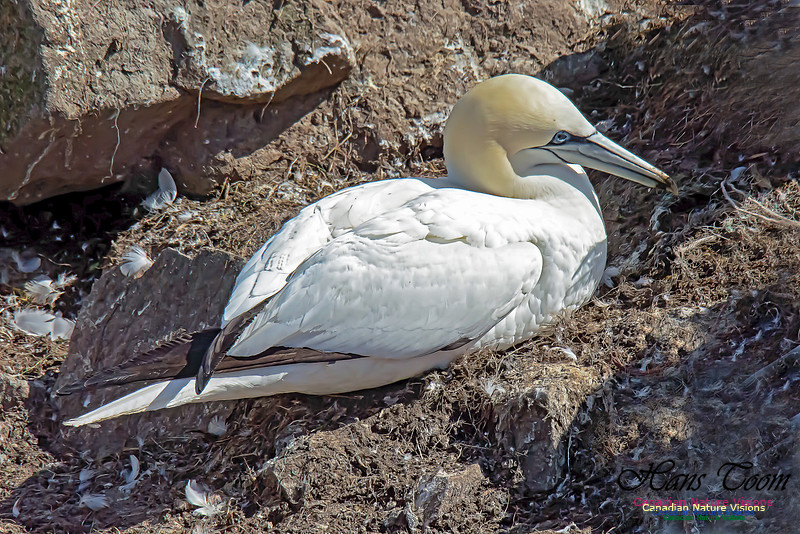
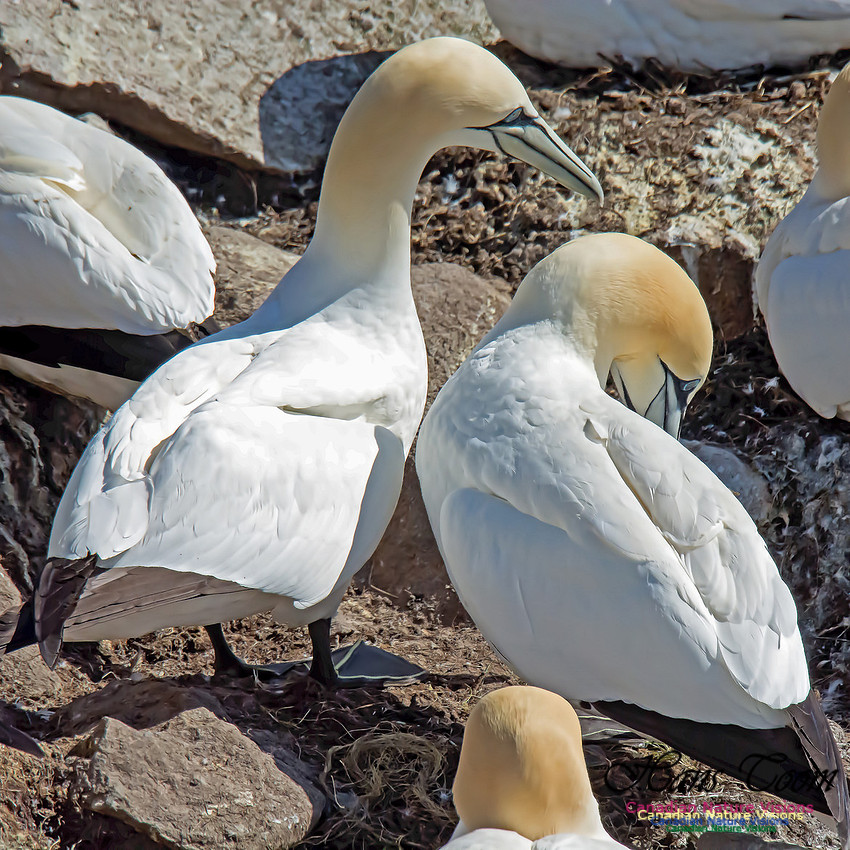
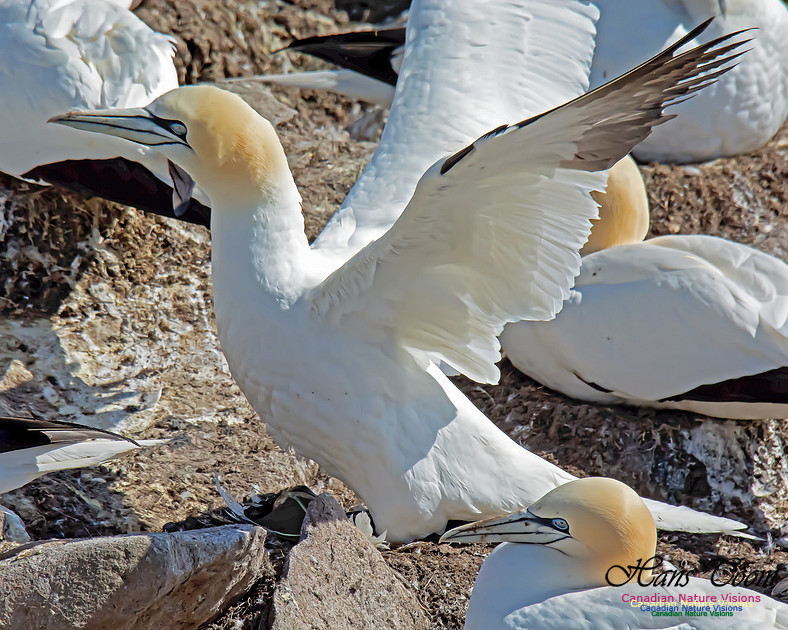
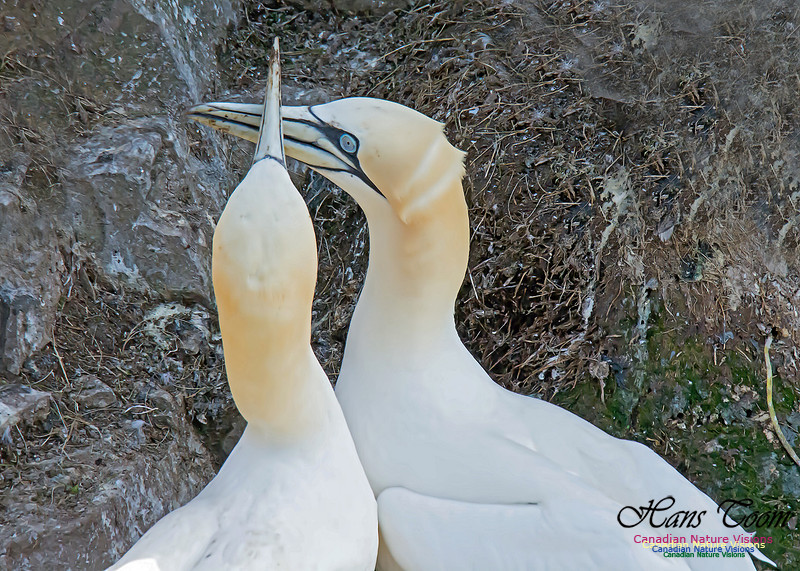
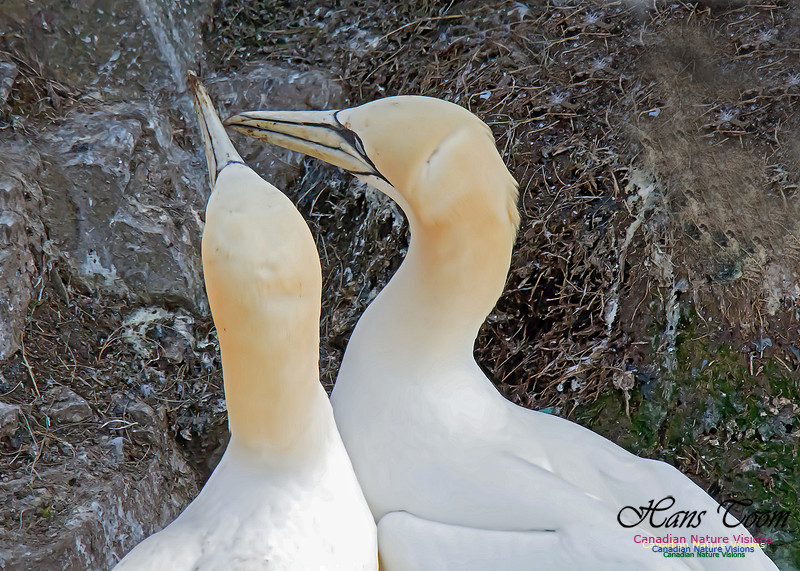
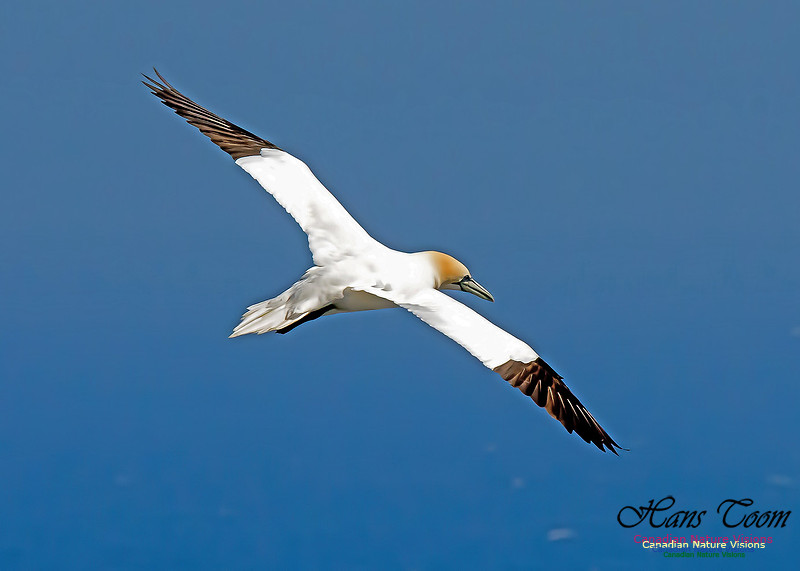
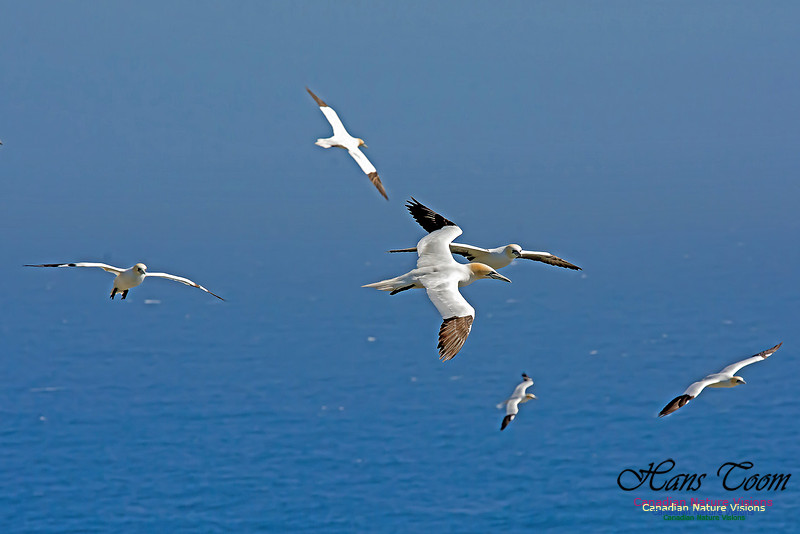
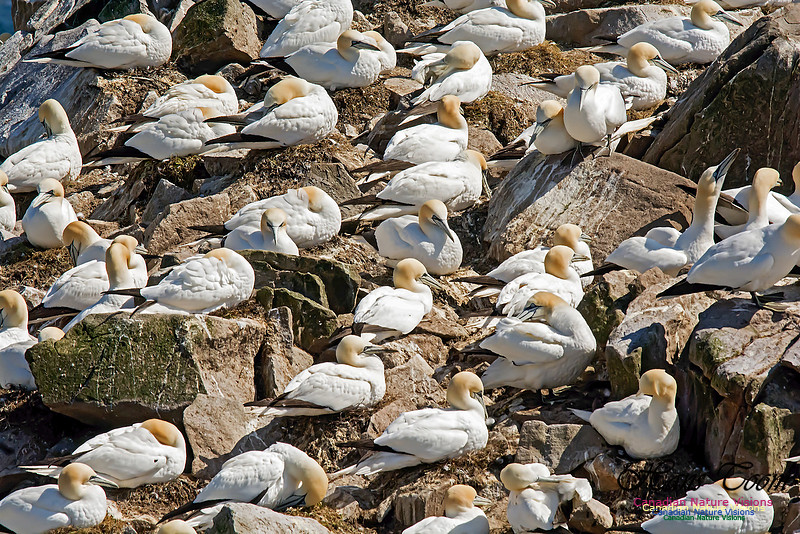
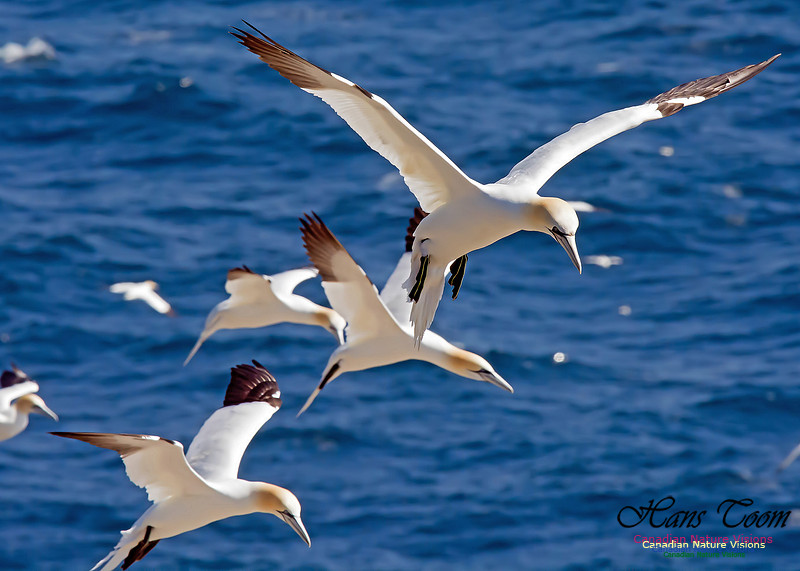
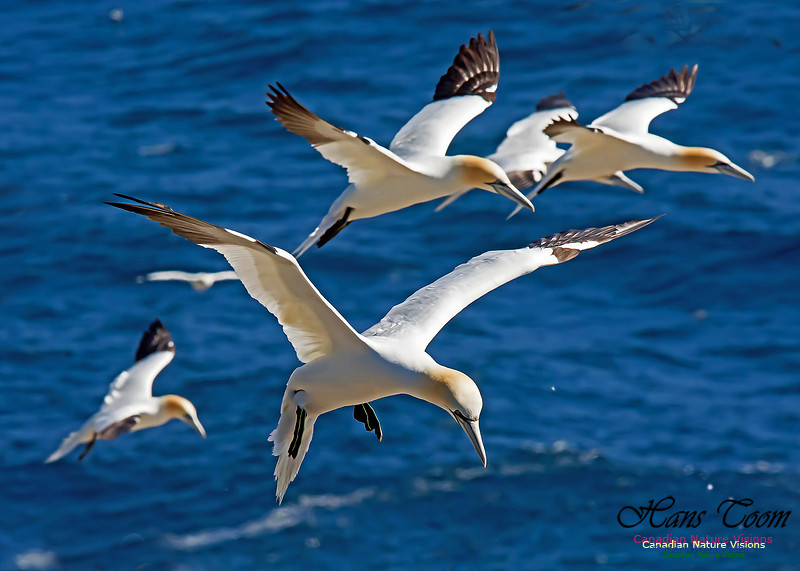
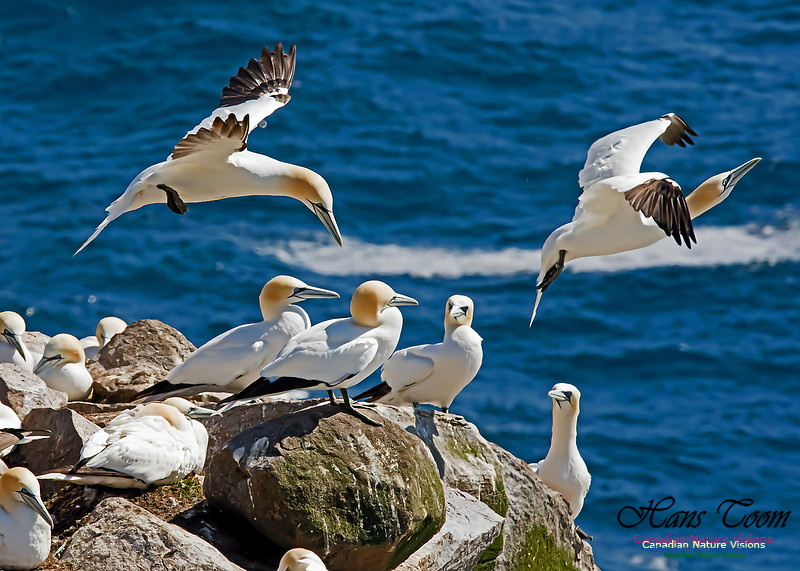
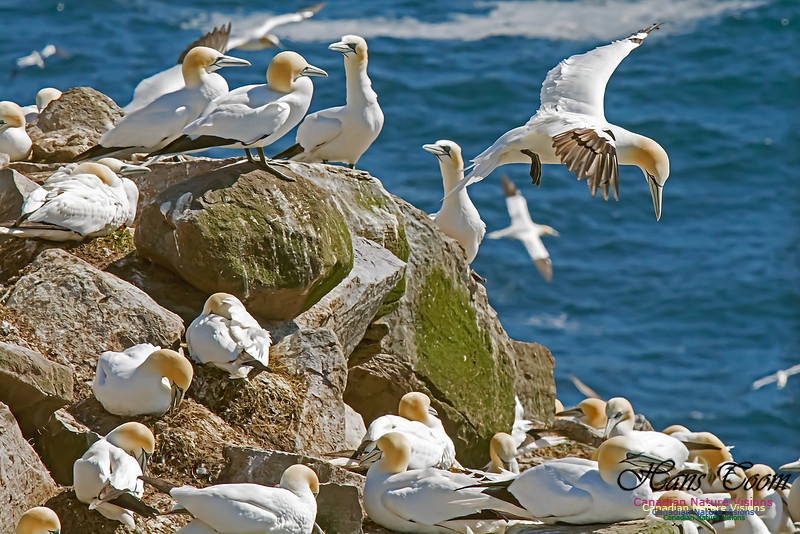
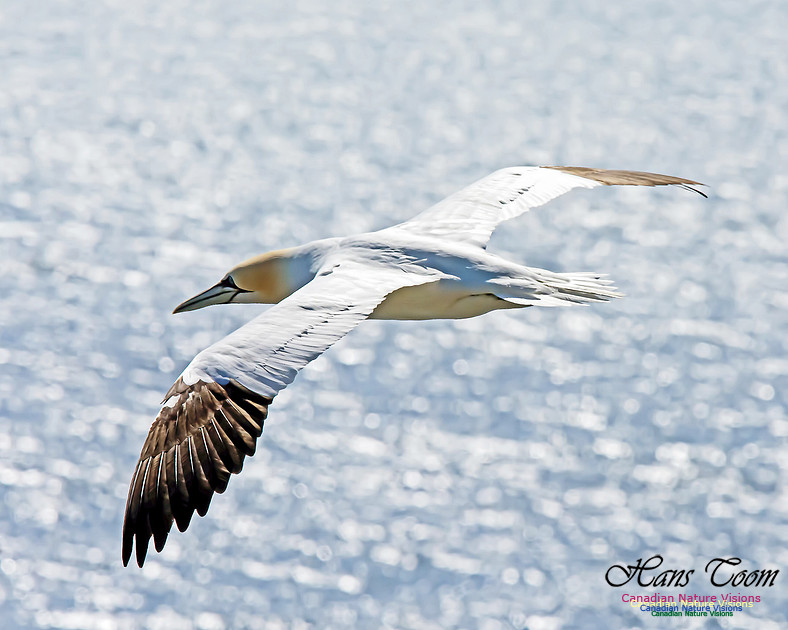
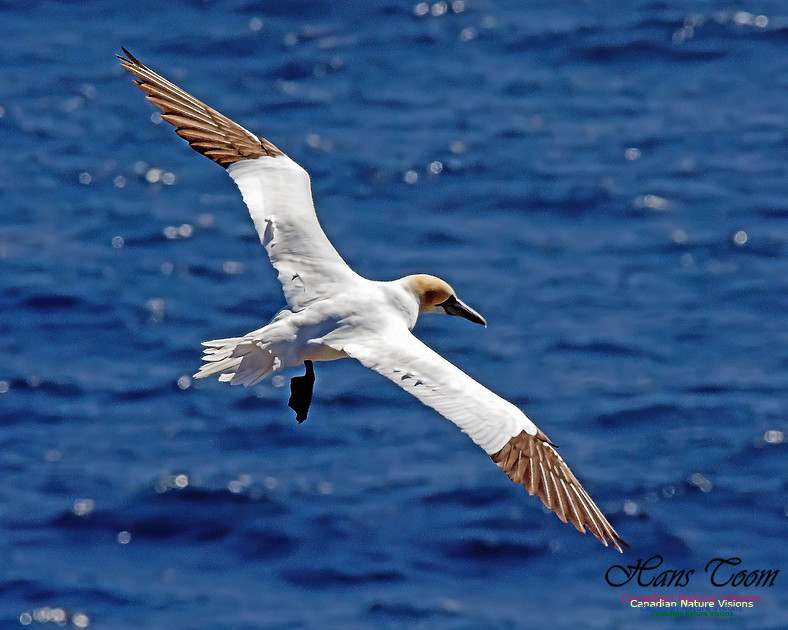
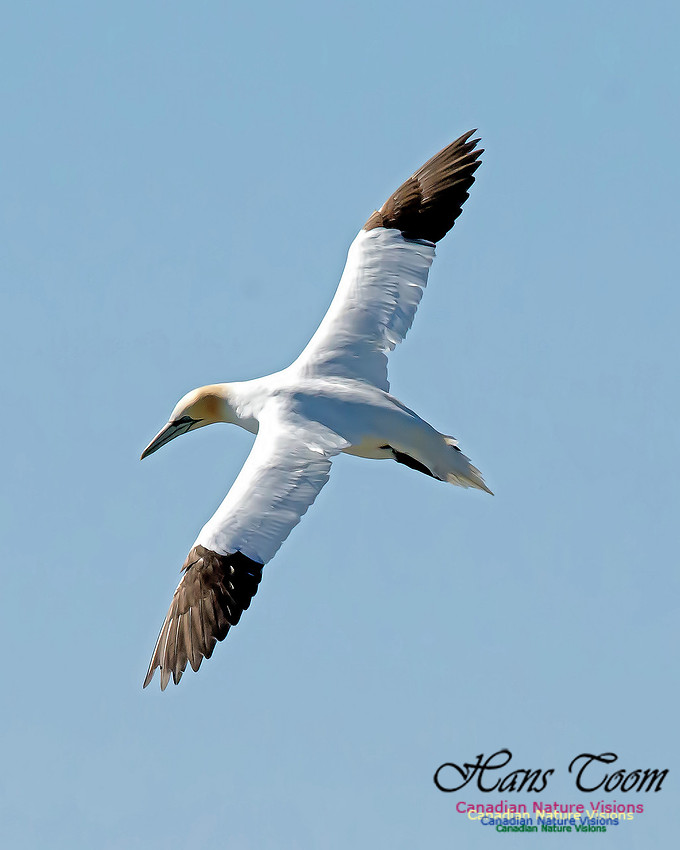
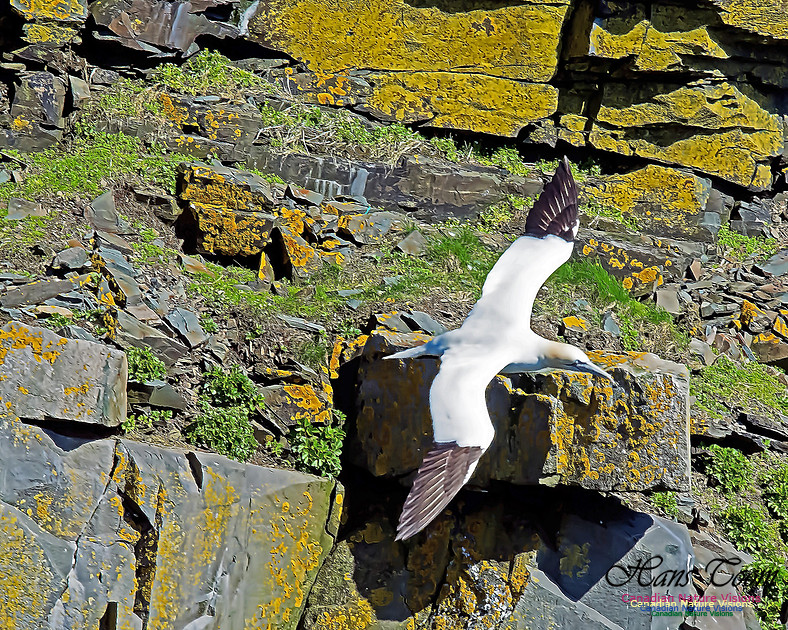
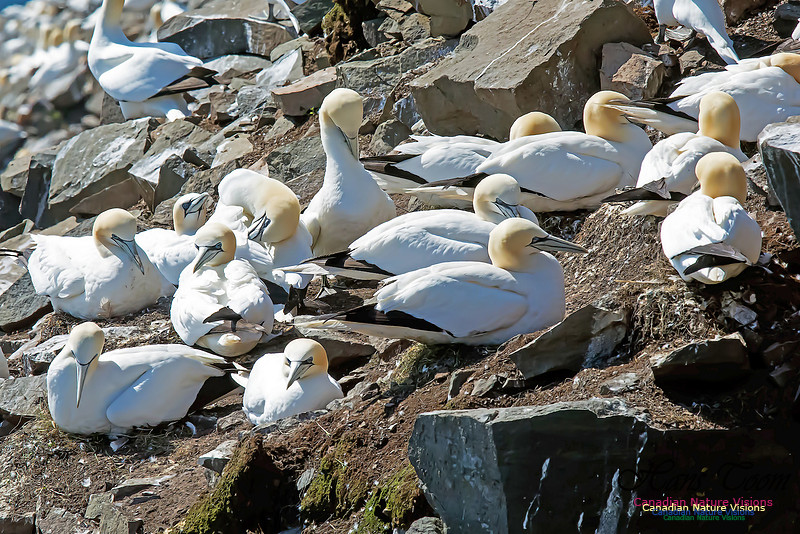
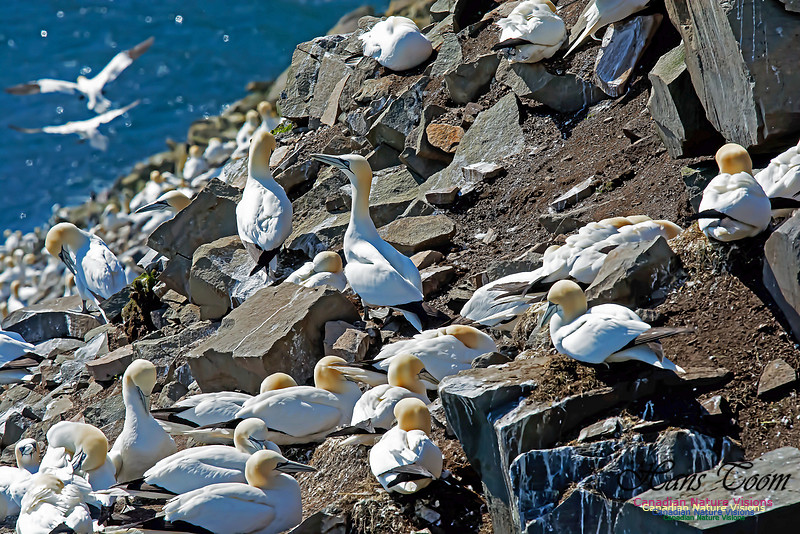
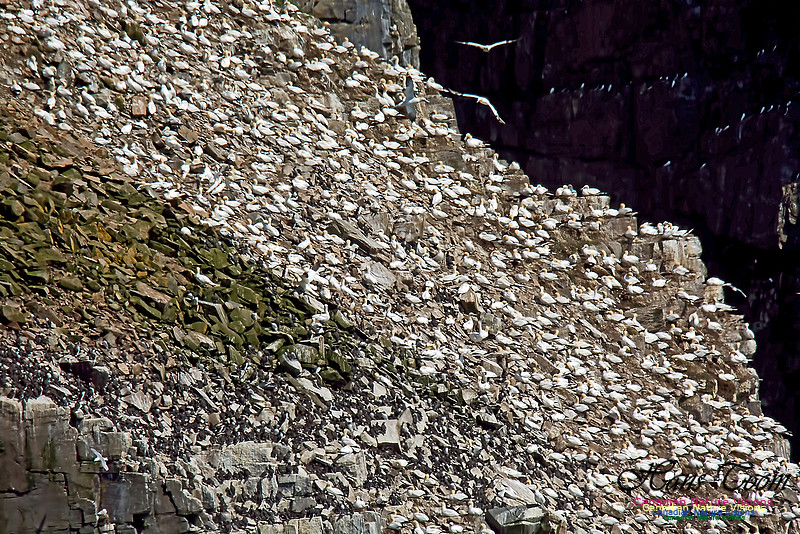
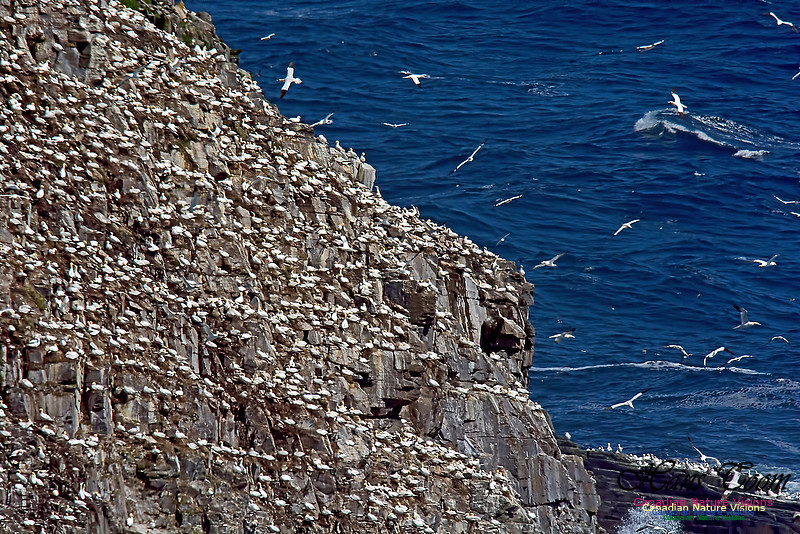
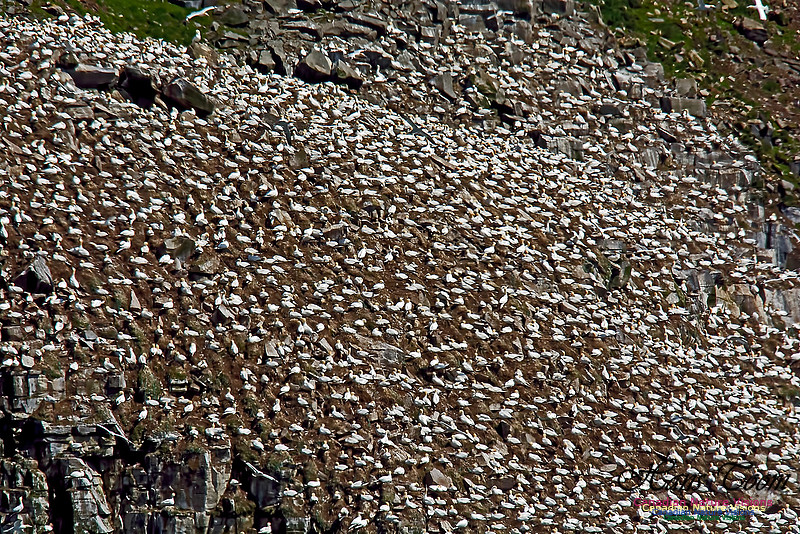
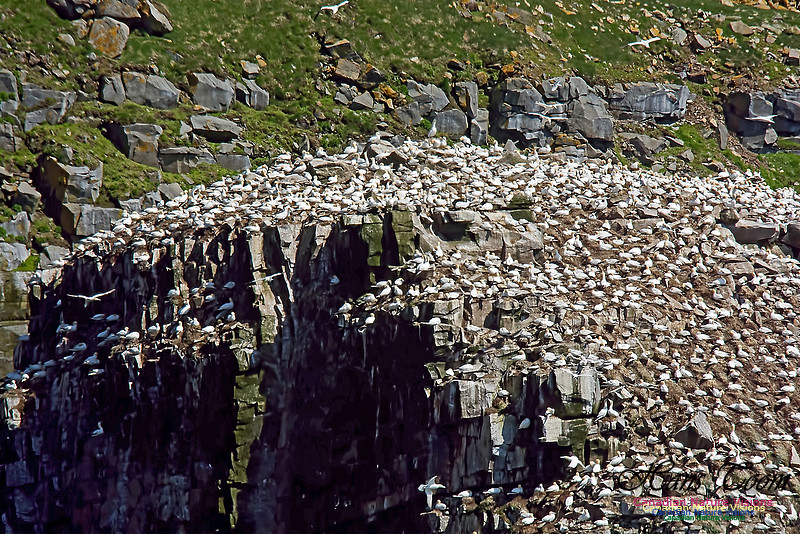
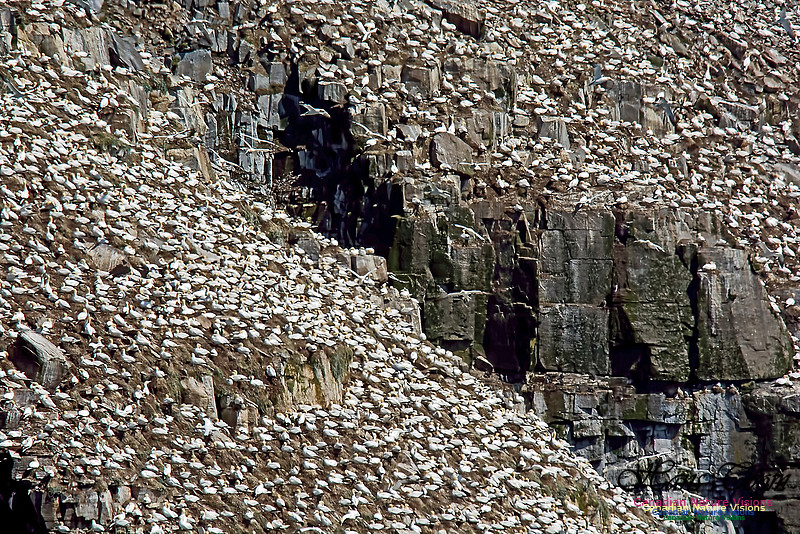
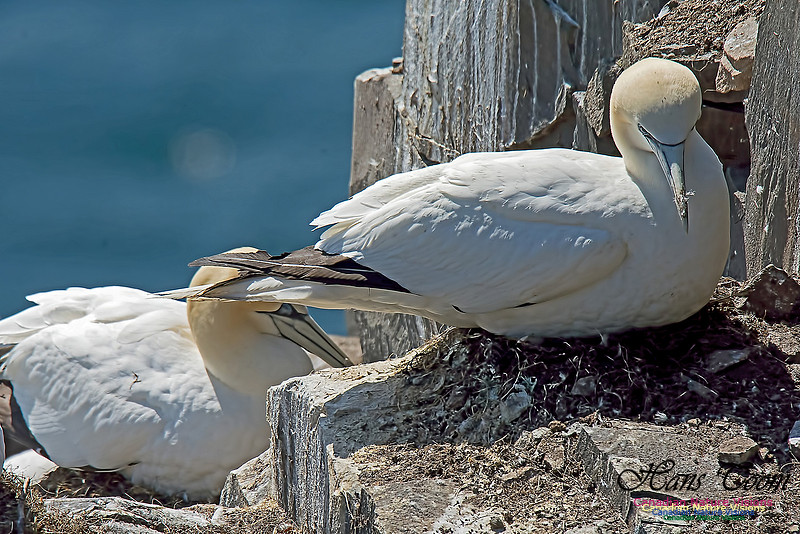
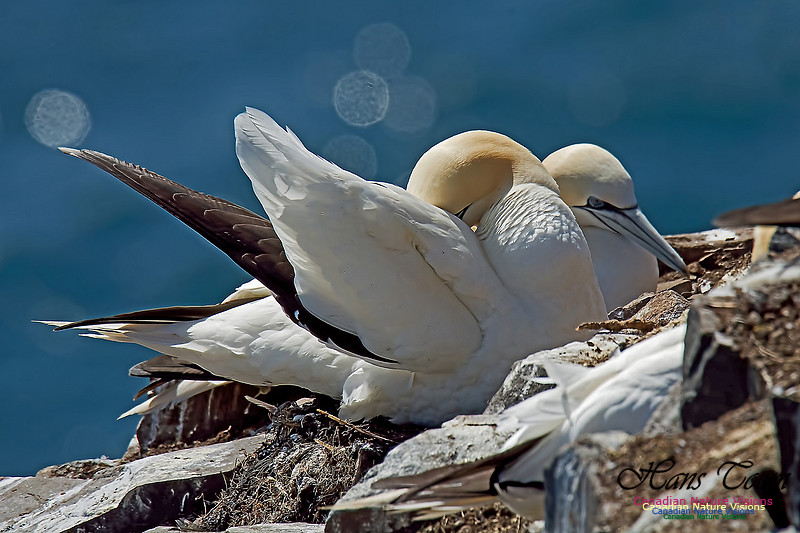
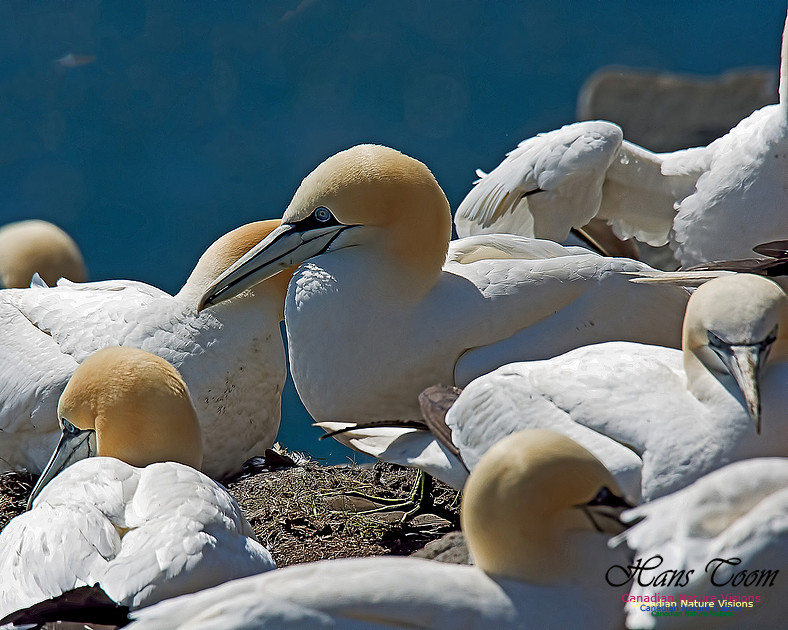
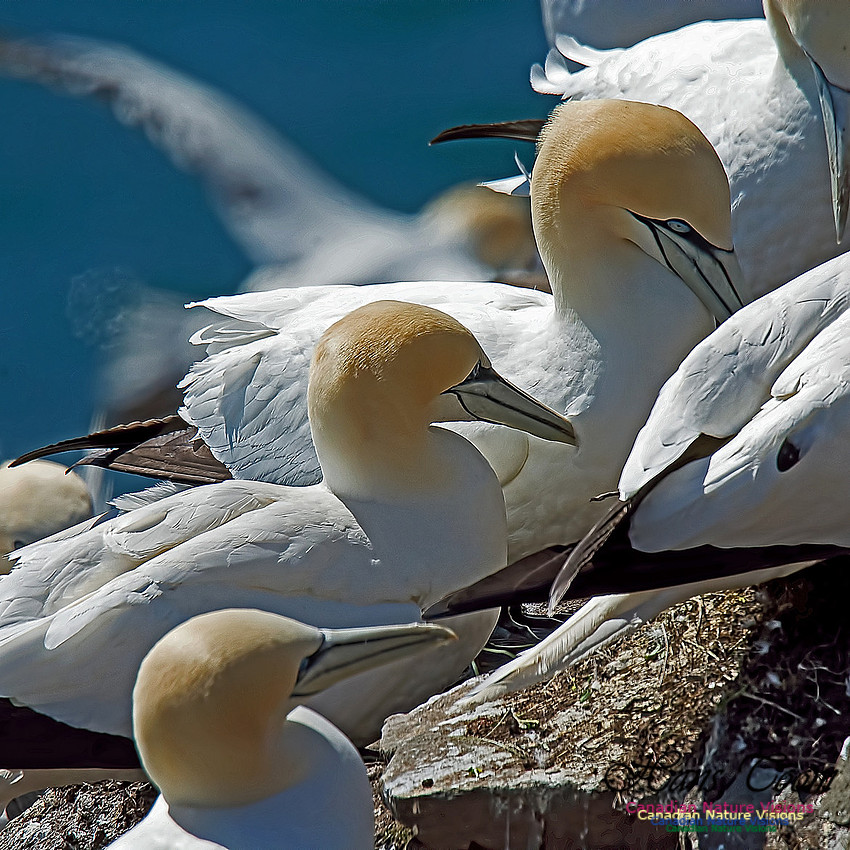
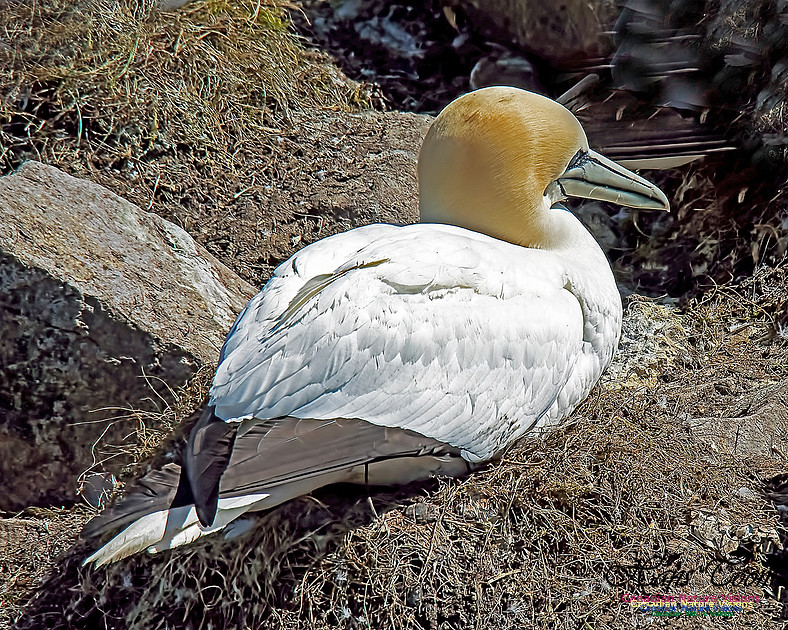
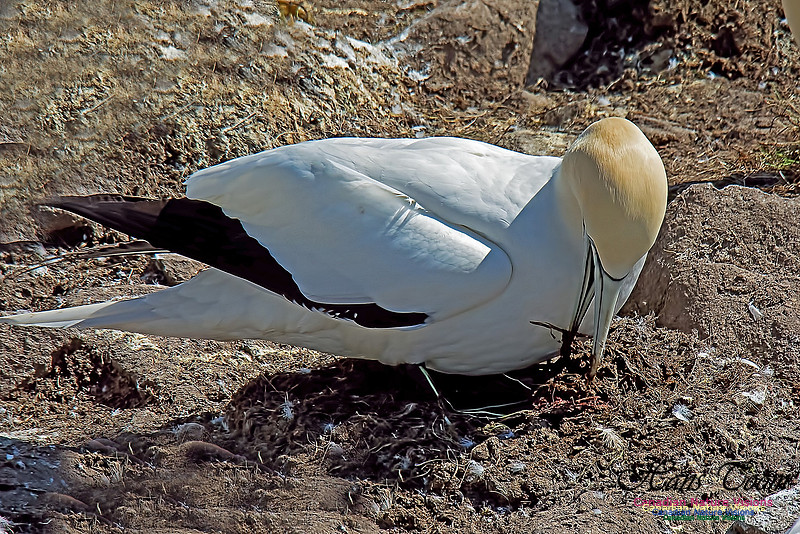
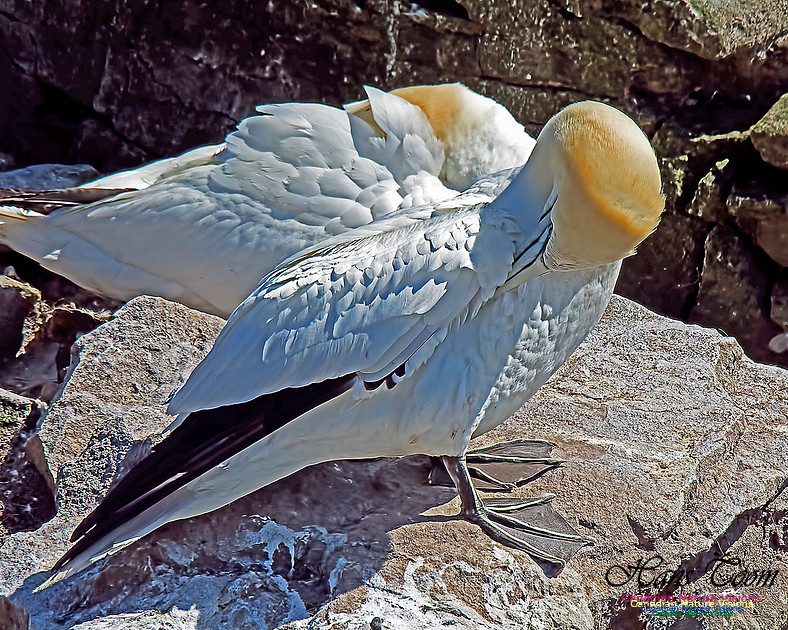
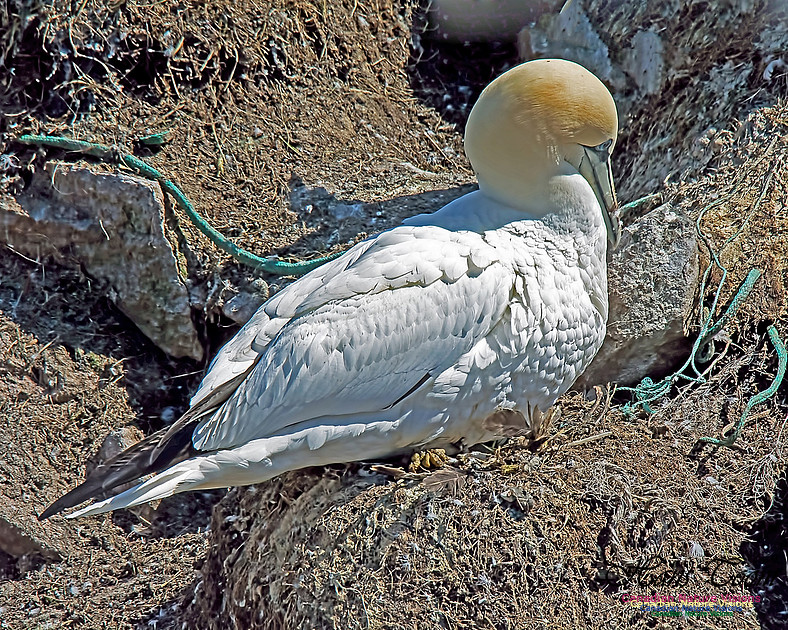
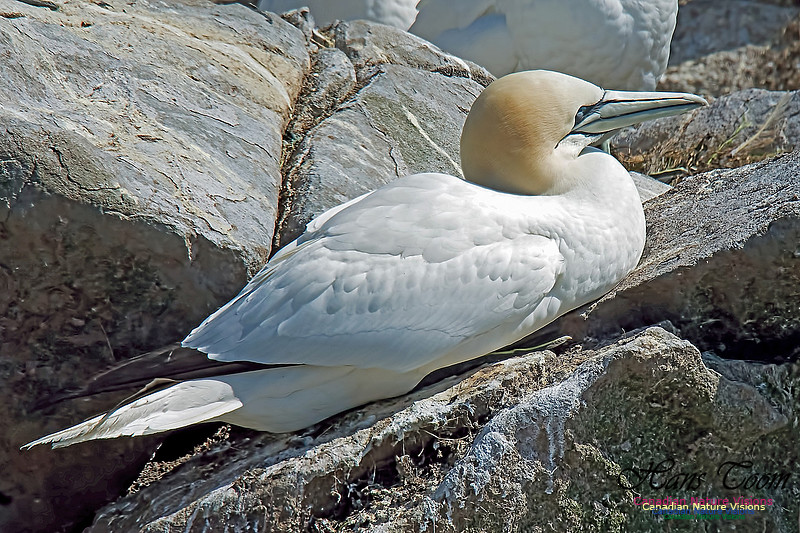
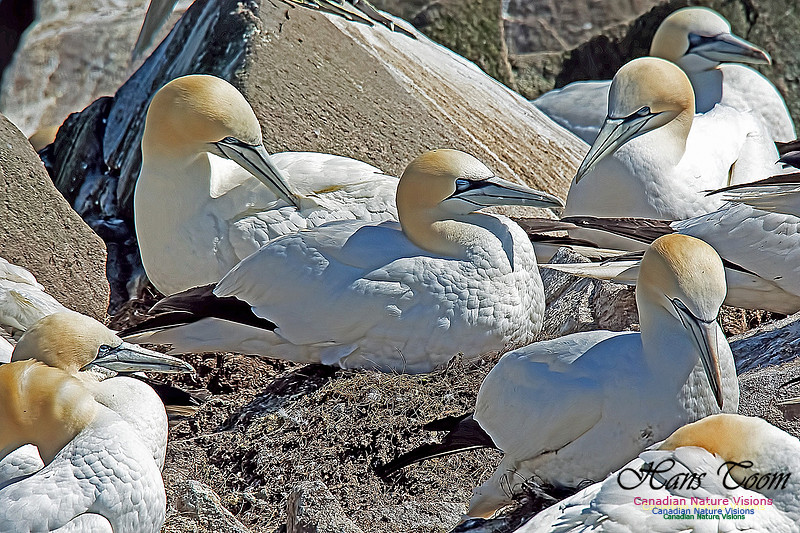
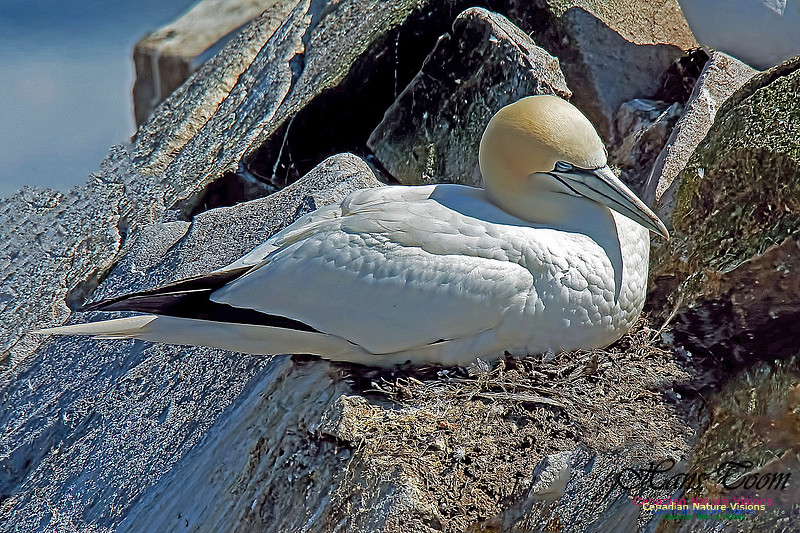
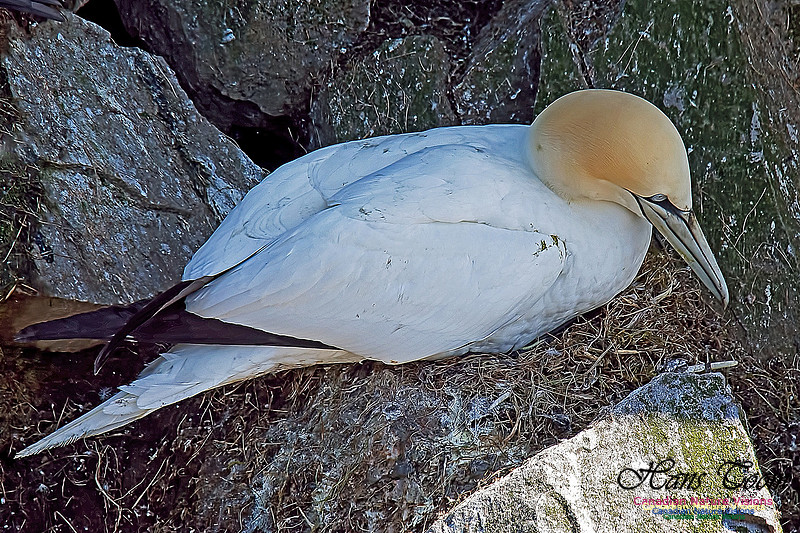
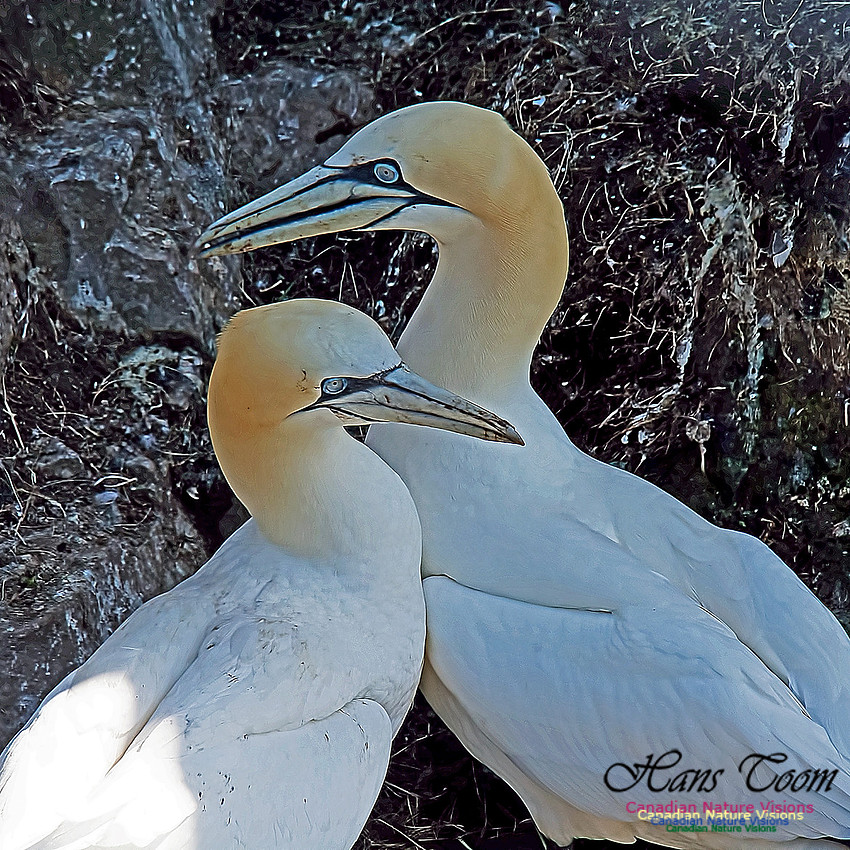
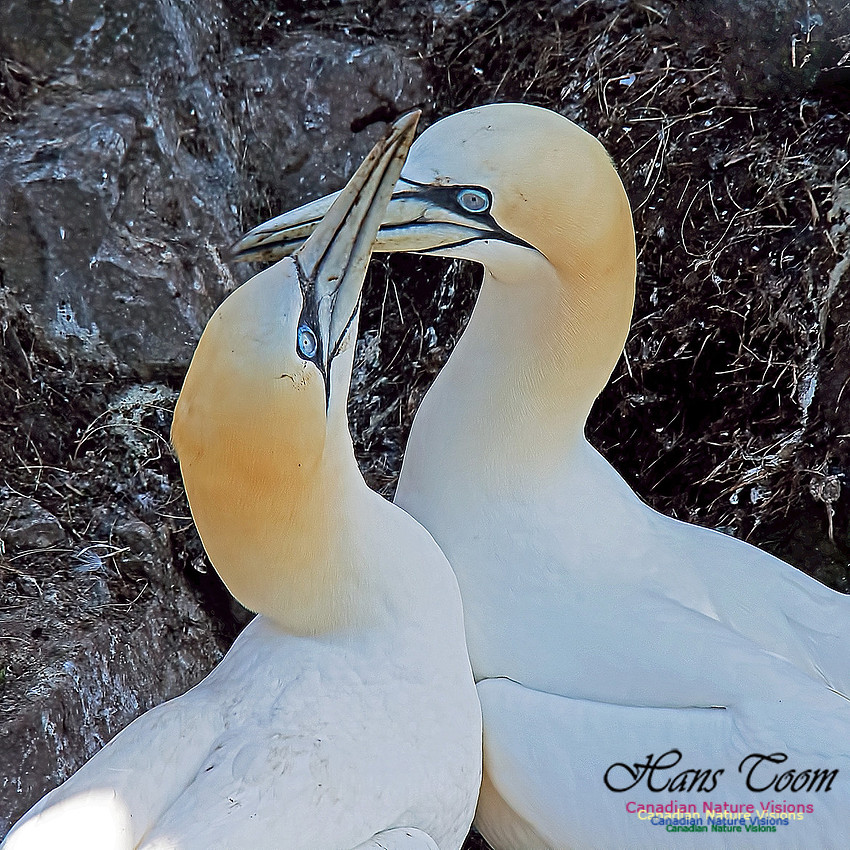
Northern GannetIn Newfoundland they call it the Great Northern Gannet, certainly a more fitting name for this magnificent bird than the PLAD Northern Gannet. To visit Northern Gannets in nesting colonies is a life filling experience, an experience I have enjoyed twice both times in brilliant sunshine. They pass by Nova Scotia in the fall and early winter singly and in flocks just offshore probably to hunt fish as they wing south. Their flight pattern is unmistakeable; long soarings followed by undulating actions, up and down, and occasionally a dive to catch a fish that wanders too close to the surface. I have seen them in early January off the coast near Portuguese Cove. Northern Gannet
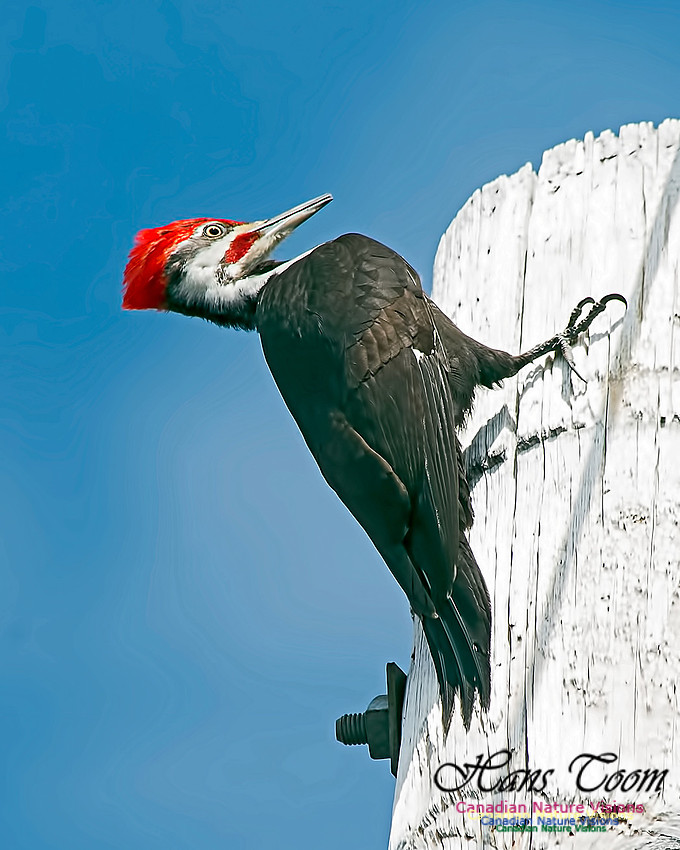
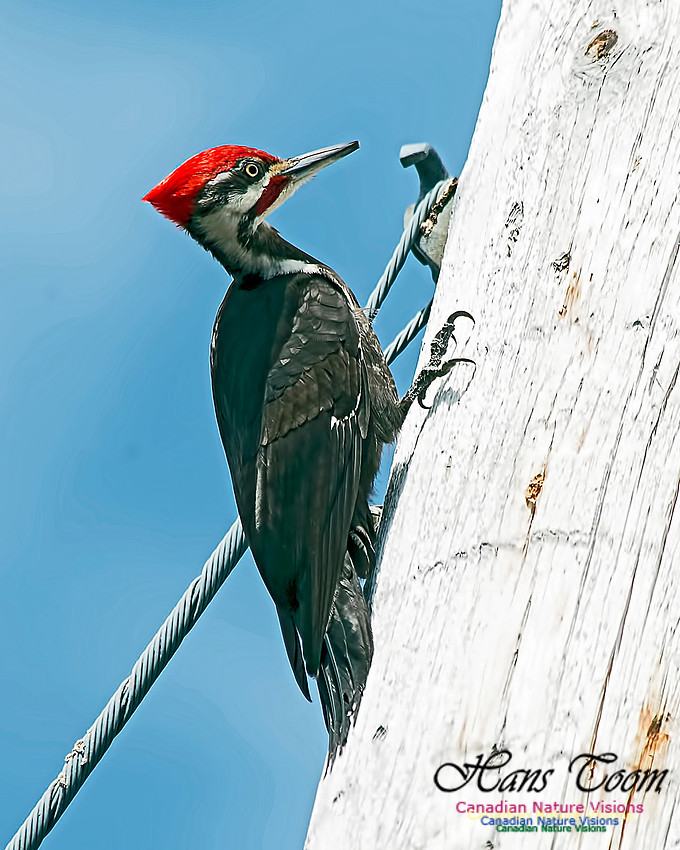
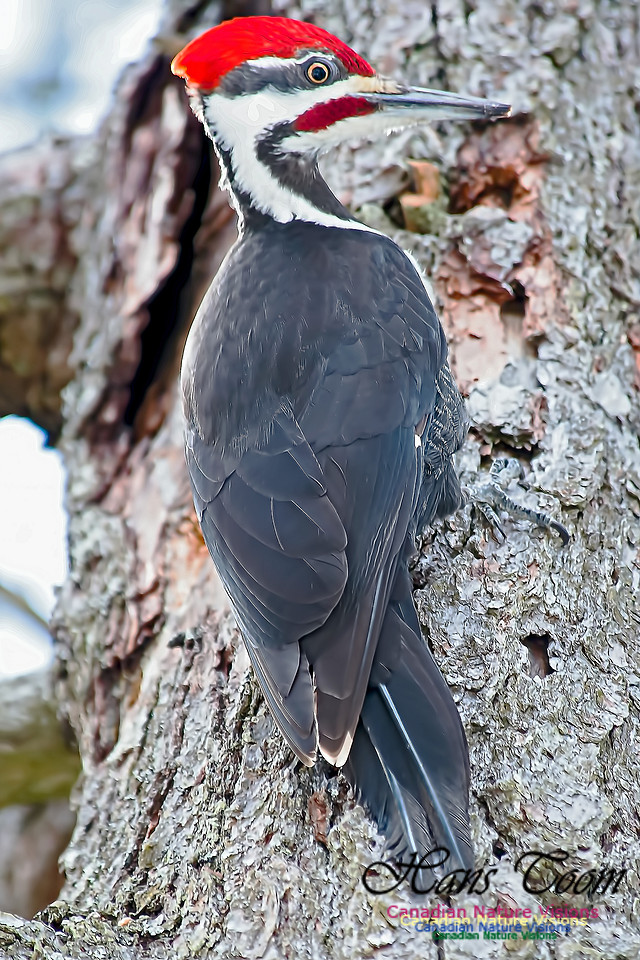
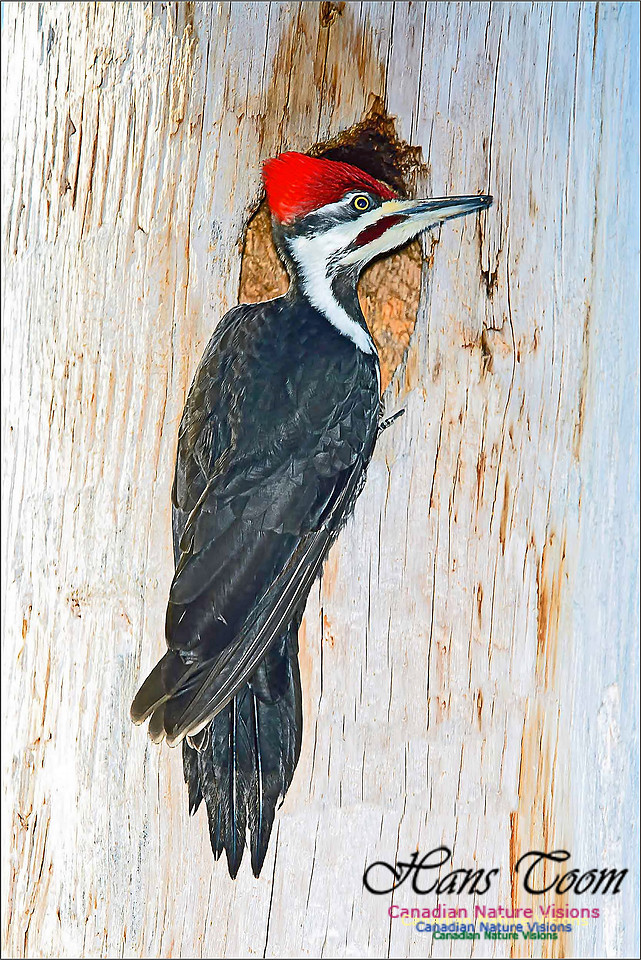
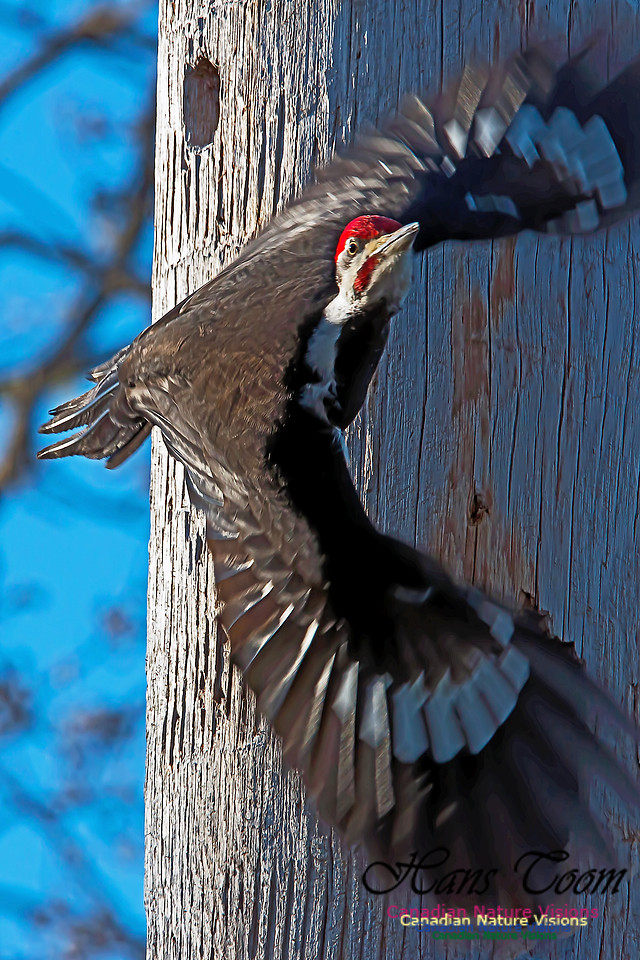
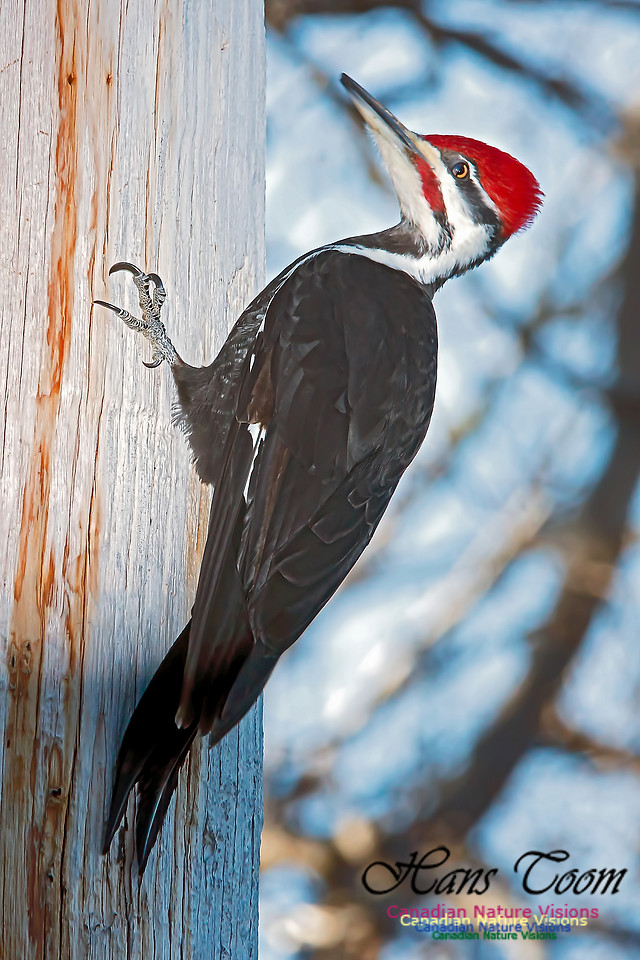
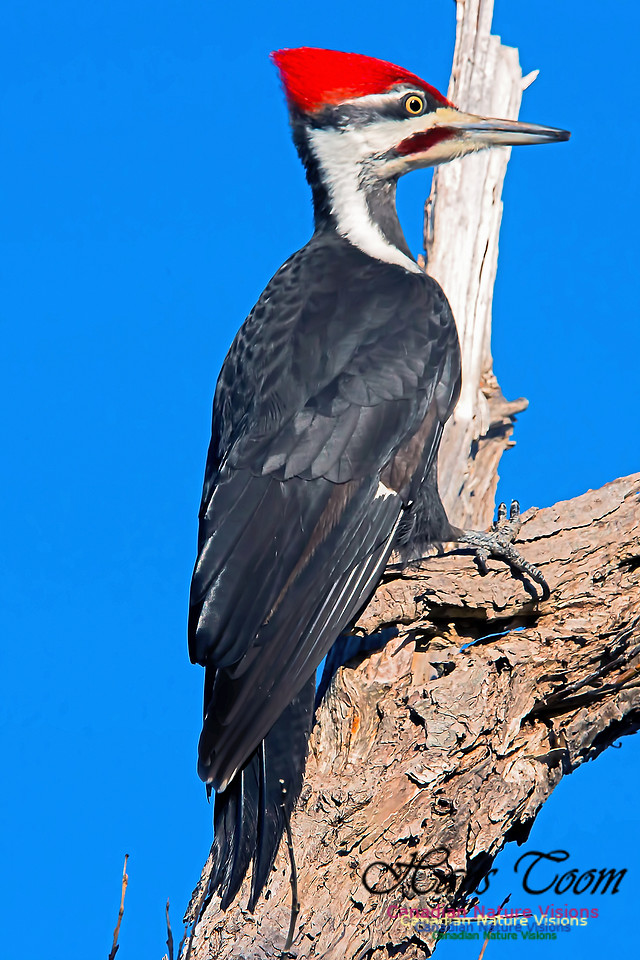
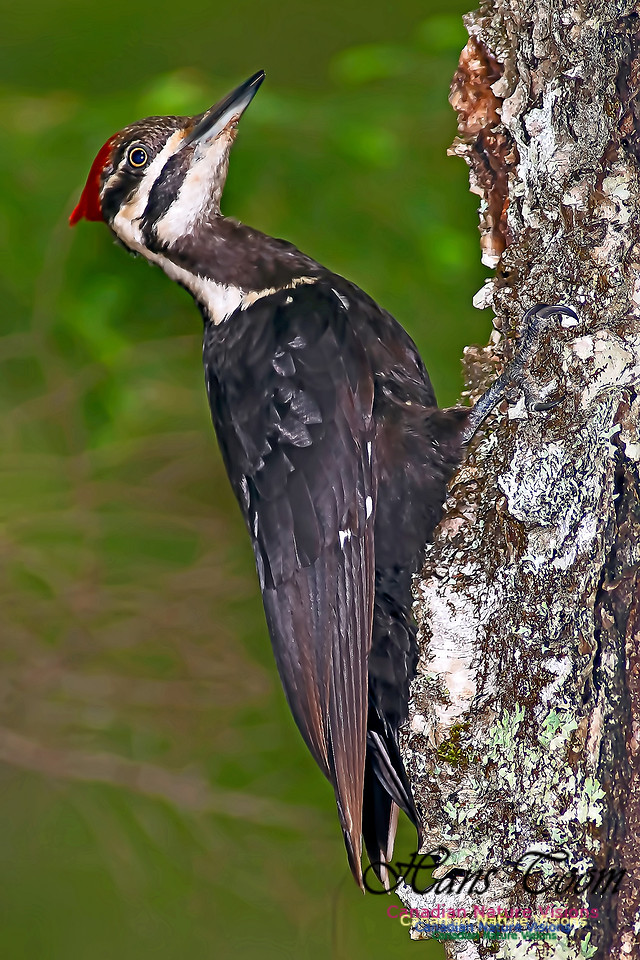
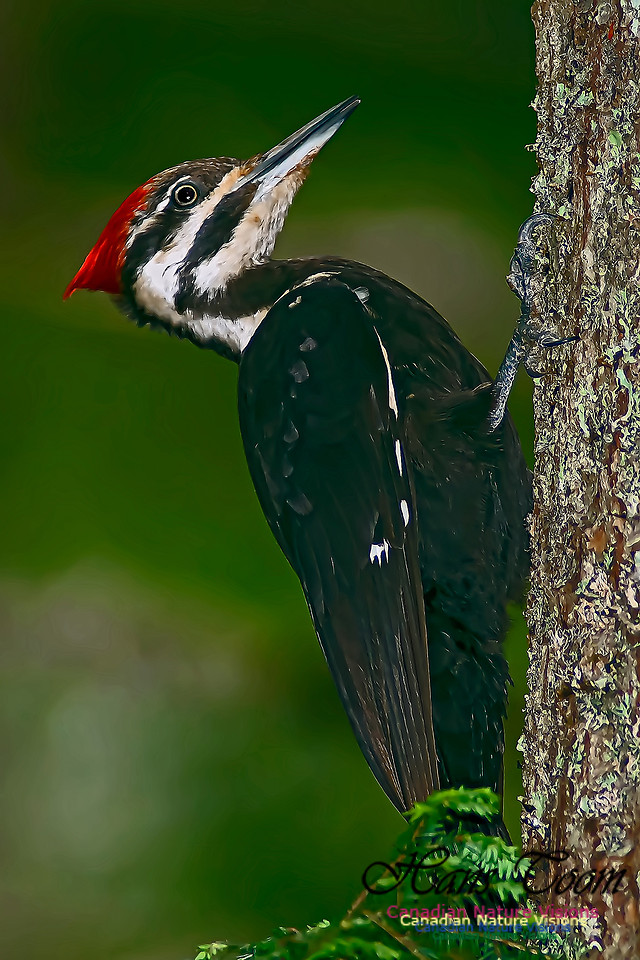
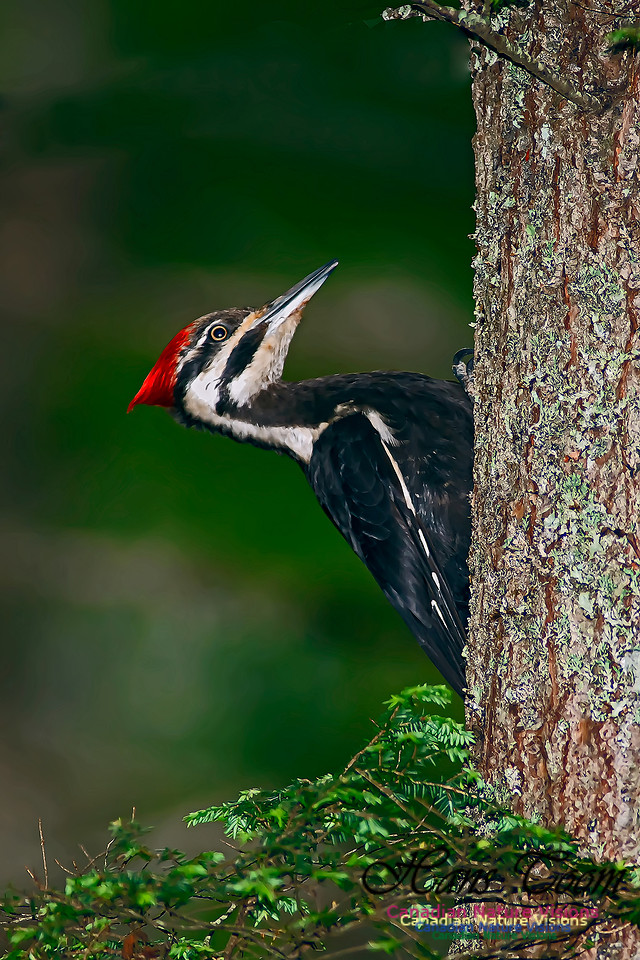
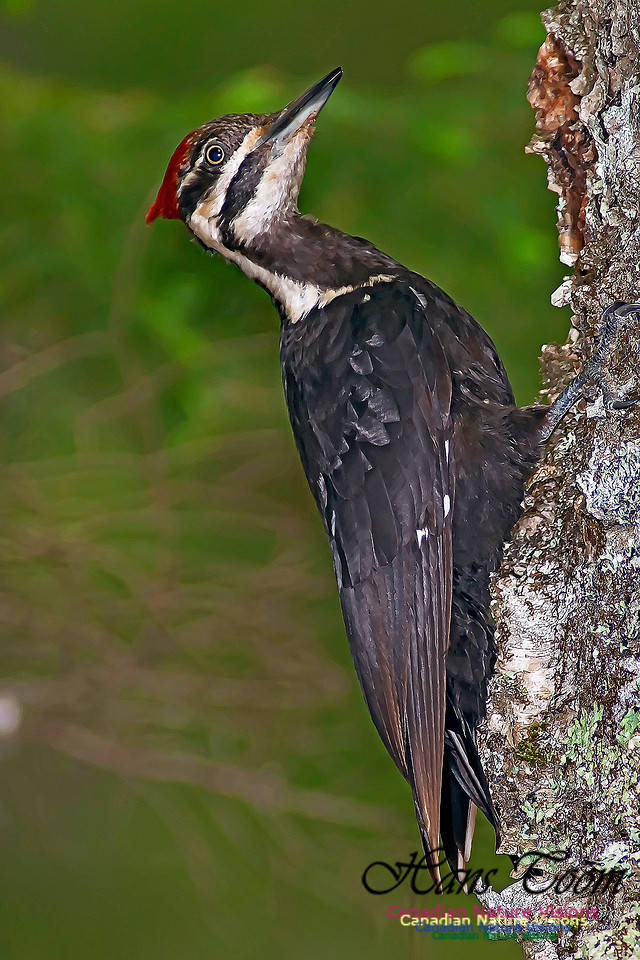
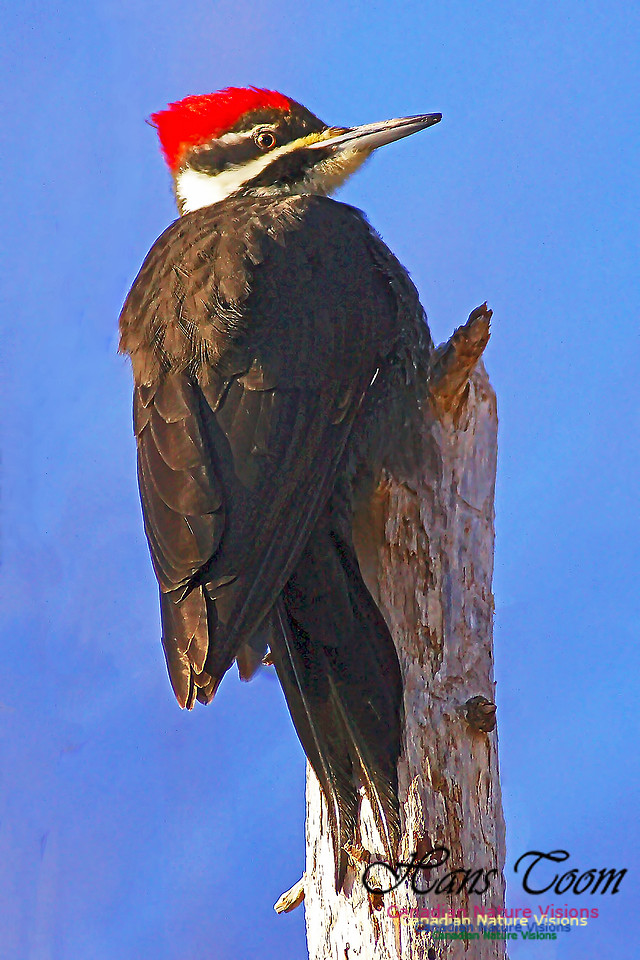
Pileated WoodpeckerThe Pileated Woodpecker is all together; elegant, audacious, colourfull and loud. If all the woodpeckers in all the land got together to elect a leader this woodpecker would be it. It is widespread in mature forests and can be found by learning its bellowing song or pounding rattle as it forages for edibles. Pileated Woodpecker
Lincoln's SparrowThe Lincoln's Sparrow is easy to identify from its marvelous and melodic song. Otherwise look for the sharpish demarkation of chest markings and light ochre wash across the chest, eyering and flanks, plus a centre chest spot. We currently have one visiting our place. It is a rare bird this time of year and not as visually prominant as the breeder. The photos shown herein are older record shots. Lincoln's Sparrow
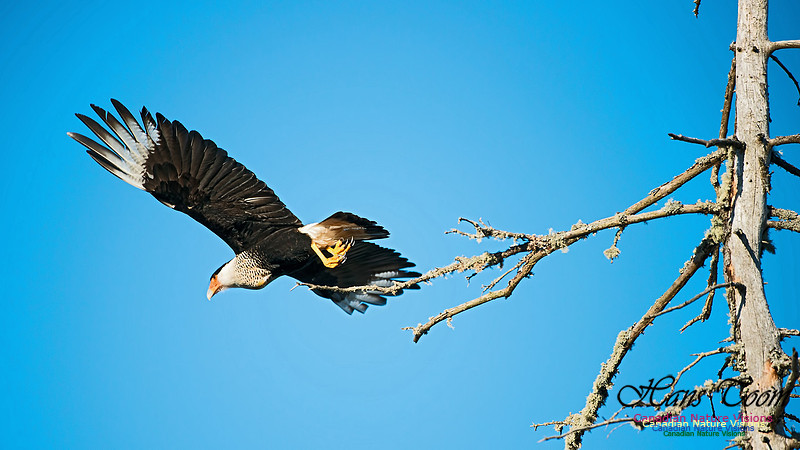
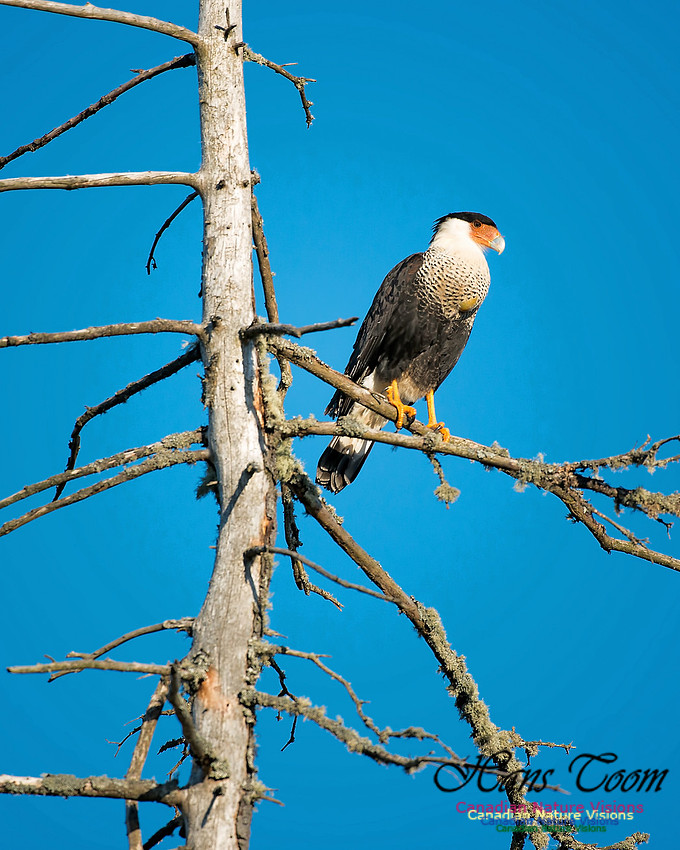
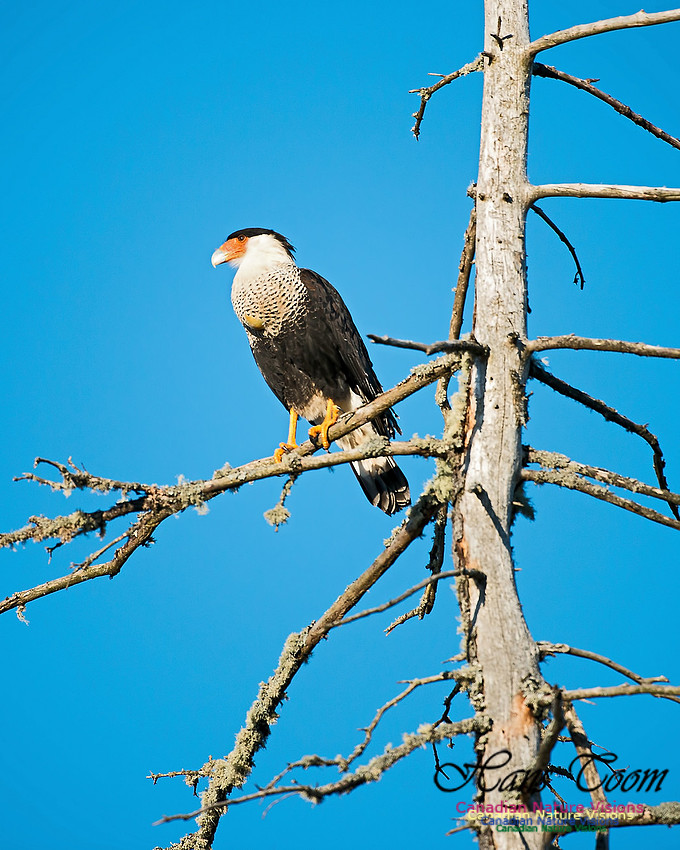
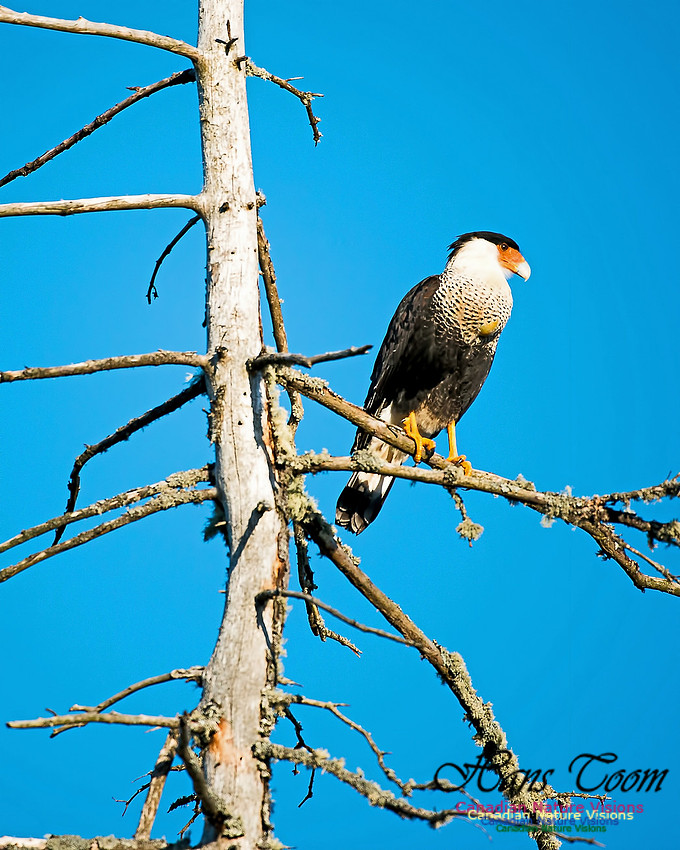
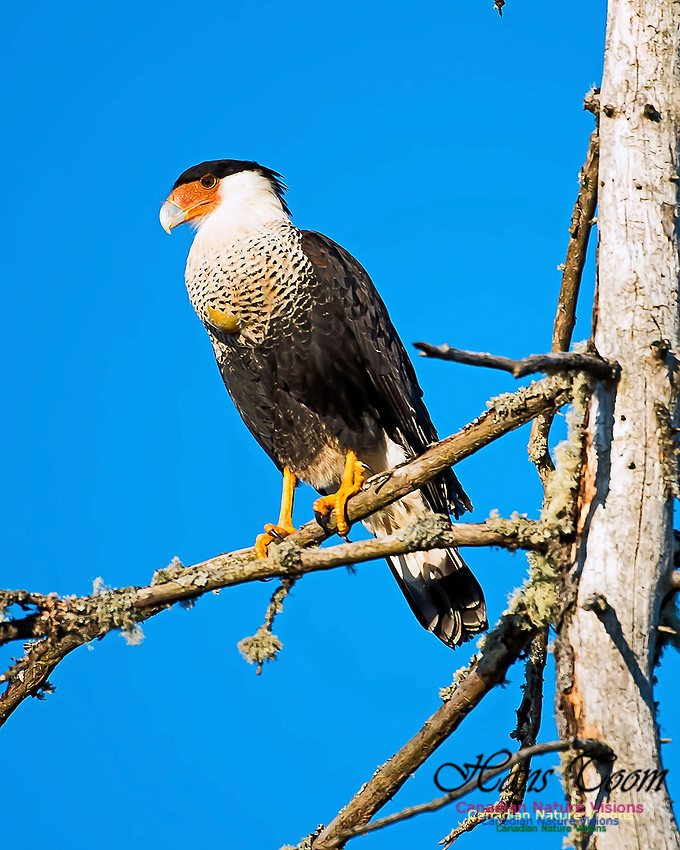
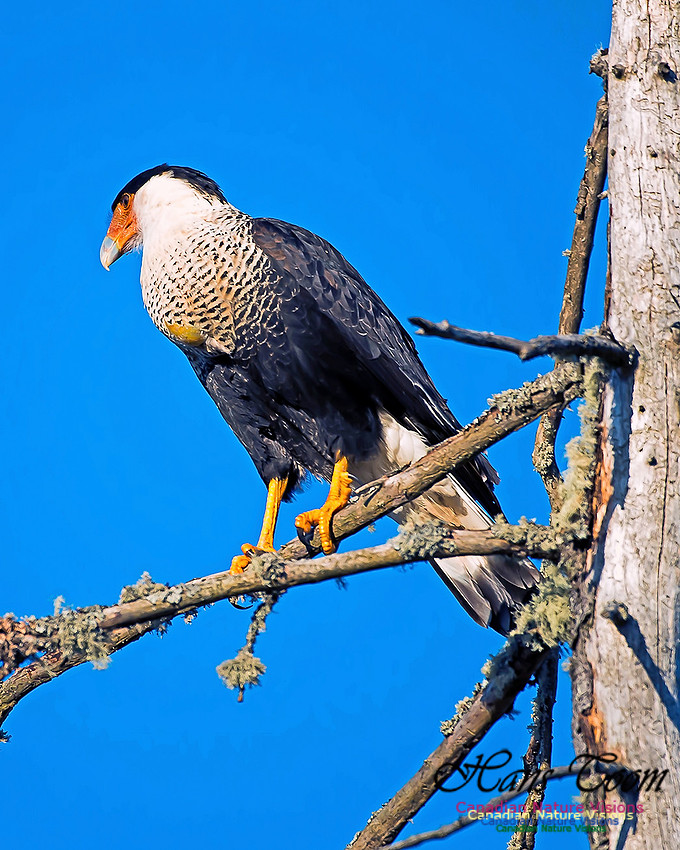
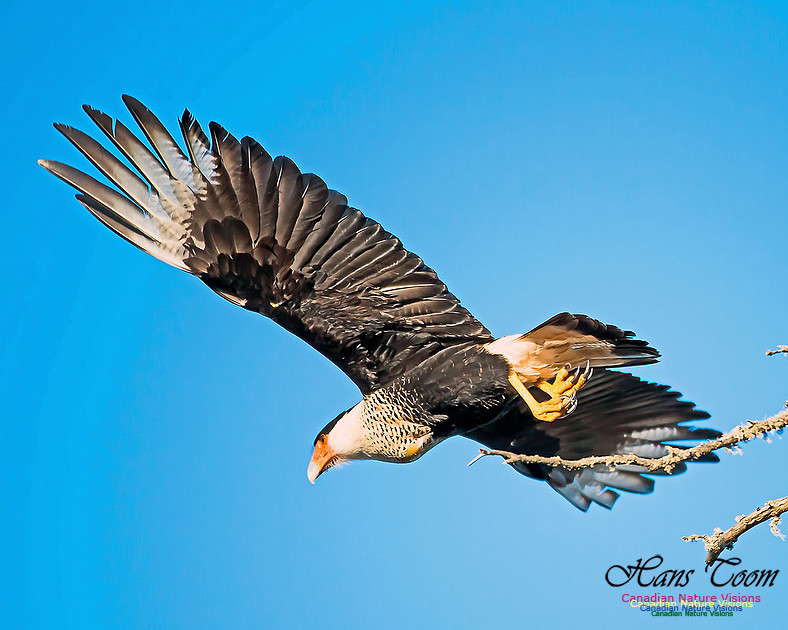
Crested CaracaraThe Crested Caracara is the national bird of Mexico. It hunts by flying and running, pouncing on its prey. Like the Bald Eagle it also feeds on carion. I have encountered Crested Caracara in three locations in Nova Scotia and searched in several other locations. It is a mega rare bird and I am very fortunate to have obtained these photos, the first photo having been published in a national magazine. Crested Caracara
Glossy IbisThe Glossy Ibis is an annual regular to Nova Scotia. I see them every year but not always close enough for photographs. Unlike the White-faced Ibis the eye ring of the Glossy Ibis does not extend above the eye except as a thin border and the mask between the eye and bill is dark-brownish as opposed to the reddish colour of the White-faced Ibis. I photographed this Glossy Ibis under much the same conditions as the White-faced Ibis. I was patient until the birders gave up and left. Then I waited for the birds to return and pose. Glossy Ibis
Ivory GullI've seen two Ivory Gulls in my life. The first one was an immature bird and my photographs did not do it justice. The second one was an adult, posted here, and was far more cooperative. I may be the first human it had ever interacted with. The Ivory Gull breeds on the high, really high, arctic and winters on ice flows. Its one tough gull but very friendly. I was within two metres of it while sitting on a dock and leaning on a building with the warm sun shining on my face. What an amazing turn of events!!! It landed in front of me and posed. Good thing too since I didn't have a bird photography telephoto lens with me just a medium telephoto zoom so the gull was photographed at 135mm. I also photographed it as it foraged along the shore. It is the most beautiful gull I have ever seen. Ivory Gull
White-faced IbisThe White-faced Ibis is a mega rare bird in Nova Scotia whereas its first cousin the Glossy Ibis is an annual regular. Look for the complete eye ring especially above the eye and the reddish mask between the eye and bill. This bird is not shy but like many waders who forage in marshes they are not always close to the observer and will certainly fly if you try to set up a bazooka lens on a tripod. Fortunately this White-faced Ibis wandered by after all the birders left the scene. Patience pays off! When I first started nature photography in Manitoba the Glossy Ibis was the rare bird and the White-faced Ibis was the annual regular. White-faced Ibis
|