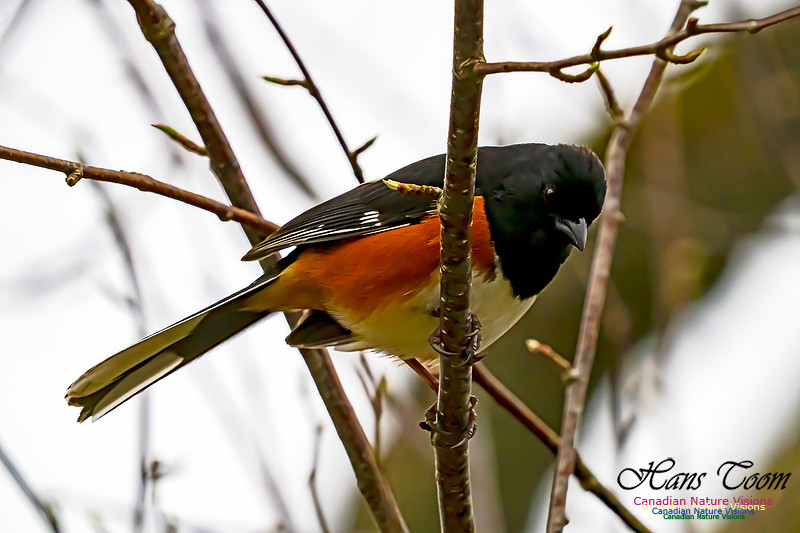
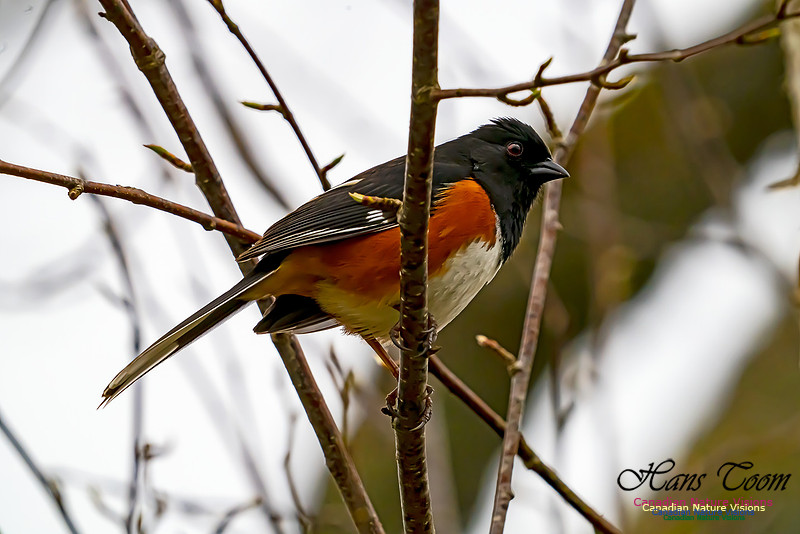
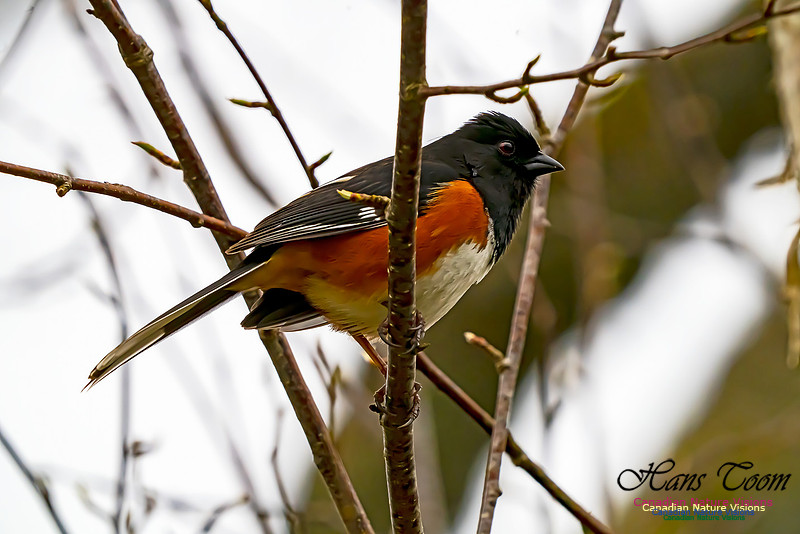
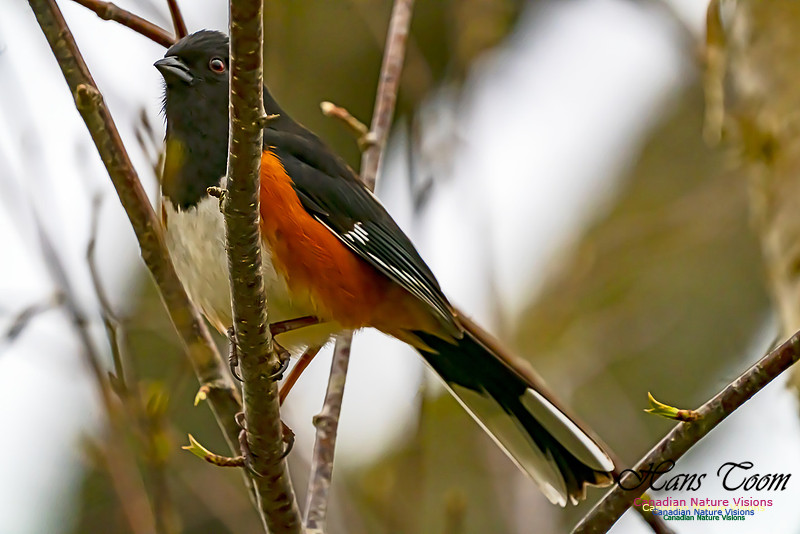
Eastern Towhee and Grey CatbirdI reedited my photos from yesterday due to excessive noise in the photographs. Noise is the curse of all good photography. Often it shows up in the opens spaces like the sky behind the subject but in all cases it compromises colour and definition. Eastern Towhee
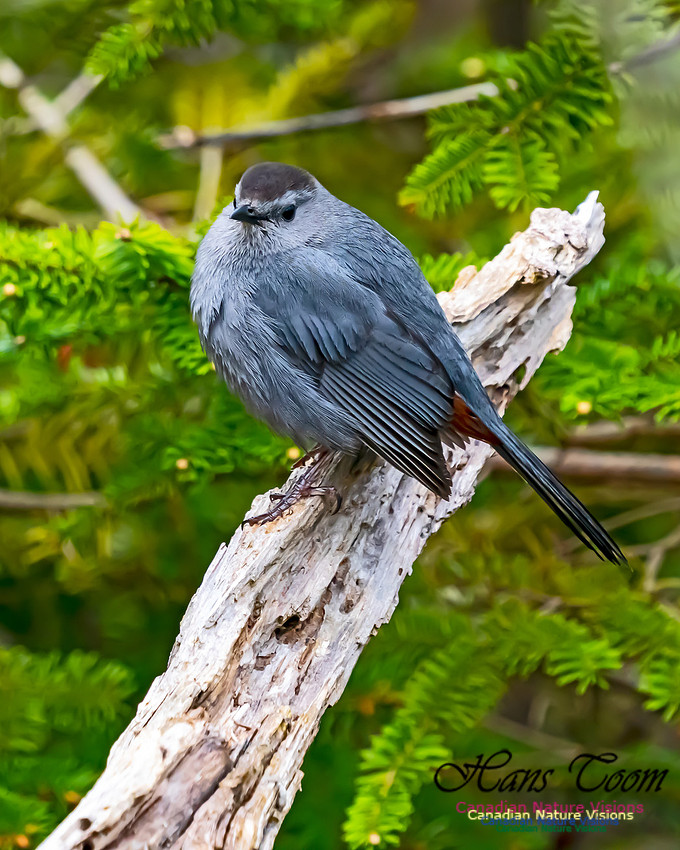
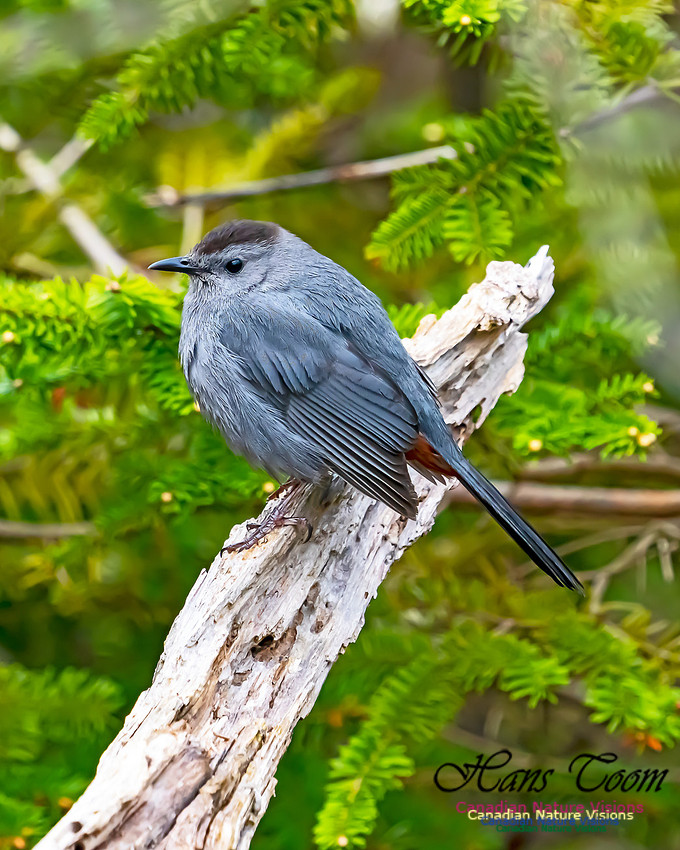
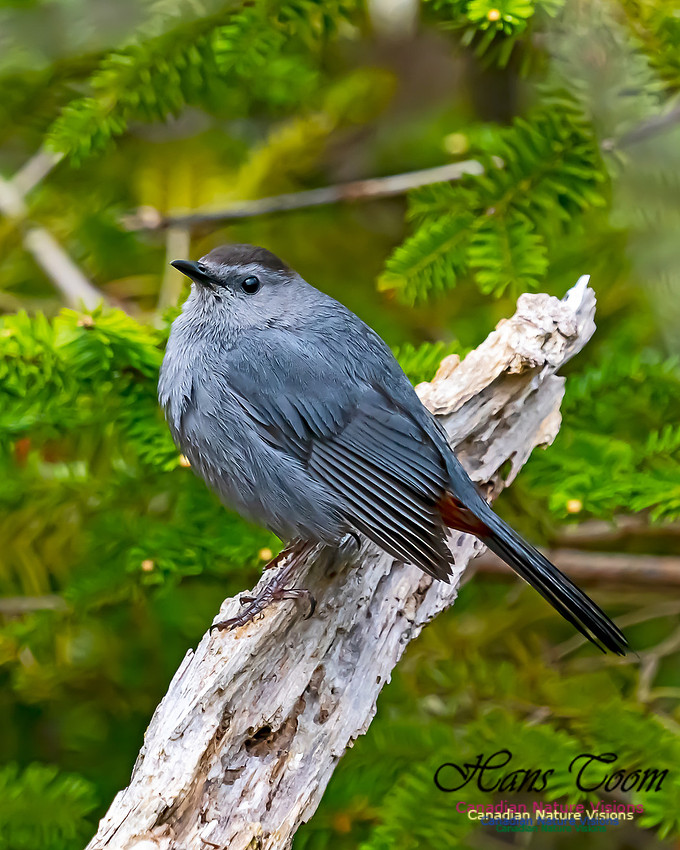
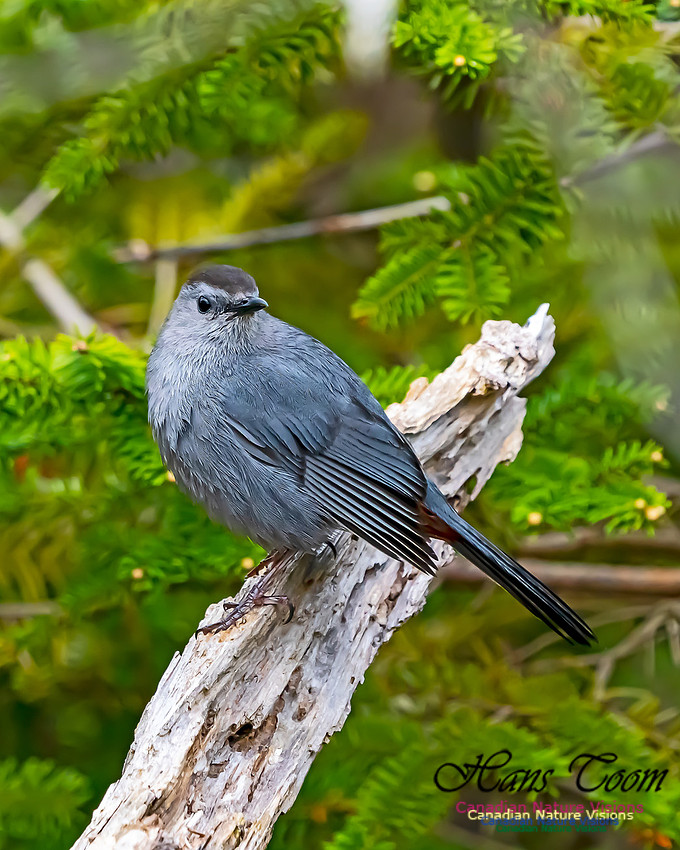
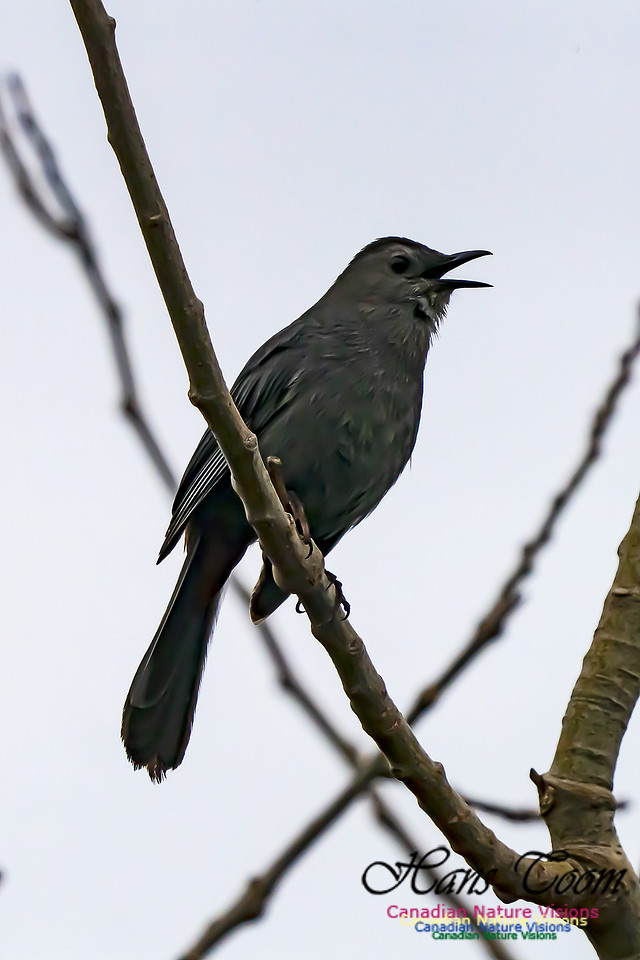
Grey Catbird
Eastern TowheeThe Eastern Towhee is an annual visitor best described as uncommon, certainly not rare. This example was a male in its finest regalia. I see one or two every year but they are usually juveniles or females. I will update these photos with better copies in a day or two after I learn the new Adobe format probably when it rains which is a reliable event in Nova Scotia The Eastern Towhee and Spotted Towhee (the western variant) were once classified as the same species, the Rufous-sided Towhee. Eastern Towhee
Grey CatbirdOur Grey Catbird has returned, the first of a pair. This time of year before the leaves erupt one can see their nest in the centre of the tangle of multiflora brambles in our front yard. They have nested here for several years. I put out some suet for it amongst the finch and chickadee fodder and the catbird found it quickly and dug right in. I bungled my editing thanks once again to Adobe. It seems in the culture of software developers if you can't make it better just reformat the software and your customers will be fooled into thinking its an upgrade. Not likely! I will have to reedit both the Grey Catbird and Eastern Towhee photos. Grey Catbird
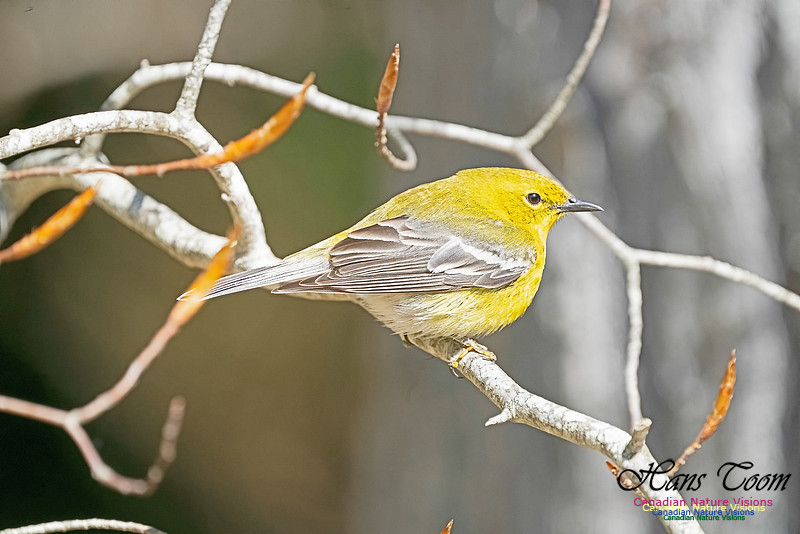
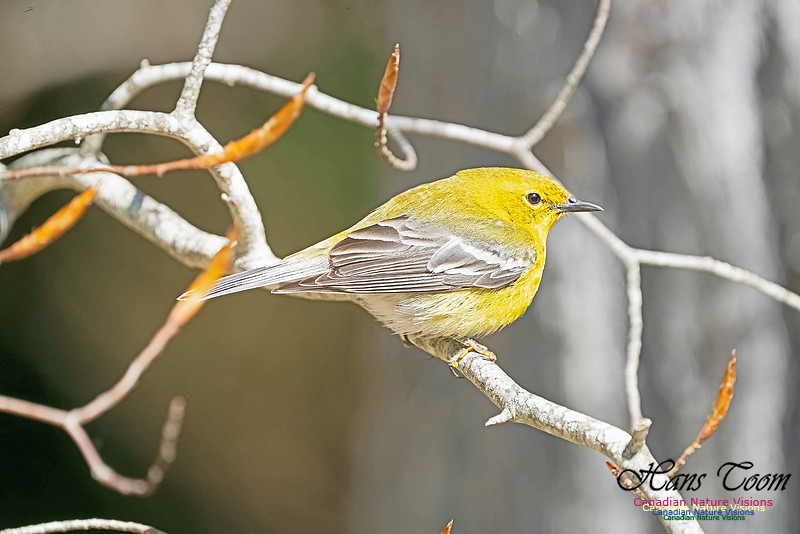
Pine WarblerThe Pine Warbler is a tough bird, often the first to arrive in the spring and the last to leave in the fall. It has nested in Nova Scotia for some time. The official confirmed first nesting is in 2010, but this is wrong. I have encountered this species on its nesting territory in the mature pine forests before that date and have encountered them ever year thereafter. Laura and I heard and saw our first Pine Warblers two weeks ago. There were several on territory today. I visit the breeding territory of the Pine Warbler before they nest and after they have finished nesting when the young have fledged. This is to eliminate human interaction during this critical period. Pine Warbler
Carolina WrenThe wrens are a wonderful family of birds with a wide variation in song types; the haunting woodland song of the Winter Wren unequaled by almost any bird, the mixed jumble of notes from the Marsh Wren, the awe inspiring jaw dropping melody of the Canyon Wren and the exuberance of the Carolina Wren. All these songs come from such a diminutive bird. I met a Carolina Wren several years ago in the dead of winter and got some wonderful photos. The photos from this example are not too bad either:) The wrens are feisty and meticulous. I foolishly put a layer of sawdust on the bottom of a wren box which was on the side of our house. Sure enough the House Wren who was moving in removed every speck of the sawdust and dropped it on the ground in front of the wren house. It started building the nest from scratch properly this time without human assistance. I watched this House Wren complain about a nearby red squirrel for a time and then watched as it flew at the red squirrel and knocked it from a tree branch to the ground. We kept our distance. It was a successful nesting. Interestingly all the young wrens fledged and disappeared over night or early in the morning. There was a major fuss as the nestlings were fed one evening but the next morning they were all gone. Carolina Wren
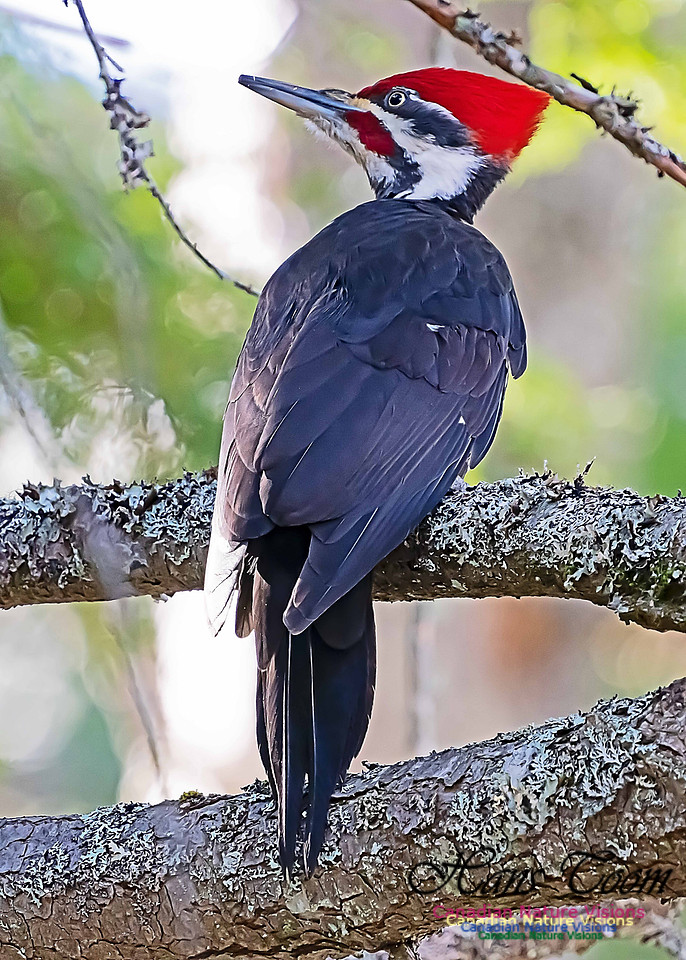
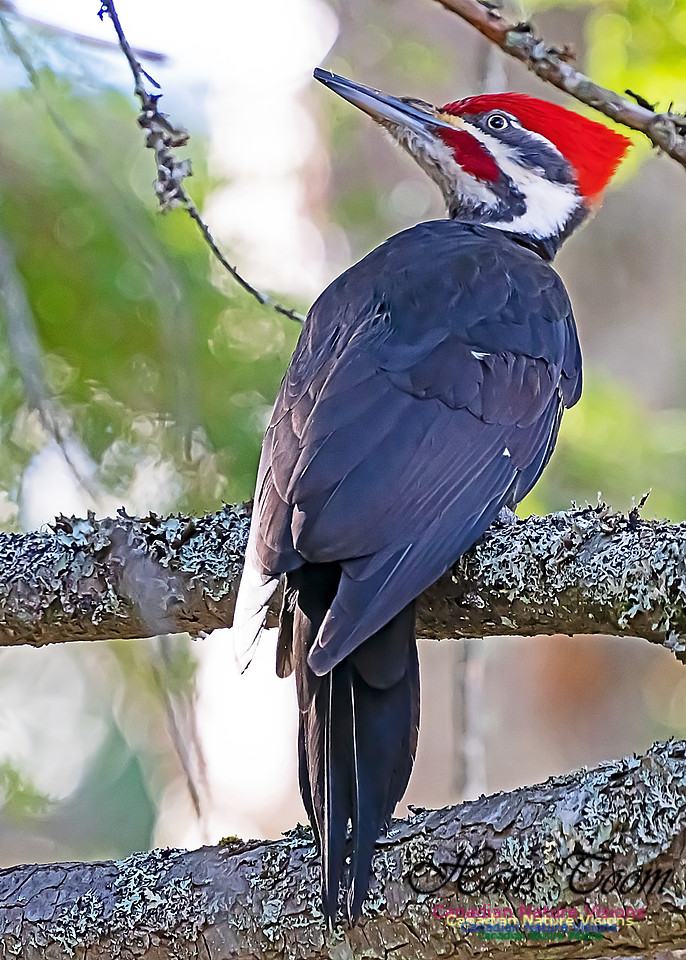
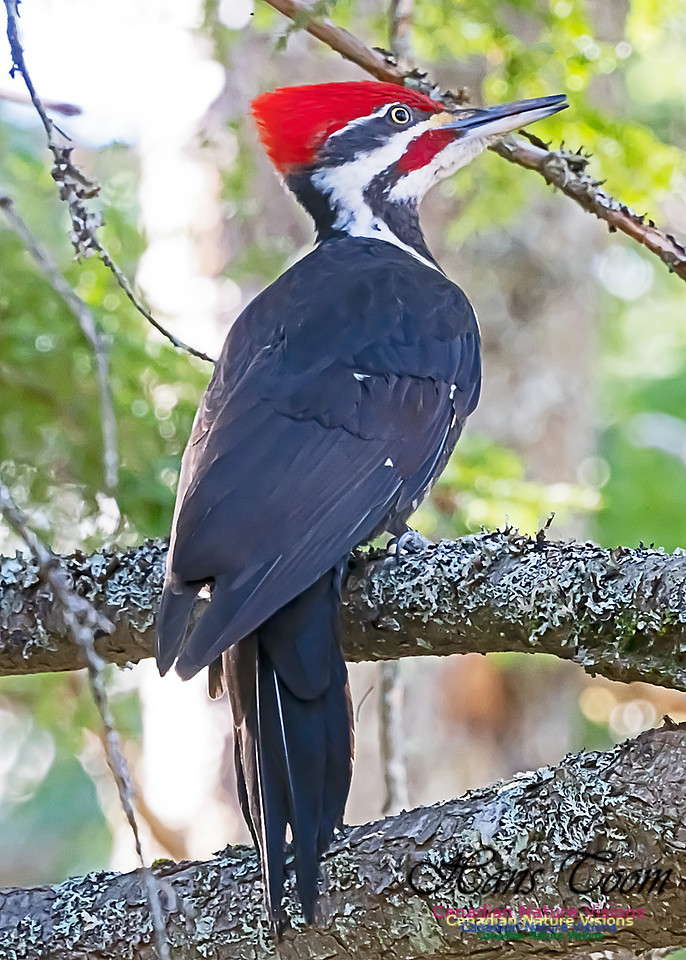
Pileated WoodpeckerLaura and I enjoyed an early spring woodland walk this morning. Our target species was the Pine Warbler which was a no show but the Pileated Woodpecker was an excellent substitute. We also saw and heard a Winter Wren and heard a White-breasted Nuthatch. Pileated Woodpecker
American Tree Sparrow in Snow StormThe Tree Sparrow is another all Canadian bird with most breeding well north of the U.S. of A. border in Canada's boreal forest. As usual Alaska gets credit for some nesters as well. The use of the name American is bizarre since everyone living in South America, Central America and North America is American, people and birds included. How the abuse of this name evolved is a study in laziness. Tree Sparrow
Dark-eyed Junco in Snow StormThe Dark-eyed Junco is actually a sparrow and challenging to photograph due to its (you guessed it) dark eye. The eye is the most important feature of all critters human and otherwise and focusing on it is the key to all successful photographs. It is a year round resident in Nova Scotia and all Canadian provinces. It is primarily a Canadian bird born and almost all breed north of the American border, although some breed in Alaska. Dark-eyed Junco
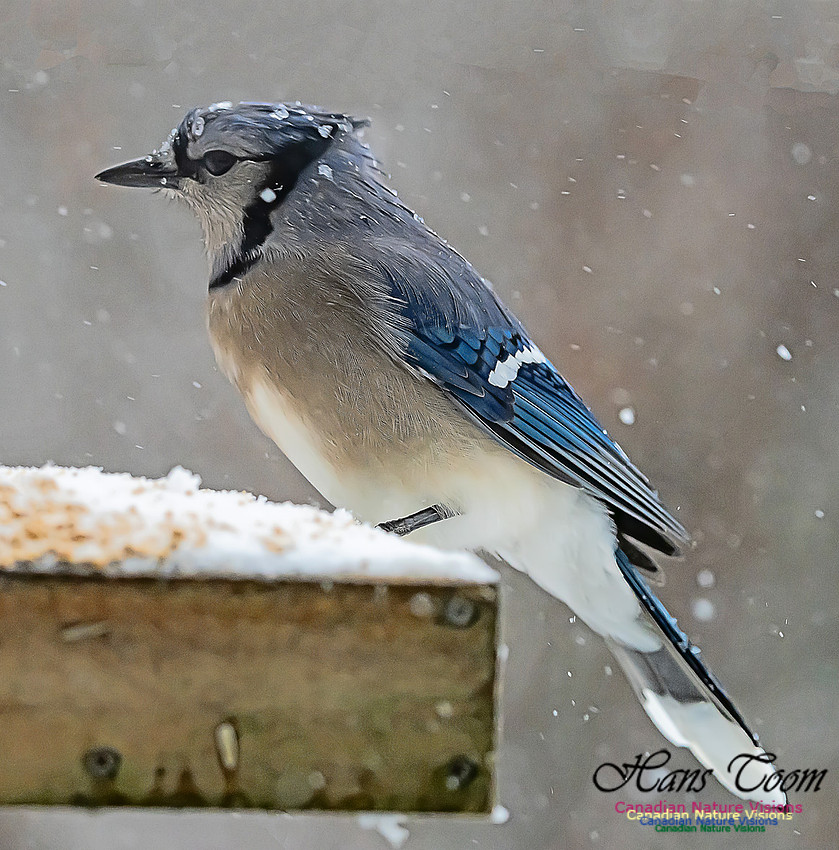
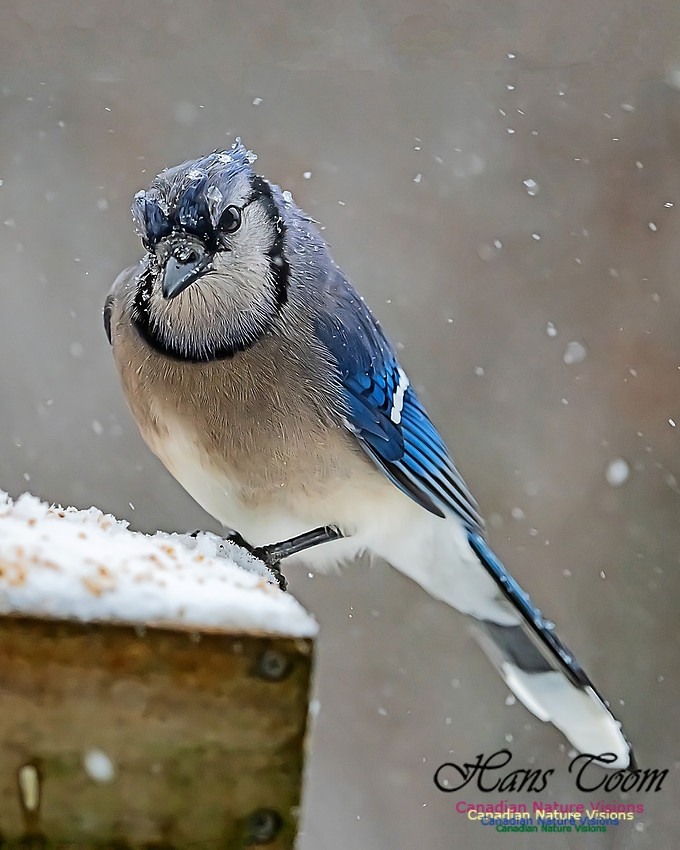
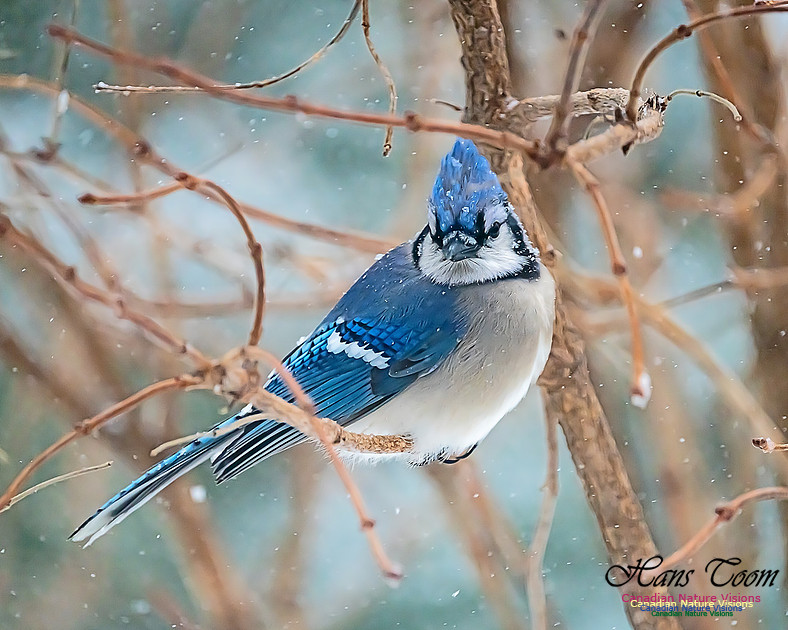
Blue Jay in Snow StormThe Blue Jay is a common North American bird and is a year round resident in all Canadian provinces although many do migrate a little further south during the worst of the winter. Although common to residents it is especially appreciated by European visitors. It is ironic that some of our best looking birds are so common and thus taken for granted. Blue Jay
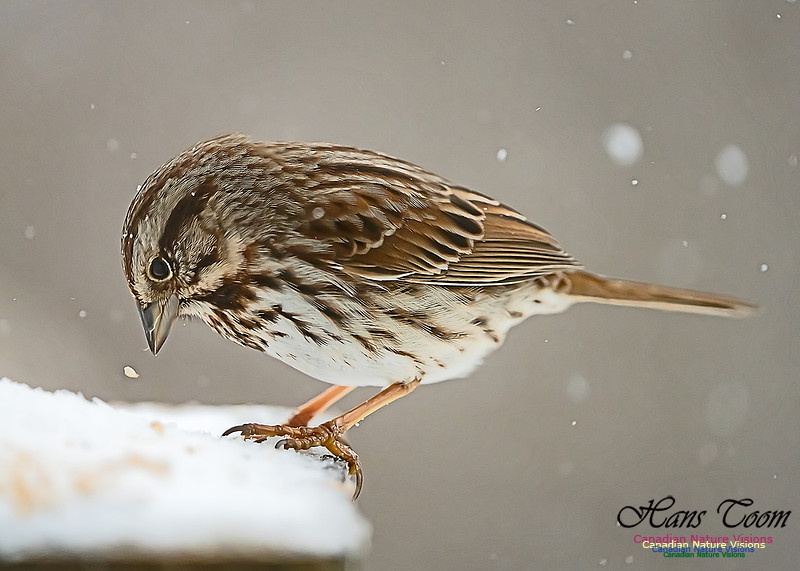
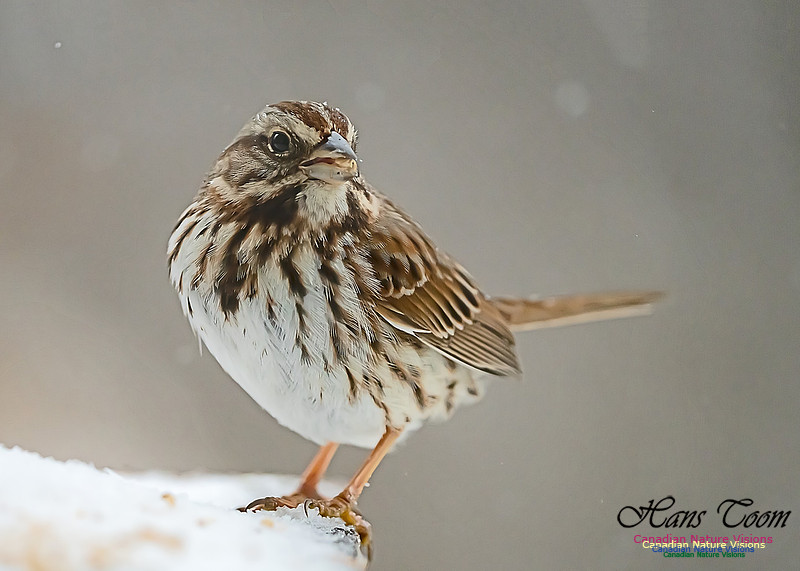
Song Sparrow in Snow StormThe recent snow storm, the last of the season we hope, brought most of our local birds up to the feeders. We usually have about 25 species and 200 to 300 birds with the peak activity occurring during and just after weather events. The Song Sparrow is usually the first to sing in the spring and it has a varied and melodic series of tunes. It stays all year round in this area. The White-throated Sparrow is also a year round resident and it is also an early singer, "Oh...sweet Canada..Canada..Canada". Song Sparrow
West Pennant Sunset at Long Cove PointLong Cove Point has spectacular views for seabirds and ocean vistas. It is sheltered water so bobbing and diving sea birds are easy to photograph. The clouds that add character to a sunset were not present but it was a warm and calm evening with no biting insects. No complaints from me:) Long Cove Point Sunset
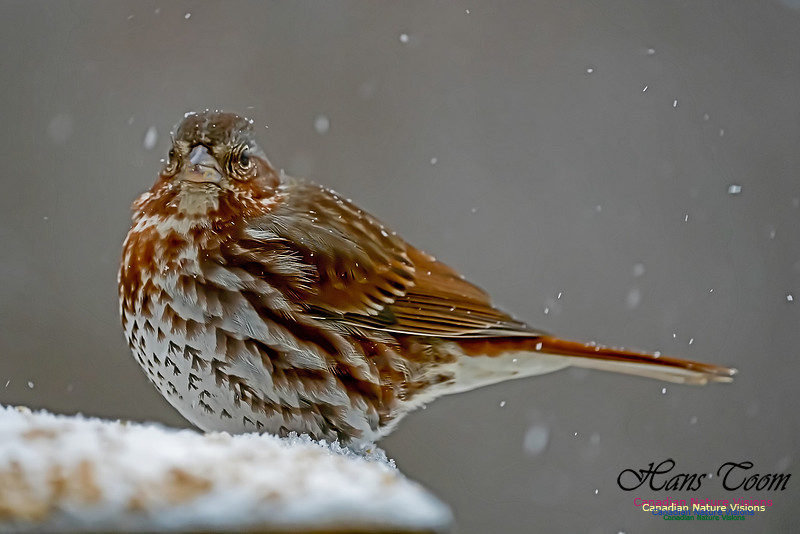
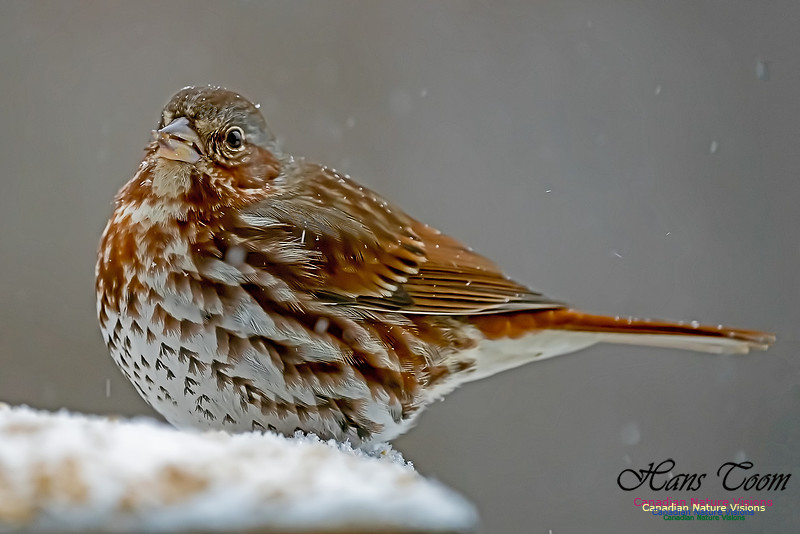
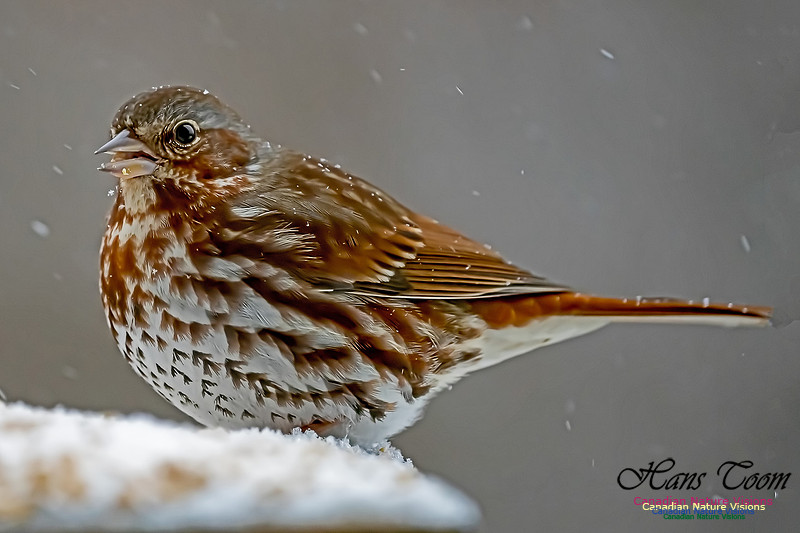
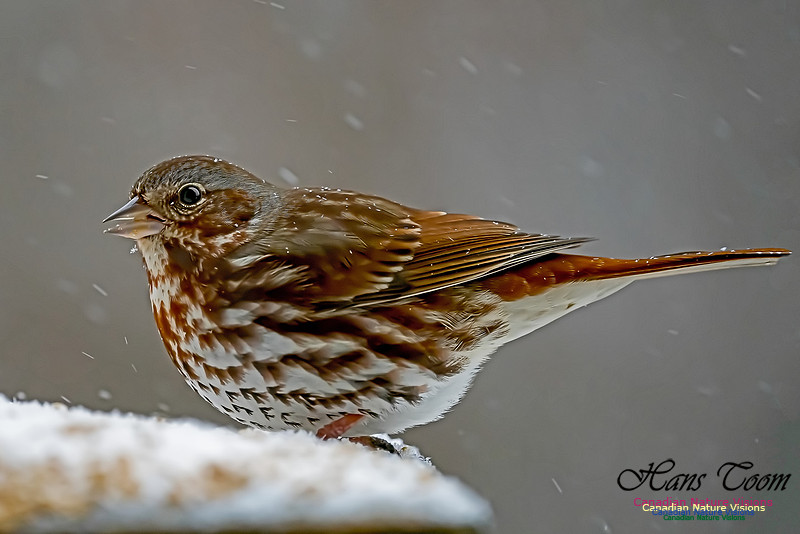
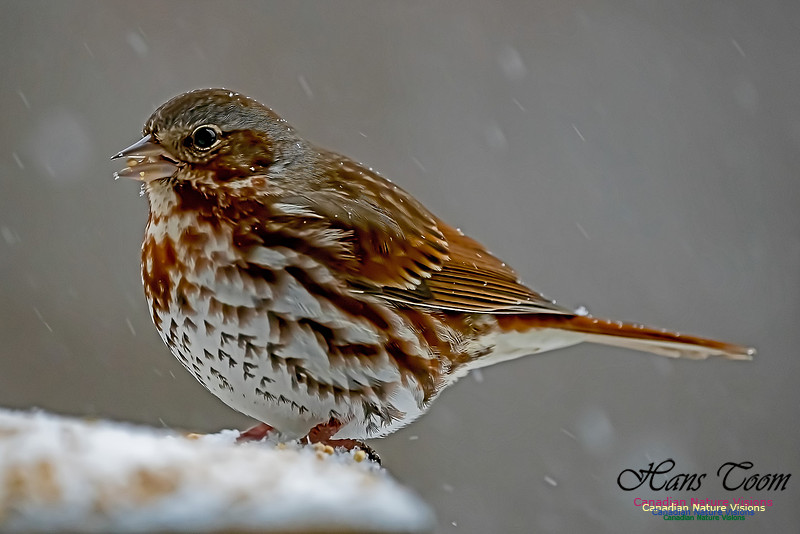
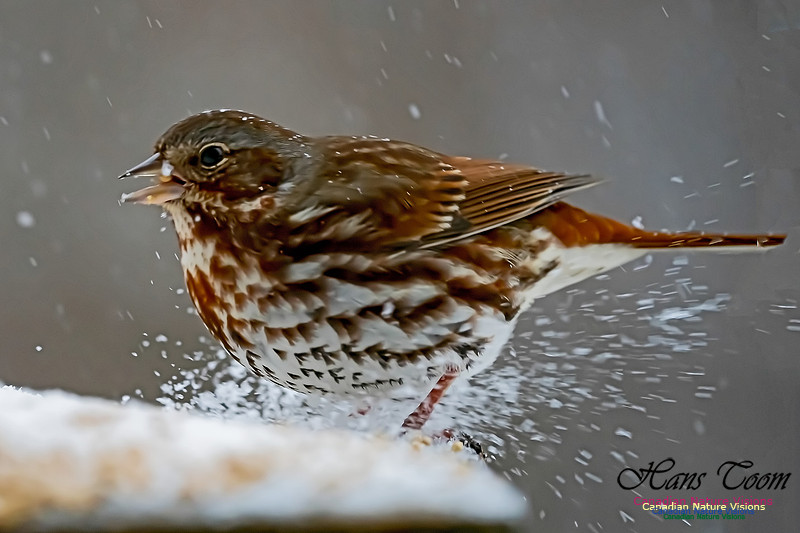
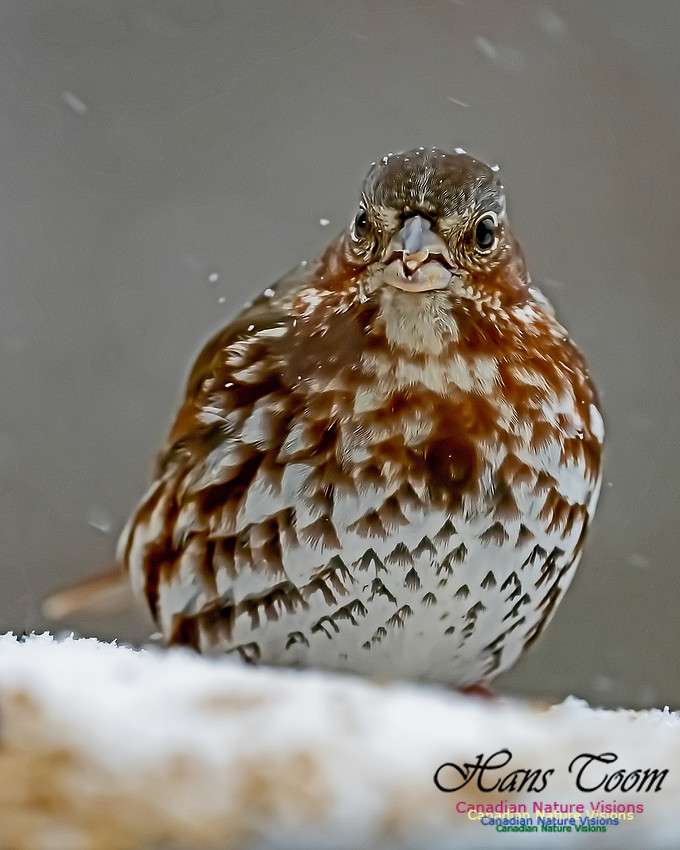
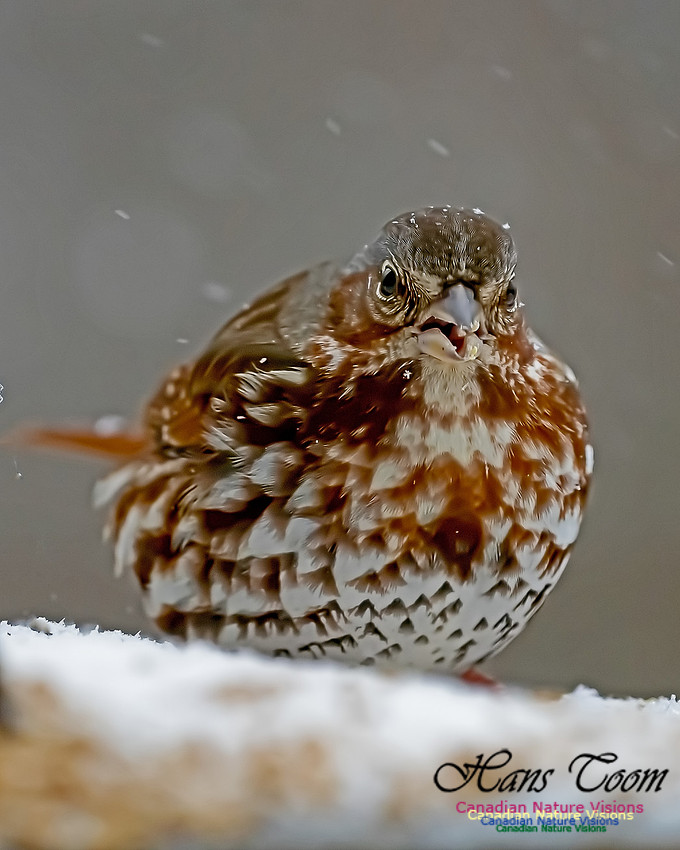
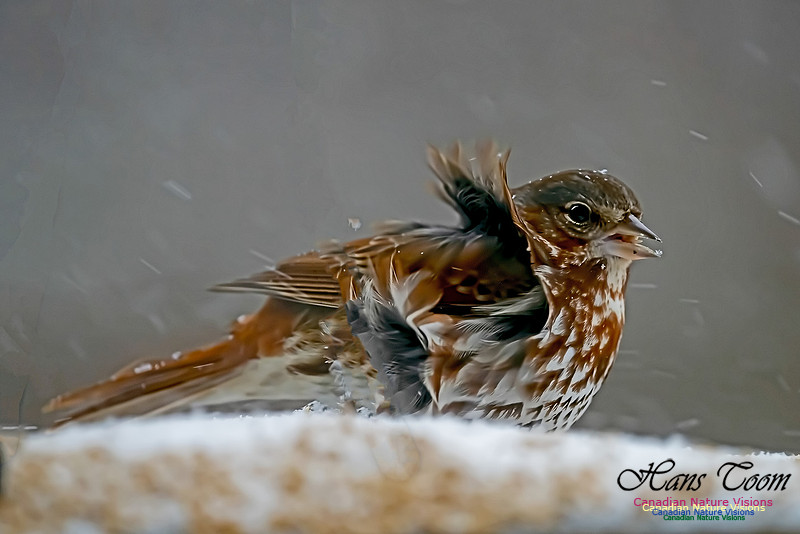
Fox SparrowThe Fox Sparrow is among our most elegant sparrows with an amazing song. We had one stay with us for 18 months several years ago yet last year we had none. It has irruptive migrations such that there will be Fox Sparrows behind every bush in suitable habitat followed by a year when very few are seen. This Fox Sparrow was photographed through our kitchen window through two panes of glass in a snow storm. It keeps scratching and scratching with snow flying everywhere. Fox Sparrow
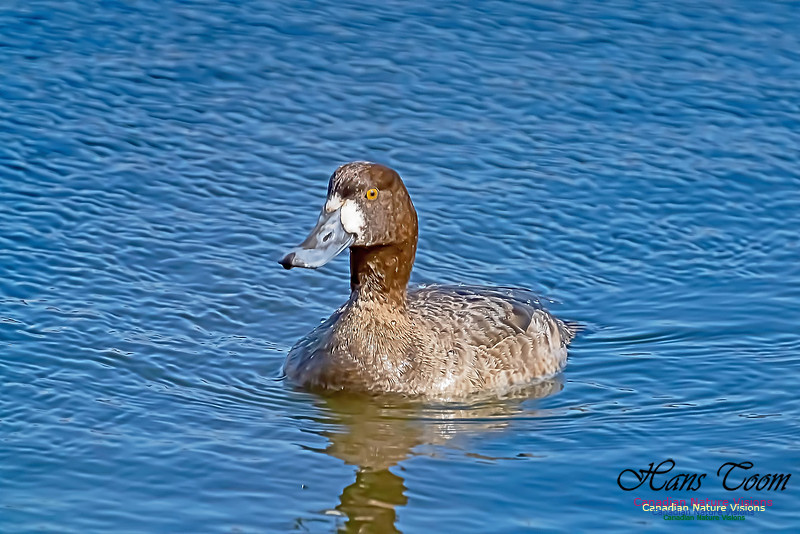
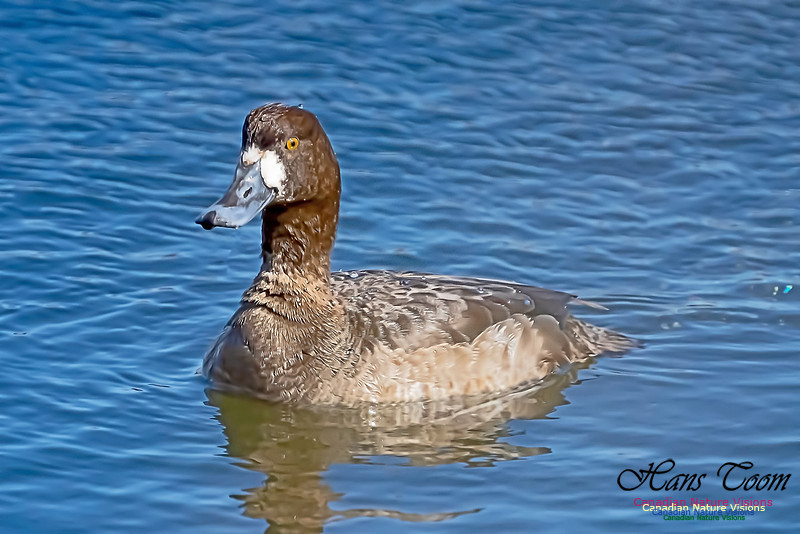
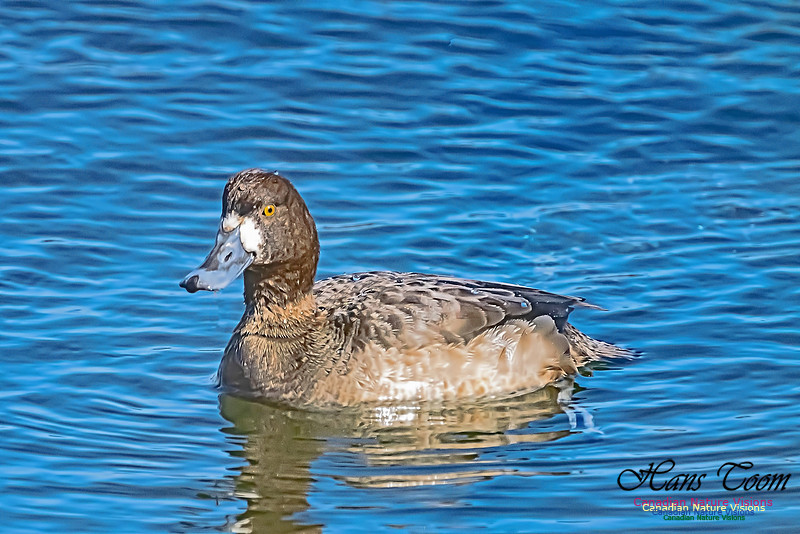
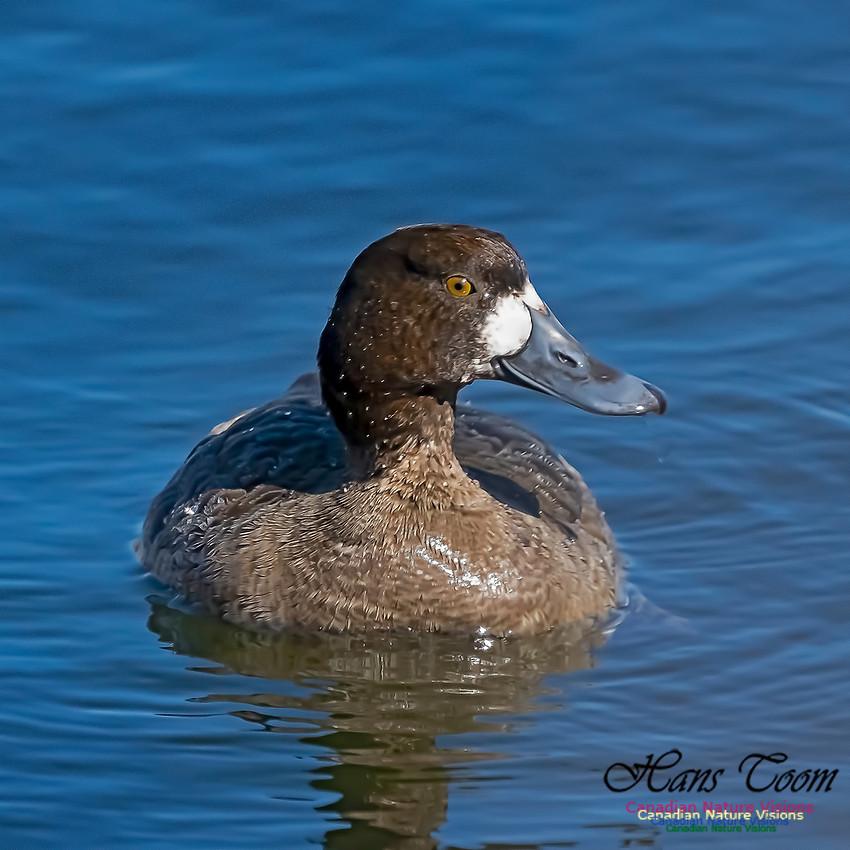
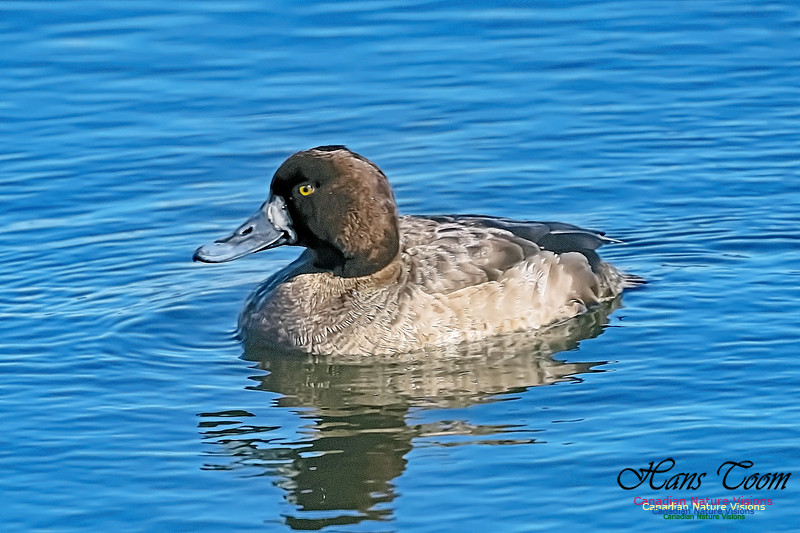
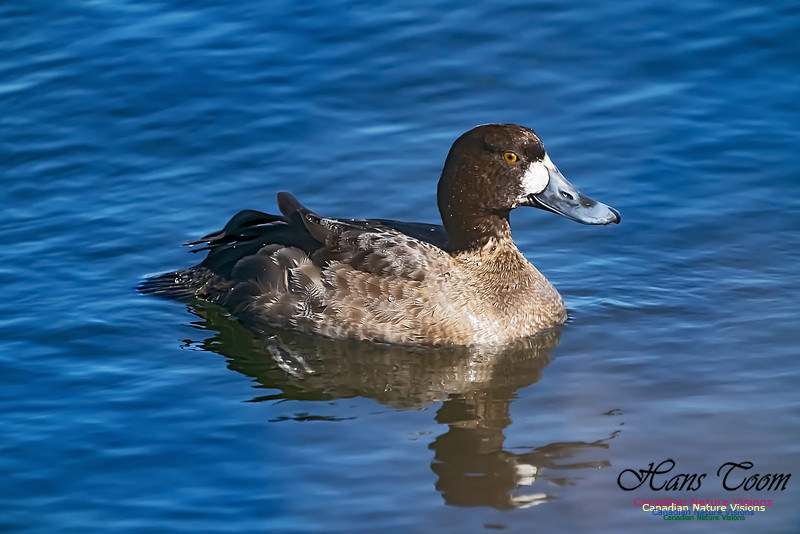
Lesser ScaupThe Greater and Lesser Scaup can be hard to tell apart. On the Greater Scaup the high point of the head is ahead or over the eye whereas on the Lesser Scaup the high point of the head is behind the eye. The Lesser Scaup also has a flat topped head while the Greater Scaup's head is rounded like it was drawn with a compass. These differences are most evident in breeding males. These birds are called Blue Bills in some areas. Even when one knows all this separating the species can still be tricky. Bring your bird identification book. ................and please feel free to correct my identification but please tell me where I went wrong:) Lesser Scaup
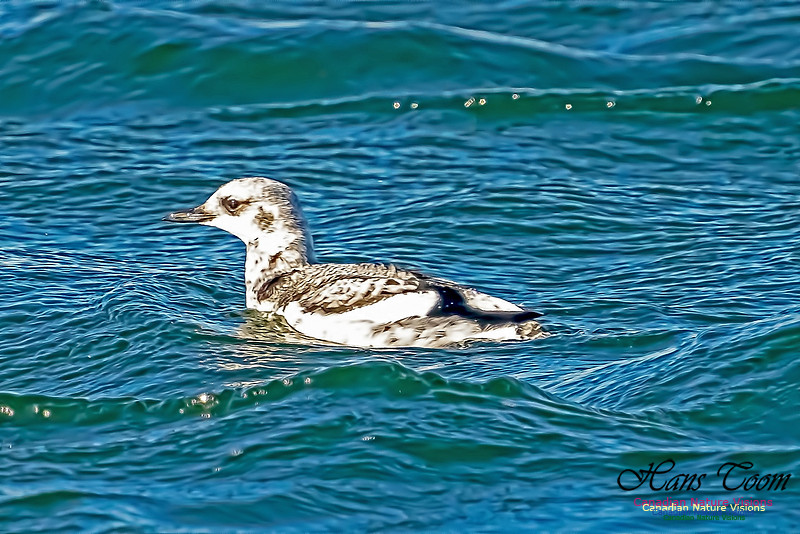
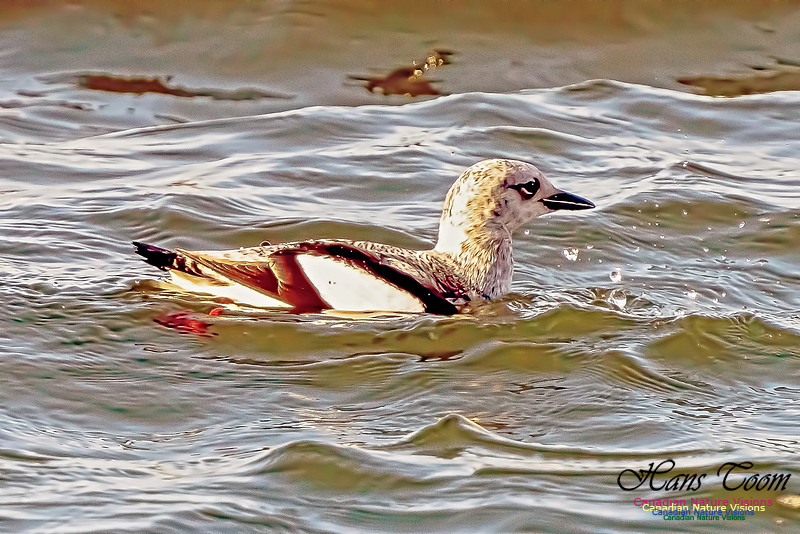
Black GuillemotThe Black Guillemot is a stunning bird in breeding plumage with its jaunty red legs and feet. In winter it presents a more modest appearance as it forages along the inshore coast often in bays. I've been to their breeding colonies and its amazing to see these birds at work and play. I hope to get to one of our offshore islands this year, Covid restrictions permitting. Black Guillemot
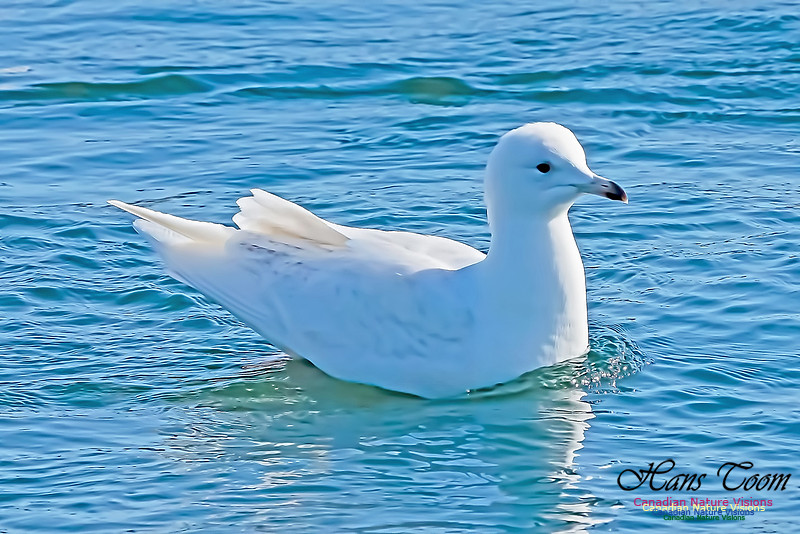
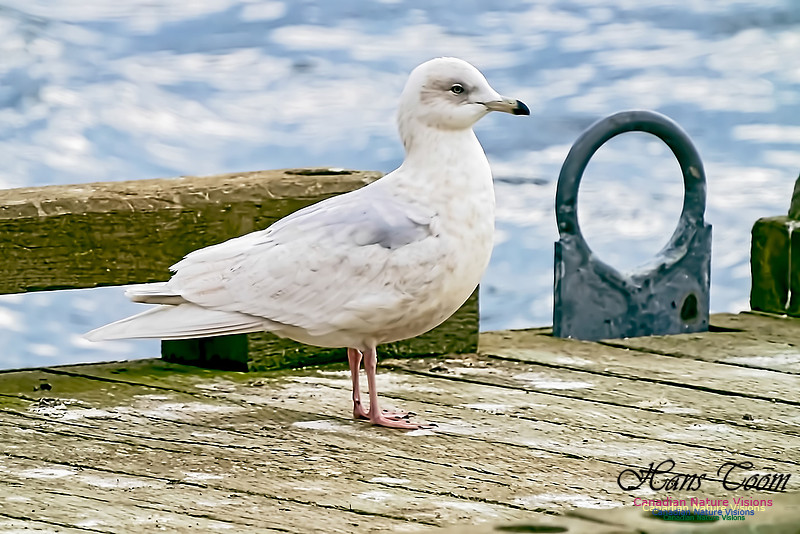
Iceland GullWhenever I see an Iceland Gull I usually take a good look just to make sure its not the mega rare Ivory Gull. I once had an Ivory Gull within two feet of me while I fed it chicken wieners. The gull loved them! I was leaning against a building on a off loading area for larger fishing vessels in the warm sunshine. The face patch is confusing in the second photograph. It could be a Thayer's Gull a variant of the Iceland Gull. The Iceland Gull breeds in the arctic and winters in coastal areas further south like balmy Nova Scotia (-12C today). Iceland Gull
|