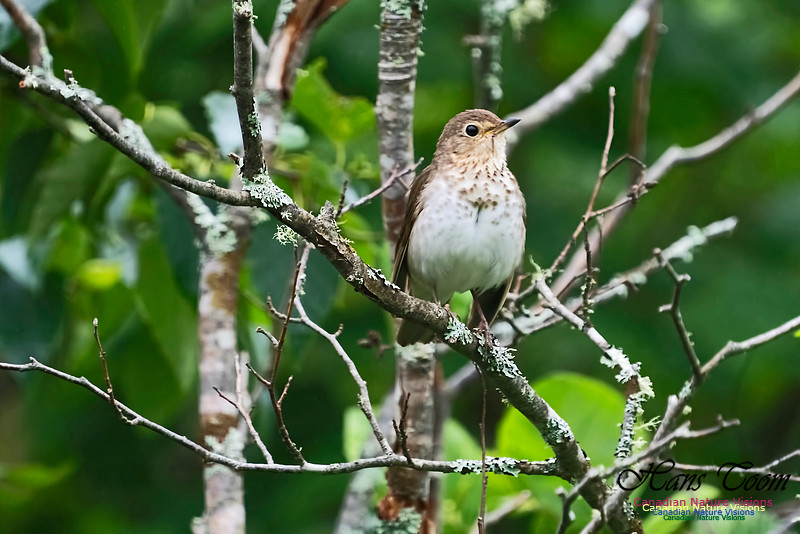
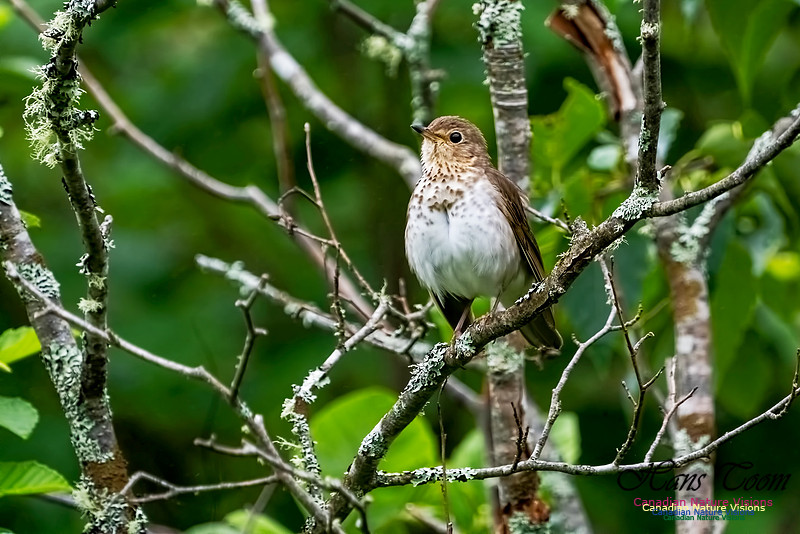
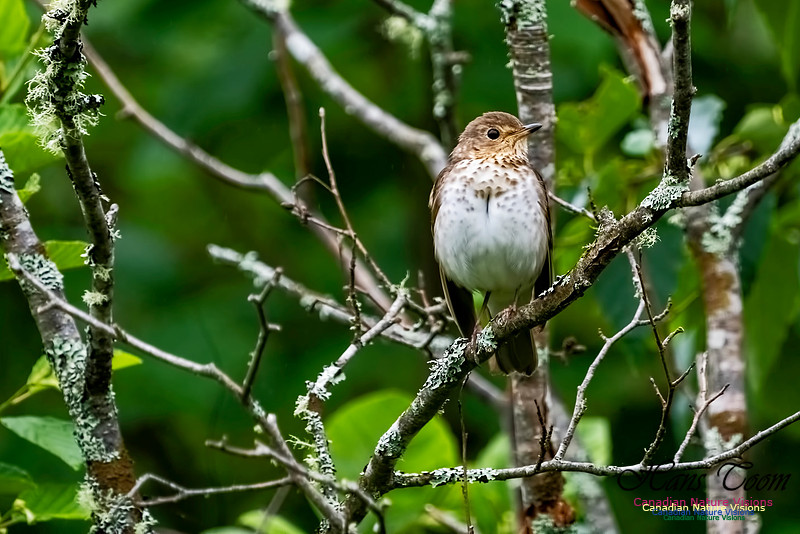
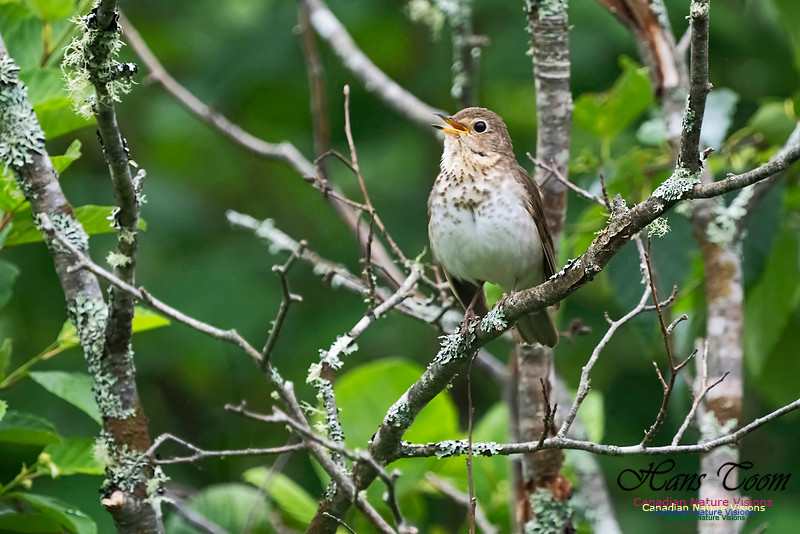
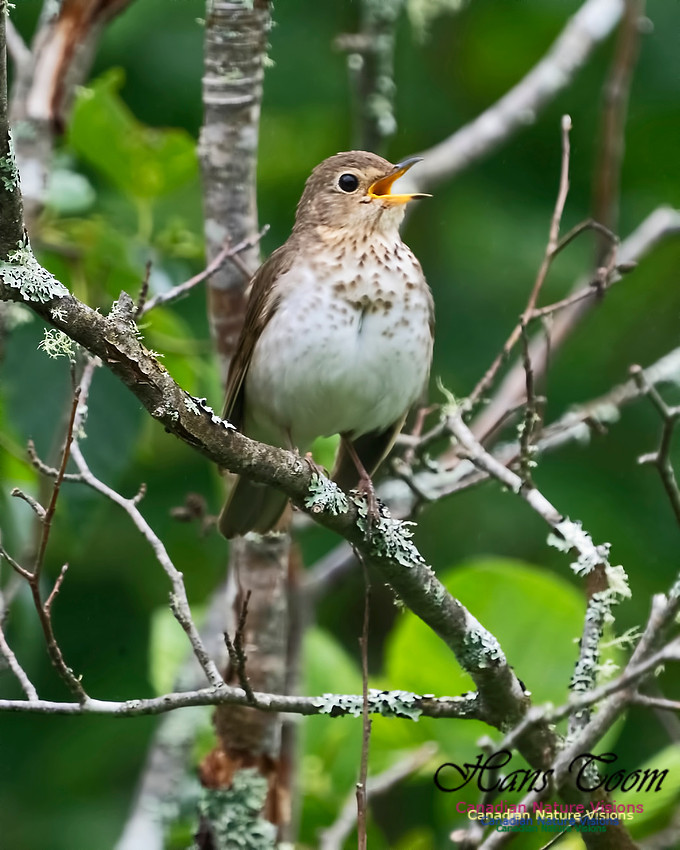
Swainson's Thrush the RevisitThe Swainson's Thrush is the predominant thrush species in Cape Chignecto Provincial Park. There were abundant Hermit Thrushes as well but the rugged north land thrushes such as the Veery and Grey-cheeked Thrush were were not heard or seen. Swainson's Thrush
American Redstart the RevisitThe American Redstart is a stunning bird and quite successful with the population increasing province wide probably due to the regrowth of forest edge habitat. American Redstart
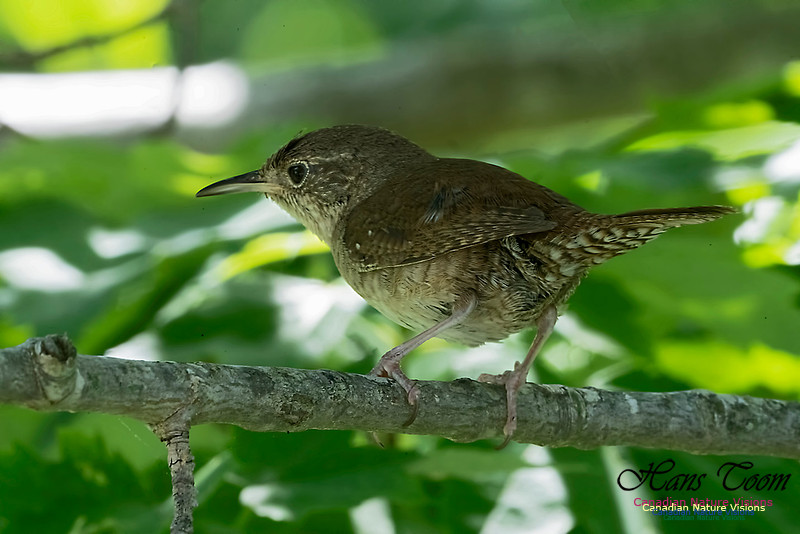
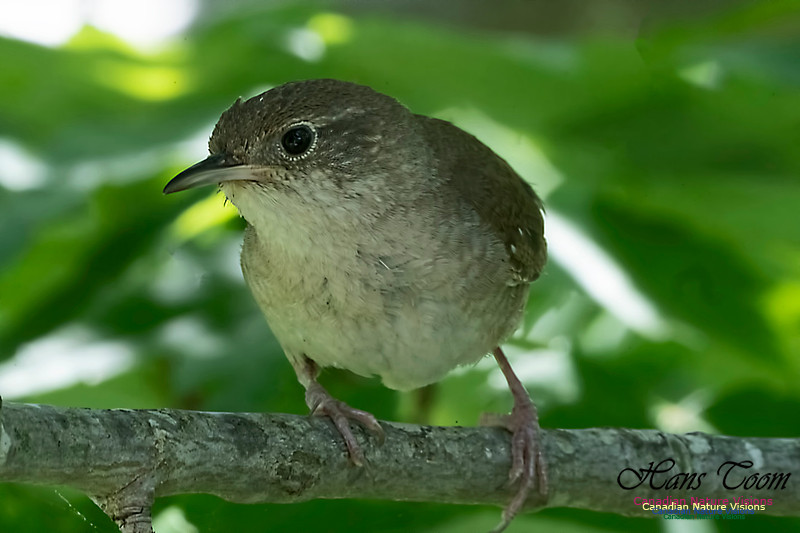
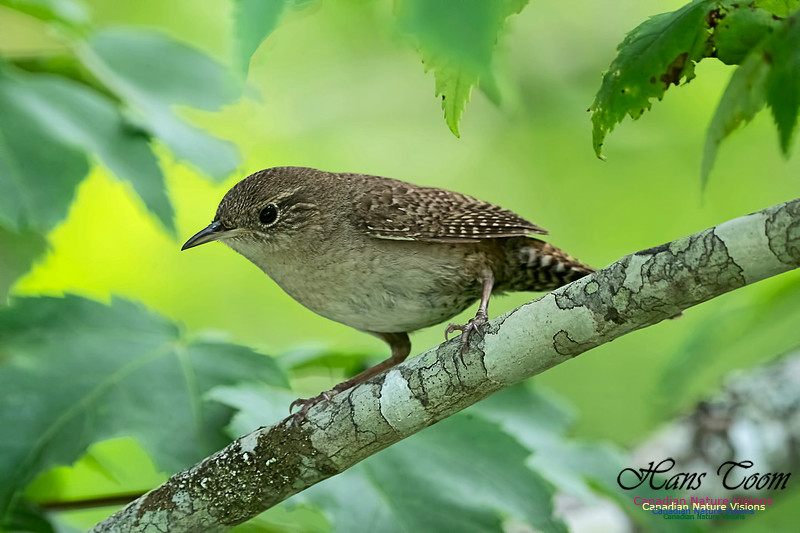
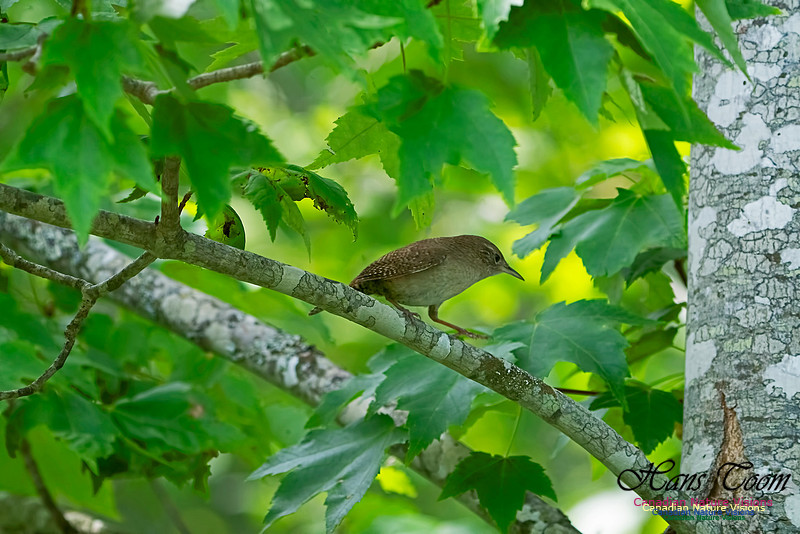
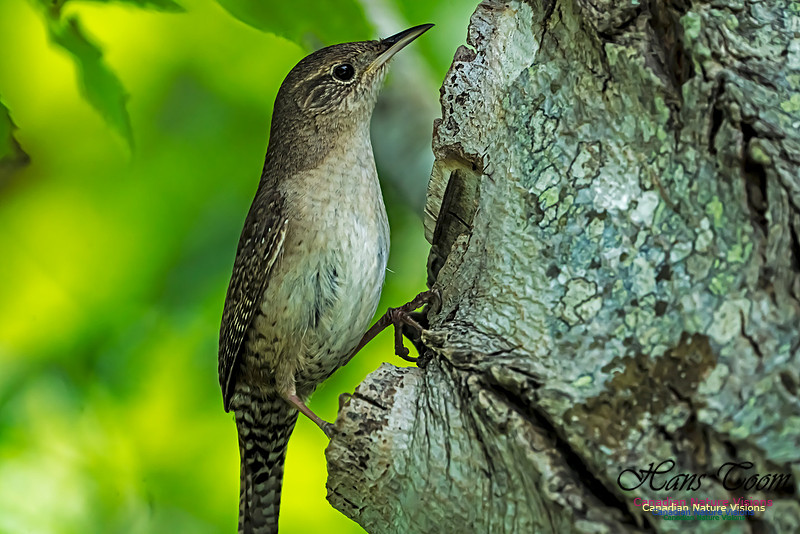
House Wren the RevisitWhile my desktop computer was in storage I was compelled to use my laptop computer which simply does not have the horsepower to process my 61mp RAW files or use Adobe so I am going through my last six weeks of photos and processing them for optimum presentation. All these photos will by captioned with "revisit". House Wren
Cape Chignecto Provincial Park Adventure Day 31, July 29This is the last blog post of this adventure. We hiked down to Anderson's Beach in the best weather of our trip; moderate temperature, light but refreshing wind, no fog, no smoke and the insects were not too bad either. There is no commentary on the photos. It's all scenery in some old growth forest and jagged coastline. Enjoy this trail at low tide for the maximum benefit. Anderson's Beach, Cape Chignecto Provincial Park
Cape Chignecto Provincial Park Adventure Day 30, July 28Today is our penultimate hike, the completion of the Acadian Dyke trail from the harbour to the sea. 40 foot tides here change the harbour basin from an ocean bay to a sand bar. Wildflowers, birds, bees and butterflies line the trail which is atop the dyke. I came poorly equipped for trail photography and image processing where modems are shared and funneled through a single phone line. Next year I will circuit Newfoundland for 30+ days and I will be better equipped for a shoot and post daily type of nature photography. The Acadian Dyke Trail
Alder Flycatcher
Astilbe
Bald Eagle
Three Great Blue Herons
Cabbage Butterfly
Canada Hawkweed
Least Sandpiper
Monarch Butterfly
Semipalmated Plover
Turkey Vulture
Yellow-rumped Warbler (juvenile)
Cape Chignecto Provincial Park Adventure Day 29, July 27Chignecto National Wildlife AreaNoticeChignecto National Wildlife Area trails and parking lot are open to the public for day-use only. Respect the environment and leave no trace. Remember, you are responsible for your own safety. We are committed to protecting the health and safety of Canadians, visitors and employees. Social and physical distancing restrictions will remain in place until further notice from local and regional health authorities. For more information, please consult our Q&A page. Chignecto NWA is located in Nova Scotia. The NWA contains diverse habitats and supports a wide array of wildlife species. 228 bird species have been recorded within the NWA in recent years. 
Chignecto NWA is home to a variety of species. Various marsh birds such as sora and Virginia railare common. Some of the highest nesting densities of pied-billed grebe in North America have been recorded in the NWA. People have recorded a total of 228 birdspecies within the NWA in recent years. Over 100 species breed within the NWA. In addition, one can find a sugar maple tree with a circumference of over 4 meters in the NWA. People have estimated that this tree is over 250 years old. The Amherst Point section consists of 412 ha which has both NWA and Migratory Bird Sanctuary (MBS) status. Ducks Unlimited Canada has improved a large portion of the Migratory Birds Sanctuary's wetlands. They improved the wetlands through the construction of dykes and control structures. Chignecto NWA provides habitat for a wide variety of mammals including, among others, the:
Find more information on Chignecto NWA in the summary table below. 
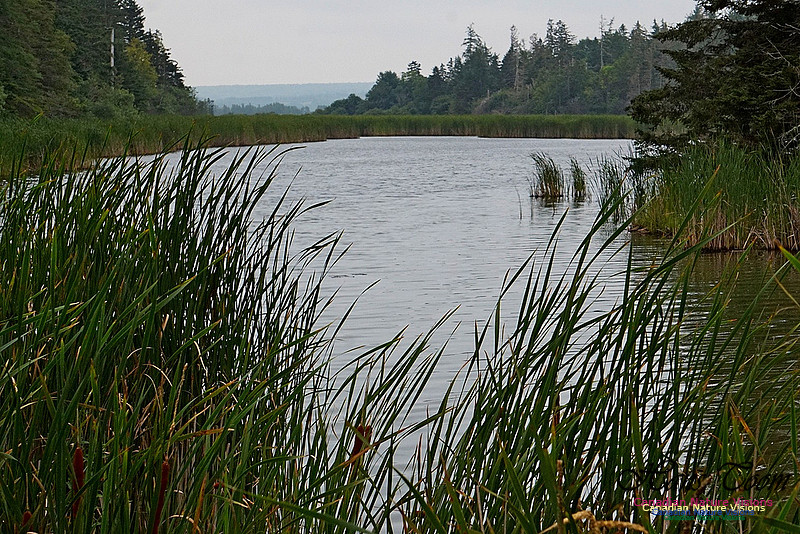
ManagementUnder the Canada Wildlife Act, NWAs are protected and managed in accordance with the Wildlife Area Regulations. The primary purpose of NWAs is to protect and conserve wildlife and their habitat. For this purpose and according to the legislation, all activities in a NWA that could interfere with the conservation of wildlife can be prohibited. Consequently, most NWAs are not accessible to the public and all activities are prohibited. However, some activities may be authorized through public notice or the issuance of permits as long as they are consistent with the management plan goals for the NWA. For more information, consult the NWAs Management and Activities section. Planning your visitThere is a small network of trails which provides access to the Chignecto NWA. You can enjoy hiking, wildlife observation, as well as some lovely photo opportunities in the NWA. Note: Hunting is not permitted within the NWA, however trapping is allowed, subject to provincial regulations. Public facilities: Parking lot and walking trails Access to the NWA is permitted in accordance with the conservation objectives of the NWA management plan. For more information on what is permitted in NWAs, consult the NWA Management and Activities page. DirectionsFrom the town of Amherst, Nova Scotia, take Southampton Road southeast until the road turns southwest. This is part of the Bay of Fundy Eco-Tour route. You can access a small parking lot on the north side of Southampton Road. You can find more information on access and permitting for Chignecto NWA, by contacting the Environment and Climate Change Canada regional office. Map of the area
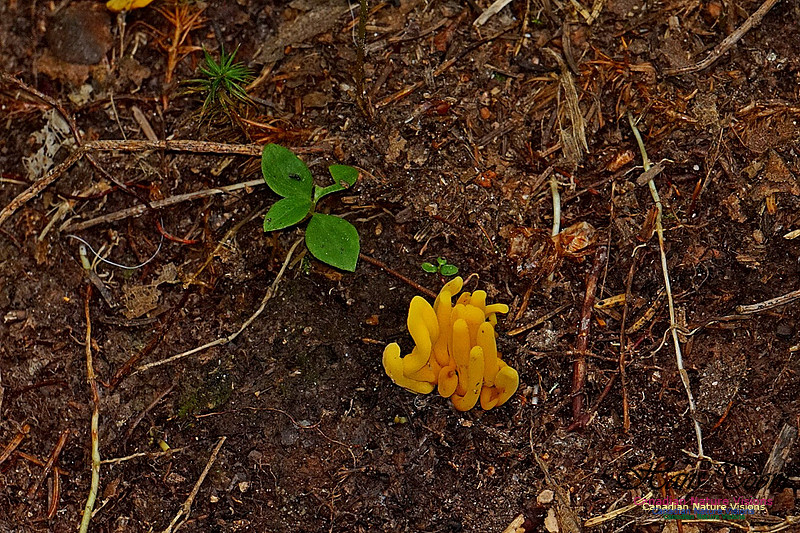
There was some huffing an puffing on our visit, gorgeous scenery, very few birds, but lots of mushrooms, lichens, fungi and mosses.
Dead Man's Fingers
Blue Bead Lily
12 Spotted Skimmer
White-tailed Skimmer
Least Sandpiper
End of Day
Cape Chignecto Provincial Park Adventure Day 28, July 26The weather was iffy so we we didn't want to get exposed on the Acadian dykes, the hike we had planned for this day. Fast moving lightning storms with torrential downpours have become a recent risk. Tomorrow we will try the Amherst Point Bird Sanctuary, a place we have not visited for years. The good news is that the marsh has been taken over by the Federal government, always a positive move in protecting our natural wilderness. They have the expertise and resources that will be needed. American Redstart
Astilbe
Bald Eagle
Bath Time
Black-and-White Warbler
Catchfly
Goldfinch
Least Sandpiper
Ring-necked Pheasant
Song Sparrow
This Tells the Story of Our Day
Cape Chignecto Provincial Park Adventure Day 27, July 25Laura and I hiked the Eatonville Trail as far as we dared. It was rough, steep and with sections of high grass which necessitated tick protocols. There were no good views of the estuary where they built the ships. The best photographs of this area were made on our earlier hike on the Three Sisters loop. Here is everything you need to know about Eatonville and the ship building and logging activity that occurred here. __________________________________________________________________________________________________________________ Eatonville, Nova Scotia
Jump to navigation Jump to search
Eatonville is a former lumber and shipbuilding village in Cumberland County, Nova Scotia. It includes a large tidal harbour at the mouth of the Eatonville Brook beside several dramatic sea stacks known as the "Three Sisters". It was founded in 1826 and abandoned in the 1940s. The site of the village is now part of Cape Chignecto Provincial Park. Early history The "Three Sisters" sea stacks
The complex geology of Eatonville Harbour and powerful erosion forces of the Bay of Fundy tides created a series of dramatic sea stacks, stone arches and caves. Three of the sea stacks are closely grouped and known as the "Three Sisters". According to a Mi'kmaw legend, they were created by the mythical figure Glooscap when he turned a pack of dogs pursuing a moose into the stone towers. The fleeing moose became the Isle Haute and can be seen in the distance from the frozen stone forms of the Three Sisters.[1] Settlers established a small sawmill on crown land at the tidal harbour beside the sea stacks about 1826. Early families at the settlement which became known as "Three Sisters" included the McDade, McNamara, Atkinson and Spicer families. By 1837 they had built a rough, but much-used road to Advocate, the beginnings of what came to be known as the "Eatonville Road". The land around the community was granted to James McDade in 1851. The land around the harbour and extensive timber holdings inland along Cape Chignecto were purchased by David Rufus Eaton and Charles Frederick Eaton in 1864.[2] Shipbuilding.jpg) The Eatons built a series of saw mills, lumber camps and a large shipyard. The growing settlement around their mills was named after their family.[3] A shipyard at the harbour produced over 20 large vessels beginning with the 1000 ton barque Chignecto in 1874[4] and finishing with the tern schooner J. L. Ralston in 1919.[5] Eatonville ships were noteworthy enough to attract coverage from Harpers Weekly Magazine which published an illustrated feature article on the launch of the barque Argenta at the Eaton's yard in 1890.[6] A notable example was the large ship Joseph H. Scammell built at Eatonville in 1884 which became a famous shipwreck in Australia when she sank in 1891. Eatonville Harbour attracted considerable shipping for the timber export trade. Two small tugs were based at the harbour to assist in docking ships and moving timber rafts[7] and the volume of shipping led to the construction of the Eatonville Lighthouses on the beach south of the wharf which operated from 1909 to 1923.[8] The harbour witnessed several shipwrecks including the spectacular wreck of the three masted schooner Marjorie J. Sumner which was severely damaged in the harbour in 1906 when it toppled over at low tide and was crushed by its large deckload of timber.[9] The shipyard and large sawmill were located at the harbour while the main village, known as "the Old Town" was located 1 mile (2 km) inland. The two were connected by a "tramway", a horse-drawn pole railway. Lumber IndustryThe Eaton's first sawmill was upriver in the "Old Town". In the 1890s, they built a much larger sawmill at Eatonville Harbour. The mill was a large steam-powered operation which could produce 60,000 board feet (100 m3) of lumber a day, but the Eatons "preferred to cut less, waste nothing and strive for quality." This allowed them to make the most sustainable use of their Cape Chignecto timber holdings which also had the advantage of very few forest fires because the "fog forests" of Cape Chignecto are constantly damp from Bay of Fundy fogs. A network of logging camps across Cape Chignecto connected by trails and log driving streams fed the Eatonville Mills while the adjacent settlement of New Yarmouth provided supplies, horse teams and workers. The village had a population of 350 people in its peak years. About 250 people lived in the Old Town which included a post office, two stores, a combined school and church and a blacksmith shop. About 100 people lived in Eatonville Harbour which had a separate post office and a large store. The store attracted customers from surrounding villages across eastern Cumberland County, drawn by its extensive array of imported goods. The store boasted fine parquet floors and one of the earliest telephone connections in the area.[10] DeclineThe Eatons sold their holdings to the Elderkin family in 1897. The population dwindled after World War One as timber stands were exhausted and wooden shipbuilding collapsed. The large mill was eventually destroyed by fire. The village was largely abandoned by the 1930s. Seasonal cutting and exports of timber from scows continued into the 1940s. The last year-round resident left in 1943, although the descendants of several Eatonville families maintain cabins in the area. The surrounding forests were logged by various Cumberland County Mills but especially for pulpwood by the Scott Paper Company until the 1980s. Present day Eatonville Interpretation Centre in 2009
The Eatonville Road became a seasonal wilderness public road for off-road vehicles maintained by volunteers from Advocate to Eatonville and through to Spicers Cove. In 1989, the Eatonville site became part of Cape Chignecto Provincial Park. The old village site is crossed by the park's main backpacking trail which follows the former tramway for several kilometres and connects to a bunkhouse and wilderness campsites at Eatonville's "Old Town" site. The sea stacks and beach at the harbour are a popular kayak destination. In July 2009, the Park built an "off-the-grid" seasonal interpretation centre accessible by car from Spicers Cove along with a network of short day hikes overlooking the harbour, the Three Sisters sea stacks and a dramatic Raised beach at nearby Squally Point. The interpretation centre closed due to environmental problems in 2013 but the trails and look-offs remain open.[11] The tidal harbour at Eatonville floods very quickly at high tide and can trap hikers attempting to explore the sea stacks from the beach. Two hikers and a dog were trapped by the tide in 2014 and had to be rescued by a helicopter from CFB Greenwood.[12] In 2020, the Eatonville Day Use trail system centred on the Three Sisters sea stacks became an anchor of the UNESCO "Cliffs of Fundy Global Geopark which begin at Eatonville and stretch around Cape Chignecto and down the coast to Debert.[13] [14] ___________________________________________________________________________________________________________________ Fritillary Butterfly and Canada Hawkweed
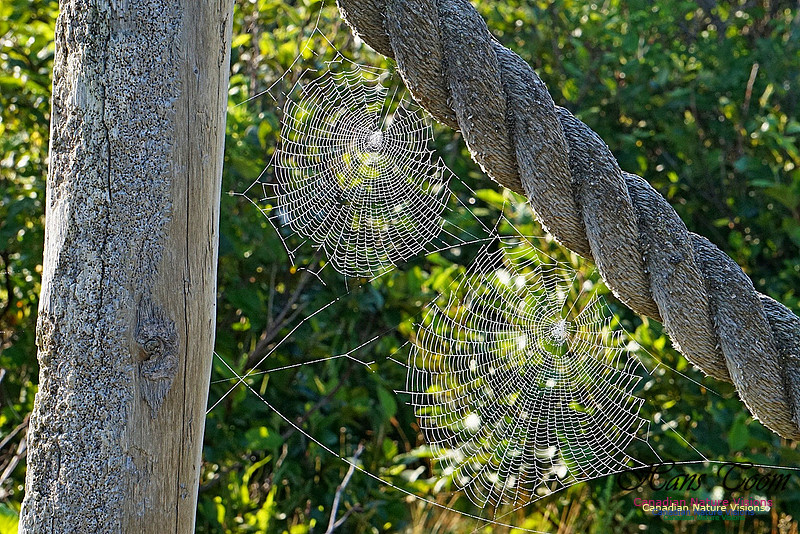
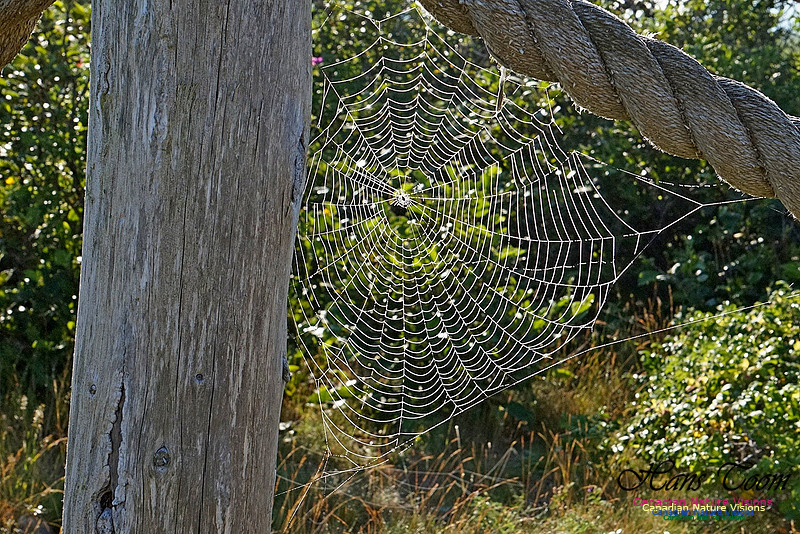
Early Morning Cobwebs
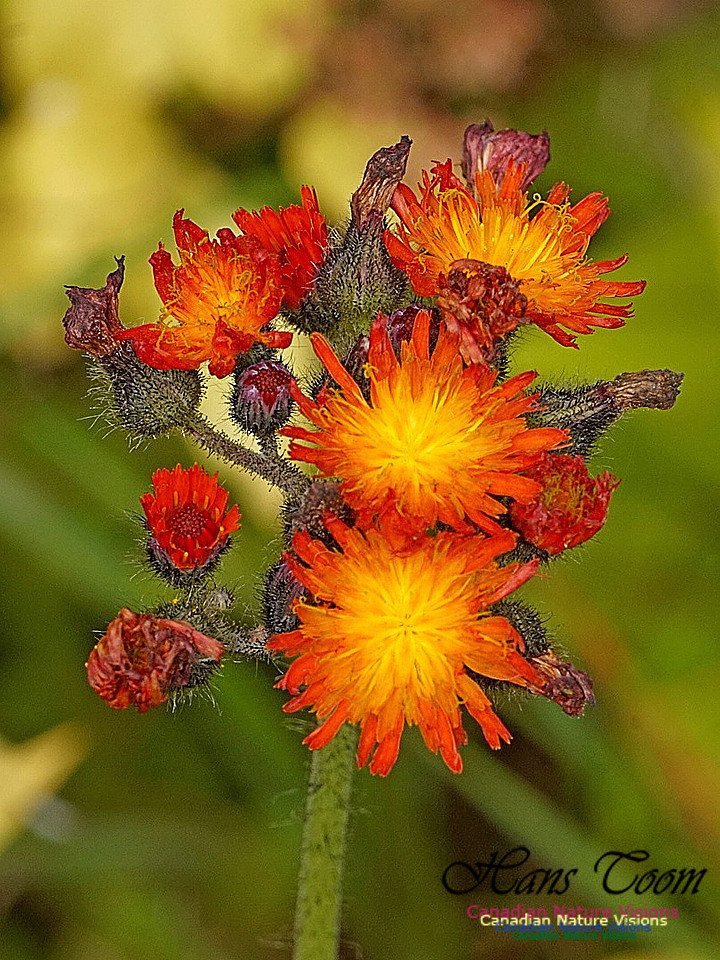
Red Hawkweed
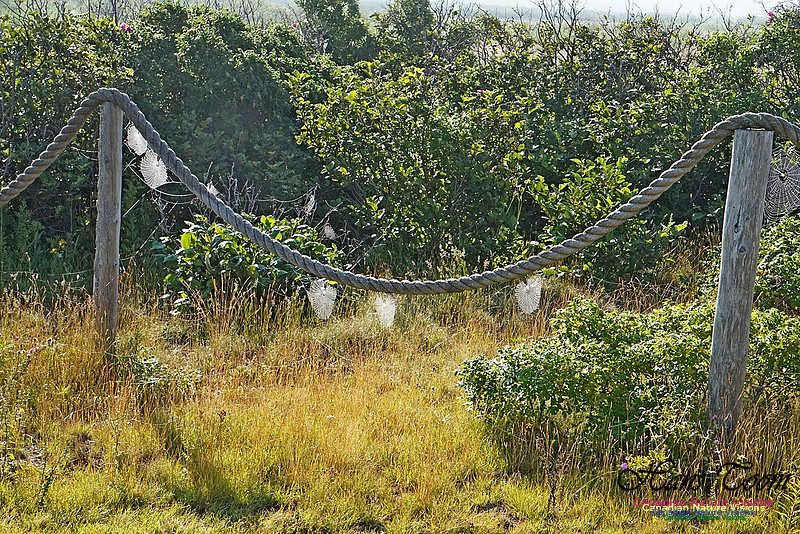
The cobwebs were everywhere.
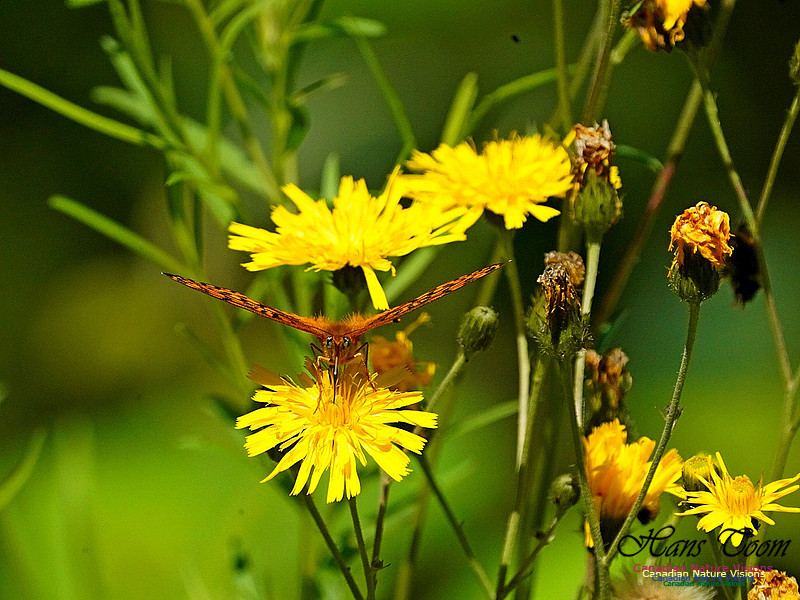
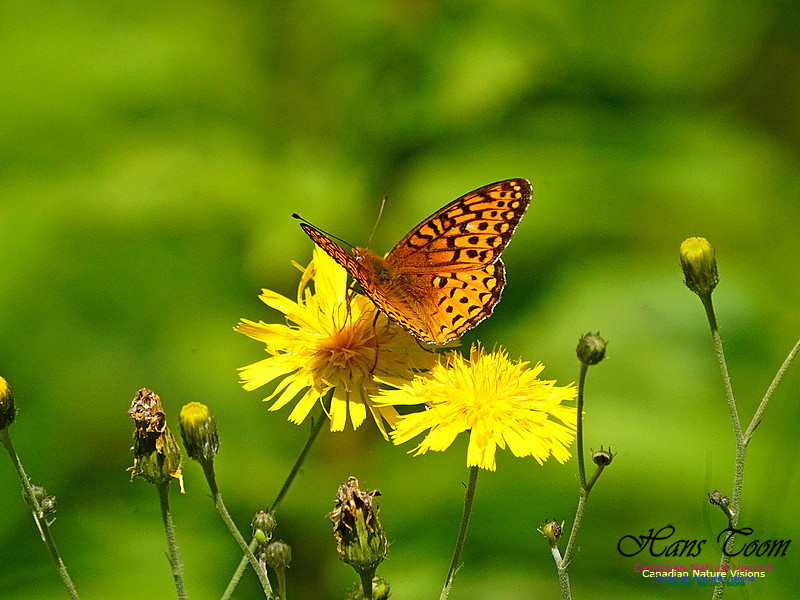
Fritillary and Canada Hawkweed
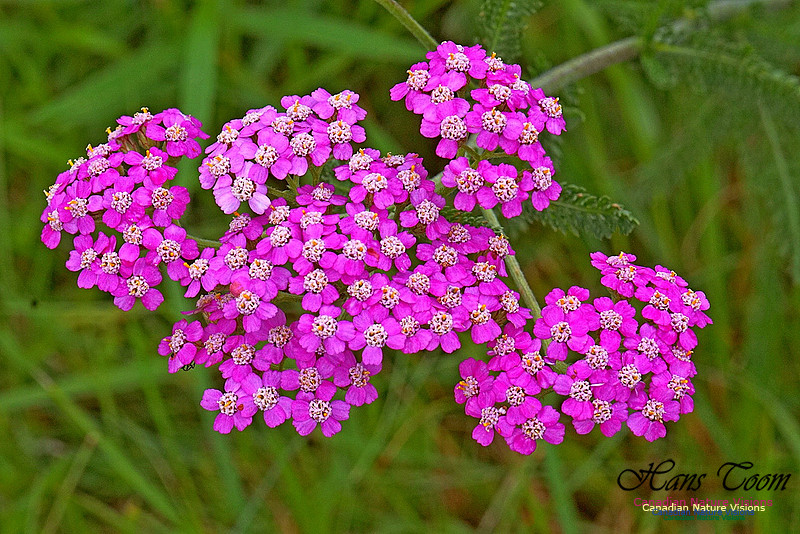
Pink Yarrow
Cape Chignecto Provincial Park Adventure Day 26, July 24On Saturday we drive into Parrsboro for supplies. There are good sand beaches between Advocate and Parrsboro but unfortunately there have been very few shorebirds. Nevertheless every day is a surprise. Today we walked the dykes that the amazing early Acadians built here to form the salt marsh and inner harbour of Advocate. I also obtained excellent moonrise photos, the first ones here in 36 days. ___________________________________________________________________________________________________________________ History of the AcadiansModern flag of Acadia, adopted 1884
The Acadians (French: Acadiens) are the descendants of 17th and 18th century French settlers in parts of Acadia (French: Acadie) in the northeastern region of North America comprising what is now the Canadian Maritime Provinces of New Brunswick, Nova Scotia and Prince Edward Island, the Gaspé peninsula in eastern Québec, and the Kennebec River in southern Maine. The settlers whose descendants became Acadians primarily came from the southwestern and southern regions of France, historically known as Occitania, while some Acadians are claimed to be descended from the Indigenous peoples of the region.[1]Today, due to assimilation, some Acadians may share other ethnic ancestries as well.[2] The history of the Acadians was significantly influenced by the six colonial wars that took place in Acadia during the 17th and 18th century (see the four French and Indian Wars, Father Rale's War and Father Le Loutre's War). Eventually, the last of the colonial wars—the French and Indian War—resulted in the British Expulsion of the Acadians from the region. After the war, many Acadians came out of hiding or returned to Acadia from the British Colonies. Others remained in France and some migrated from there to Louisiana, where they became known as Cajuns, a corruption of the word Acadiens or Acadians. The nineteenth century saw the beginning of the Acadian Renaissance and the publication of Evangeline, which helped galvanize Acadian identity. In the last century, Acadians have made achievements in the areas of equal language and cultural rights as a minority group in the Maritime provinces of Canada. ___________________________________________________________________________________________________________________
The Acadian Dykes of Advocate
I found some wild blueberries, ripe and ready to go, on the side of the Avondale Road. Laura was delighted to take advantage of this discovery.
Cape d"Or As seen from the dykes.
Bumblebee and Fireweed
Fritillary and Pearly Everlasting
Great Blue Heron Beside the dyke
Laura Enjoying the View
The Blueberry Harvest
Sweet White Clover
Two Tree Swallows and Two Song Sparrows
I was never able to get good moonrise or sunrise photographs at Portuguese Cove because of the turbulent air currents compressed onto the photo from shooting over 30 kilometres of ocean. This is not a problem at Advocate. Moonrise at Advocate Harbour The photos are taken from the cottage deck.
The moon photos are low resolution, about 250 kilobytes jpeg files. I look forward to working on these photos from the 120 megabyte RAW files.
Cape Chignecto Provincial Park Adventure, Day 25, July 23There was sunshine in the morning which gave us an opportunity to visit the Cape d'Or Light. The hike down to the light is easy enough but there was a lot of huffing and puffing as we came back up the hill. The weather deteriorated in the afternoon but it did provide an opportunity to photograph the unusual and dramatic cloud formations. Late Day Clouds
The Bluffs at Cape d'Or
Lightkeeper's Buildings
Tide Rip The tidal rips run like a river.
Ominous Evening Cloud
Memories
Nightshade
Tidal Pond
Sunset Over Cape Chignecto
Cape d'Or From the Cape Chignecto
Cape Chignecto Provincial Park Adventure Day 24, July 22A tropical rain storm greeted our morning. Laura stayed at the cottage reading a book from the free libraries that have popped up roadside while I drove about in the rain looking for photographic opportunities and challenges. The rain did let up later in the day and we were able to enjoy our evening walk along the beach to the red rocks. Alder Flycatcher
Cape Chignecto
Cape d'Or
Cape Split
At the Dockside
Isle Haute and Cape Chegnecto
Memories
Red Rock Falls
Sunset Over Cape Chignecto
Cape Chignecto Provincial Park Adventure Day 23, July 21It was another lousy weather day,....enough said. Nature photography changes over the seasons with the movements of birds and animals as well as changes in environmental conditions. This time of year there is a transition from bird photography to wildflowers, butterflies, mosses, lichens, mushrooms, fungi, fall colours, snow and ice and night sky photography. Bird and wildlife photography is always present with a gradual switchover from summer nesting and breeding to migrations and the always present year round residents. Bald Eagle
British Soldier Lichens
Bunchberry
Butter and Eggs
Cape Capstan Light
Cedar Waxwing
Club-spur Orchid (Little)
Dark-eyed Junco
Spicer's Cove
Fungus
Grey Catbird
Mushrooms
New England Aster
Red Hawkweed
Red Lichen
Red Rock Falls Red Rock Falls is on our evening walkabout route so it always gets attention from us as we observe its changes in light and water flow.
Spicer's Cove
Cape Chignecto Provincial Park Adventure Day 22, July 20It was a lousy day for walkabouts, photography and sinuses thanks to the fog and the smoke plume from the wild fires. All of my photographs were compromised. I pity the millions of sentient creatures who are dying in these fires, mostly alone and in agony. We have done terminal damage. This is the price of reckless greed and disregard for the natural world. The human species has lost its moral right to oversee this planet or to exist as a species. Armageddon in the form of a planet killer is needed now so that this marvelous rock in space can once again thrive. This will happen sooner or later. In Nova Scotia clear cut (strip logging) is permitted in wilderness areas including provincial parks. I ran across some forest butchering in Chignecto Provincial Park. These guys are stripping 6-10 inch diameter trees and leaving a wasteland in their wake. I experimented with some fog/smoke editing techniques to try to save the day's photos but at best they will only serve to remind us of this sad day. American Redstart
Bumblebee in Purple Vetch
Dark-eyed Junco
Goldenrod
Sun's Last Gleaming Through the Smoke
Swainson's Thrush
Young Doe
Cape Chignecto Provincial Park Adventure Day 21, July 19The weather has gone down hill; morning and evening fog usually arriving with the incoming tide, drizzle, fog mist, cool then muggy and steady rain. As I expected the Eastern Bluebird and Tree Swallow chicks have fledged. They move around with their parents, protective parents, and are difficult to photograph as they sit on wires almost always backlit. We can smell the wild fires and the sky has a errie cast with the sun occasionally poking through the fire haze. What have we done to this planet? Eastern Bluebird There are no more mouth fulls of grubs and insects.
Fritillary Buttterfly on Thistle ThistleMilk thistle flowerhead
 Cirsium arizonicum, showing arachnoid cobwebbiness on stems and leaves, with ants attending aphids that might be taking advantage of the shelter.
Thistle is the common name of a group of flowering plants characterised by leaves with sharp prickles on the margins, mostly in the family Asteraceae. Prickles can also occur all over the plant – on the stem and on the flat parts of the leaves. These prickles are an adaptation that protects the plant from being eaten by herbivores. Typically, an involucre with a clasping shape similar to a cup or urn subtends each of a thistle's flowerheads. The comparative amount of spininess varies dramatically by species. For example, Cirsium heterophyllum has minimal spininess while Cirsium spinosissimum is the opposite.[1] Typically, species adapted to dry environments have greater spininess. The term thistle is sometimes taken to mean precisely those plants in the tribe Cardueae (synonym: Cynareae),[2] especially the genera Carduus, Cirsium, and Onopordum.[3] However, plants outside this tribe are sometimes called thistles, and when this is done, "thistles" would form a polyphyletic group. A thistle is the floral emblem of Scotland and Lorraine, as well as the emblem of the Encyclopædia Britannica. Biennial thistles are particularly noteworthy for their high wildlife value, producing such things as copious floral resources for pollinators, nourishing seeds for birds like the goldfinch, foliage for butterfly larvae, and down for the lining of birds' nests
Grey Catbird Hunting for nesting material for its second nesting.
Native Bee on Purple Vetch
Red Crossbill He is a long way's off. (I find it offensive to call a sentient creature, "it")
White Rose
Yarrow
Cape Chignecto Provincial Park Adventure Day 20, July 18The Eastern Bluebirds and Tree Swallows will fledge (obtain flight feathers) tonight or tomorrow morning. I will visit them probably for the last time tomorrow. These species have similar requirements for nest box size and hole size and placement. The adults of both species have been very careful about not revealing their nest box location, often waiting patiently on a post until I leave or back well away although I am not that close since I am using a 1200mm lens. Eastern Bluebird
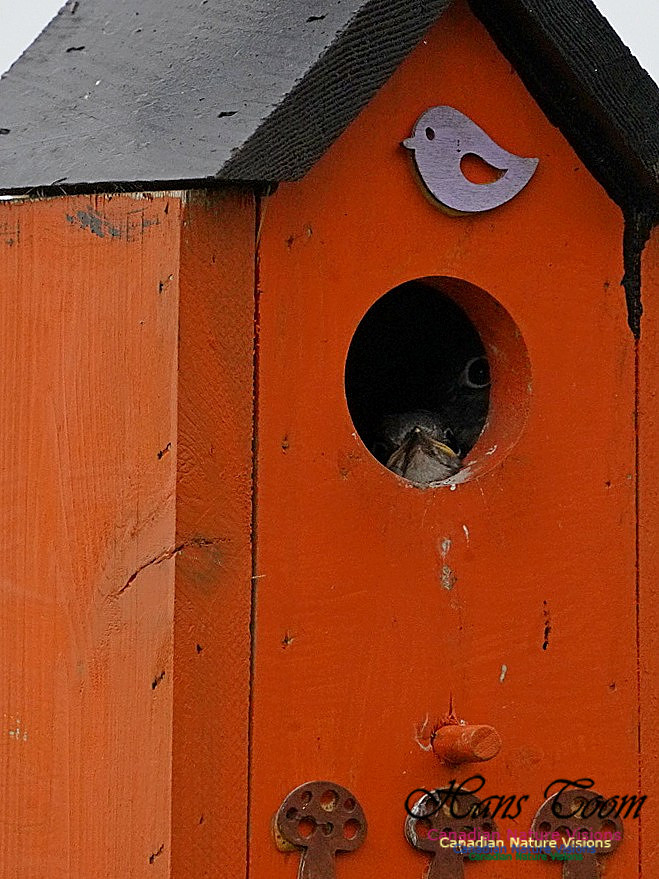
Peek-a-boo
I see you both
Down the hatch
....and a job well done.
See you next year.
Fritillary There are six Fritillary species in Nova Scotia. The tabulation below is for all of Canada. The species shown in red are Nova Scotia's records. Subfamily Heliconiinae – fritillaries
Hermit Thrush
Pearly Everlasting
Tree Swallow
White-tailed Deer
Yarrow
|
|||||||||||||||||||||||||