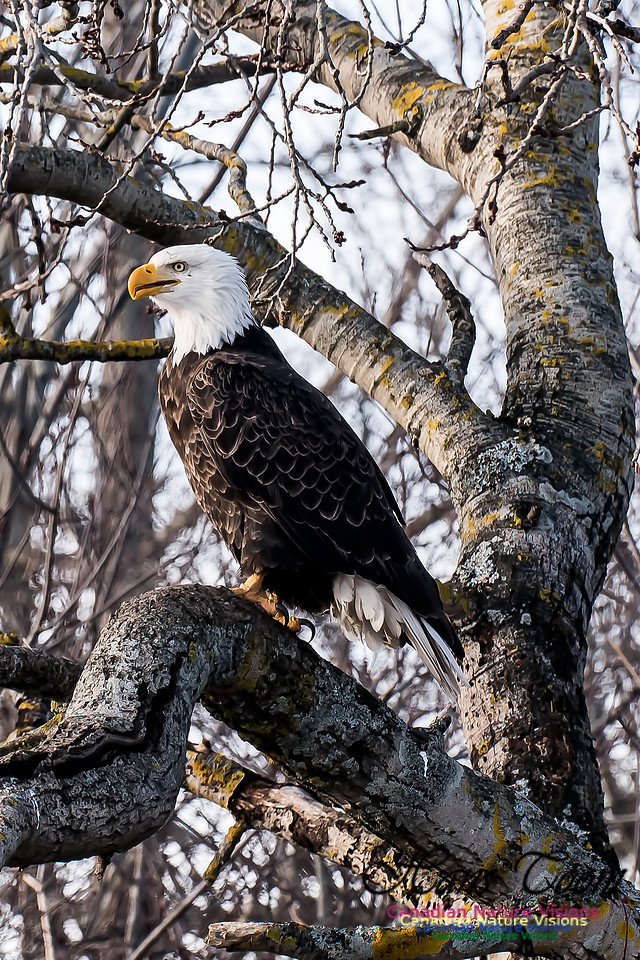
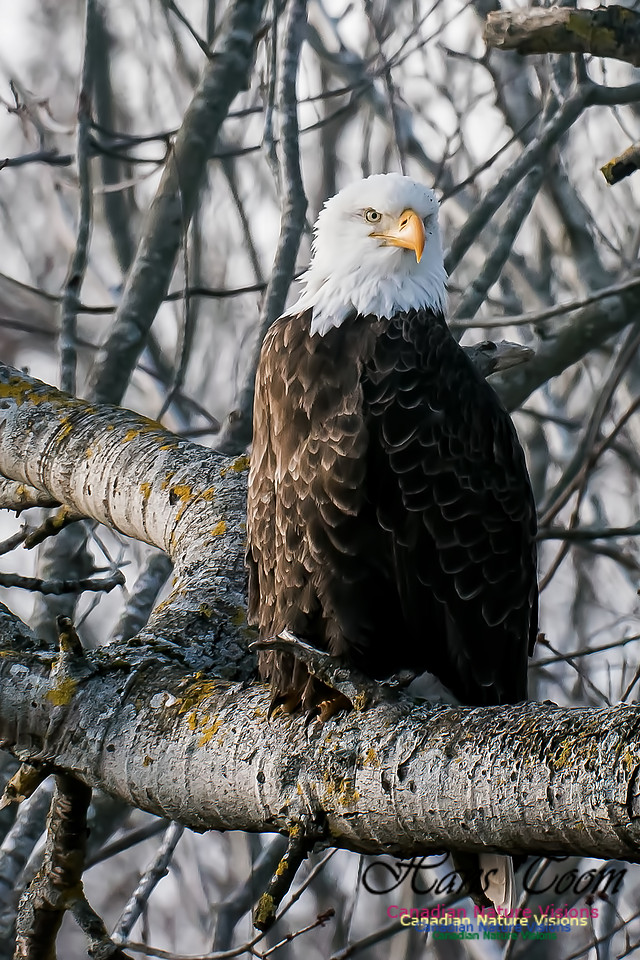
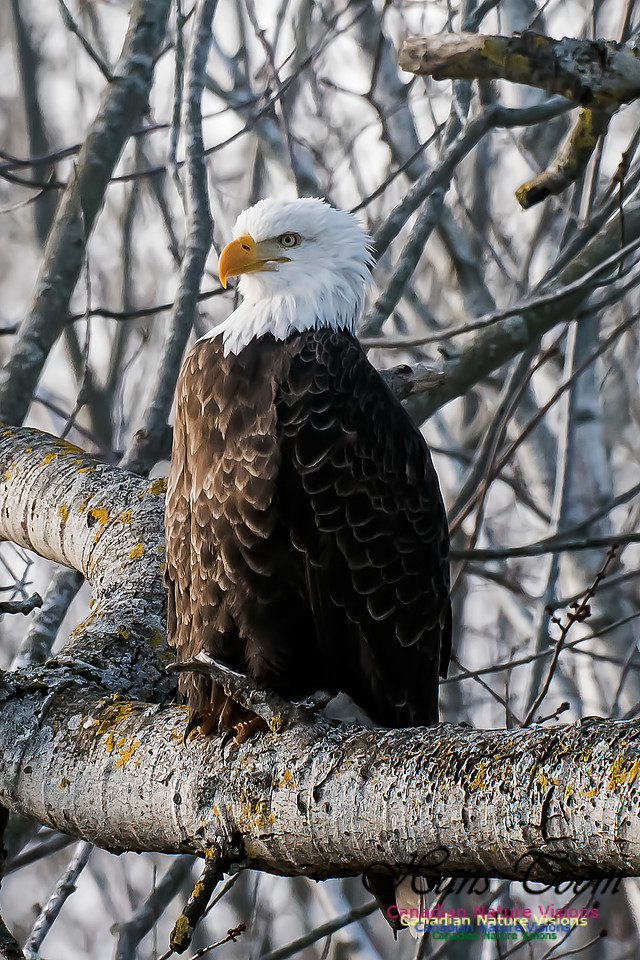
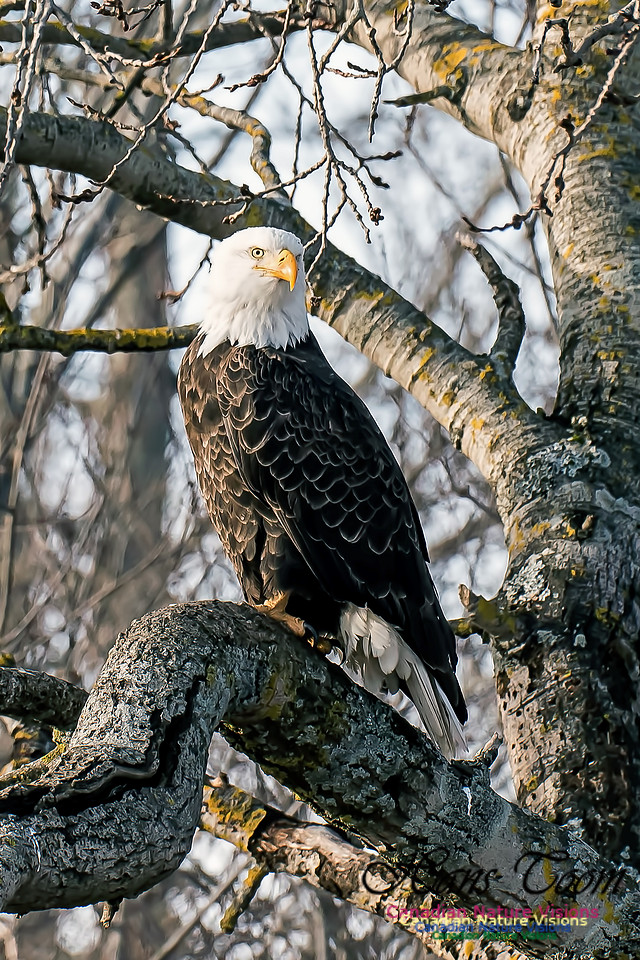
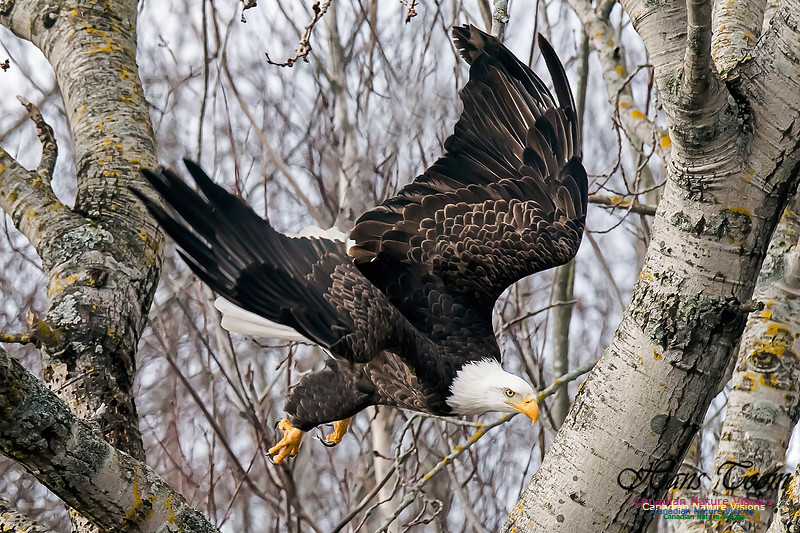
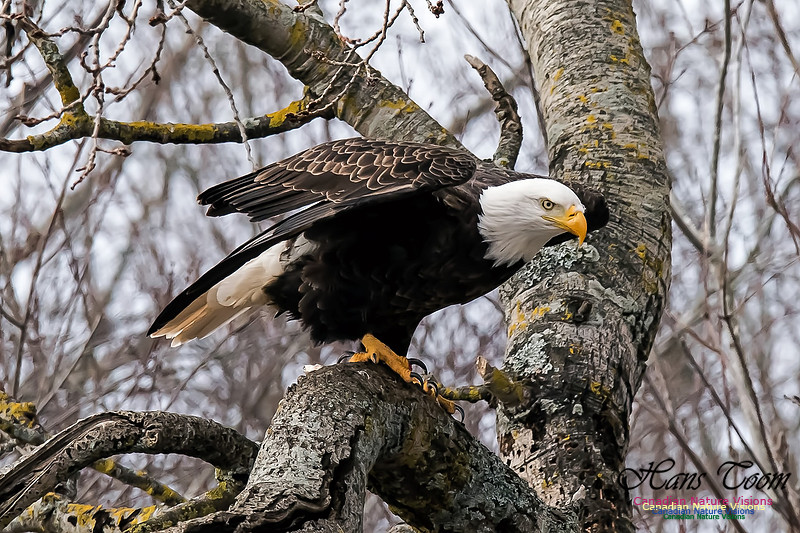
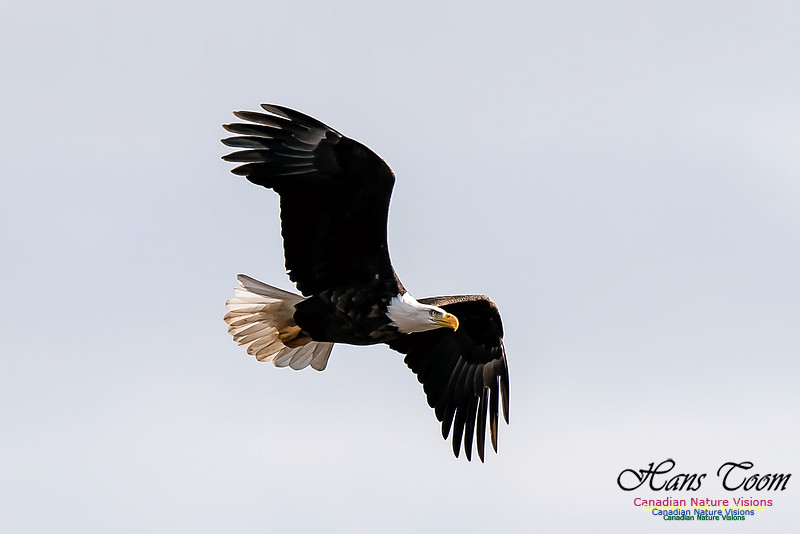
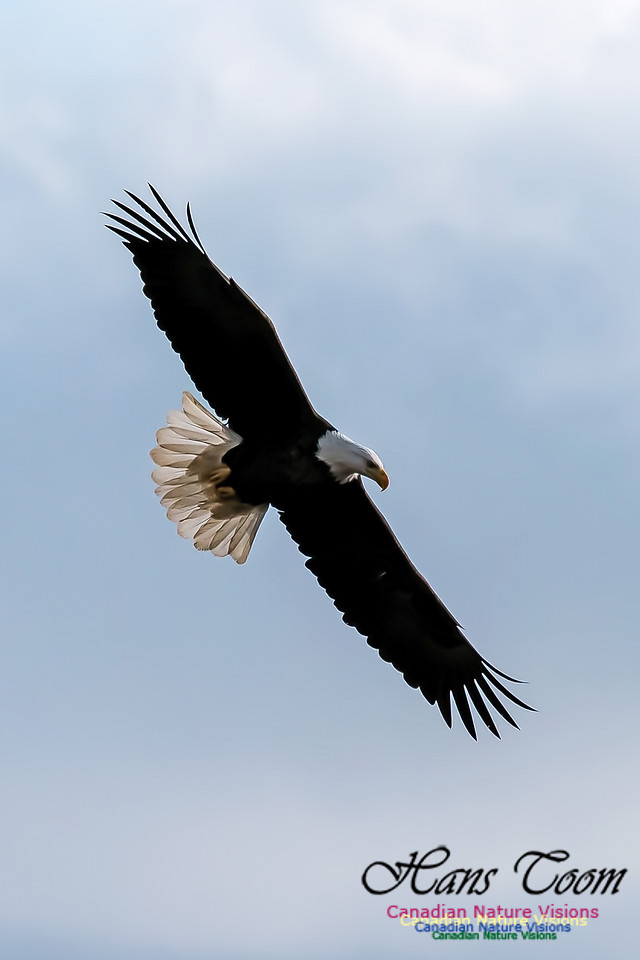
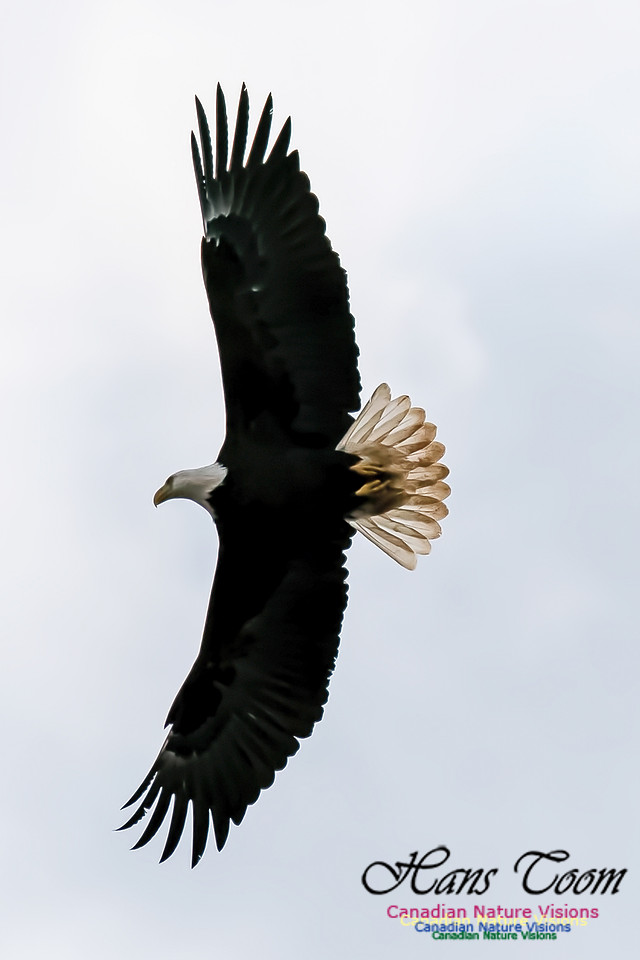
Raptors AplentyYesterday, January 23, was predicted to be the last good day of decent weather for a while so I decided to try and search out and photograph some of our winter raptors. Ray Staszko joined my excursion and we arrived at our first stop, Sheffield Mills, at 9:45AM, to try for some more Bald Eagle photos. Alas, although the table was set the eagles chose to sit and watch and we had other places to visit so we departed at 10:30AM, after obtaining some tree shots of this magnificent bird. Bald Eagle
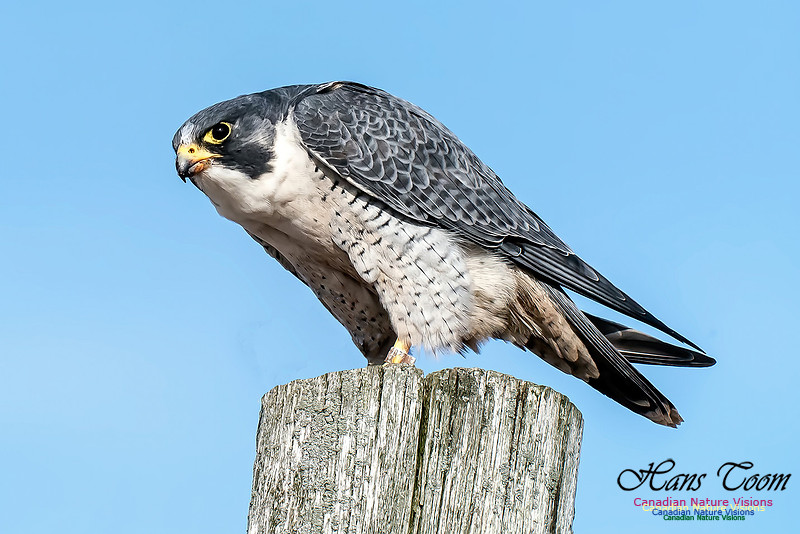
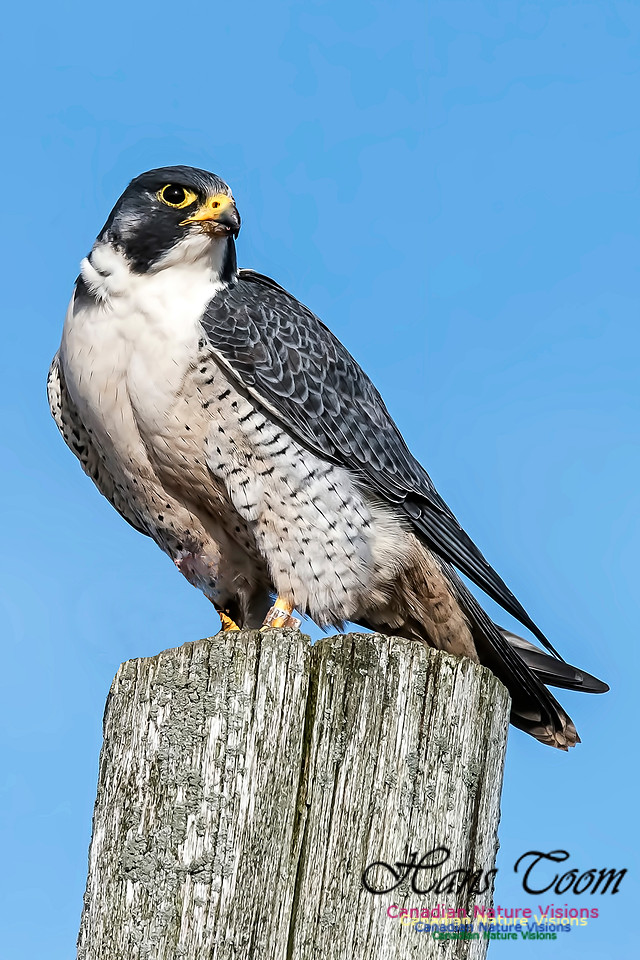
We were delighted to find a Peregrine Falcon atop a utility pole and so we stopped for some images. This bird by itself made the trip worthwhile. Peregrine Falcon
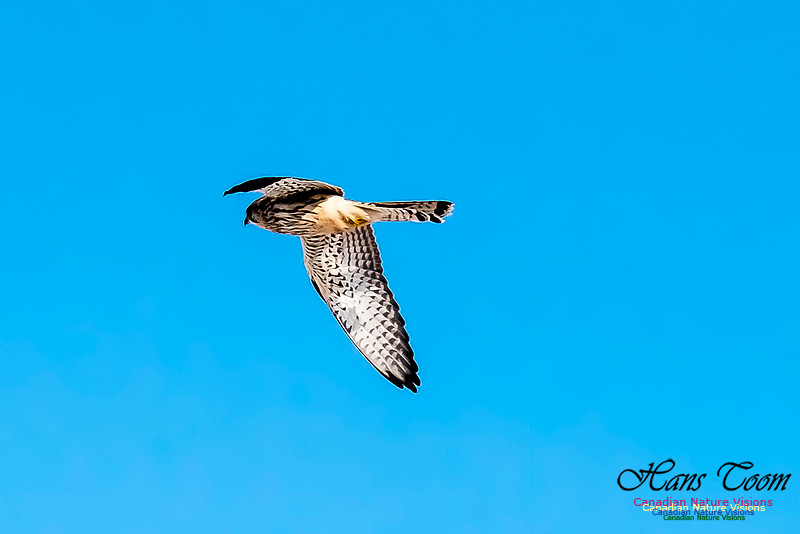
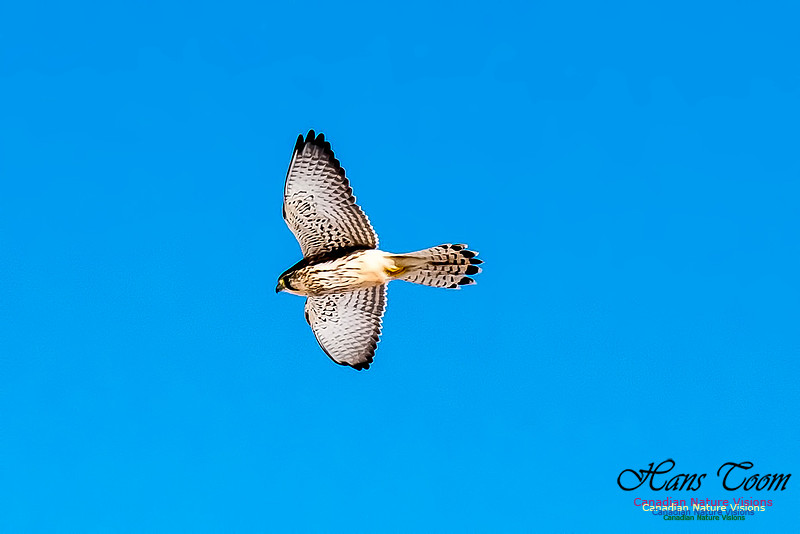
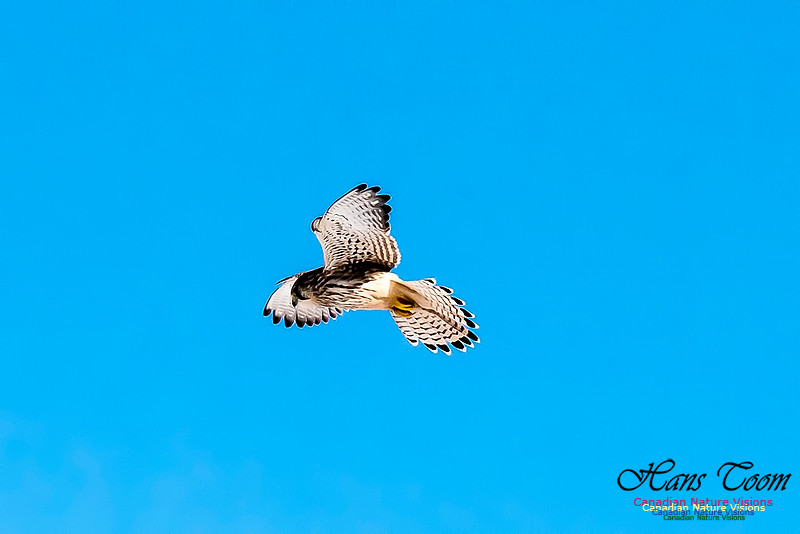
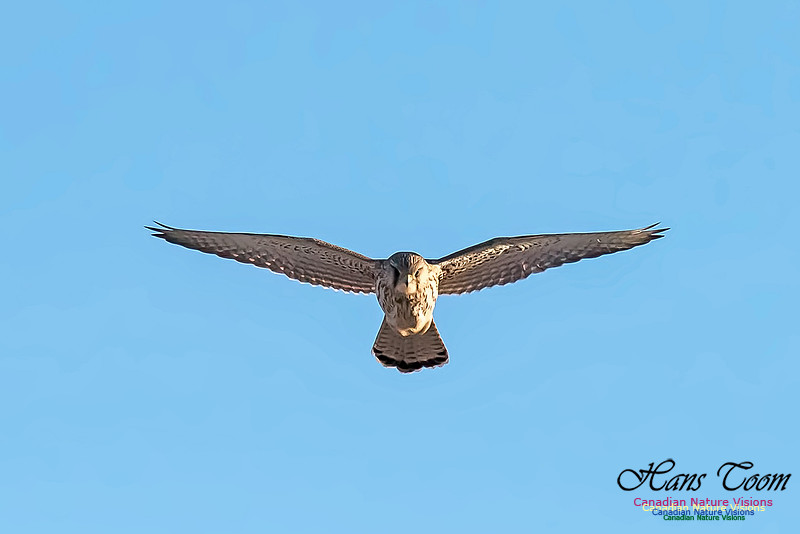
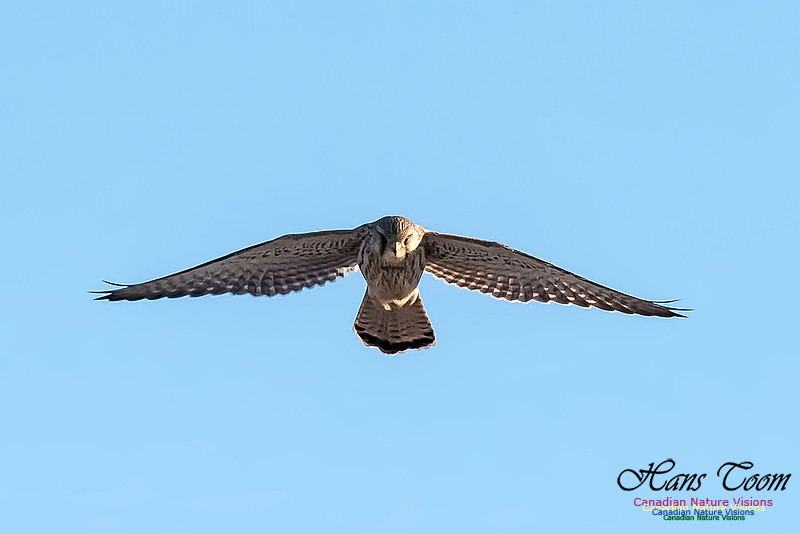
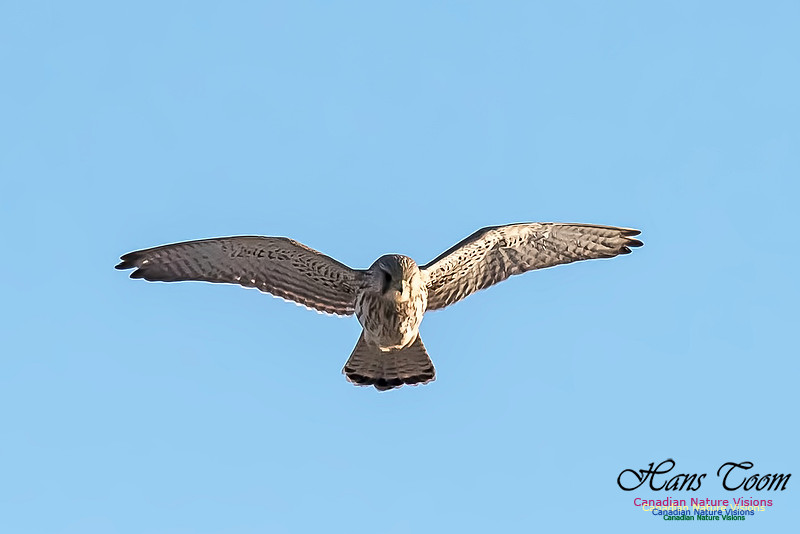
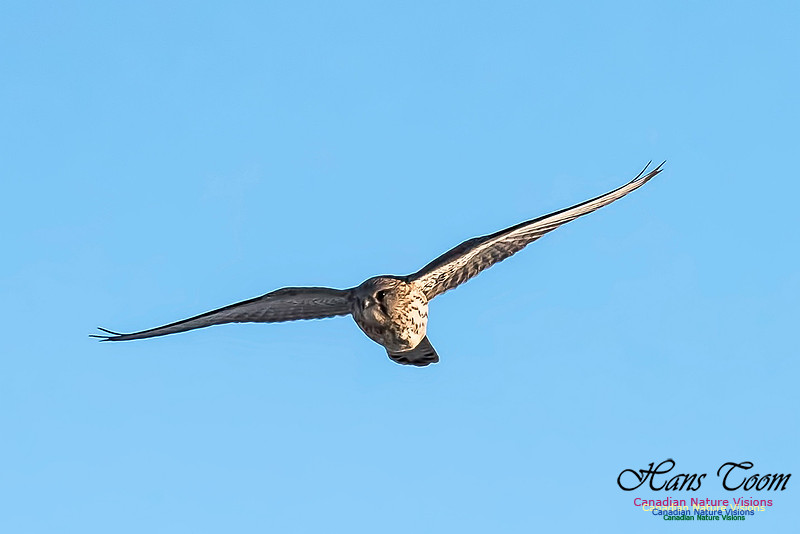
The Falcon was banded but unfortunately it is not possible to read all of the numbers on the band. Our next visit was The Guzzle at Grand-Pre. We had high hopes of spotting a Snowy or Short-eared Owl but unfortunately dyke work had several big hoes working atop the dykes and fourteen wheel dump trucks rumbling down the road frequently so if there were any owls around an extensive search of the fields would have been required and we had no time. We stopped at Just Us Coffee for a brew and a delicious frittata. Our final stop of the day was Hartlen Point where we easily and quickly found the Eurasian Kestrel sitting in a spruce tree beside the settling pond near the the Golf Club's Clubhouse. It didn't remain sitting for long and was soon hunting along the western shoulder of the golf course. The ground was partially obscured by snow but not enough to hinder the kestrel in its quest. Eurasian Kestrel
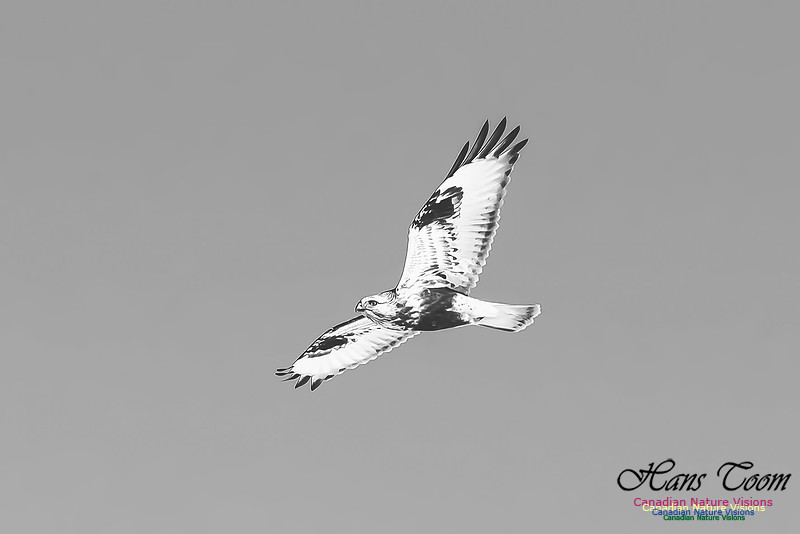
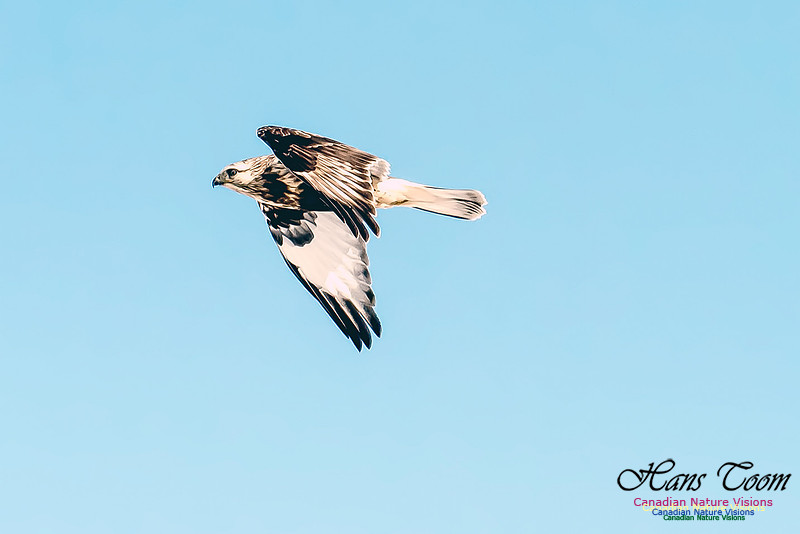
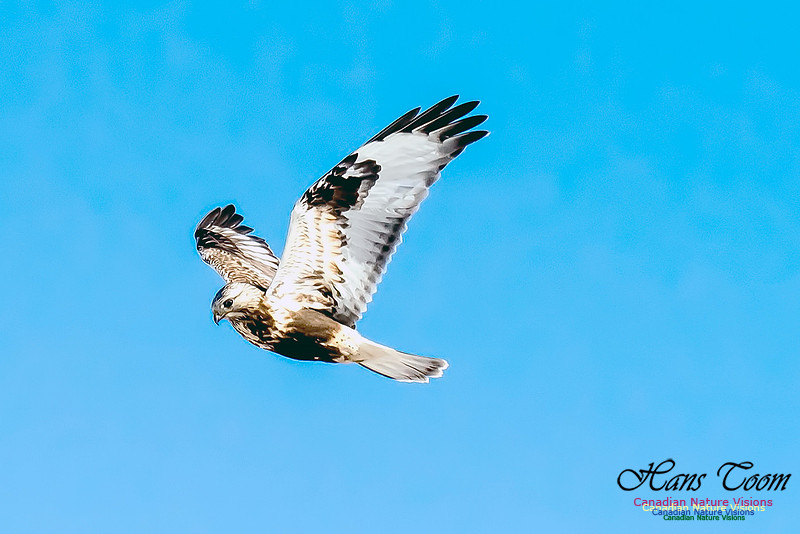
My final photo capture of the day was the Rough-legged Hawk which has a very similar hunting style as the Eurasian Kestrel; soar, hover and plunge. Rough-legged Hawk
With the addition of Northern Harrier and Red-tailed Hawk, both seen several times but not photographed, it was a six raptor species day and well worth the effort.
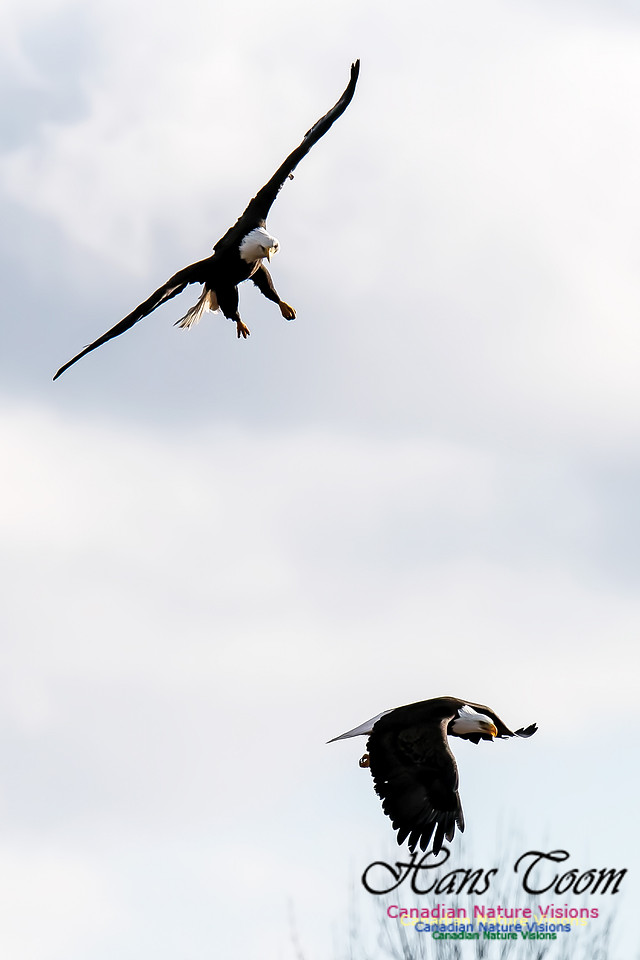
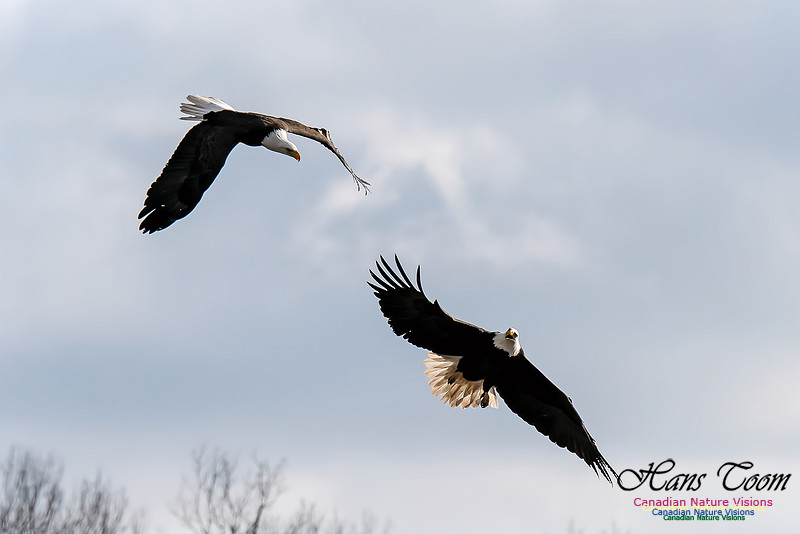
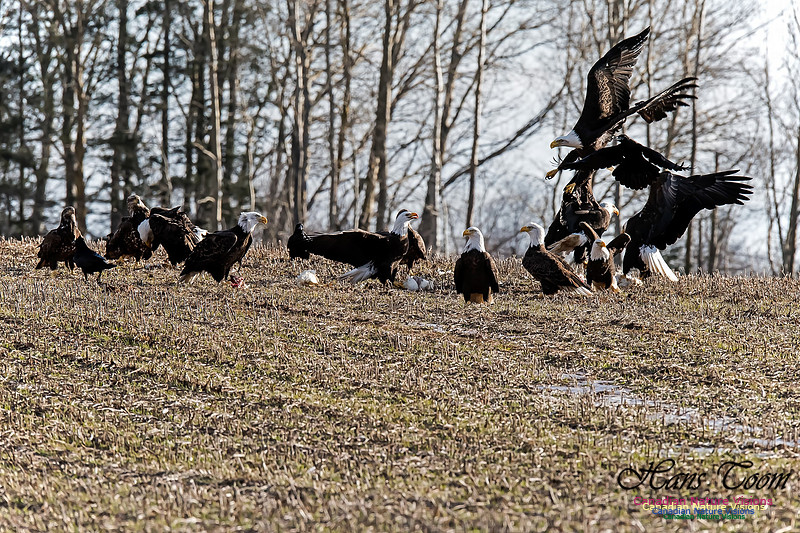
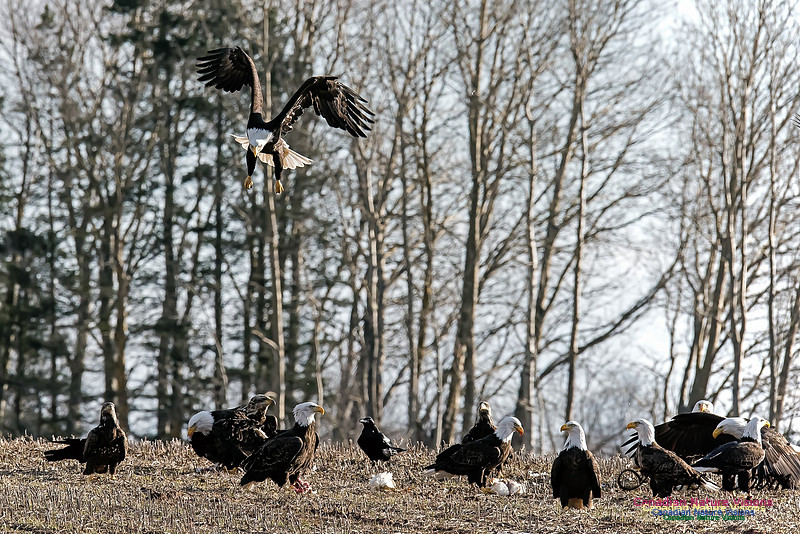
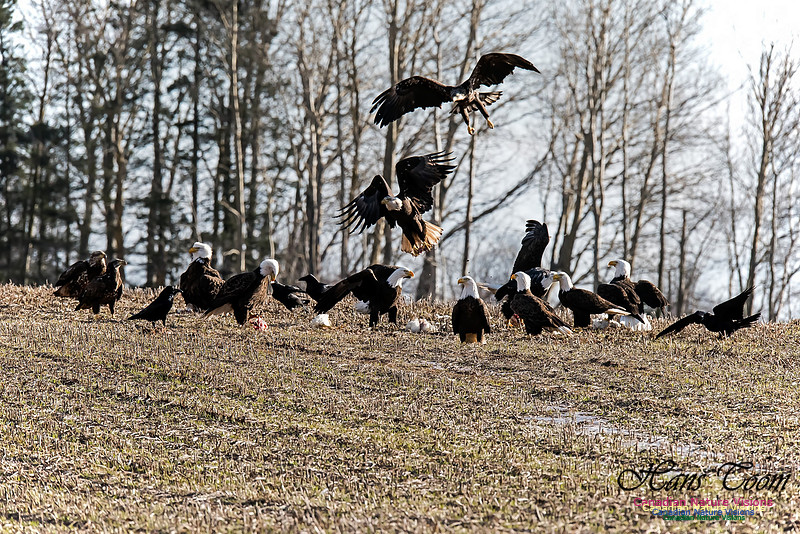
Gathering of Bald EaglesI took a reconnaissance trip to Sheffield Mills, January 20, to view the assembling eagles. It was bitterly cold thanks to a biting wind but the skies were partly cloudy so photographic conditions were good save for the dreaded back lighting when shooting up into the sky. There were about ten people, all photographers, present. Since the eagles are baited the photographs are not natural so do not qualify as nature photographs in my opinion but its good fun nonetheless to photograph these magnificent birds, especially in flight. Bald Eagle in a Takeoff Plunge
It Gets a Little Crowded
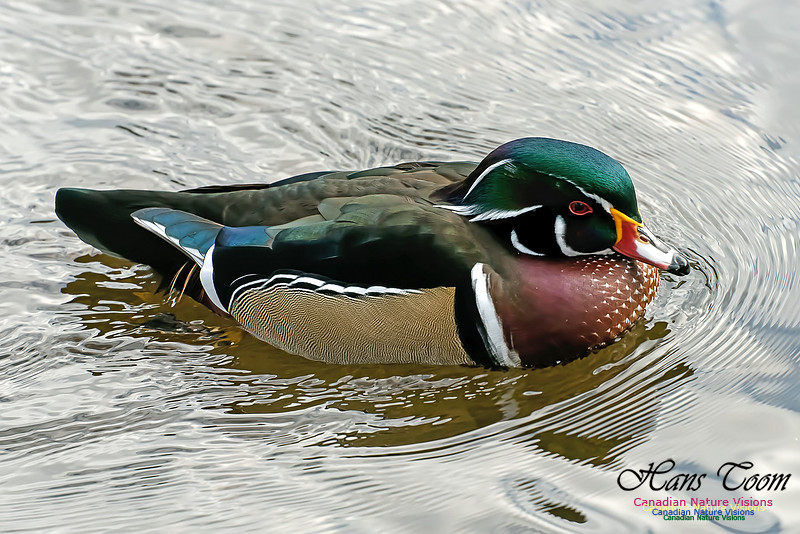
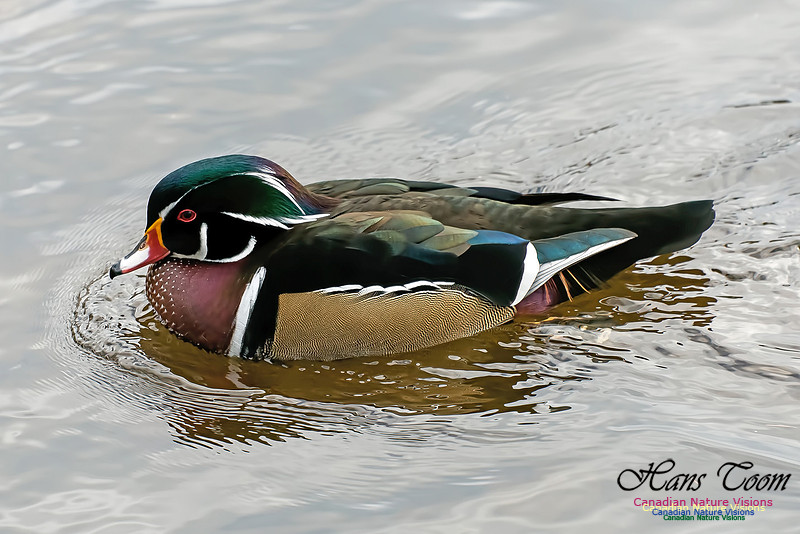
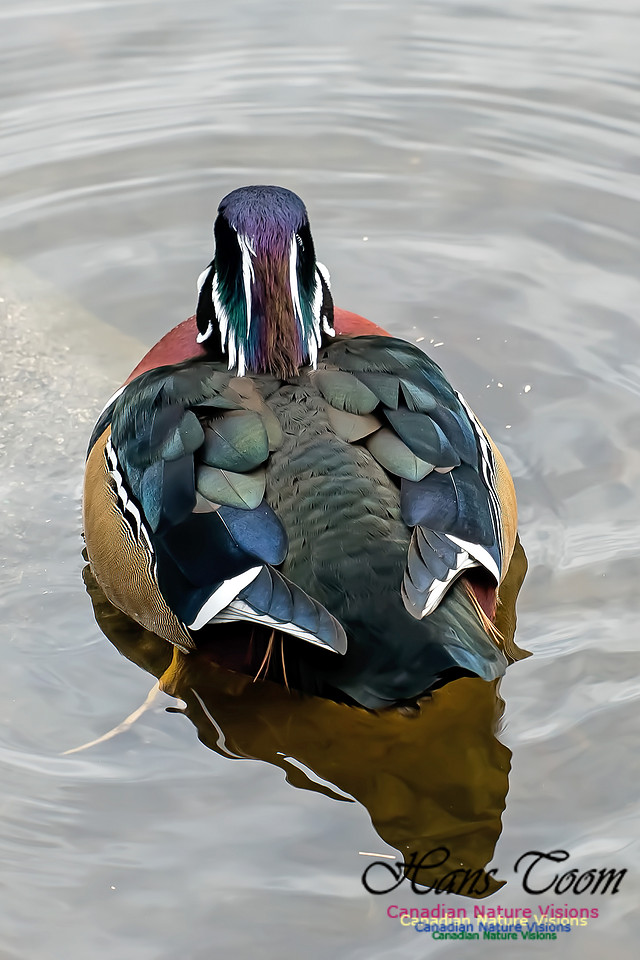
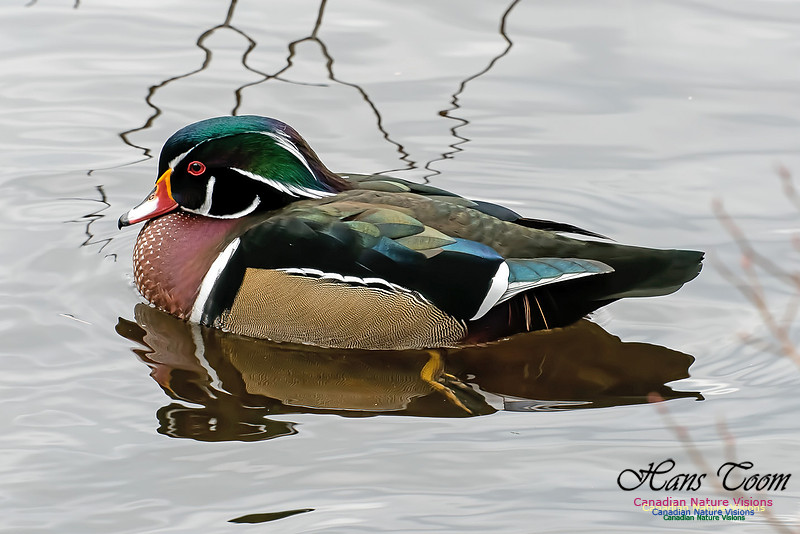
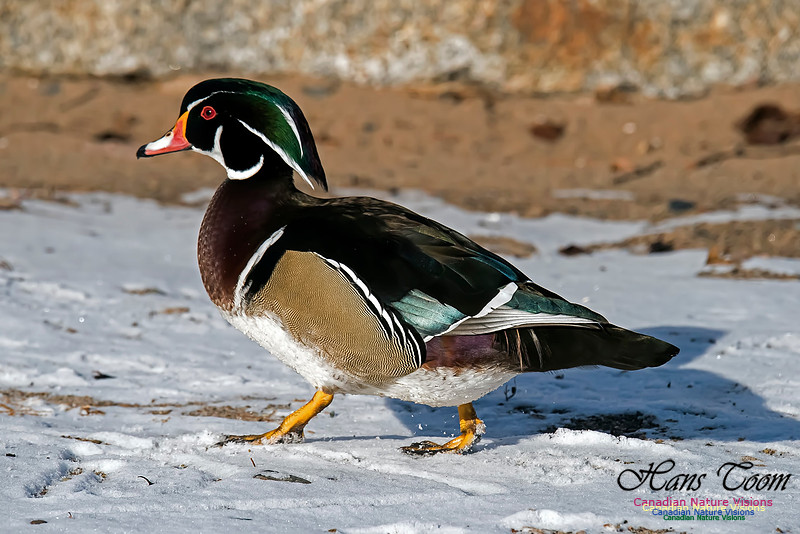
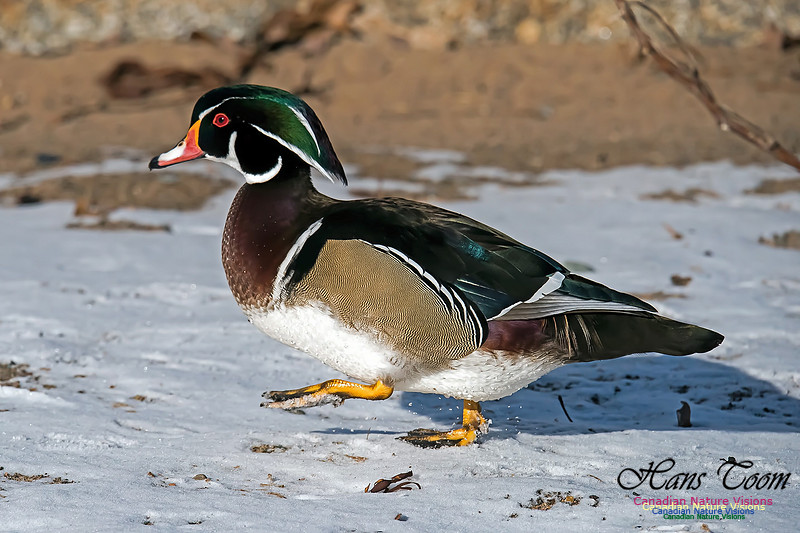
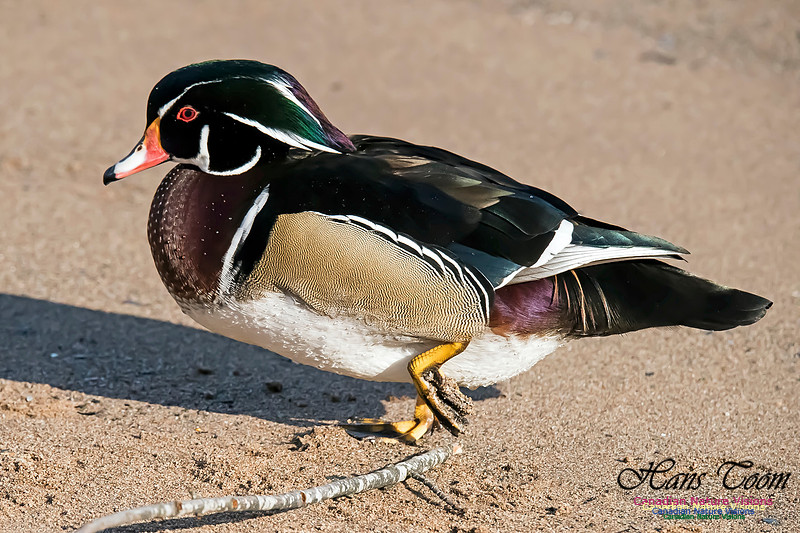
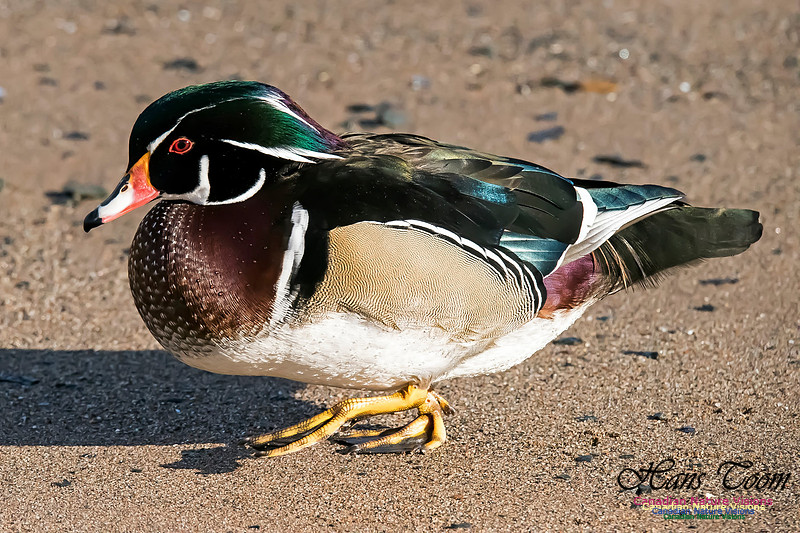
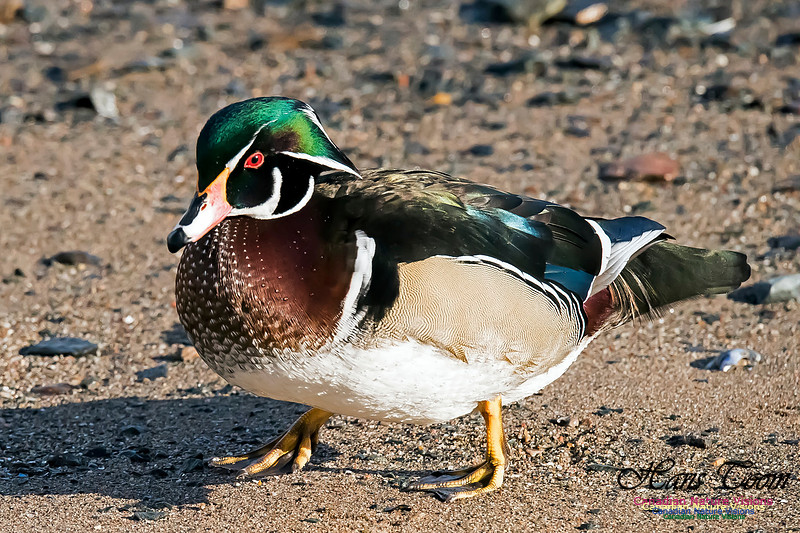
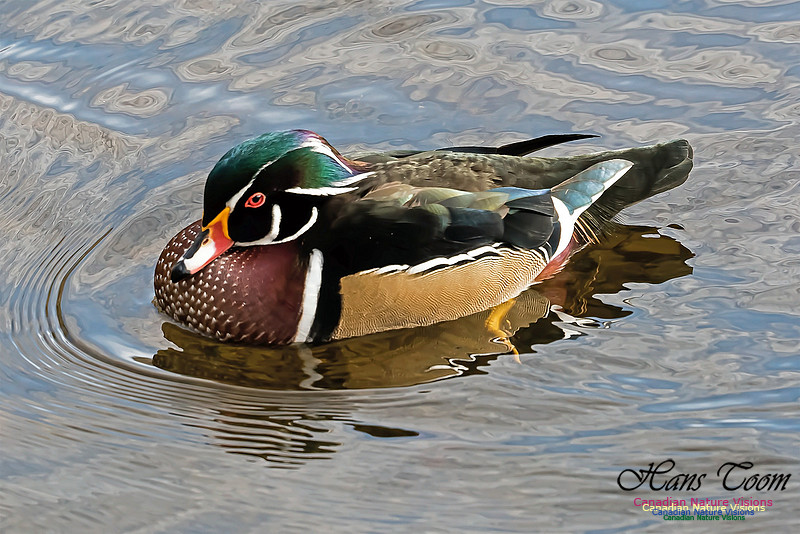
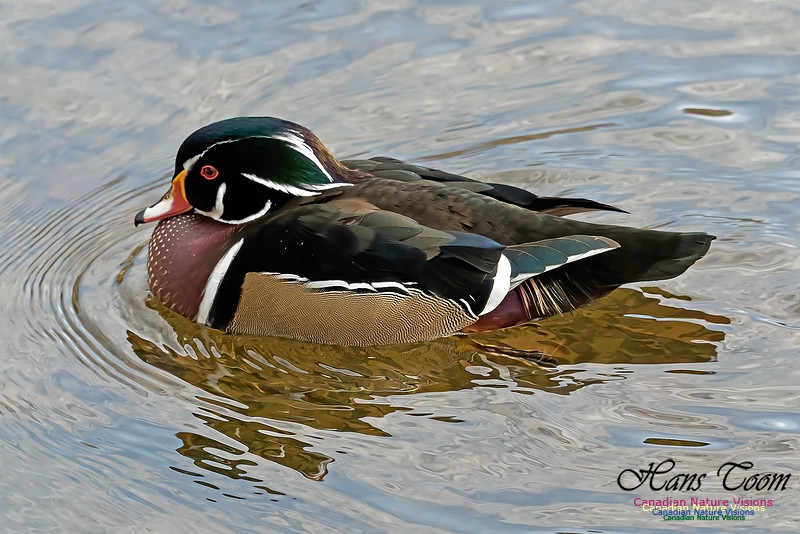
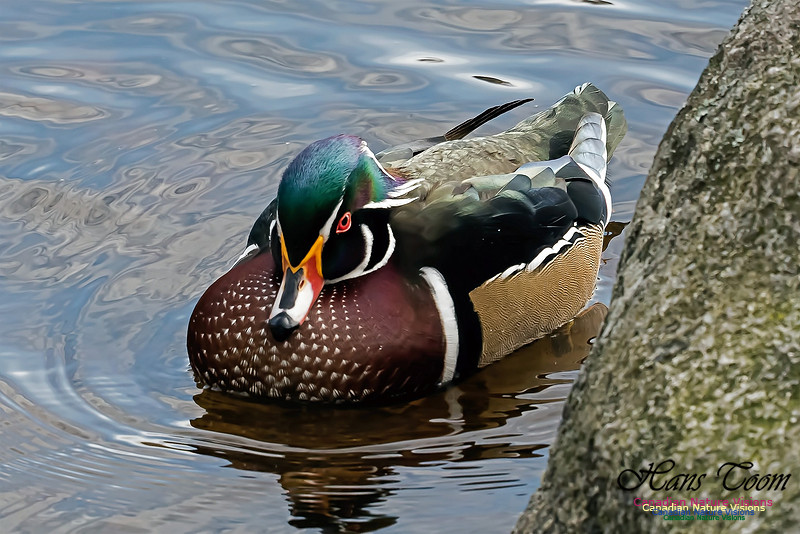
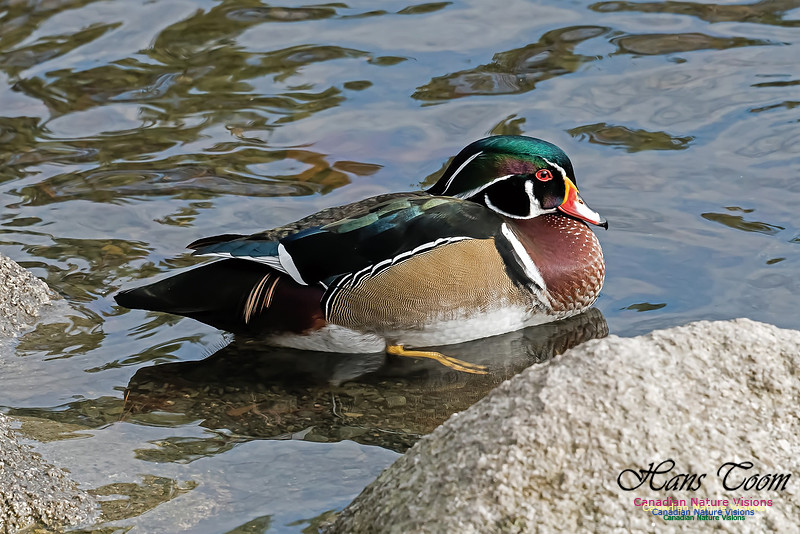
Wood Duck, Eurasian Wigeon, American Coot and OthersThe Wood Duck relocated from the Frog Pond to the Dingle when the Frog Pond froze over. The south end of the North-west Arm doesn't freeze so dabbling ducks can forage freely around the reefs and shallows at low tide and on the grass at high tide. Unfortunately, the dabblers are driven back into the ocean when loose dogs or children chase them off the Dingle grass. This is the tamest Wood Duck I've ever had the experience to meet. The Wood Duck is without doubt the most elegant of all the ducks displaying exquisite detail and colour. It exists with such beauty for no reason,... other than that it can. The Wood Duck was headed the way of the Labrador Duck due to uncontrolled hunting and habitat destruction. Eventually it became protected and habitat began to be preserved. When I was in Winnipeg a Wood Duck recovery effort was underway with nest boxes being built over ponds and rivers all along the Red and Assiniboine Rivers in both Canada and the United States. The Pileated Woodpecker also uses these boxes and in an unusual display of cooperation Wood Ducks and Pileated Woodpeckers have been reported to co-nest, side by side in the same box, although the usual behaviour of the woodpecker is confrontation with any intruding species. The following is courtesy of Wikipedia: ConservationThe population of the wood duck was in serious decline in the late 19th century as a result of severe habitat loss and market hunting both for meat and plumage for the ladies' hat market in Europe. By the beginning of the 20th century, wood ducks had virtually disappeared from much of their former range. In response to the Migratory Bird Treaty established in 1916 and enactment of the U.S. Migratory Bird Treaty Act of 1918, wood duck populations began to recover slowly. By ending unregulated hunting and taking measures to protect remaining habitat, wood duck populations began to rebound in the 1920s. The development of the artificial nesting box in the 1930s gave an additional boost to wood duck production.[9] Landowners as well as park and refuge managers can encourage wood ducks by building wood duck nest boxes near lakes, ponds, and streams. Fulda, Minnesota has adopted the wood duck as an unofficial mascot, and a large number of nest boxes can be found in the area.[citation needed] Expanding North American beaver populations throughout the wood duck's range have also helped the population rebound as beavers create an ideal forested wetland habitat for wood ducks.[8] The population of the wood duck has increased a great deal in the last several years. The increase has been due to the work of many people constructing wood duck boxes and conserving vital habitat for the wood ducks to breed. During the open waterfowl season, U.S. hunters have only been allowed to take two wood ducks per day in the Atlantic and Mississippi Flyways. However, for the 2008–2009 season, the limit was raised to three. The wood duck limit remains at two in the Central Flyway and at seven in the Pacific Flyway. It is the second most commonly hunted duck in North America, after the mallard.[2]
Wood Duck
Even the back of the Wood Duck is marvelously adorned with colour and presentation.
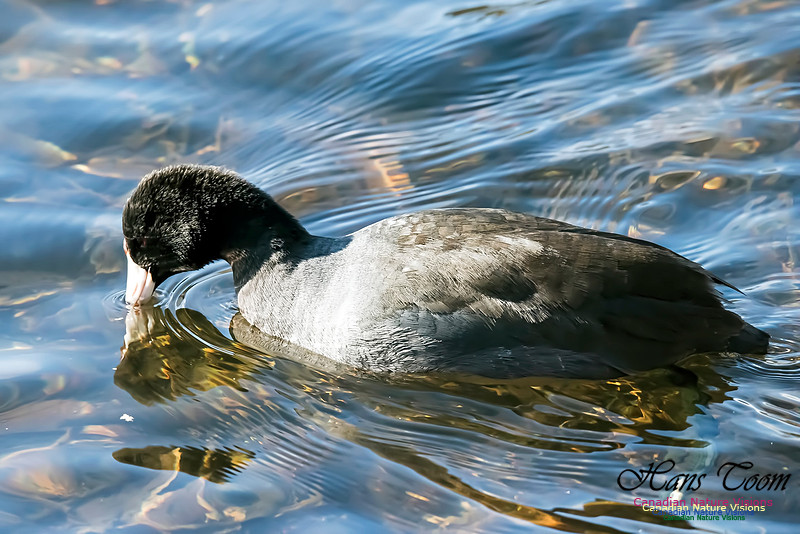
At Sullivan's Pond there are at least 500 ducks of all types; Eurasian Wigeon, American Wigeon, Mallard, Black Duck and Hooded Merganser. The American Coot is extremely hard to photograph well due to its all black presentation and dark red eyes, quite the contrast from the Wood Duck. American Coot
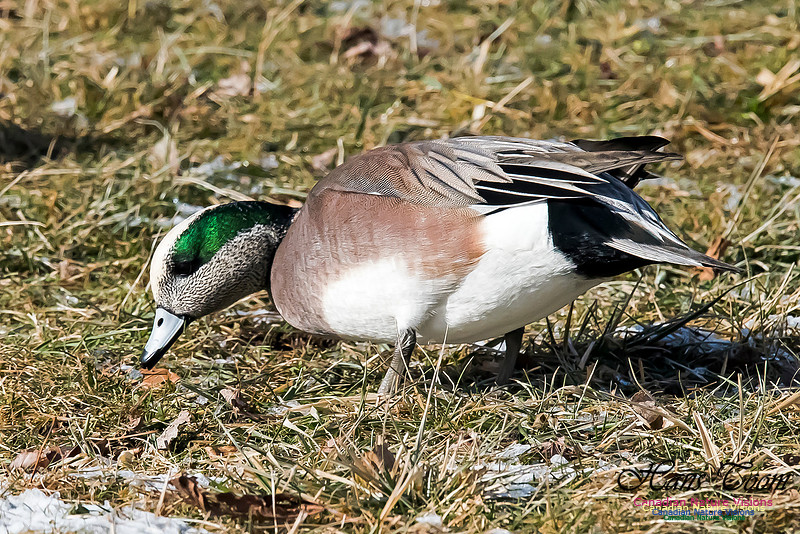
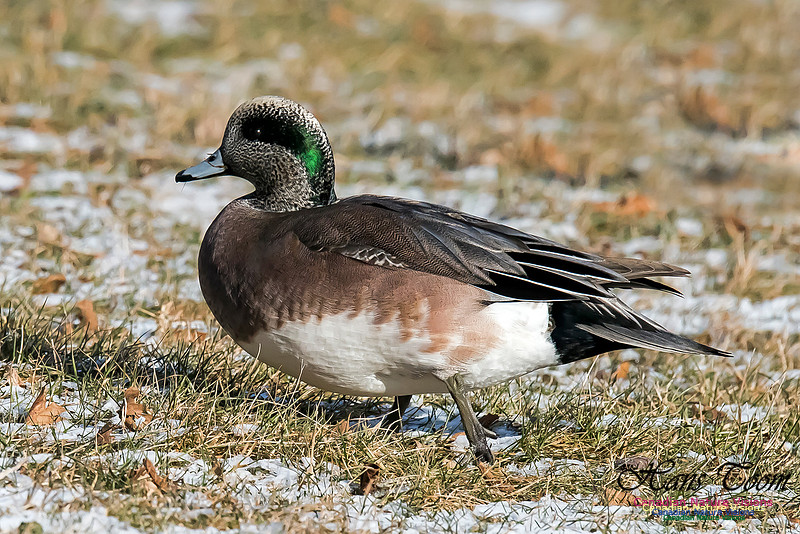
The American Wigeon is present and always a welcome member of the pond. American Wigeon
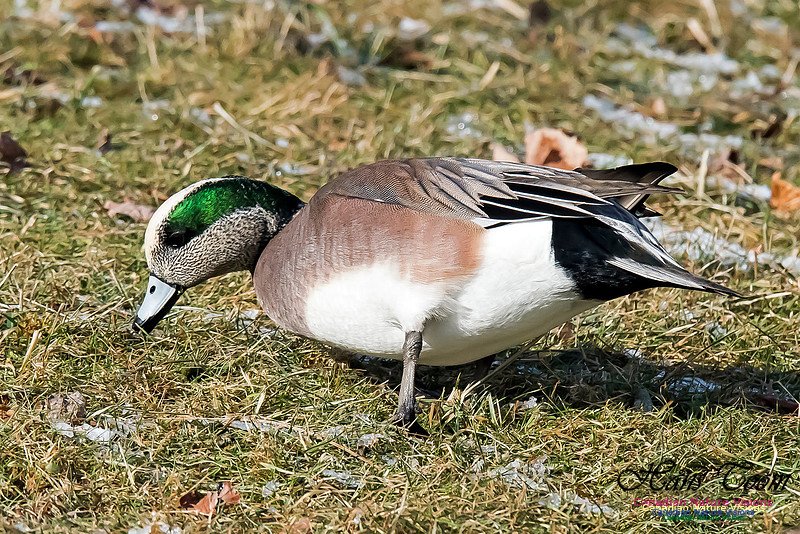
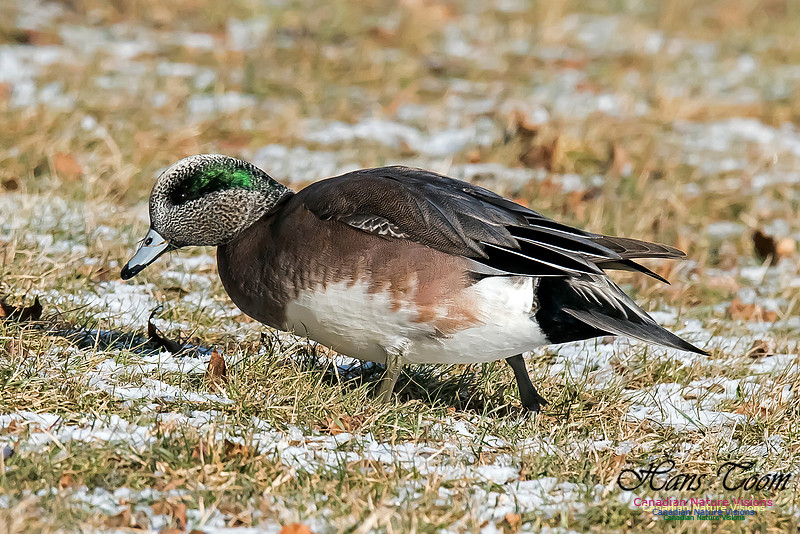
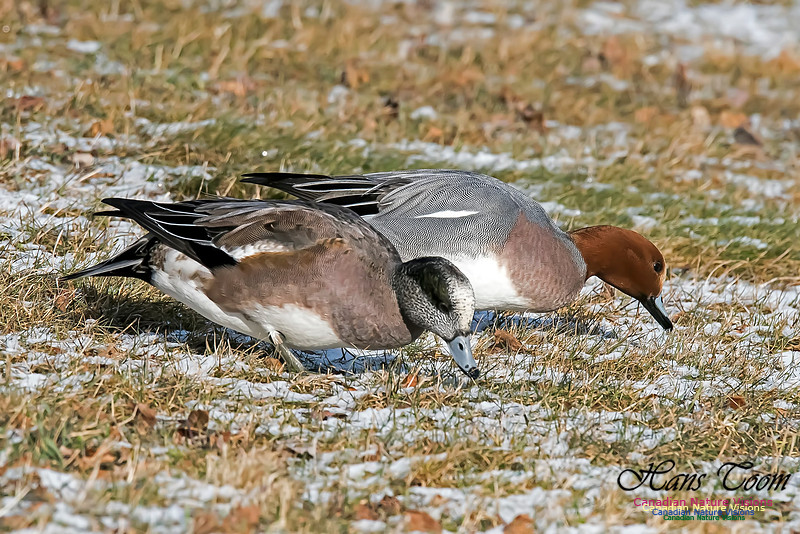
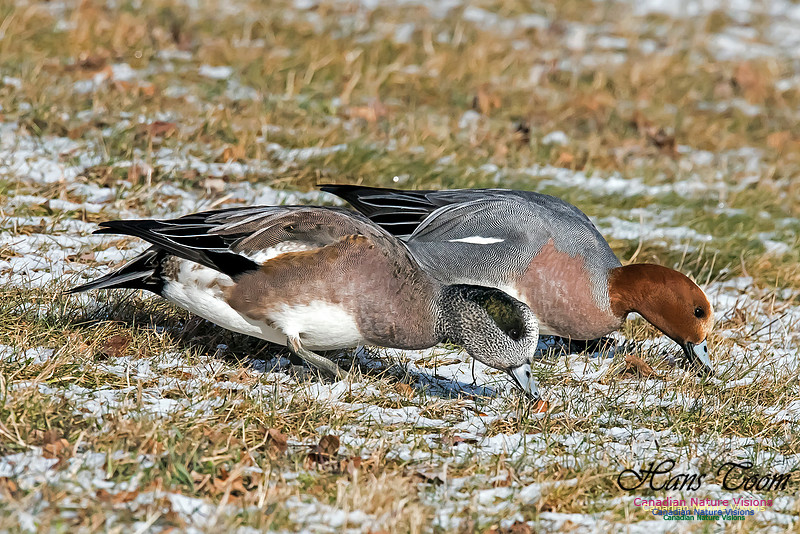
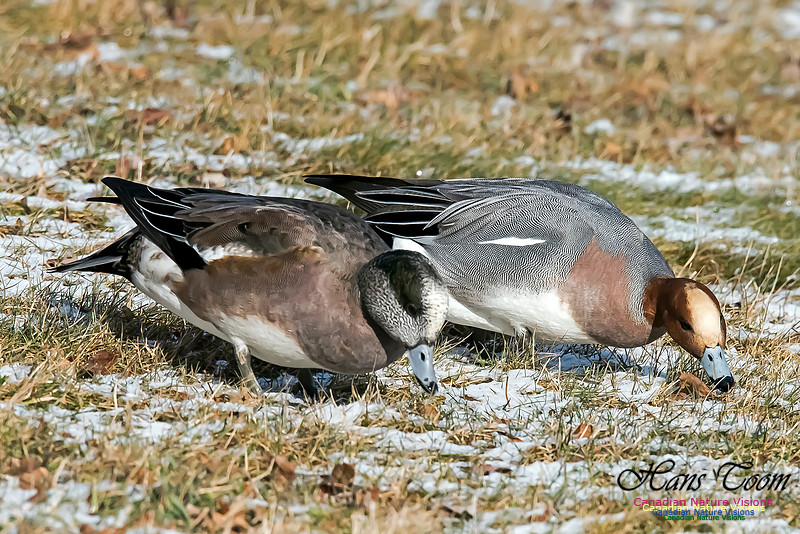
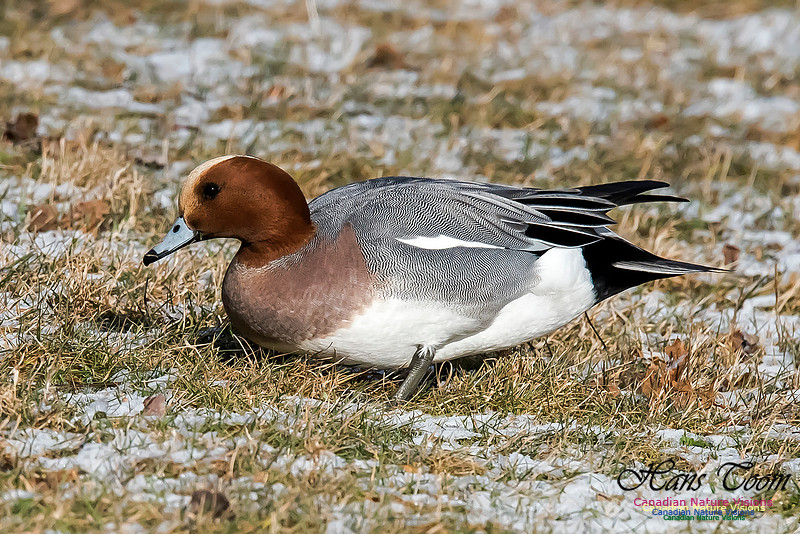
An American Wigeon and Eurasion Wigeon were kind enough to allow side by side views, always a good teaching aid for beginners. With a depth of field of about three inches with my camera and lens combination making these comparisons work is tricky. In this case I focus on a spot about half way between the birds and then frame the image thus reducing fuzziness to a minimum. Eurasian Wigeon and American Wigeon, Side by Side Comparisons
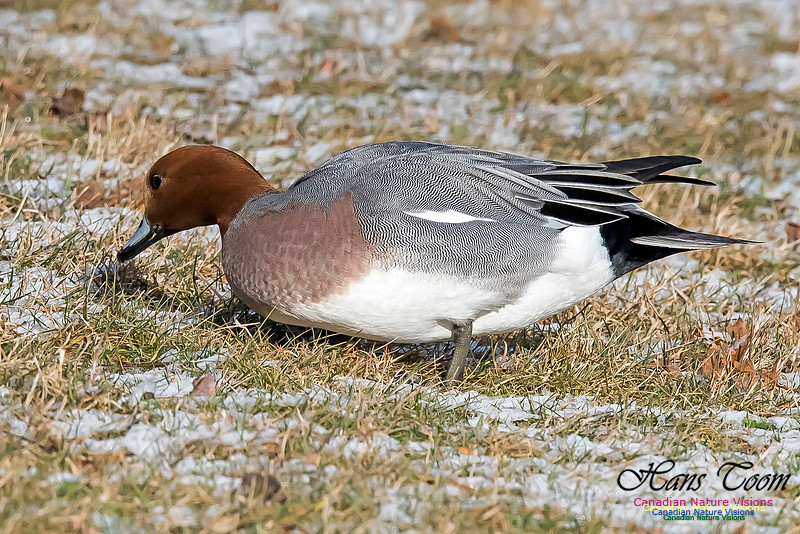
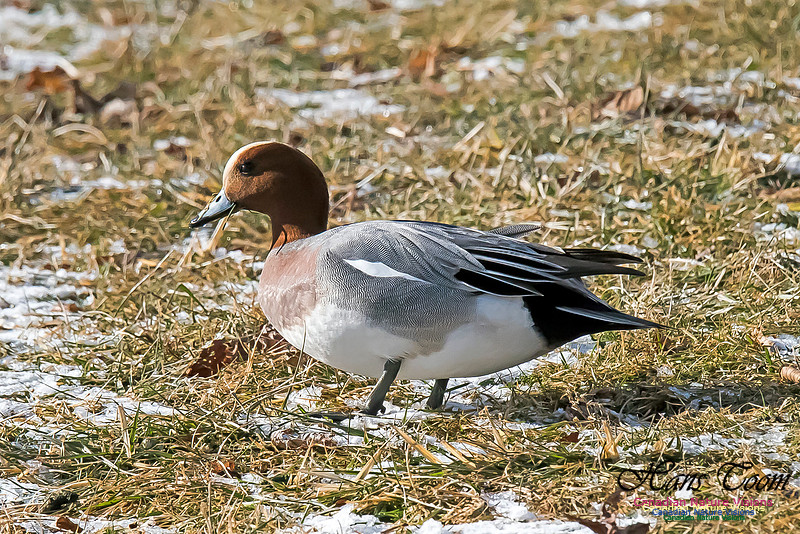
Eurasian Wigeon, Male
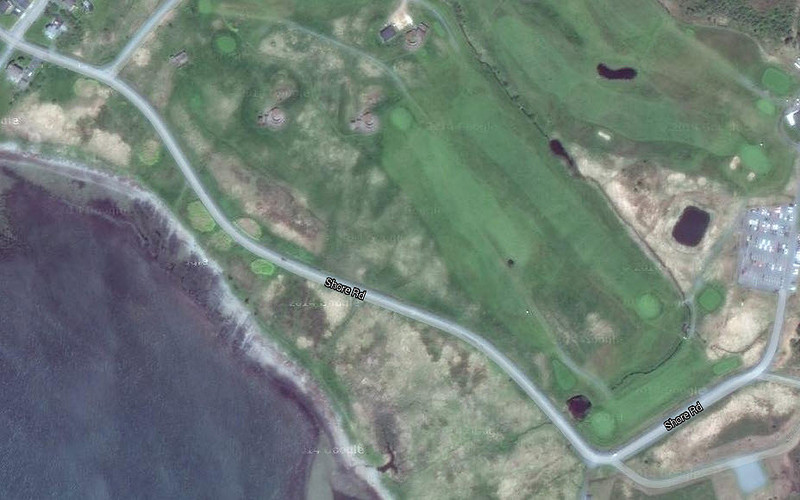
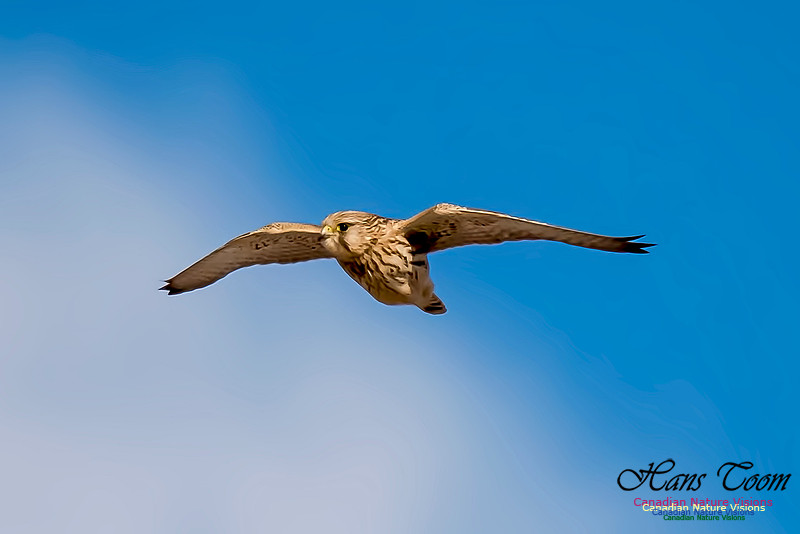
Eurasian KestrelThe Eurasian Kestrel was first found, photographed and reported by Kyle Shale on December 26, 2014 at Hartlen Point although it certainly could have been present earlier. It is still present as of this writing, January 2, 2015, and will likely remain indefinitely as long as the snow cover doesn't hamper its hunting. It has the look and size of a Merlin but its hunting style is all kestrel. It either sits and watches or courses back and forth over successful terain with lots of hovering in place. Today it was coursing back and forth on the golf course side of Shore Road but I have seen it coursing on the ocean side of Shore Road as well. All Eurasian Kestrel photographs are severely cropped. The Golf Course
The Eurasion Kestrel also known as European or Common Kestrel
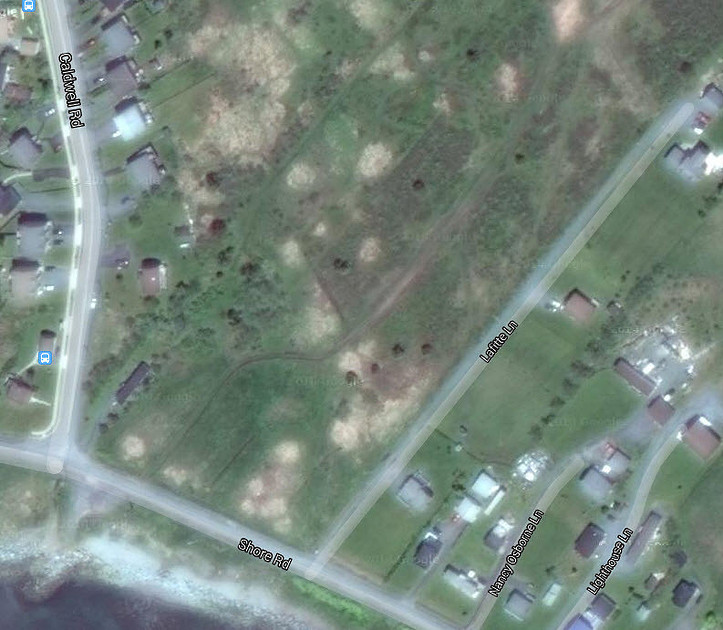
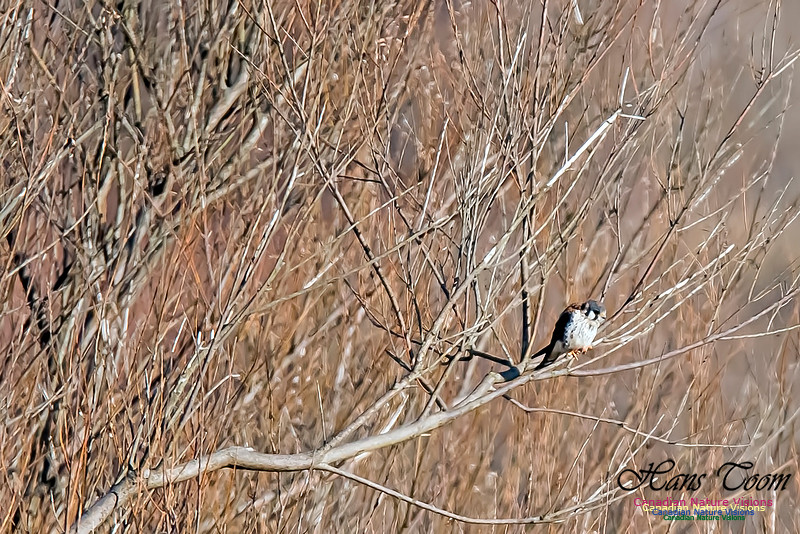
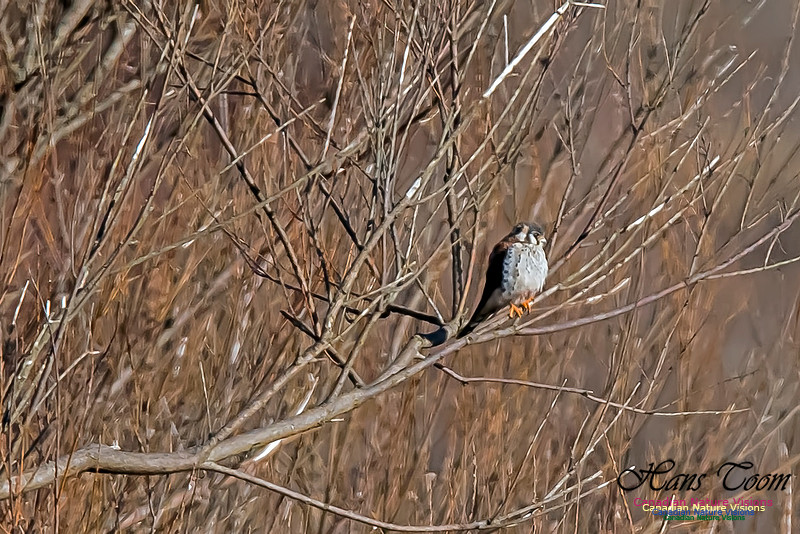
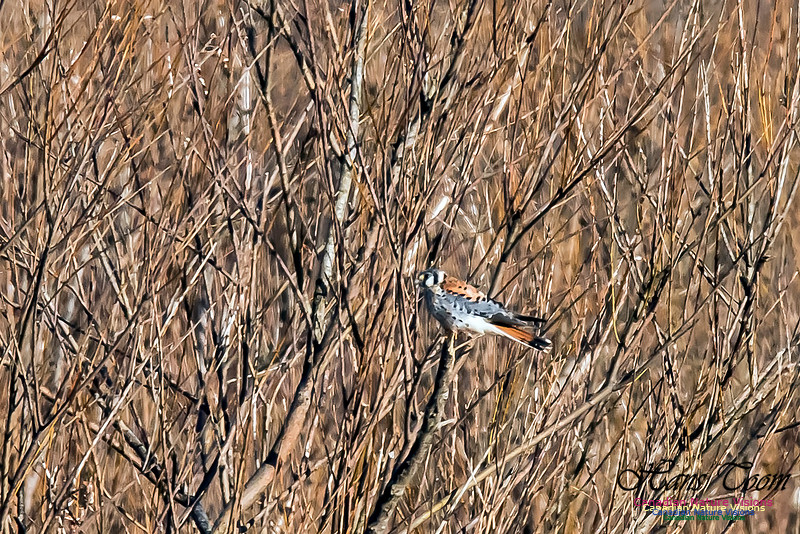
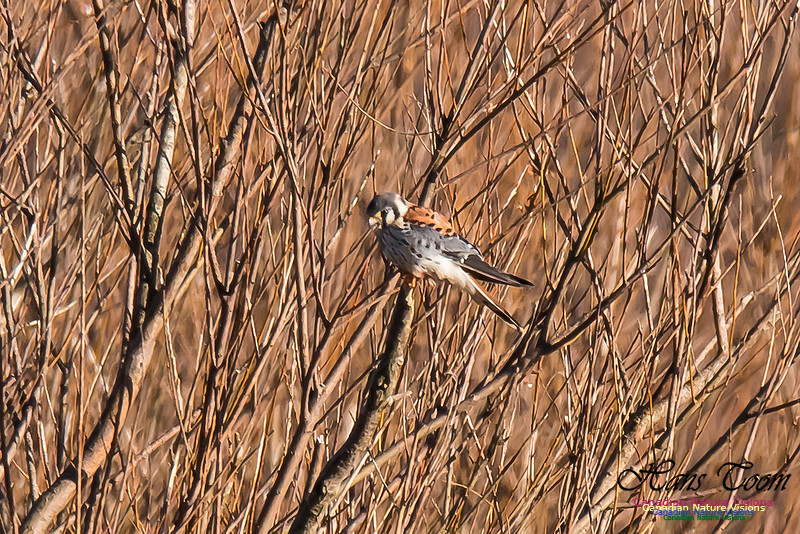
The other kestrel of interest was the American Kestrel, a smaller but much more elegant bird. It hunted in the same manner as its European cousin but was found by me only in the vacant lots between Caldwell Road and Lafitte Lane on the land side of Shore Road. This bird was extremely difficult to photograph well due to its smaller size and the distance to its perching area, visible as the dog-leg in the aerial photo. Consequently, the photographs posted here are severely cropped. Vacant Lot Between Caldwell Road and Lafitte Lane
American Kestrel
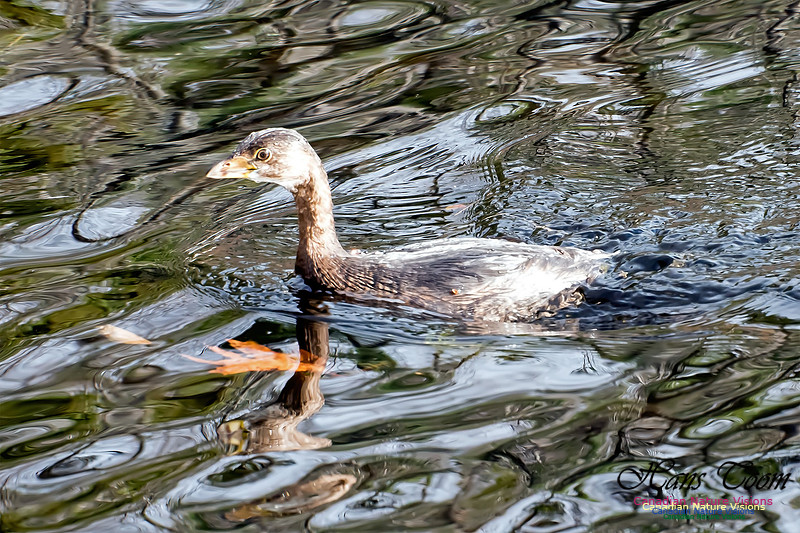
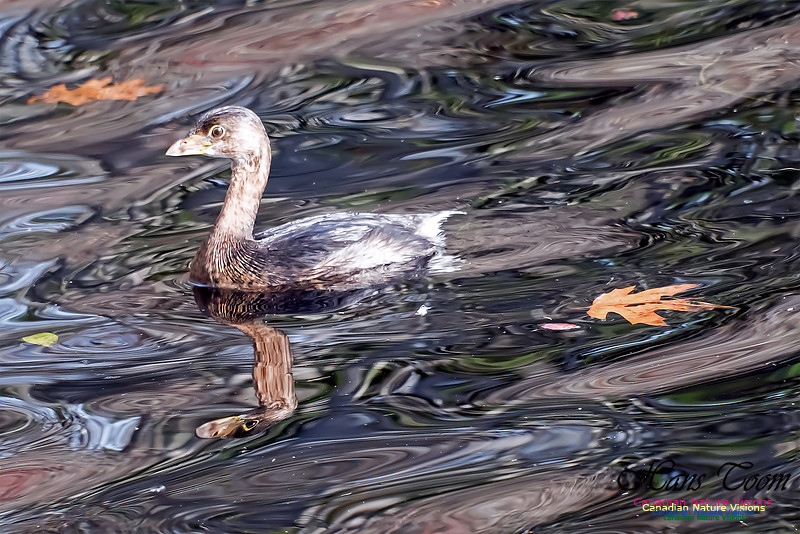
Wood Duck and Pied-billed GrebeLaura and I went for a walk around the Frog Pond, Sir Sanford Fleming Park, Halifax, on Sunday November 16. Our target species were a Wood Duck and a Pied-billed Grebe. Both birds were easily found. Also found were hordes of birders, photographers and loose dogs. The Wood Duck was unusual because although it appeared completely healthy it was quite tame, as tame as the companion Black Ducks. The Pied-billed Grebe was less cooperative but was captured with pixels, none-the-less.
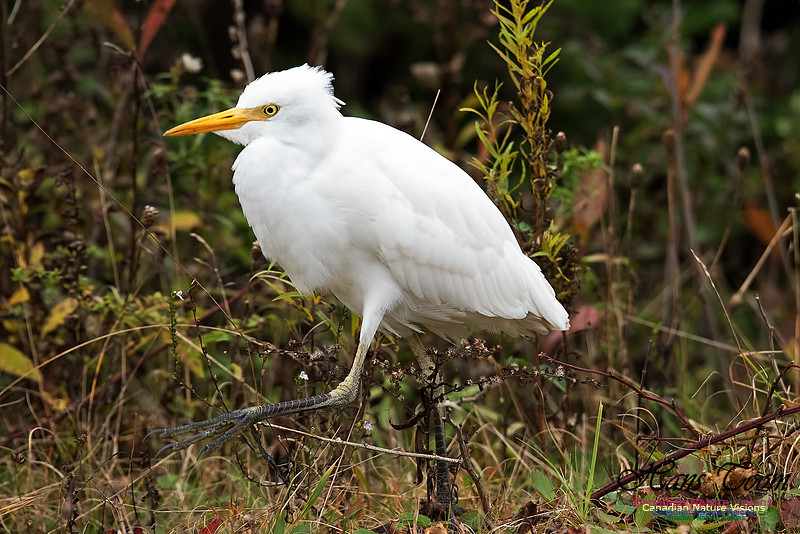
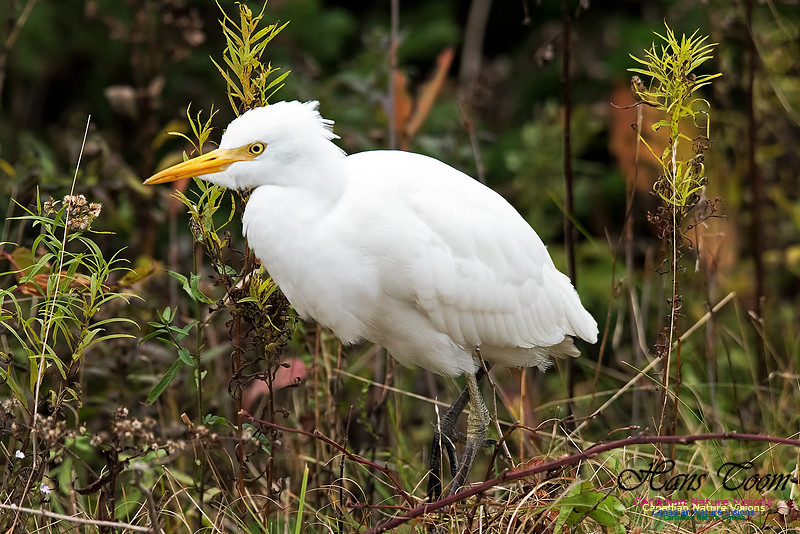
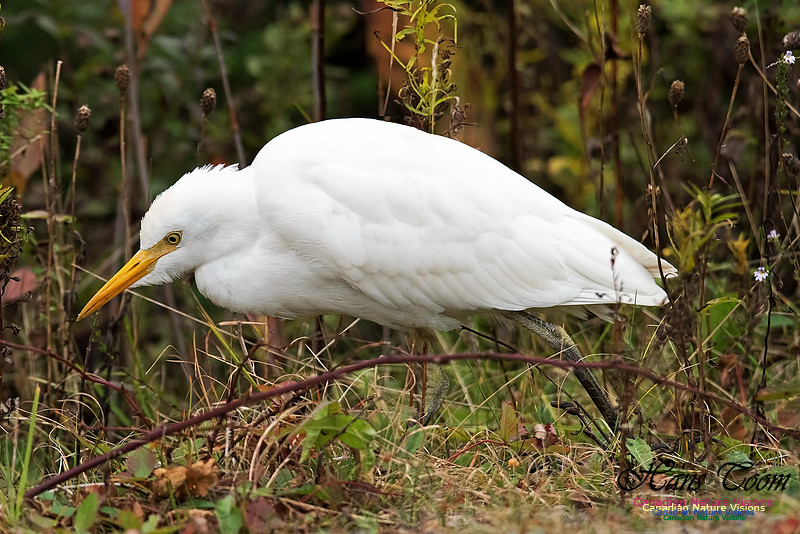
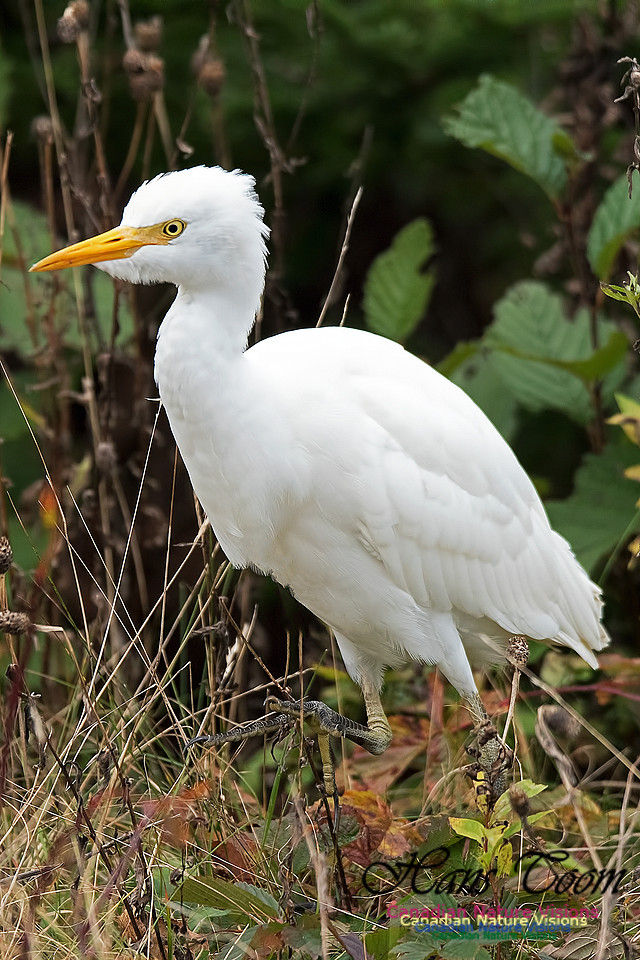
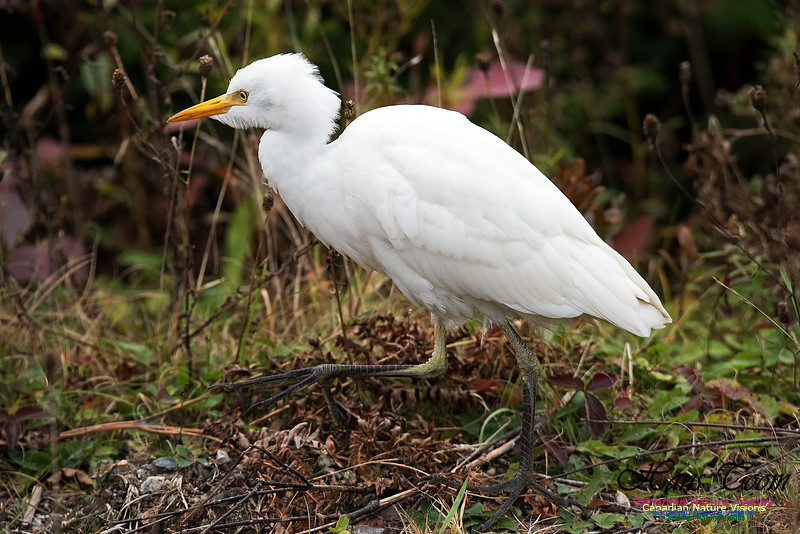
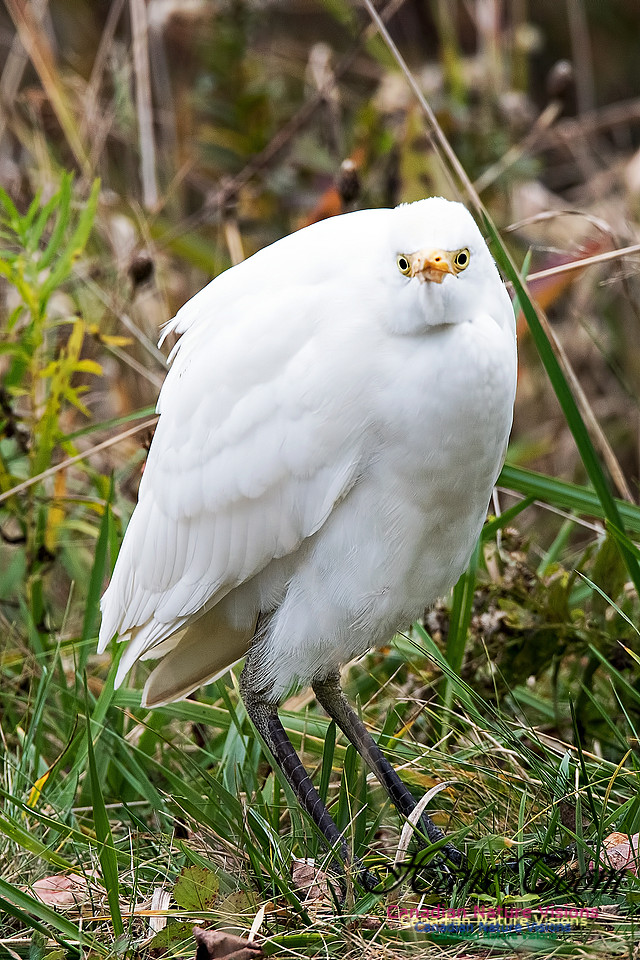
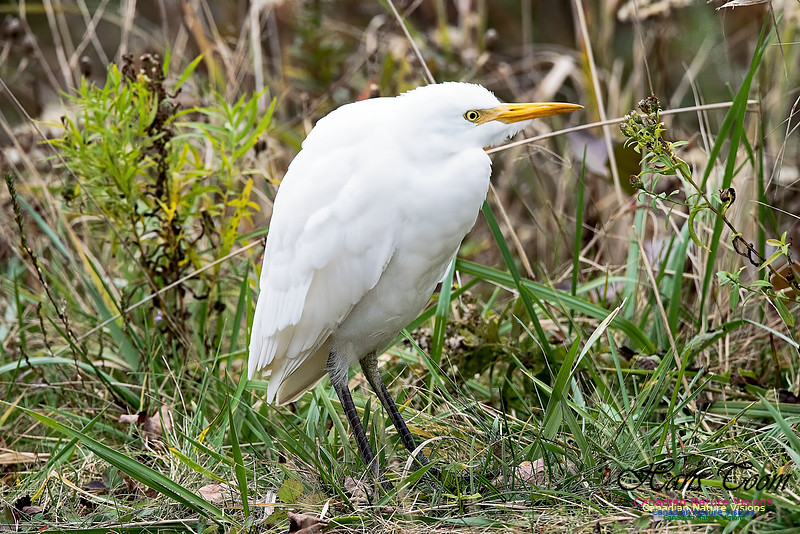
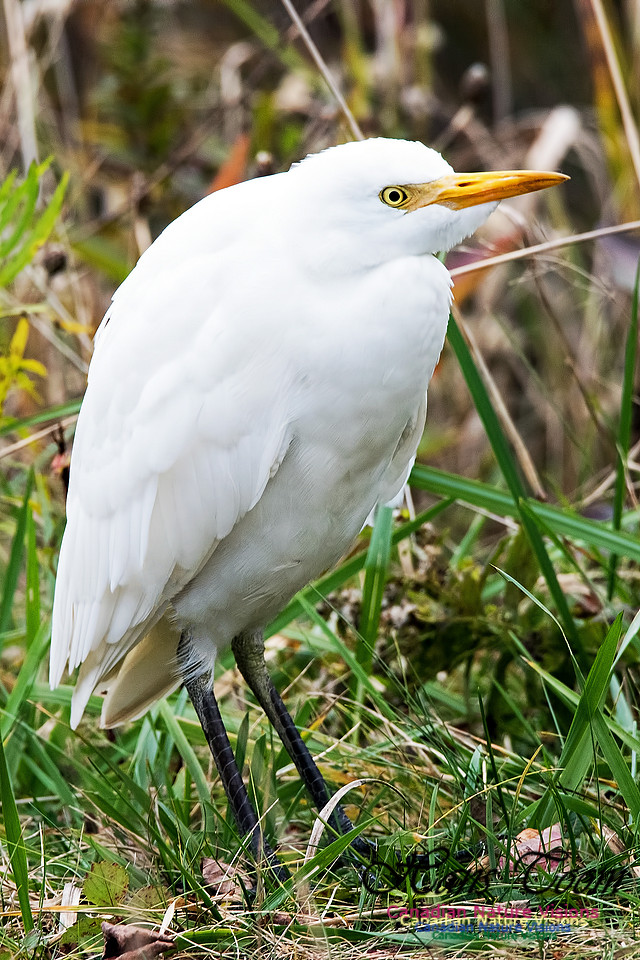
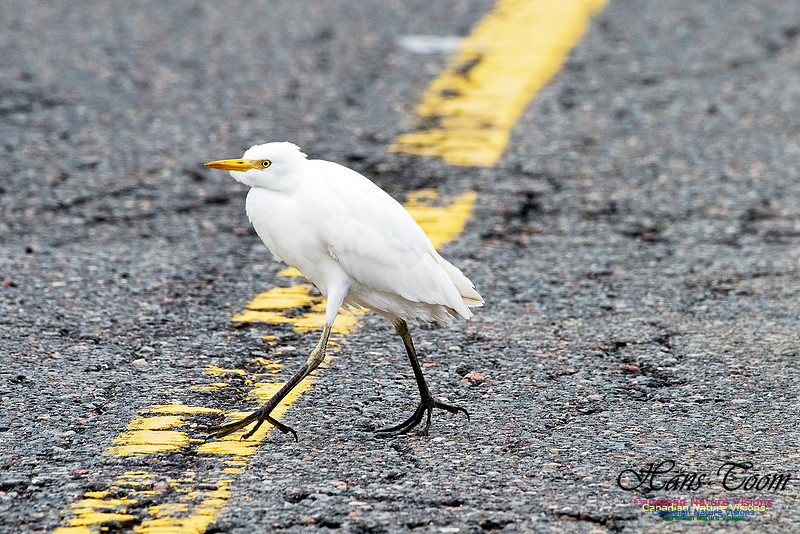
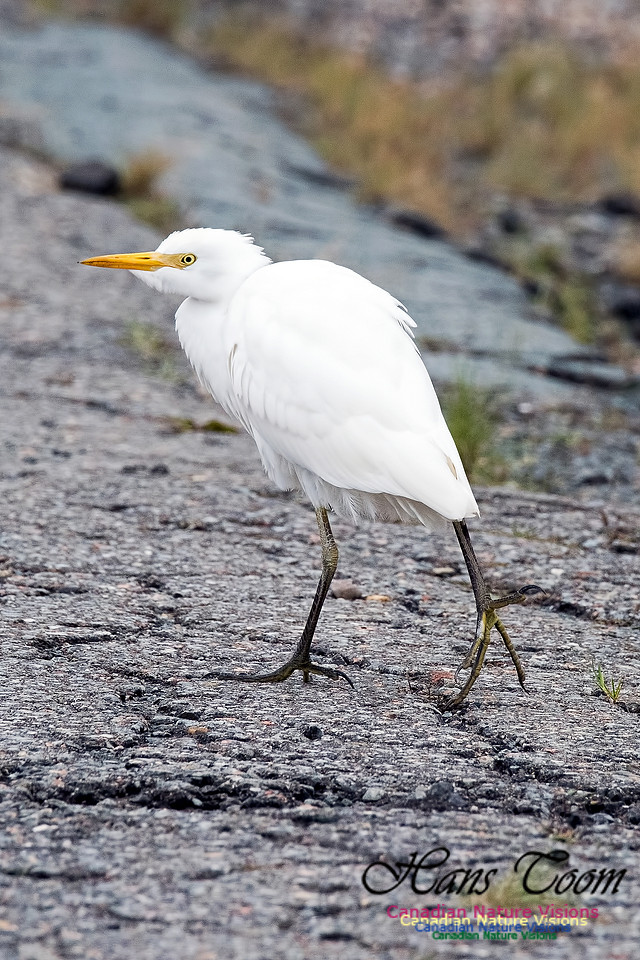
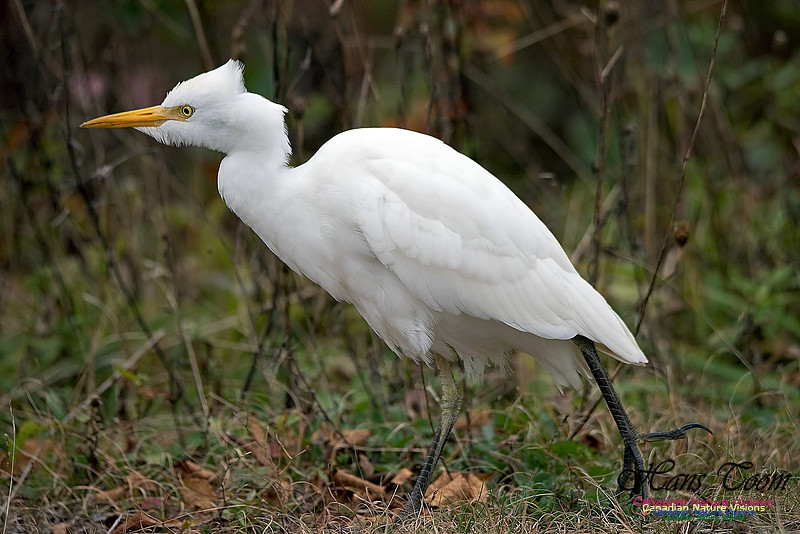
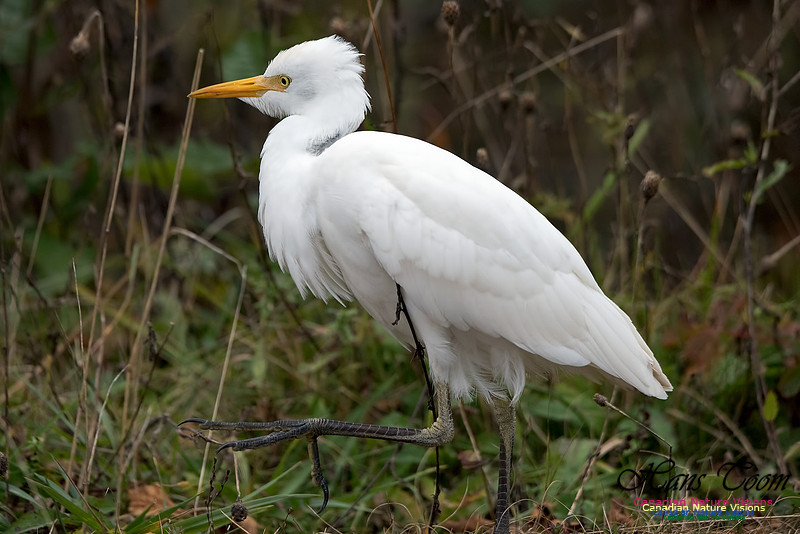
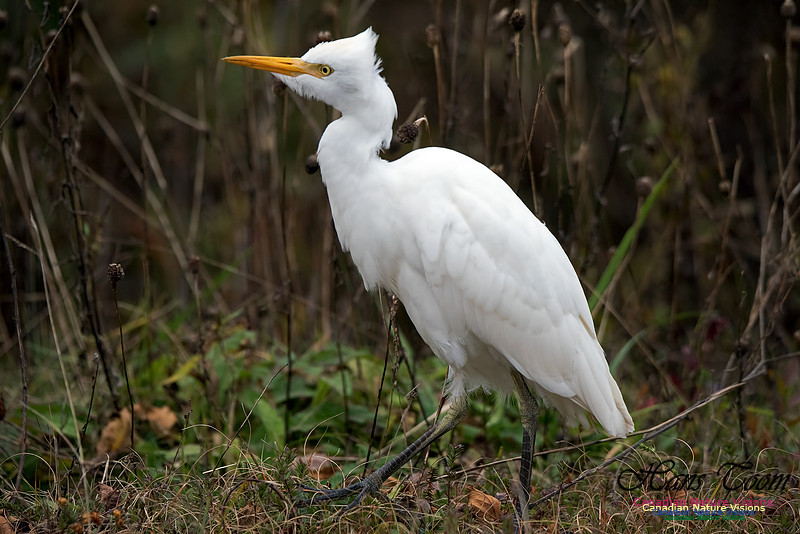
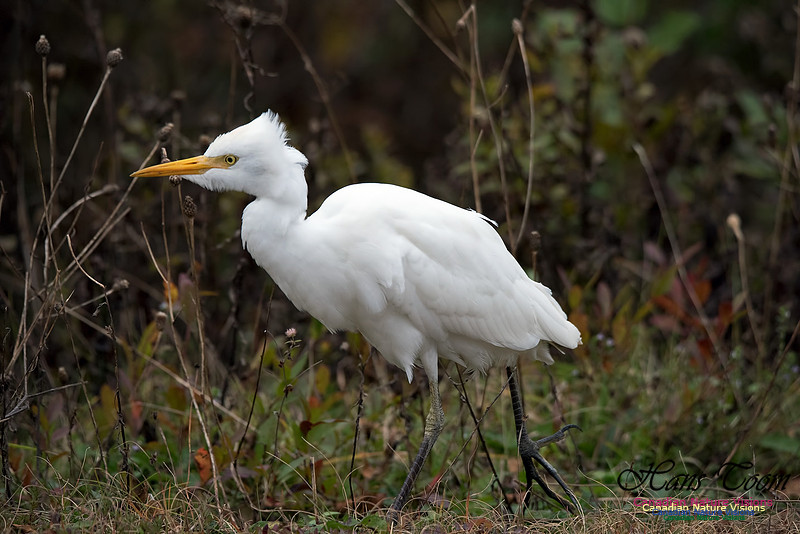
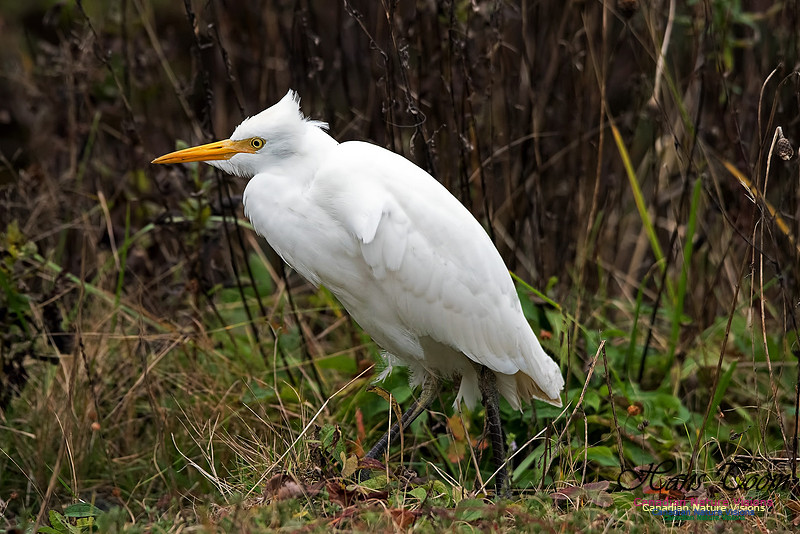
Cattle EgretI was on a prowl for a reported Snowy Egret that had moved somewhere from Duncan's Cove the day before. The ditches alongside Sandy Cove Road and the beach at Sandy Cove were my first target areas followed by the salt marshes from Sambro Head to West Pennant. I was surprised to find instead a Cattle Egret working the roadside ditches and road shoulder along Sandy Cove Road. In many parts of the world the Cattle Egret is as common as our European Starlings or Brown-headed Cowbirds especially around and on cattle. In Nova Scotia it is an annual regular but quite uncommon and turns up in the oddest places but usually arround farms. This is probably the tamest of the egrets but it kept a discrete distance nonetheless. My gripe this time is that all my photos are hand held at relatively slow shutter speeds for a 600mm lens, hence the lack of definition in some of the photos. This is nonetheless the first Cattle Egret I've seen along this road, although Great Blue Herons commonly work the roadside drainage ditches for green frogs.
Cattle Egret
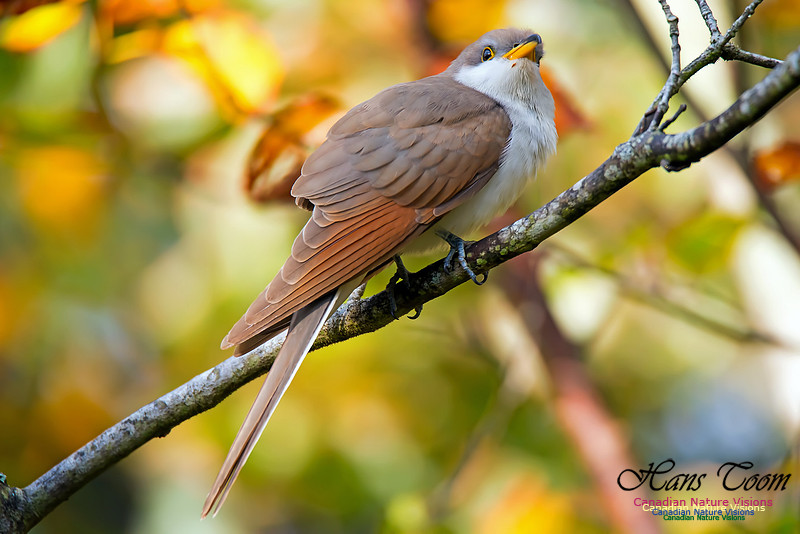
Yellow-billed CuckooI encountered the Yellow-billed Cuckoo at Duncan Cove, Halifax Regional Municipality, on October 9, 2014. This elegant bird allowed several photos before it moved on. I am happy with my photos with just two gripes. I haven't been carrying my tripod along this route due to scarcity of birds so I had to photograph my cuckoo with a hand held 600mm lens with some nasty, as always, backlighting. I was also huffing and puffing after climbing a hill. From a never relevant techno-babble point of view at the shooting distance I had with f-stops between f6.3 and f11 the depth of field of my images are between 45mm to 70mm. This is why its so important to focus on the eye before framing the shot because unless the bird is totally flat on to the camera a portion of the bird will always be out of focus, especially if your target bird like this cuckoo is five metres distant. Nevertheless despite my gripes it was a good find.
Brier Island JournalLaura and I visited Brier Island Sept 5-7, with a stop at Annapolis Royal Marsh on route. The weather was moderately cooperative, too windy for a comfortable ocean tour, and foggy during the mornings and the evenings. Nevertheless the island offered some interesting experiences. Firstly, a few photos from Annapolis Royal Marsh. The Joe Pye Weed was finished for the Season
The shoreline of the Annapolis Royal Marsh is very attractive this time of year.
Some Asters are always late bloomers
Common Yellowthroat
Yellow-rumped Warbler
We arrived at Brier Island late in the afternoon after making the ferries right on schedule. After checking in to our hotel our first tour was towards the south end of the island. Peter's Island Light
Westport as Seen From the Peter's Light Lookoff
After viewing Peter's Island Light Laura paid homage to Joshua Slocum at his memorial. He was born on Mount Hanley very near to Laura's ancestorial home. From Wikipedia: Nova Scotian childhoodJoshua Slocum was born on February 20, 1844 in Mount Hanley, Annapolis County, Nova Scotia (officially recorded as Wilmot Station), a community on the North Mountain within sight of the Bay of Fundy. The fifth of eleven children of John Slocombe[1] and Sarah Jane Slocombe née Southern, Joshua descended, on his father's side, from a Quaker, known as "John the Exile" who left the United States shortly after 1780 because of his opposition to the American War for Independence.[2] Part of the Loyalist migration to Nova Scotia, the Slocombes were granted 500 acres (2.0 km2) of farmland in Nova Scotia's Annapolis County. 
Slocum's childhood school, now the Mount Hanley Schoolhouse Museum.
Joshua Slocum was born in the family's farm house in Mount Hanley and learned to read and write at the nearby Mount Hanley School. His earliest ventures on the water were made on coastal schooners operating out of the small ports such as Port George and Cottage Cove near Mount Hanley along the Bay of Fundy. When Joshua was eight years old, the Slocombe family moved from Mount Hanley to Brier Island in Digby County, at the mouth of the Bay of Fundy. Slocum's maternal grandfather was the keeper of the lighthouse at Southwest Point there. His father, a stern man and strict disciplinarian, took up making leather boots for the local fishermen, and Joshua helped in the shop. However, the boy found the scent of salt air much more alluring than the smell of shoe leather. He yearned for a life of adventure at sea, away from his demanding father and his increasingly chaotic life at home among so many brothers and sisters. He made several attempts to run away from home, finally succeeding, at age fourteen, by hiring on as a cabin boy and cook on a fishing schooner, but he soon returned home. In 1860, after the birth of the eleventh Slocombe (Joshua changed the spelling of his last name later in his life)[3] child and the subsequent death of his kindly mother, Joshua, then sixteen, left home for good. He and a friend signed on at Halifax as ordinary seamen on a merchant ship bound for Dublin, Ireland.
After visiting Joshua Slocum's memorial we followed Gull Rock Road to Big Pond and Big Pond Cove. The roadside is covered in blackberries and the best display of Nodding Ladies Tresses's Orchid I've seen anywhere in Nova Scotia. There was a nice display of shoreline flowers and grasses along the walking route to Big Pond. Scentless Chamomile
At Big Pond two shorebirds, a Least Sandpiper and a Pectoral Sandpiper, were pinned down together and fearfull of flying due to rampaging raptors even though three humans were approaching. Laura stayed wisely far back. We came far too close to these birds since their anxiety level must have been very high due both to their fear of flying and their inability to react to the humans approaching. I said to my companions that we were too close to these birds and I backed off. My companions didn't care! One of them even had the bravado to say that he could pick these birds up since they were so paralized with fear. We have to show more respect for birds. Least Sandpiper and Pectoral Sandpiper
I saw the Pectoral Sandpiper the following day when the raptors were not about and obtained some nice images. Pectoral Sandpiper
Purple-stemmed Aster
Rough-leafed Aster
Rush Aster
Scentless Chamomile
Nodding Ladies Tresse's Orchid
Semipalmated Plover
Least Sandpiper
Common Eider
I could not identify this wildflower even with half a dozen flower identification books and the internet at my disposal. Unidentified
Unidentified
White Water Lily
The largest rose hips we have seen anywhere in Nova Scotia reside on Brier Island. Rose Hips
I had hoped for a sunset photo on our last night so we went to Brier Island's Western Light. Alas the fog rolled in but it was so thick I was able to capture sunspots on our sun without the use of a filter. Brier Island's Western Light
Sunspots on the Sun at Sunset, Brier Island Western Light
On our last morning the fog lifted and the wind turned away from its relentless southerly blow so we went up to North Light about an hour before sunrise. Brier Island North Light
Sunrise at Brier Island, North Light
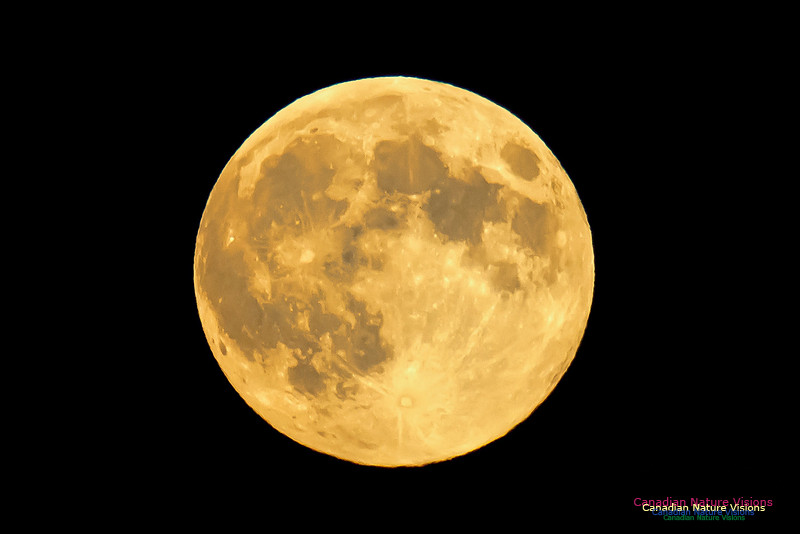
The Harvest Supermoon of 2014The harvest moon this year was also a supermoon since it was closer to our earth than during other times of the year. Usually when I photograph a moon when its rising or near the horizon the photograph is compromised by atmospheric disturbances and contamination resulting in poor quality images often severely distorted and fuzzy. That was not the case this time. The orange colour was also dominant since when the moon is low in the sky its light has to travel a greater distance through our atmosphere and the shorter wave lengths of light are absorbed permitting only the reds and oranges to pass through. Harvest Supermoon, September 8, 2014
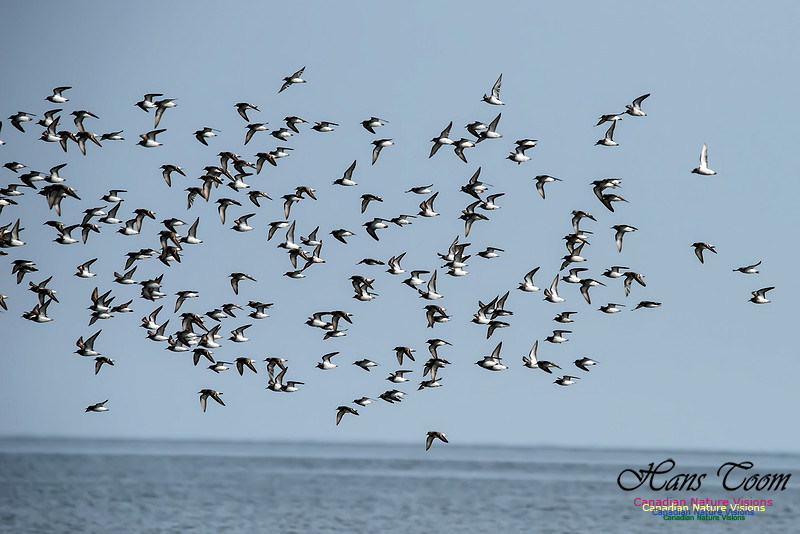
Lots of Peeps at Evangeline BeachI made my last trip to Evangeline Beach August 6 and it was a good one. I saw the largest flocks of peeps I've ever seen here, indeed anywhere. There were several groups that streamed forth both in front of and behind Boot Island varying between 200-400 metres in length and 20-50 metres in height with an unknown width but they were probably as wide as they were high. With densities varying between .5 to 4 birds per cubic metre the flock sizes are 100,000++ each. The dimensions of the flocks are easily determined using the sensor frame as a measuring tool providing you know the distance to the flock. This distance was measured off a map. I used my usual strategy of arriving 1-1/2 hours before high tide and sitting in a beach chair with my camera tripod mounted and at eyeball level. The fishers appreciated what I was doing and gave me space. Only a few dozen birds landed on the beach mostly in front of me as the fishers were casting, reeling and baiting which kept the birds to my end of the beach. I have perhaps a hundred photos so this set is just a sampling of what was seen. Semipalmated Plover
Semipalmated Plover
Semipalmated Plover
Semipalmated Sandpiper
I saw Semipalmated Plover, Semipalmated Sandpiper, Least Sandpiper and White-rumped Sandpiper on the beach in front of me. The photos of swarms are the big flocks off Boot Island.
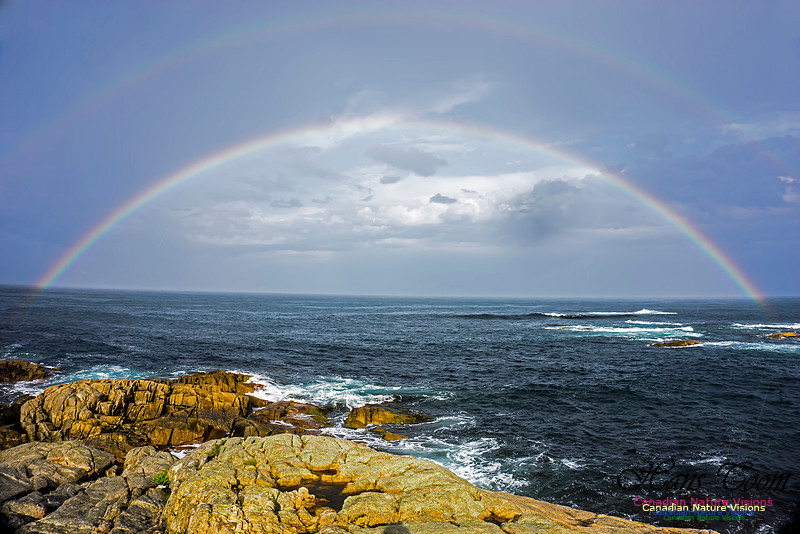
180 Degree Double Rainbow and Largest and Brightest Supermoon of the YearLast Friday about 6PM I decided to risk a trip to Duncan Reef to photograph the Ruddy Turnstones passing through despite rain and thunderstorm warnings. Yup, wearing just a shirt and jeans I got rained upon at the Duncan Reef lookoff. I was wet but I was rewarded big time when the rain stopped. A double rainbow appeared over Duncan Reef and with my little hiking camera I took a row of photos.
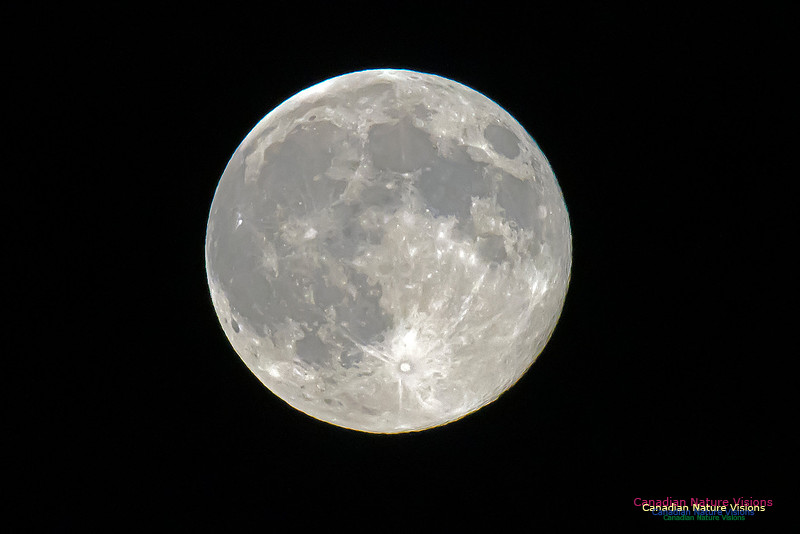
Last evening the clouds cleared over the Atlantic Ocean and I obtained some nice photos of the brightest and largest supermoon of the year.
Troop Island Journal, August 2, 2014I visited Troop Island for the second time this year on August 2. The weather was iffy with showers the day before and the day after the trip but the trip itself had fine weather, mostly cloudy bright with a few bursts of sun. 23 folks expressed interest in the trip but many did not show up. We had two boats and I left with two others on the first departure at 8AM with Beth McGee tasked to be the skipper once again. My companion on the trek was Petra Mudie. She kept me on the move and tasked me to observe and take photographs as she led the way. Petra Mudie
The following map shows the route we followed during the circuit of the island. Troop Island Route
The water level in the bog north of the pond was low so we were able to navigate through although we had to avoid the potholes which can swallow a water buffalo. The shoreline although scenic was not easy to walk even at low tide. The after effects of wind and surf were evident. The West Side Shoreline
East Side Shoreline
Storm Tossed Flotsum West Side Beach
South-east Shoreline
Dodder(Cuscuta sp) and Hair Cap Moss
Marsh St. John's Wort(likely Triadenum virginicum)
Moss sp.
Willow Herb(Epilobium sp., possibly E. ciliatum, Fringed Willow Herb)
Bog Cranberry
Bog Cranberry
Seneca pseudo-arnica
Seneca pseudo-arnica
Old Man's Beard, Usnea
Virginia Ctenucha Moth
The following photo of the Virginia Ctenucha Moth was not taken on Troop Island but on my front porch several years ago. I include it here to show the beauty of this critter. Virginia Ctenucha Moth
Acorn Barnacle
Bracket Fungus
Bracket Fungus
Butter and Eggs
Butter and Eggs
Canada Hawkweed
Green Dead Man's Fingers, Codium Fragile Green Fleece Algae
Indian Pipe
Indian Pipe
Mushroom sp.
Seapea
The Roof of the Old Growth Forest
In the Dark Forest Were Three Fairies
Yellow Birch
John Himmelman in the Yellow Birch
John Himmelman in the Yellow Birch
The North-east Corner of the Bog, North of the Pond
The North-east Corner of the Bog, North of the Pond
The Bog, North of the Pond
The Bog, North of the Pond
The Bog, North of the Pond
Flotsom at the East End of the Pond
The Pond Looking to the West
Amanita muscaria
Sea Milkwort(Glaux maritima)
Moss sp.
Cinquefoil
Hair Cap Moss
Bedstraw(Galium obtusum)
Suaeda sp, (probably seablite-S. Maritima)
Mint-Mentha arvensis
Marsh Skullcap(Scutellaria galericulata)
Seaside Grass
Senecio Vulgaris or S, jacobaea or Ambrosia artemisiifolia
Mint-Mentha arvensis
Beach Pea and Sea Rocket-Cakile edentuala, a Brassicaceae
Seaside Grass
Unidentified 25
Moss Sp.
Sedge, possibly Carex sp
Marsh Skullcap(Scutellaria galericulata)
Beach Pea-Lathyrus maritimus
Unidentified 30
Unidentified 31, Moth in Sea Weeds
Senecio Vulgaris or S, jacobaea or Ambrosia artemisiifolia or Clamy Groundsel(Seneca Viscosus)
Unidentified 33
Unidentified 34
Unidentified 35
Suaeda sp, (probably seablite-S. Maritima)
Unidentified 37
Unidentified 38
Unidentified 39
Plaintain sp.
Sea Lavender-Limonium carolinianum
Petra says that this plant is rare in Nova Scotia. I used a macro lens to photograph it but unfortunately these lenses when shooting close to a subject have almost no depth of field. Glasswort-Salicornia sp
Glasswort-Salicornia sp
I was not active in searching for birds as Petra keep me too busy but Bob McDonald has a complete list, which I've copied here. I've also included a few additions. Troop Island Bird List
Petra and I completed our circuit in about three and one half hours. I was exhausted after hobbling around on a bad knee but I think Petra could have repeated the loop without problem. It was a memorable excursion with fine company on the trail and gorgeous weather. Even the insects were not too bad. Shorebirds of Evangeline BeachLaura and I enjoyed our first visit of the year yesterday to Evangeline Beach, in search of shorebirds. We arrived at about noon with the tide peaking at 1:30PM. Richard Stern was already on the job and he reported some sizeable flocks which we never did see. Just as we were leaving for the beach a Peregrine Falcon flew by.
Our plan was to sit in our beach chairs and wait until the tide came up. We spotted several small flocks passing by offshore in string formation which is useless for photographs. A couple of medium sized flocks landed nearby but didn't stay long enough for video recording which is what I was hoping for. About 1PM a dozen fisherman came down to the beach so further photographic opportunites ended.
We looked for the Eastern Kingbirds behind the gardens at the Grand Pre museum without luck and then completed our visit with a picnic. We'll be back again perhaps during the week to avoid the hordes of fisherman.
Least Sandpiper
Least Sandpiper
Laughing Gulls at Sandy Cove's Beach, HalifaxFour Laughing Gulls spent about a week at Sandy Cove's Beach. I checked on them daily and managed a few decent photos. Sandy Cove's Beach produces some of the nicest heaps of rotting kelp around this area which fosters the development of kelp flies and maggots, a delicacy for the gulls although they seemed to spend more time in the shallows perhaps hunting small fish and invertebrates.
Recent BirdsI went to Meisner's Point again, for the last time this year, to search for the suddenly elusive Blackpoll Warbler. Once again I found my bird and once again I had very little luck in getting a decent photograph. The following is the best that I could muster so I may have to wait until shore bird season, Martinique Beach to Flying Point. Flying Point is loaded up with Blackpoll Warblers and Nelson's Sparrow although it is a trudge.
Meisner's Point did produce Common Yellowthroat and Yellow Warbler.
I went to Jerry Lawrence Provincial Park to listen for the Canada Warbler but if it's where I last heard it's silent now. My consulation was a Hermit Thrush.
At Dollar Lake Provincial Park I met Swainson's Thrush and Eastern Wood-Pewee.
|