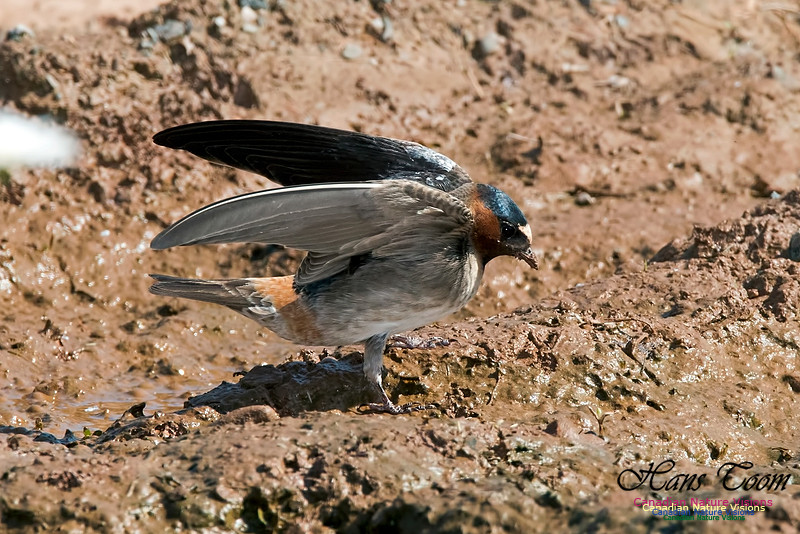
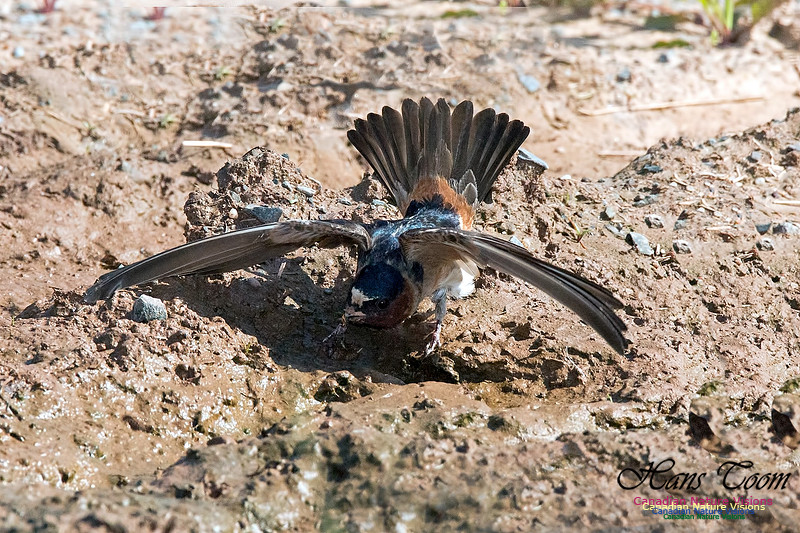
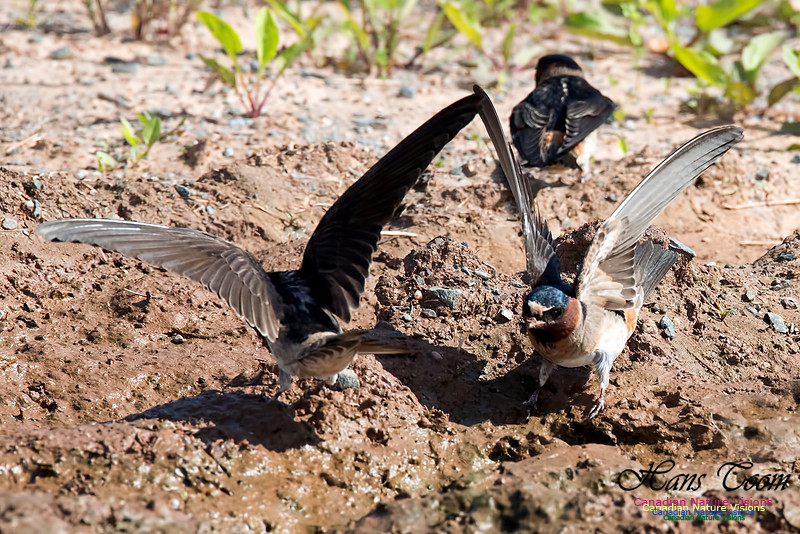
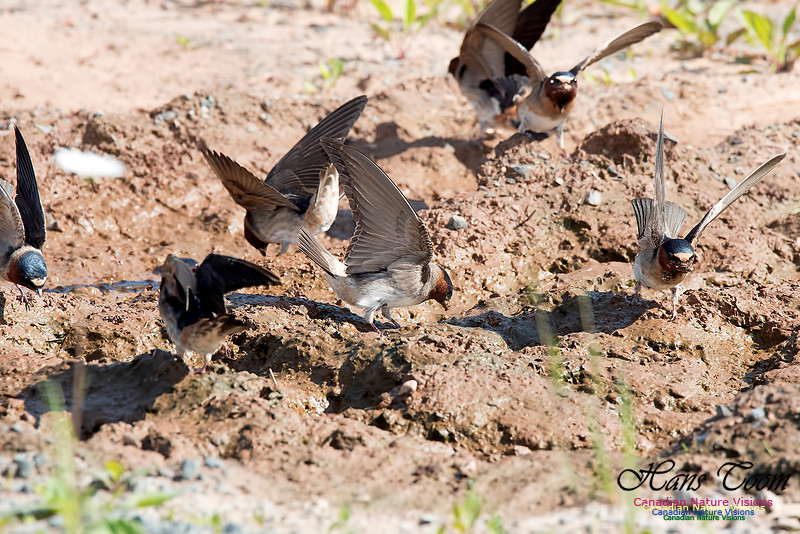
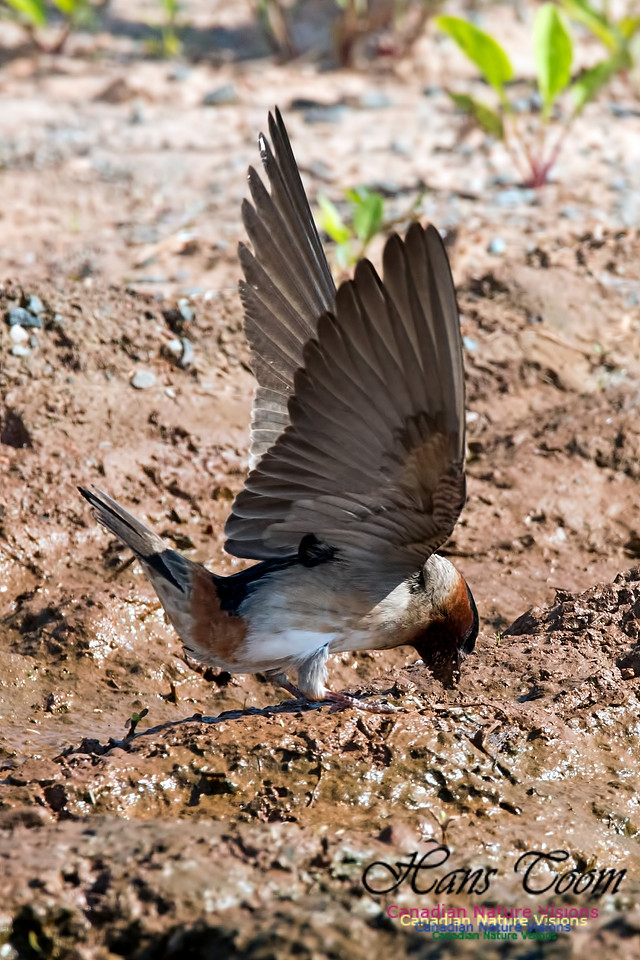
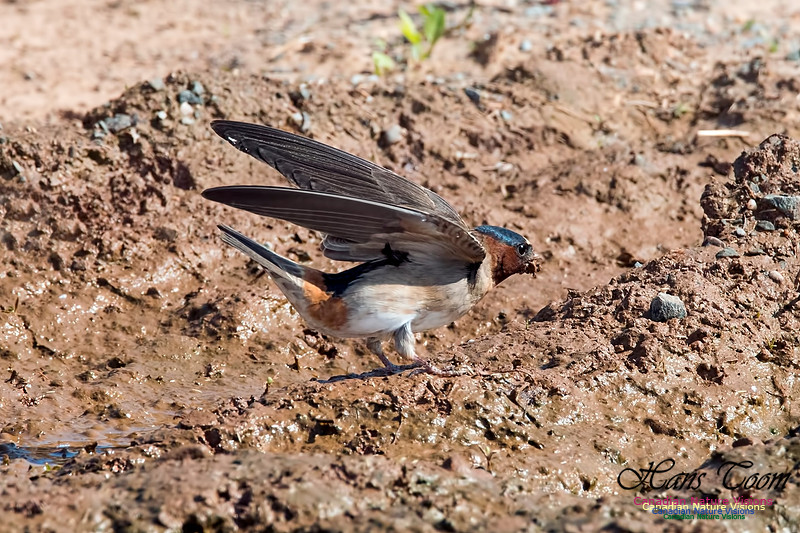
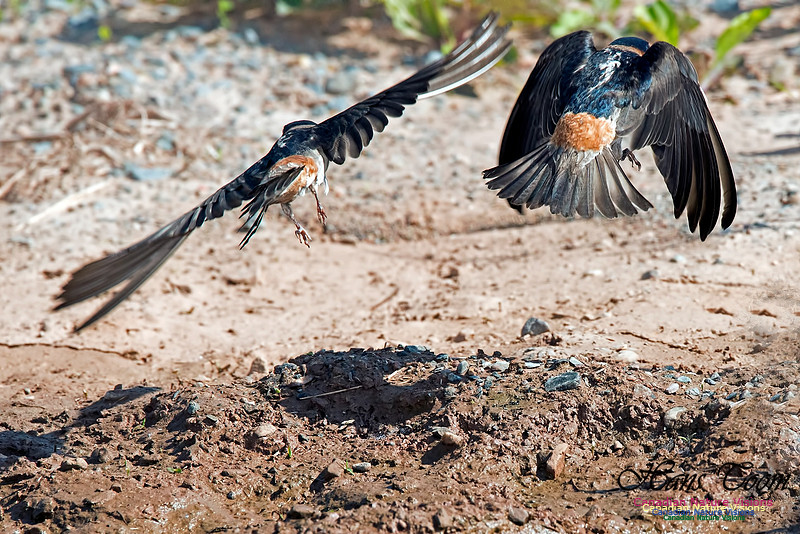
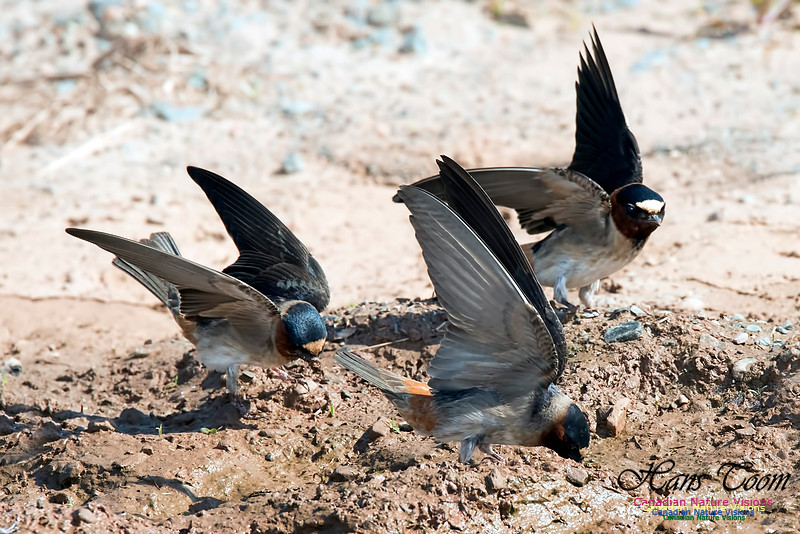
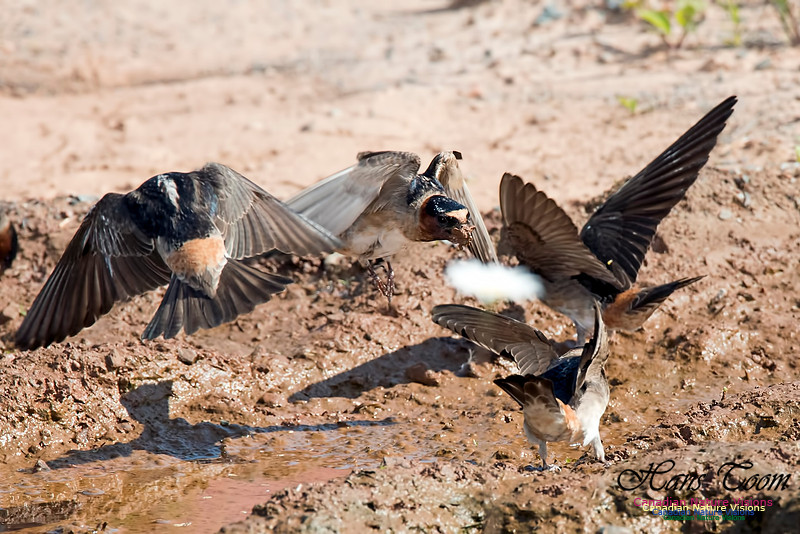
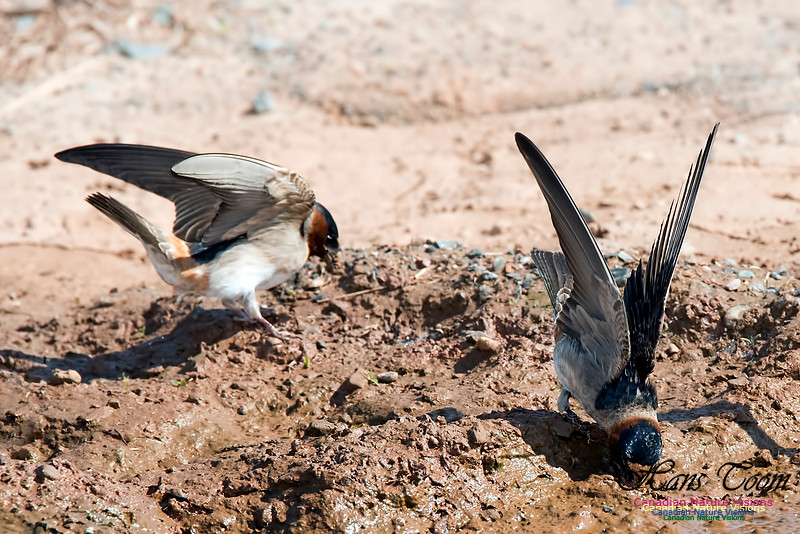
Cliff Swallows Playing in the MudAfter a visit to Dollar Lake Provincial Park, June 29, I went along Wyse Road since this road is often productive for wildlife due to the open fields, recovered forest and the Musquidoboit River. I came across a troop of Cliff Swallows collecting mud for repair or building of their nests. It's a treat to watch these guys at work. Fortunately I was still in my car which always provides some camouflage.
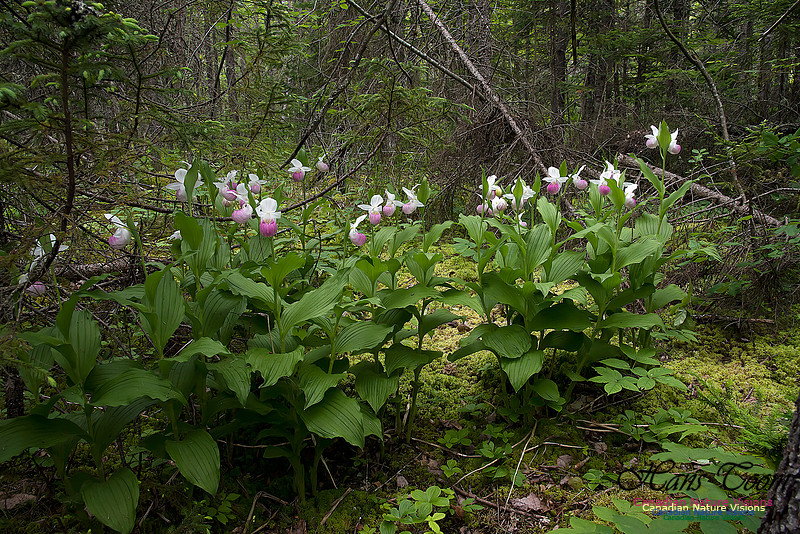
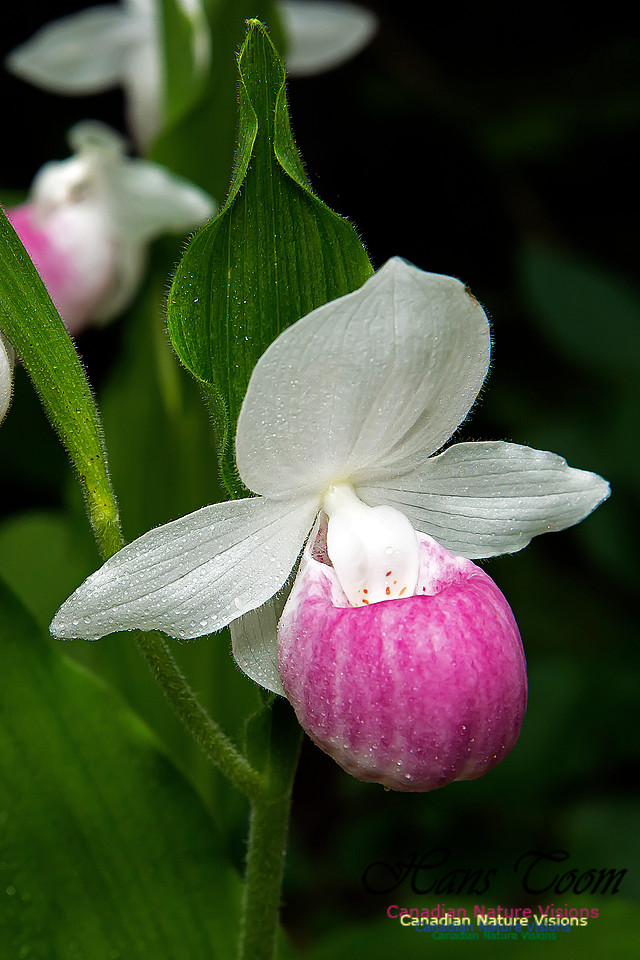
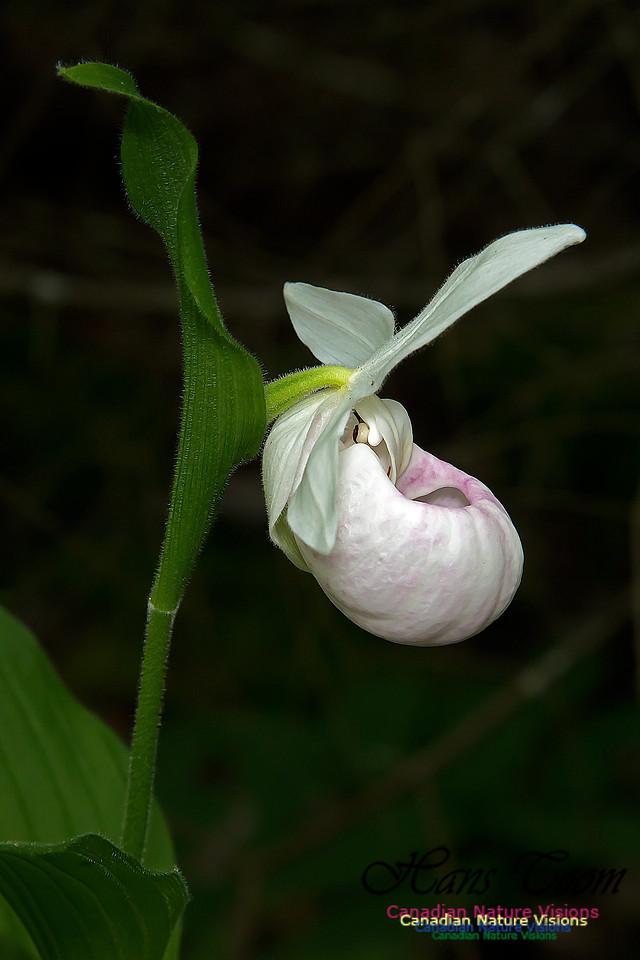
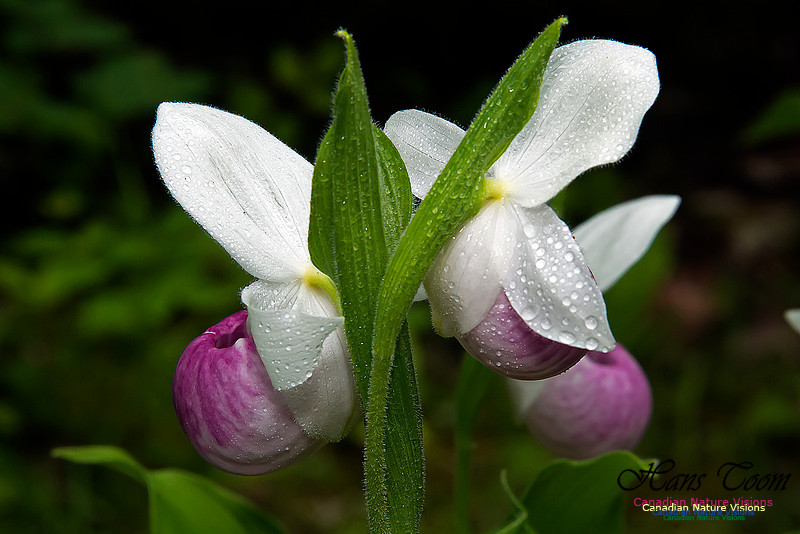
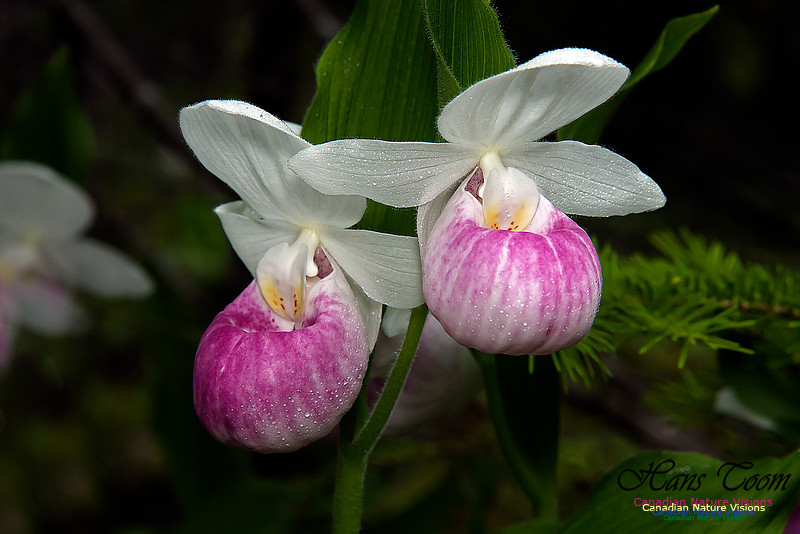
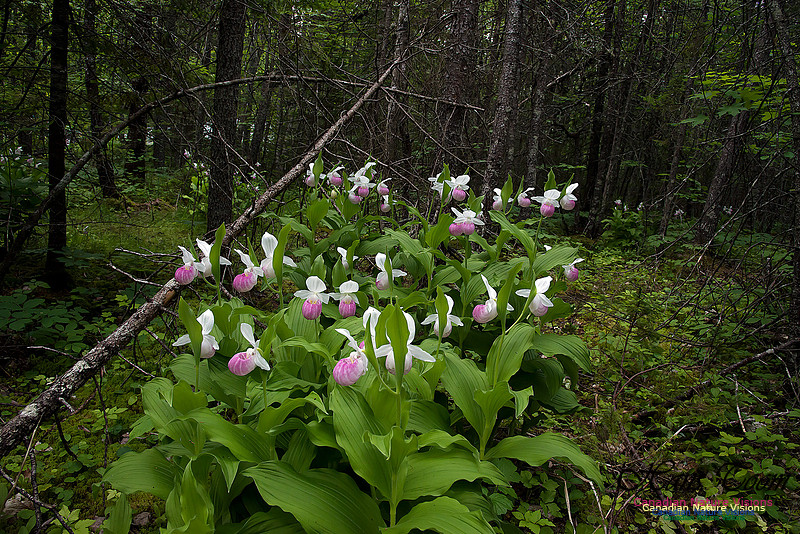
Showy Lady's Slipper OrchidLaura and I visited Smiley's Provincial Park twice, once about a week before the end of June and on June 29. I returned by myself July 2. Our first visit was a complete miss since not one Showy Lady's Slipper Orchid had opened. June 29 was better as almost all the orchids were open and July 2 was best of all.
The Warblers of Jerry Lawrence Provincial ParkAbout ten years ago I published a guide to the warblers of Lewis Lake Provincial Park, now renamed Jerry Lawrence Provincial Park. This guide disappeared when I abandoned my old website due to its unreliablility and slowness. By request of others I've republished the guide on this blog.
The Warblers of Jerry Lawrence Provincial Park
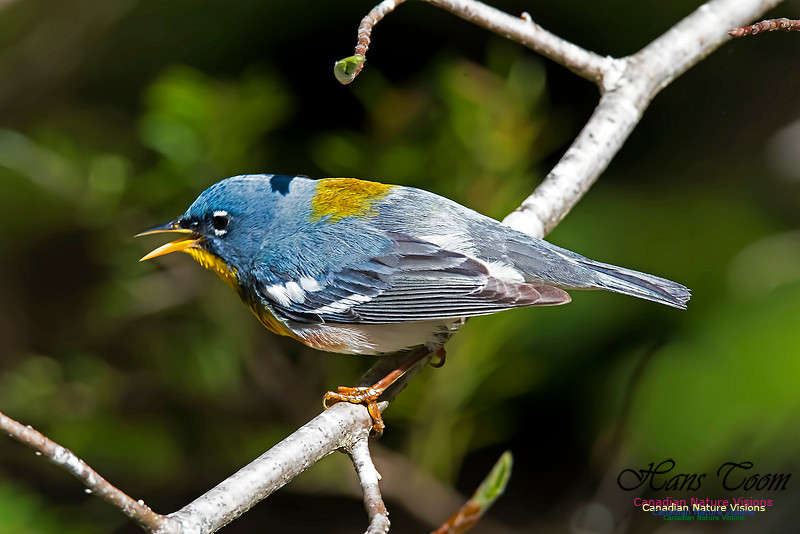
Twenty-two neotropical warblers regularly nest in Nova Scotia. All of these warblers can be seen at Jerry Lawrence Provincial Park during migration especially in late May and early June. At least eighteen of these warbler species nest or have nested in this jewel of a park. Fourteen species are reliable annual nesters and can be seen or heard in June on a two hour walk around the park's circle road and along the St. Margaret’s Bay Trail. Four others are harder to find and may not nest in this area every year. This is a special place for these beloved little birds and well worth a visit. The best way to experience these birds is to study and learn their songs before venturing out or bring along an experienced birder since many species are heard long before they are seen. Bird song tapes are helpful but the best way to learn song is to watch the bird as it sings. Remember to bring insect repellent and water along with your birding friends. The mixed woodlands between the lakes provides some excellent woodland birding for Red-eyed Vireo, Blue-headed Vireo, Eastern Wood-Pewee, Red-breasted Nuthatch, Hermit Thrush, Golden and Ruby-crowned Kinglets, Winter Wren, Brown Creeper, Pine Siskin, Boreal Chickadee, Downy and Hairy Woodpeckers, American Robin, White-throated Sparrow, Yellow-rumped Warbler, Canada Warbler, Black-throated Blue Warbler, Black-throated Green Warbler, Magnolia Warbler and Northern Parula. Overhead above Round and Lewis Lakes keep your eyes open for the Osprey, our provincial bird, Broad-winged Hawk, Northern Harrier and Belted Kingfisher. On the lakes themselves you’ll find Common Loon, Double-crested Cormorant, Common Merganser and American Black Duck.
In the bog area north of Round Lake you’ll see and hear Swamp Sparrow, Red-winged Blackbird, Alder and Olive-sided Flycatchers, Cedar Waxwing, Yellow Warbler, Northern Waterthrush and Common Yellowthroat. Look for the beaver dam and the occasional beaver and muskrat.
The park is open mid May to early October, from 8AM to dusk but it is always a good idea to check with Parks Nova Scotia as operating hours and dates often change. You can also park at the park gates and walk into the park which adds about two kilometres to the round trip walk. Another option is to park at the Head of the St. Margaret's Bay Trail off Highway #3 and walk the trail until you come to the first lake on your left, Round Lake. The trail to the park leads in near here but it is not marked.
Tennessee Warbler This olive-green warbler has a white band over the eye and a black line through the eye.
Nashville Warbler The conspicuous white eyering and grey cap of this olive-green warbler are its field
Northern Parula Look for the greenish patch behind the head and neck and the distinctive black
Yellow Warbler The adult male of this bright yellow warbler shows vertical rusty-red striping on the chest which
Chestnut-sided Warbler The adult male wears a bright yellow crown and has chestnut-coloured flanks. This
Magnolia Warbler Look for a white band across the tail and a yellow rump plus a striking black
Black-throated Blue Warbler This is one of our special warblers in the area. Look for a black throat and a blue
Yellow-rumped Warbler The yellow cap, yellow side patches and yellow rump are the distinctive field
Black-throated Green Warbler Look for a black throat on an olive-green bird. The black throat patch extends along both
Blackburnian Warbler The Blackburnian Warbler is remarkable. Its flame red throat and bright yellow-orange chest with prominent white wing bars make it unmistakeable with any other species. It prefers mature coniferous forest habit so is usually only found between Round and Lewis Lake or the maturing forest west of the creek exiting Round Lake to the north. The song is easily confused with the Black-and-white Warbler, with a high pitched, "zip, zip, zip, zip, titititi, tseeee," and "teetsa, teetsa, teetsa, teetsa."
Palm Warbler The rusty-red cap and yellow band over the eye are this warbler's
Black-and-White Warbler This bird is strikingly marked in bold black and white stripes and can be
American Redstart This warbler flashes bright yellow or red outer tail feathers and the male
Ovenbird This warbler haunts the understory of thick mixed woods, and walks, not hops, along tree limbs.
Northern Waterthrush Look for a yellowish band over the eye, a dark brown stripe through the eye and thin vertical chest
Common Yellowthroat The adult male of this bright yellow warbler is easy to recognize with its black mask,
Wilson's Warbler This adult male of this diminutive olive and yellow warbler species sports a jaunty black cap.
Canada Warbler This is a much sought after warbler and nests annually in the park. A black necklace
The Missing Four Warbler Species Of the twenty two warbler species that nest in Nova Scotia only four species have not been found showing nesting behaviour in Jerry Lawrence Provincial Park; Cape May Warbler, Bay-breasted Warbler, Blackpoll Warbler and Mourning Warbler. Both the Cape May Warbler and Bay-breasted Warbler could nest in the maturing forest west of the creek and bog that exits Round Lake to the north. The song of these high pitched singers does not carry a great distance so if they are in this forest they would be very difficult to hear across the bog and creek. The Blackpoll Warbler would find suitable habitat north of Round Lake so it should have or does nest in the boggy fringe north of Round Lake. Again this high pitched singer would be hard to hear at distance. The Mourning Warbler will find suitable second growth habitat along the St. Margaret's Bay Trail but has not been encountered as yet. Finding these final four warblers showing nesting behaviour in Jerry Lawrence Provincial Park would be a coup.
Sambro Island Journal 2014Three of us, Ray Staszko, Keith Lowe and I, visited Sambro Island last Monday. I gave my companions just 24 hours notice since an end of month trip must coincide with lack of fog, fair weather, and favourable winds. It is a tricky affair and because it's tricky I've missed visiting the island for the last two years due to fog or a strong south-westerly wind. As it was there was morning fog over Portuguese Cove but thankfully it was absent at our departure point, Sambro Head, and mostly absent over Sambro Island.
The aerial photo above shows the appropriate areas to walk when on the island. The white areas are solid rock and this is where one should be most of the time. There are a few well trudged trails through the grass which are OK but the large green/brown areas on the north and south side of the island are definitely "feet off". Arctic Tern are ground nesters and scratch out a space of ground to lay their camouflaged eggs so it would be easy to destroy or expose the location of a nest by trudging about in the grassy areas. The same reasons apply for not walking on sandy and gravel areas. When we arrived at Sambro Island at 8:30AM and the captain took us on a clockwise loop of the island I witnessed a life event, although for mariners of all types this is no doubt witnessed regularly. It was a fog bow! According to Wikipeida: A fog bow is a similar phenomenon to a rainbow; however, as its name suggests, it appears as a bow in fog rather than rain. Because of the very small size of water droplets that cause fog—smaller than 0.05 millimeters (0.0020 in)—the fog bow has only very weak colors, with a red outer edge and bluish inner edge.[1] In many cases when the droplets are very small, fog bows appear white, and are therefore sometimes called white rainbows. This lack of color is a feature of a fog bow which distinguishes it from a glory, which has multiple pale colored rings caused by diffraction. When the droplets forming it are almost all of the same size the fog bow can have multiple inner rings, or supernumeraries, that are more strongly colored than the main bow. According to NASA:
A fog bow seen in clouds, typically from an aircraft looking downwards, is called a cloud bow. Mariners sometimes call fog bows sea-dogs.
When at the light itself you'll see two cannons. These cannons were fired in lieu of fog horns before fog horns were available.
We moor at the the island in a narrow inlet that faces directly south west(see aerial photo above) which is why strong south-westerly winds are trip killers. The old mooring eyes are still present and the boat can be pulled up tight to the rock which has a shear vertical face dropping into deep water. There is an old shack here which might have been used for temporary storage when unloading supplies for the lightkeeper and his family. It also makes a superb blind for photography. A great pile of garbage from previous and probably recent visitors was left here, a shame.
The Arctic Tern is easily recognized by it's all red bill and extra long tail. When at rest the tail extends beyound the wing tips.
The tail can also be observed in flight, a spectacular vision. Interestingly the Arctic Terns although constantly dive bombing the gulls ignored the humans.
The principle enemy of the Arctic Tern is the Great Black-backed Gull which also nests on the ground. I walked past a nesting Black-backed Gull not a metre from me while I was on one of the main trails.
On the same trail near the shore I stood briefly on a rock when out popped a Black Guillemot from under the rock. It's primarily a cavity nester where it wedges into rock crevices and can easily defend its nest.
Another common nesting bird is the Spotted Sandpiper. We must have been close to its nest since it appeared to be trying to divert our gaze elsewhere.
I have lots of other photos from this trip but to see them all you should visit my website, and look under birds/shorebirds, birds/swimming birds and birds/aerialists. It was a magnificent day with light winds, no biting insects, excellent company and with one missed opportunity. When I was on the other side of the island observing what I believe was an Arctic Tern nest in a gravel space between rocks I heard Ray bellow for my attention. I arrived at the south west corner of the island just in time to miss two Atlantic Puffins which both my compatriots had already photographed. Next time! A compete e-bird record was posted by Keith so I won't repeat that material. I was exhausted after hobbling around on a gimpy knee and looked forward to an afternoon of rest.
Golden Heather and Other Local WildflowersLaura and I visited the Chebucto Head area last Sunday in fear of missing the blooming of the Golden Heather. It has just begun to blossom, not like many wildflowers which blossom out together, but more like a gradual sweep across the plant much like an incoming tide.
The Dragon's Mouth Orchid is also in bloom. I find this orchid very difficult to photograph with or without fill-in flash. I always seem to lose detail.
The Arctic Blueberry is showing berries and I hope to photograph it on my next visit. Another local wildflower is the Blue Flag Iris, a common wildflower, but it still stuns us with it's beauty. There is no sign yet of the Slender Lady's Tresses Orchid or the Green Adder's Mouth Orchid, although the latter is in leaf.
Cape Chignecto Provincial ParkI took a 24 hour trip to Cape Chignecto Provincial Park on Thursday and Friday. I left Thursday afternoon and after checking in I took a look around. The view to Cape Chignecto was spectacular after an evening shower.
My best photography actually occured on Friday during a rain shower. I enountered a nesting Northern Mockingbird who enjoyed hanging about on the top of a fence post. It's nest was located within an isolated shrub, a common and somewhat peculiar practise. A Red-winged Blackbird also posed. Northern Mockingbird
Red-winged Blackbird
The Luppins are always a joy with their multiude of brilliant colours. Luppin
The beach ridge is covered with columbine. These may be escapees although there is a wild blue columbine. Columbine
My target bird species for this trip was the Mourning Warbler which I did find without difficulty. Unfortunately they had no interest in me so my photos are less than stellar. Mourning Warbler
This Mourning Warbler was in deep shadow.
Troop Island JournalYesterday Laura and I were delighted to enjoy an outing to Troop Island, off Seabright, in St. Margaret's Bay with Beth McGee, our guide and captain. Troop Island was the object of a major and hurried fund raising campaign to save it from the developer's maul. Beth and many others who live around St. Margaret's Bay were dismayed to hear of the development plans for their beloved island, the focus and object of many childhood and adult memories for many people. The island is now protected and held by the Nova Scotia Nature Trust.
We landed on the beach at 8:30AM on the north end of the island. There are only two beaches, the one we landed on and the beach on the east side of the pond. The tide was rising and this would cost us dearly later in the morning. We proceeded on a counter clockwise circumnavigation of the island. This is copied from the St. Margaret's Bay Stewardship Association story on the rescue of this island: As those who have visited the island well know, Troop is a truly incredible and ecologically unique place. Wandering inland from the charming sand beach, you enter a new and unexpected world. Lush mossy ground gives way to a cathedral of towering centuries old American Beech, Sugar Maple and White and Red Spruce trees. The island is one of only a few remaining in the entire province providing refuge for Acadian hardwood forest. Further along the shore, you discover an ecologically rich saltmarsh and pond, rocky intertidal habitats rich in marine life, and coastal forests where you’ll likely hear a lively chorus of songbirds or catch a glimpse of the resident osprey family. Unlike so many of our coastal islands, nature has been left unimpeded on Troop Island, offering a unique outdoor classroom and opportunity to understand and to study coastal dynamics and climate change. It is a place well-known and treasured by the local community. Here are my companions preparing for the three hour hike.
As a physicist I make a lousy botanist so many of the photographs from our adventure are unidentified and will require the help of others to sort out. The birds we saw or heard were; Double-crested Cormorant, European Starling, Great Black-backed Gull, Herring Gull, 7 Great Blue Herons feeding on the shoreline, Common Loon, Hermit Thrush, Northern Flicker, Black-throated Green Warbler, Northern Parula, 3 active Osprey nests, American Robin, American Goldfinch, American Crow, Red-breasted Nuthatch, Song Sparrow, Purple Finch, Downy Woodpecker, Black Duck with 9 chicks following in line, Willet. We identified the following plants; Seapea, Apple tree in blossom, Starflower, Cow Parsnip, Pearly Everlasting, Blue Flag Iris, various thistles and Coltsfoot. I was carefull not to touch the Cow Parsnip just in case we misidentified it and it was the dreaded Giant Hogweed. We finished the hike at 11:30AM and I was exhausted. Beth was willing to head to the island interior but that will have to wait for another trip.
Cinquefoil
Old man's beard, Usnea
Apple tree in blossum, suggesting someone may have tried to settle here or perhaps the work of a Johnnie Appleseed
Hay-scented Fern A Visit to Rainbow Haven Provincial ParkI visited Meisner's Point yesterday in the hopes of photographing a Blackpoll Warbler but the weather did not cooperate and although I have seen them there this year I had no luck today. I continued on to Rainbow Haven Provincial Park to find and photograph the Nelson's Sparrow. This late arriving sparrow has not returned in numbers yet but a few were present.
Another denizen of the coastal salt marshes is the Willet and one posed for me.
Not to be outdone a Yellow Warbler cooperated just as I was leaving the park.
The Visit of the Queen Mary 2 to HalifaxThe Queen Mary 2 visited Halifax last Wednesday and I never miss an opportunity to see and photograph this grand ship. She remains the largest ocean liner in the world. Some cruise ships exceed her tonnage but cruise ships are not physically strong enough or fast enough for continuous ocean crossings so cannot be classified as ocean liners. The following is copied from Wikipedia: Queen Mary 2 (also referred to as the QM2) is a transatlantic ocean liner. She was the first major ocean liner built since Queen Elizabeth 2 in 1969, the vessel she succeeded as flagship of the Cunard Line. The new ship was named Queen Mary 2 by Queen Elizabeth II in 2004 after the first RMS Queen Mary, completed in 1936. Queen Mary was in turn named after Mary of Teck, consort of King George V. With the retirement of Queen Elizabeth 2 in 2008, Queen Mary 2 is the only transAtlantic ocean liner in line service between Southampton and New York, which operates for part of each year. The ship is also used for cruising, including an annual world cruise.[11] The ship was designed by a team of British naval architects led by Stephen Payne, and was constructed in France by Chantiers de l'Atlantique in 2003. At the time of her construction, Queen Mary 2 was the longest passenger ship ever built, and with her gross tonnage of 148,528 also the largest. She no longer holds this distinction after the construction of Royal Caribbean International's 154,407 GT Freedom of the Seas in April 2006. Queen Mary 2 was intended to routinely cross the Atlantic Ocean, and was therefore designed differently from many other passenger ships. The ship's final cost was approximately $300,000 US per berth. Expenses were increased by the high quality of materials, and having been designed as an ocean liner, she required 40% more steel than a standard cruise ship.[12] Queen Mary 2 has a maximum speed of just over 30 knots (56 km/h; 35 mph) and a cruising speed of 26 knots (48 km/h; 30 mph), much faster than a contemporary cruise ship. Instead of the diesel-electric configuration found on many ships, Queen Mary 2 uses integrated electric propulsion in order to achieve her top speed. This uses gas turbines to augment the power generated from the ship's diesels. Queen Mary 2's facilities include fifteen restaurants and bars, five swimming pools, a casino, a ballroom, a theatre, and the first planetarium at sea. There are also kennels and a nursery on board. On 19 October 2011, Queen Mary 2 had her registry changed to Hamilton, Bermuda, from her home port of Southampton, England to allow the ship to host on-board weddings. This marked the first time in 171 years that Cunard have not had a ship registered within the UK.[13]
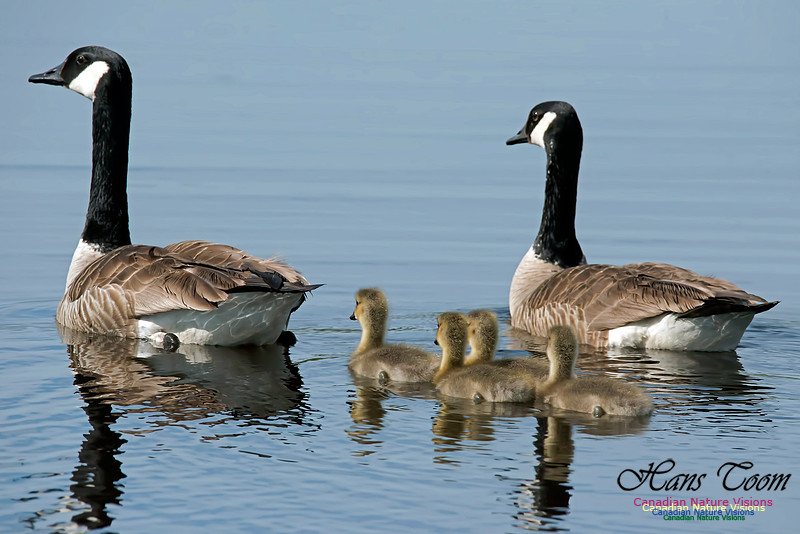
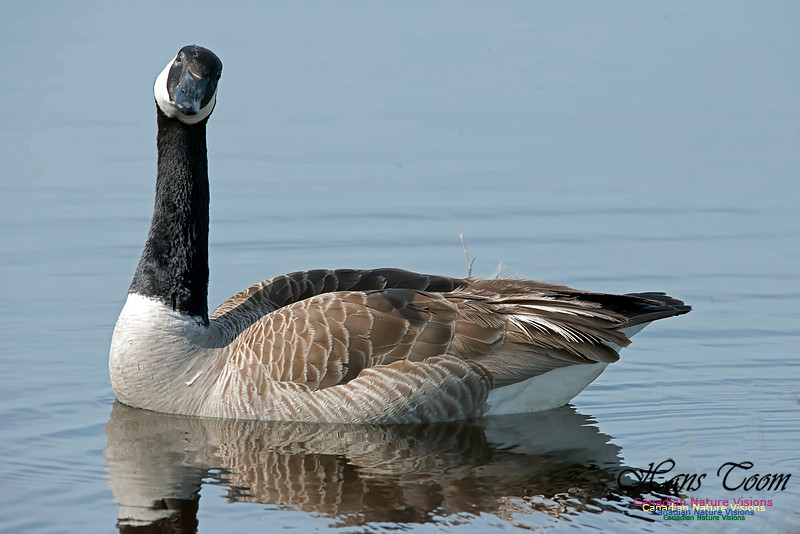
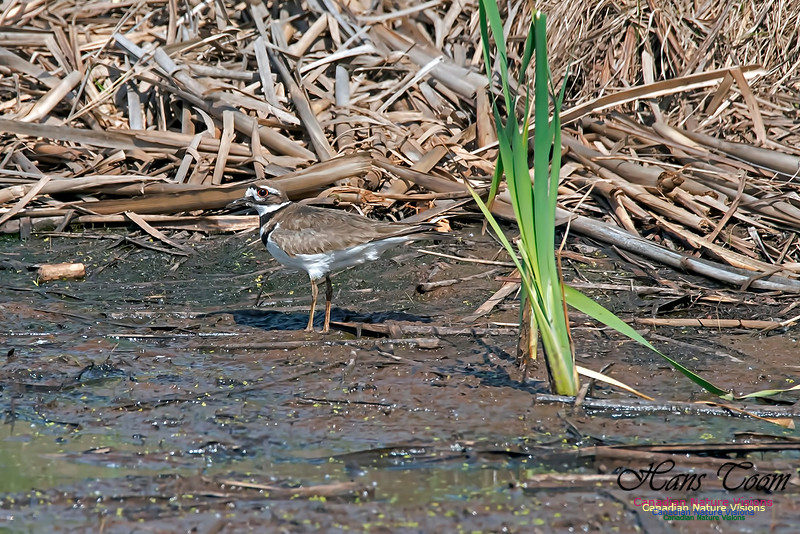
A Visit to Brookfield MarshOn my way to Truro I stopped for a short tour of Brookfield Marsh. It was too early for wildflower activity but I did enjoy the parade of Geese, the wild songs of the Red-winged Blackbirds and Common Grackles. Alder Flycatchers, Yellow Warbler, Common Yellowthroat, Tree Swallows and the usual throng of sparrows added to the melee, plus a single Killdeer. It was too late in the day for a serious summary of this marsh's membership.
The single Killdeer did not pose but kept a discrete distance probably due to nesting activity.
Wildflower Walk Around the Frog PondLaura and I took a wildflower walk around the Frog Pond, Sir Sanford Fleming Park, on Sunday primarily for the Pink Lady's Slipper Orchid. We had been checking the area every week so as to not miss the lady's slipper yet we almost missed the peak anyways. Some flower heads were already fading. It is challenging to post just one example of dozens of photos.
The red-pink Rhodora is always a treat even though it is so common.
The White Rhodora is far less common in my area, indeed I know of only one plant growing alongside Sandy Cove Road, Halifax Regional Municipality. Every year Laura has asked me to photograph it and I'd always vaccilate until it was gone but not this year.
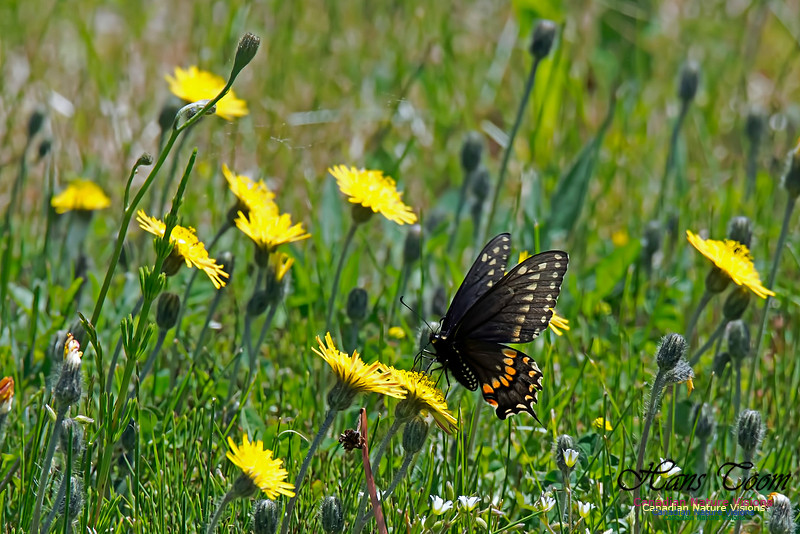
Black SwallowtailLaura and I were enjoying our picnic lunch behind the Greenwings Legacy Interpretative Centre last Sunday when a butterfly appeared on the grass in front of us. I was not equipped for butterfly photography since we were interested in birds and flowers that day. Nevertheless I snapped a couple of quick photos. At first glance it appeared to be one of the black swallowtails. Yesterday evening I decided to put a label on this butterfly and by referring to Plate 5, Peterson Field Guides, Eastern Butterflies, I could find only one partial match. Only one of the black swallowtails has double orange/red banding on the hind wing, the Spicebush Swallowtail. The Spicebush Butterfly is a rare butterfly perhaps not even reported yet in Nova Scotia, so it is probably an unusually bright Black Swallowtail. I note also that the swallow's tail, the pointy part, on my example is not bulbous, that is rounded on the end. The upper wing spotting is more typical of the BIack Swallowtail, with the equal sized spotting marching up the upper wing and making a dog leg at the end whereas the upper wing spotting on the Spicebush Swallowtail has reducing spot sizes as they move up the wind and no dog leg turn at the end. I have one other photo but it doesn't help.
Old Annapolis Road TrailI was pleased to hear from reliable sources that there may be changes in the works to curb the ATV activity in the old Bowater Mersey road system. The management of the area has degraded after management responsibilty was transferred from Bowater Mersery to the Ministry of Natural Resources. The majority of ATVers are responsible and naturalists as well just travelling to their fishing spots or riding along the old roads so it is a shame that a few spoil their image by wrecking hiking trails. I visited the area again yesterday looking for Bay-breasted Warblers. Once again I found the birds and actually obtained a couple of record photos although the images are not worthy of inclusion in my web site. Swainson's Thrush posed once again for some portrait shots.
My most photographed warbler is the Common Yellowthroat and yesterday I obtained several more images.
While looking for the Bay-breasted Warbler a Common Grackle appeared on a nearby rock.
Lewis Lake Warbler Walk, Jerry Lawrence Provincial ParkI lead my annual warbler walk at Jerry Lawrence Provincial Park on the first Sunday in June starting at 7AM, this year it was June 1. The warbler walk is sponsored by the Five Bridges Wilderness Heritage Trust. This year we had near perfect conditions with bright sunshine and cool temperatures in the morning. The cool morning kept the black flies at bay and allowed us to enjoy the whole walk without being tormented. There were thirteen of us in this years group of beginners and more experienced birders.
We heard 14 warbler species and saw all of them except the Canada Warbler who sang with authority but stayed hidden in the tangled undergrowth and wet understory of its preferred habitat. On hand were; Nashville, Northern Parula, Yellow, Chestnut-sided, Magnolia, Black-throated Blue, Yellow-rumped, Black-throated Green, Palm, Black-and-White, American Redstart, Ovenbird, Common Yellowthroat and the much coveted Canada Warbler. Flycatchers seen and heard were Alder Flycatcher and Eastern Wood-Pewee. The usual bunch of sparrows were present; Song, Swamp, White-throated Sparrows, and Dark-eyed Junco. Raptors included a pair of Osprey fishing over Round Lake, and probable but unconfirmed sightings of Sharp-shinned Hawk and Broad-winged Hawk. We looked unsucessfully for the Spotted Sandpiper that nests at the pond north of the beaver dam. Blue-headed and Red-eyed Vireos were present as was Mourning Dove, American Robin, Hermit Thrush, American Goldfinch, Purple Finch, Ruby-crowned Kinglet, Northern Flicker, Black-backed Gull, Ring-necked Pheasant, Common Loon and Great Blue Heron. It was a good day and enjoyed by all. Flycatchers and WarblersI visited three places in recent days, Jerry Lawrence Provincial Park, Dollar Lake Provincial Park and Meisners Head, East Chezzetcook. At Jerry Lawrence Provincial Park I found my first Eastern Wood-Pewee of the year, apparently just a single male singing vigourously for a mate.
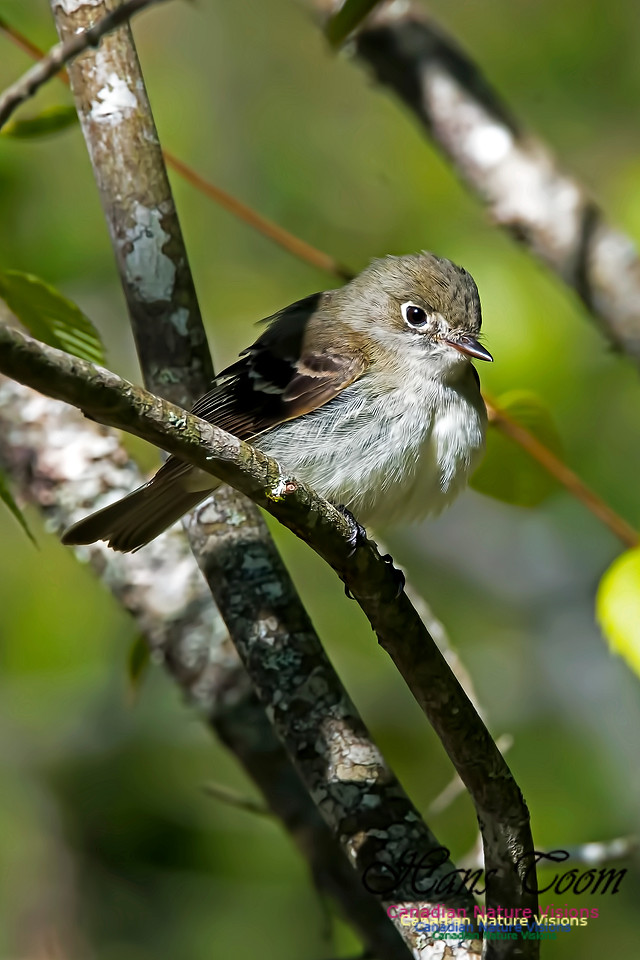
At Dollar Lake Provincial Park, a reliable haunt of the Eastern Wood-Pewee there were none present. I'm just a day or two early I suspect. However, I did manage to photograph a few warblers.
At Meisners Head, East Chezzetcook I was on the lookout for Blackpoll Warblers that nest here but although I saw one there was no opportunity for a photograph. I did however find and sucessfully photograph the Alder Flycatcher, a challenging subject at times.
There were numerous Yellow Warblers in the area and one posed briefly, all on a gorgeous spring morning.
|